
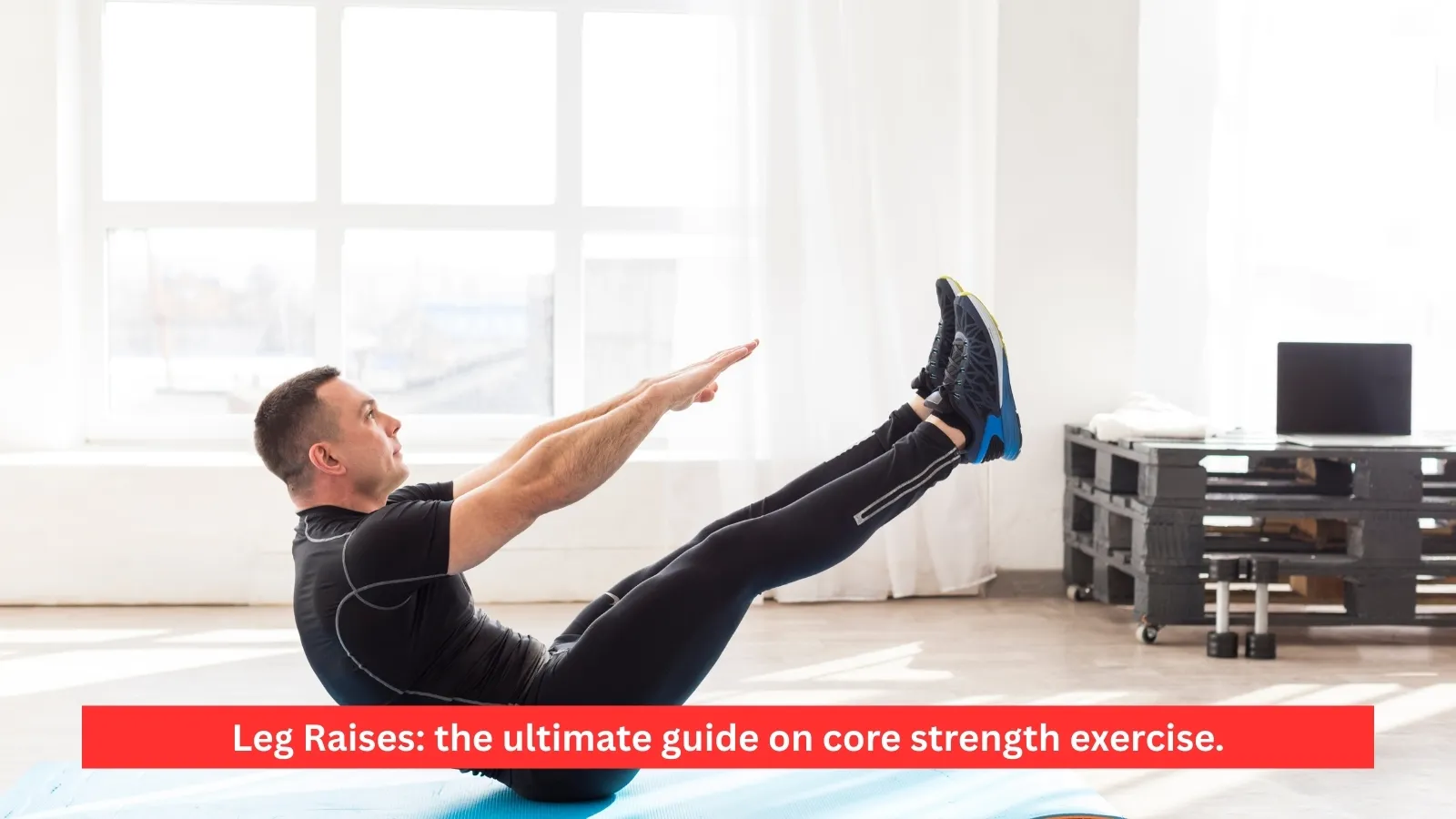

One of the most efficient bodyweight exercises applied to work on the core is leg raises. They mostly attack the lower abdominal muscles, but also include the hip flexors, oblique and even the thighs in a certain way. Leg raises are beneficial whether you are a novice or a professional in sporting activities, and with no equipment, you can get more stable, improve your posture and have more control of your core.
What Are Leg Raises?
Raising legs is an easy exercise, and you would raise your legs and not touch the ground, and make sure that your core is in action. These have many different variations: lying leg raises, hanging leg raises, and seated leg raises; however, they all require the use of raising the legs against gravity to put the abdominal muscles to the test.
The exercise enjoys huge popularity in fitness training as it engages the lower core in a better way than most traditional abs exercises, such as crunches.

Muscles Worked
It mainly targets:
- Lower abdominals- this is the main muscle in charge of lifting the legs.
- Hip flexors– help in the flexion.
- Obliques – make the body stable (also in variations).
- Quadriceps– allow keeping of straight legs throughout the movement.
This will transform leg raises into a total core-training exercise.

Benefits of Leg Raises
1. Strengthens the Lower Abs
Leg raises strike the lower abs in a small number of exercises. Lifting with the legs rather than the torso will result in the lower part of the abdomen being the driving force.
2. Improves Core Stability
The core is strong on the lower side, contributing to the balance, stability of the spine, and improving the posture in everyday activities and on the sports ground.
3. Easy to use and Hardcore Lifters
Since leg raises come in numerous variations, such as the bent-knee leg raise to the final hanging leg lift, their use by any fitness level is possible.
4. Increases the Strength of the Hip Flexor
Tighter hip flexors contribute to the enhancement of leg movement and explosive sports activity.
5. Requires No Equipment
The lying leg raises can be performed anywhere and hence can be used in homes.

Learning to Do Lying Leg Raises(Step-by-step)
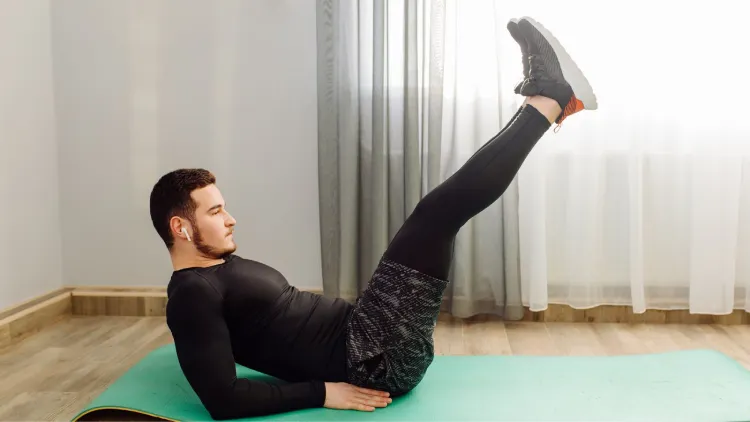
- Lie on your back, maintaining the straightness of legs and arms on both sides.
- Bring your core by making the lower back against the floor.
- Gradually raise the two legs till they lie at a 90-degree angle to each other.
- Stand on the edge and do not release the abs.
- Bring your legs with a slow movement without reaching the ground.
Repeat for 10–15 reps
Habit: the slower the better, not to utilise momentum. The slower the pace, the greater the working of the core.
Common Mistakes to Avoid
- Bending at the back may become straining.
- Applying force leads to ineffectiveness.
- Failure to regulate the lowering stage, the most difficult one, is descent.
- Elevating legs excessively high – lifting more than 90 degrees dislocates the tension off the abs.

Leg Raise Variations
1. Bent-Knee
Less challenging variation; the advantage is the ease of variation by bending knees to reduce load.
2. Hanging
Possess advanced and high performance in deep core activation.
3. Toe Touch
Raise your leg and extend your hand to your toes to work more upper abs.
4. Side
Works on the obliques and hip muscles.
5. Weighted
Place a dumbbell between your feet as a means to make it harder.
Who Should Avoid Leg Raises?
Individuals who have suffered lower-back injuries or have tight hip flexors are supposed to be cautious. In case of any pain, adjust the movement or seek variations with a bent knee.
Conclusion
Leg raises are an effective, equipment-free workout that can be used to gain lower-ab strength, stability and better overall core performance. They are easy to use, have many variations and are suitable for many exercises to do at home, during gym exercises and during sports training. As a regular part of your exercise, they help you have a better and more manageable core.
Frequently Asked Questions
1. Do beginner trainees do well on leg raises?
Yes. Novices may you on bent-knee leg raises, or half raises, in order to diminish the challenge and yet work the muscles of the core.
2. Which muscles of the legs are the ones targeted by leg raises?
Leg raises primarily target the lower abdominals, hip flexors, obliques, and quadriceps, as well as rendering it one of the best core-based exercises.
3. Do leg raises burn belly fat?
It strengthens and tightens the lower abs, and does not directly burn the muscle-burning belly fat. Fat metabolism needs a deficit of calories both in food and in general exercise.
4. What is the number of leg raises that I am supposed to have daily?
Beginners can use 2 sets of 8-12 reps. The intermediate and advanced people can add up to 12 to 20 reps in 3 to 4 sets, depending on strength and control.