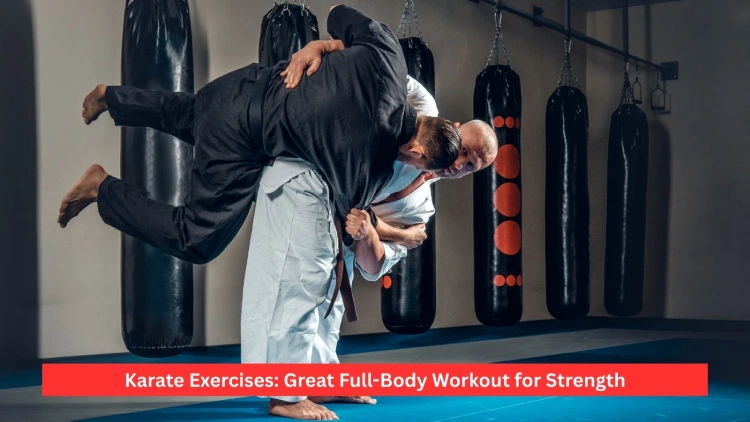

Karate is a total body workout system which is a combination of strength training, cardio, flexibility, balance and coordination in a single disciplined workout. These exercises, used globally, help in building muscle power, weight loss, sharpening the mind, and increasing athletic movement patterns applicable to both adults and children. Taken as just an exercise, karate provides a healthy substitute to the gym and traditional fitness routine, as it offers physical training as well as body control in the long term.
- Warm-Up Drills
- Strength exercises: Basic Karate Stances
- Striking as an Upper-Body Exercise
- Karate Kicking Exercise for Lower-Body Power
- Kata Movements as a Form of Functional Exercise
- Karate Core Exercises
- Flexibility and Stretching Exercise
- Karate Exercises: Benefits of the Cardiovascular System
- Karate Drills Bodyweight Conditioning
- After Karate Training Cooldown Exercises
- Extended Knowledge of Karate by means of Exercise
- Conclusion
- Frequently Asked Questions
Warm-Up Drills
Every karate exercise starts with the use of warm-ups. Such movements are aimed at the preparation of the body for dynamic movements, decreasing the risk of injuries, and enhancing performance during training. Warm-ups are done with controlled movement as opposed to intense, and the joints and muscles are made fully active.
Joint rotations are done systematically till the neck. Shoulder, elbow, wrist, hip, knee, and ankle circular motion enhances the amount of synovial fluid circulation and enhances the lubrication of the joints. This method promotes long-term health and strength of joints, and it is one of the reasons why karate can be deemed safe and useful for people of various ages.
Light cardiovascular movements occur after joint preparation. Placing on the spot, hopping, sideways motion and stepping to the music bring the heart rate up gradually. The movements are similar to aerobic training in athletics, and therefore, it is a good workout based on the warming up.
Dynamic stretching tends to be incorporated in warm-ups. Worried leg raises, arm activities and rotating of the torso are controlled to prevent overstretching. This balance justifies the fact that karate can be regarded as a sustainable system of exercises, but not an extreme impact routine.
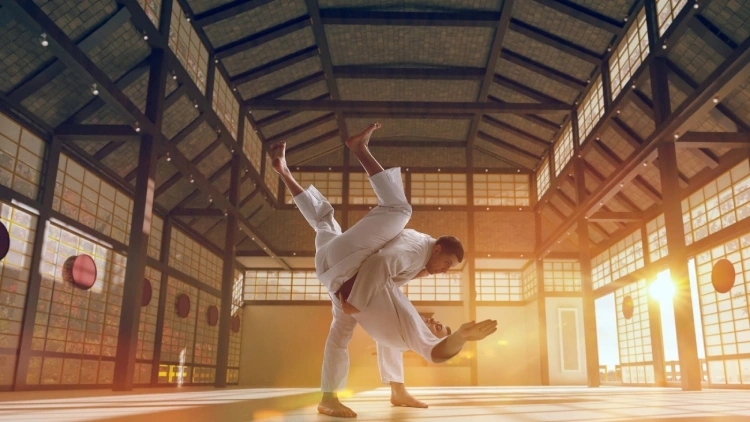
Strength exercises: Basic Karate Stances
Karate is an exercise that involves lower-body activities, which are static and dynamic and help to develop muscle endurance and stability. In contrast to leg exercises in the gym that involve the use of weights, in stances, the body weight and posture positioning are the resistance.
The horse position strengthens the quadriceps, glutes and inner thighs. Extended recovery employees in this position, which resembles isometric squat conditioning, to enhance stamina and mindfulness. It also tightens the lower back and centre by straining the spine in an upright position.
Front positions are also provided to act like lunges. They lift the legs singly, raise their hip motion, and behave better in control of weight movement. This mode of movement is favourable to athletic activity and everyday functional power.
Back poses are more focused on the hamstrings and the muscles of stability. The positions are useful when it comes to the enhancement of posture and the evasion of muscle disparities. Another important use of stance transition is that it enhances agility and coordina thus karate is a total lower body exercise.
Striking as an Upper-Body Exercise
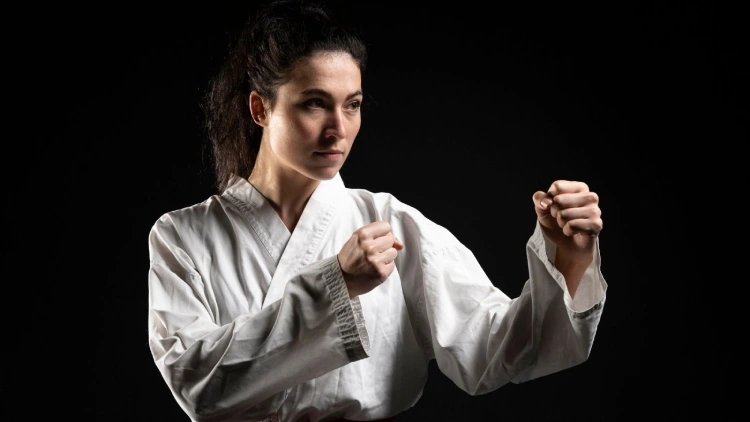
Powerful motions in karate serve as strength training exercises of the upper body with no resistance. Punches and blocks are performed with restrained tension, speed and involvement of the body.
The exercises of punching make the shoulders, triceps, chest, and forearms stronger, and the core is involved. Monotonous punching enhances both muscular endurance and muscular coordination as opposed to the sheer bulk of muscles. This is what makes it favourable to anorexic muscle building as opposed to anorexic.
The movements are blocked to exercise the shoulders, upper back and the arms in large controlled arcs. The exercises also enhance shoulder flexibility and balance in muscles, which prevents overuse injuries, as was the case in weight training.
The striking stress training also enhances the speed of reaction and neuromuscular coordination. This factor of technique versus brute force is the reason why karate can survive as a system of long-term exercise and not a short-term fitness fad.
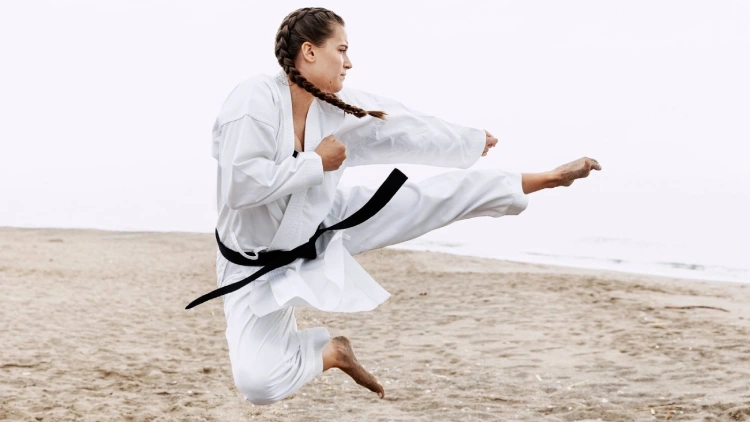
Karate Kicking Exercise for Lower-Body Power
Kicking is one of the most physically challenging practices. They make the legs strong, enhance balance and make the flexibility much greater.
Front kicks focus on the trousers and upper hip flexors with the use of core activities to maintain balance. Side kicks engage the glutes and lateral hips that enable the pelvis to stand firm. Roundhouse kicks add rotational force to the body that uses the obliques and enhances the flexibility of the spine.
Sometimes, slow kick drills are utilised in developing muscle control and balance. Kick-ups disrupt muscle stabilisation and, therefore, karate is good at producing functional strength as opposed to working individual muscles.
These kicking exercises also increase the heart rate, which helps in burning calories and losing fat. This is the reason why karate-based exercise programs have been recommended for use in weight management.
Kata Movements as a Form of Functional Exercise
The practice of kata movements is a complete body functional exercise when continuously performed. They pick up poses, blows, kicks, turns, and moves.
Kata enhances muscular endurance, coordination, and balance as far as exercising is concerned. Kata done continuously enhances the cardiovascular output and thus serves the purpose of circuit training.
Kata practice is also helpful in reinforcing posture, breathing control and rhythm. These parts contribute to the effective movement and decrease fatigue in the case of more extended training. It is this organised body system that makes it be referred to as physically and mentally exhausting.
Karate Core Exercises
The karate activities are about core involvement. All the movements start at the body center making it stable and powerful.
Rotational punches include strengthening of obliques, whereas stance transitions involve lower abdominal muscles. The use of slow kicks involves the continued contraction of core muscles and has the benefit of enhancing spinal support and stability.
At least, karate trains the core in a combined movement as opposed to the traditional abdominal exercises that train muscles in isolation. This style increases functional strength, posture and prevention of injury.
Flexibility and Stretching Exercise
In training, flexibility training will be inevitable. Stretching exercises increase the range of motion in the joints and are useful in helping to kick well.
Stretches of the hamstring, hips, and groin are highlighted because of the lower-body movement requirements. Shoulder and arm stretches ensure that the upper part of the body moves.
The better the flexibility, the less the muscles are stiff, and the quality of movement is improved. That is the reason why karate belongs to those sports where people remain flexible even in later adulthood.
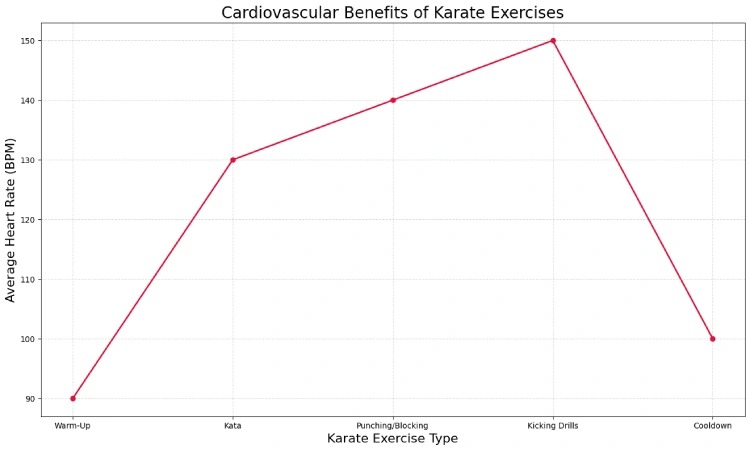
Karate Exercises: Benefits of the Cardiovascular System
Intensive exercise of karate inherently offers a reasonable workout of the heart in the form of constant motion, sharp shifts, and strategic charge-up. The fast-paced drills, striking pattern repetitions and continuous kata training elevate the heart rate rapidly, putting the body in the aerobic and anaerobic training modes. This mixture enhances the efficiency of the heart in pumping the blood and the available stamina.
It has an interval training pattern, unlike steady-state cardio exercises like jogging or cycling. High effort periods are followed by short-term recovery periods, which assist in enhancing endurance and efficiency in metabolic rates. It is particularly a good training mode that burns calories, aids weight loss, and enhances the capacity of the lungs. Regular training improves heart condition over time and makes exercise interesting and challenging.
Karate Drills Bodyweight Conditioning
Karate also places a lot of importance on bodyweight-based body conditioning, thus becoming a powerful form of training which does not require gym equipment. Controlled positions, repeated blows, and continuous motion are many karate exercises which provide resistance by position and muscle tension. Deep stance punching is entirely strength training the legs, core, and upper body of the body at one go, whereas the drills on repetitive kicking work on lower-body strength, balance, and muscular endurance.
Power, coordination and agility are also promoted by explosion editions between positions and actions. Since the exercises are based on natural body mechanics and not the external weight, training can be easily transformed into home training, into a group or outdoor training. The gradual increase in intensity, repetitions, and control enables the practitioners to develop their ability progressively, which facilitates long term fitness, enhanced mobility, and minimised chances of injury.
After Karate Training Cooldown Exercises
Cooldown exercises are very necessary to finish a workout. Since the body has been subjected to hard work and a high heart rate, light exercises like slowing down the speed or easy footwork will aid the body to revert to a rest position gradually. Such a gradual change assists in the circulation and helps to avoid blood pressure sudden decreases.
A cooldown consists of deep, slow breathing to relax the nervous system and enhance the supply of oxygen into the muscles. This enhances quick healing and less fatigue after training. The muscles that have been trained during the training are then stretched, which in this case is done through static stretching, with special care provided to the legs, hips, shoulders and back. These stretches enhance the flexibility and make the muscles tight, as well as prevent stiffness.
Not only can a well-planned cooldown program aid the physiological recovery process, but it may also prompt the trainees to be consistent in training. Cooldown exercises help relieve soreness and mental exhaustion, allowing karate practitioners to continue practising regularly and help in long-term fitness gain.
Extended Knowledge of Karate by means of Exercise
History and Physiological Development of Karate
Karate was invented or started in Japan; the movement systems of China, which are more focused on the controlled mechanics of the body, had some influence. Gradually, karate became an organised practice that concerned physical training, balance, and restrained strength as opposed to brute force.
Exercise-wise, this development transformed karate into a training system which focuses more on posture, alignment, and efficient movement patterns.
Karate vs Taekwondo as Exercise Systems
Both karate and taekwondo are good exercises, but they train the body differently.
The features of karate exercises include:
- Stands on the ground that strengthens legs.
- Linear movements that enhance truthfulness and support.
- The importance of equilibrium and moderation.
The features of Taekwondo exercise include:
- kicks that are higher than required flexibility.
- Increased speed and agility work.
- Increased focus on leg explosive speed.
Karate is likely to have a more balanced target of the whole body, as compared to tennis, in giving general muscular endurance and stability of posture.
Karate vs Jujitsu in Physiological Training
Karate and jujitsu are not used in exercise systems with a similar purpose.
- Karate focuses on flow movement and is therefore more efficient in cardiovascular conditioning.
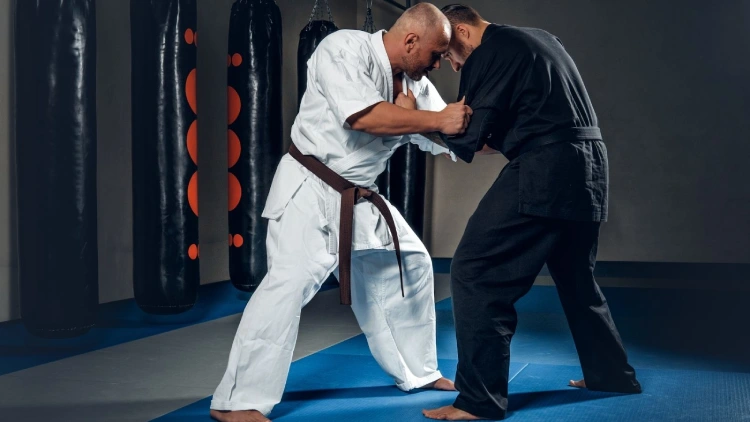
- Jujitsu depends on the strength of grappling and is more challenging to the upper body and grip strength.
The active movement forms of karate ensure that it is of great use in enhancing a person’s mobility, coordination and stamina.
Use of Karate as Exercise Discipline
Holistic physical development is the main point of karate in exercise.
Karate training improves:
- Strength and muscular endurance.
- Coordination and balance
- Cardiovascular fitness
- Mental discipline and focus
With strong supervision and discipline of intensity, karate would be generally regarded as safe and helpful.
Belt System and Physical Progression
In traditional karate, a belt-ranking system is applied, which shows physical development and control of technique.
Key points about belts:
- The development passes through phases of diverse colored belts.
- The black belt degrees are a physical high performance.
- Top positions take decades of regular training.
There are some sophisticated belts which are uncommon because they demand long-term commitment to achieve.
Timeline and curve of learning and training
- Karate as an exercise is a progressive path to learning.
- Simple motions and poses are within a few months.
- The strength, flexibility, and coordination are enhanced with time.
Advanced body control and endurance are developed as a result of long-term practice.
This is an orderly process that helps to improve lifetime fitness and is not a quick outcome.
Karate vs Boxing as a Workout
Both karate and boxing are extreme workouts, although their training modes vary.
Karate focuses on:
- Full-body engagement
- Flexibility and balance
- Endurance of the lower body and core.
Boxing emphasizes:
- Upper-body conditioning
- Punching endurance and hand speed.
The benefits of karate are more holistic in terms of physical growth, which makes it a fair substitute for gym exercise.
Physical and Psychological Positions
Karate has an extreme variety of fitness advantages, such as:
- Greater muscle tone and strength.
- Enhanced fat burning and calorie burning.
- Improved coordination and balance.
- Improved blood circulation.
- Sharper mental focus
Karate will act as a useful substitute for gym training with these advantages.
Varieties of Karate and Intensity of Training
Various types of karate are known to exist, whose training requirements vary.
Some styles emphasise:
- Mighty positions and perseverance.
- Velocity and dynamic motion.
- Accuracy and a high degree of technique.
In spite of these variations, there is total physical conditioning in all the styles of karate.
Physical Challenge and Level of Difficulty
Karate is deemed to be physically challenging because of:
- Precision requirement of technicality.
- Balance and posture control
- Coordinated body movement.
The activity poses this degree of challenge, which enhances exercise performance and permanent fitness.
Fit at various age groups
Karate exercises may be modified to:
- Children are achieving coordination.
- Adults who are interested in whole-body fitness.
- Elderly people with good fitness.
With consistent practice and dedication, the benefits of karate become increasingly evident over time, making the learning process a rewarding journey rather than a temporary challenge.
Physical karate benefits, which are obvious in real life
These exercises improve:
- Reflex speed
- Body awareness
- Balance under movement
Exercise with high energy will also help burn off a lot of fat and condition the heart.
Etiquette, Concentration and Training Discipline
Karate training deals with well-organised greetings and etiquette that:
- Promote mental discipline
- Enhance regularity in exercises.
- Encourage respect and focus.
This is a psychological element that facilitates long-term compliance in exercise programs.
Conclusion
When used as a workout system, it is a well-balanced and efficient workout of the whole body. Karate strengthens, enhances flexibility, endurance, and maintenance of balance and coordination without any equipment and through systematic movement and moderation of intensity. Its training practices are based on the use of natural body movement, which makes it acceptable to various fitness groups and even age brackets.
Since it enables the intensity and complexity to be toned and increased with time, it promotes a gradual advancement and enduring fitness. This flexibility, along with discipline and control of movement orientation, makes karate one of the most viable and easiest forms of exercising to condition the entire body.
Frequently Asked Questions
Do you think karate is a practical workout to be taken as a whole body fitness?
No doubt, it is a great workout. It is a combination of resistance training with cardiovascular exercise training, flexibility, balance and coordination. As an individual gets used to karate, regular training builds endurance, burns fat, and improves the general control of the body without the need to use gym equipment.
Does karate aid in the process of weight loss and fat burning?
Karate is quite efficient in losing of fats when attended regularly. Punishing exercises, constant motion, and combinations of kicks and kata exercises raise the heart rate and temperature. These workouts have long-term weight support through the interval-style intensity.
What is the length of time to realise fitness results of karate?
Within a few weeks of regular training, basic levels of fitness can be observed in the form of improved coordination, flexibility and stamina. An increase in strength, balance and endurance processes can be further enhanced over a few months, whereas long-term practice results in advanced body control and prolonged benefits of fitness.
Can karate be practised by beginners and the elderly?
Karate drills may be practised by beginners, children and the elderly. Intensity and speed of training, as well as complications, are regulated, and a person may get trained safely at their own pace. This flexibility renders exercise that is sustainable amongst the various age groups and fitness levels.