

One of the best methods of developing strong and well-defined shoulders, as well as stable shoulders, using simple equipment, is through dumbbell shoulder lifts. Doing these variations, such as front raises, lateral raises, shoulder presses, and reverse flies, you will be working out all areas of the shoulder and will enhance the strength, posture, and stability of the shoulder joint. Regardless of whether you are working with light weights such as 2 kg or moving on to heavier dumbbells, consistency, proper form, and controlled movement are the factors of muscle growth. When done properly, these exercises can strengthen your rotator cuffs, make your bones stronger, and allow you to build more muscle with only some dumbbells.
- What Are Dumbbell Shoulder Lifts?
- Muscles involved in the Dumbbell Shoulder Lifts
- Shoulder Lifts on Dumbbells
- Best Dumbbell Shoulder Lift Exercises
- Correct Dumbbell Shoulder Lifts Form
- Mistakes to be careful of
- Basic Dumbbell Shoulder Lift Workout
- Intermediate Routine
- Advanced Routine
- Methods and Techniques of Training
- Selecting the correct Dumbbell weight
- Is it possible to build muscle with just the use of dumbbells?
- Health and Shoulder Training and Rotator Cuff
- Are Lateral Raises Good For Shoulders?
- Are Heavier Dumbbells Better?
- Additional Exercise Insights
- Shoulders: How Often Do You Train Them?
- Safety Tips for Dumbbell Shoulder Lifts
- How Fast to achieve results?
- Conclusion
- Frequently Asked Questions
What Are Dumbbell Shoulder Lifts?
Dumbbell shoulder lifts are body workouts that ensure that the shoulder muscles are hit by lifting dumbbells in various directions. These movements may be executed in various forms, whereby one may raise weights either forward, sideways, or overhead.
The usefulness of dumbbell shoulder liftsliess in the fact that they isolate particular muscles along with the involvement of stabilizing ones. This renders them more practical than set machines.
These exercises are popular due to:
- They have an excellent range of motion.
- They enhance muscle balance between the two sides.
- These can be modified to all fitness levels.
Even light weights like 0.5 kg or 2 kg dumbbells can also be helpful, particularly in the case of beginners, rehab, or endurance training. On the other hand, the heavier, the more the resistance and the muscle grows.
Muscles involved in the Dumbbell Shoulder Lifts
The muscles that are mainly used in the Dumbbell shoulder lifts are those of the deltoid, which are also supported by a few muscles assisting in stability and movement.
Deltoids
There are three heads of the deltoid muscle:
- Anterior deltoid: Lifts the arms forward.
- Lateral deltoid: Dilates the arms in a sideways motion.
- Posterior deltoid: The action of pulling the arms back.
The deltoid is focused on a different area by each form of dumbbell shoulder lifts.
Supporting Muscles
- Trapezius: Helps stabilize and move the shoulder blades
- Rotator cuff: A series of muscles that stabilize the shoulder joint.
- Core muscles: Be upright and supportive on lifts.
Toughing up these muscles by using the dumbbell shoulder lifts will enhance the stability of the joints and lower the chances of injury.
Shoulder Lifts on Dumbbells
1. Improved Shoulder Strength
Dumbbell shoulder lifts assist in developing the functional strength to aid in daily movement, unlike lifting, pushing,g and carrying.
2. Better Muscle Definition
Dumbbell shoulder lifts, when used on a regular basis, result in well-built and shaped shoulders. This is more so when mixing the various versions.
3. Greater Range of Motion
Dumbbells are also useful in enhancing shoulder joint flexibility and mobility due to their free movement.
4. Balanced Muscle Development
The arms are independent without any interdependence,ce and it enhances symmetry.
Rotator Cuff Health
Dumbbell shoulder lifts done correctly can build up the rotator cuff, needed to stabilize the shoulder. This is particularly helpful with light weights.
6. Bone Density Improvement
Resistance training, such as dumbbell shoulder lift,s can be used to increase the strength of the bones over time, which would decrease the chances of fractures.
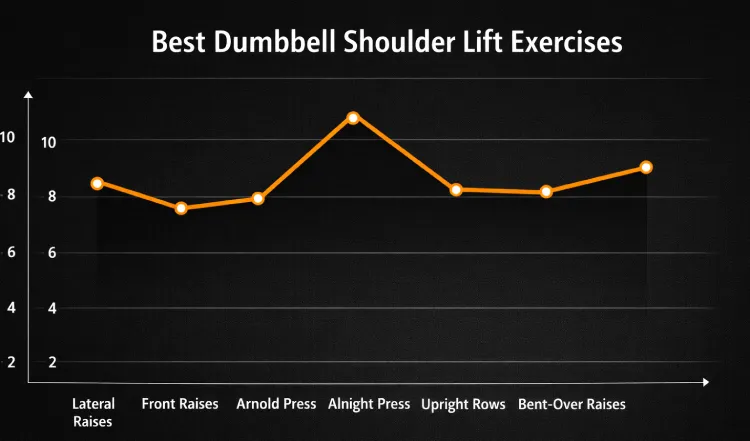
Best Dumbbell Shoulder Lift Exercises
1. Dumbbell Front Raise
Target: Anterior deltoid
It is among the easiest dumbbell shoulder lifts and is ideal to start with.
How to Perform:
- Stand upright, holding dumbbells at your sides
- Gradually lift them towards you.
- Stop at the level of the shoulders.
- Lower with control
This exercise can be effectively done with a 2.5 kg dumbbell, provided that one is practicing the correct technique.
2. Dumbbell Lateral Raise
Target: Lateral deltoid
This is one of the exercises that is popularly regarded as the best when it comes to shoulder width.
How to Perform:
- Grasp the dumbbells by your sides.
- Take them up into the air.
- Lower slowly
Lateral raises are very effective and are among the most effective exercises when it comes to developing the shoulders.
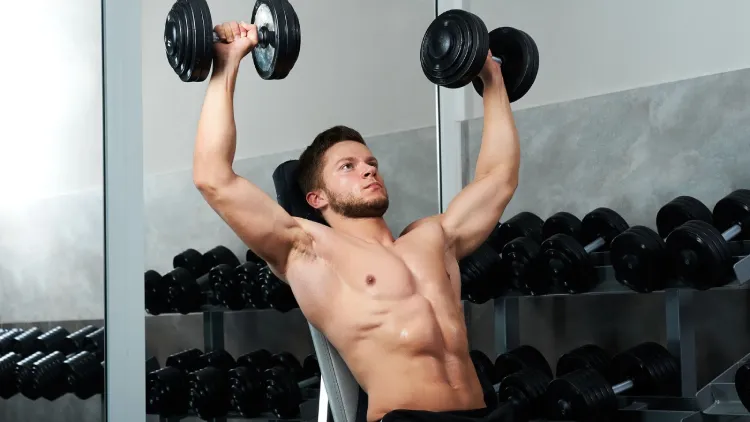
3. Dumbbell Shoulder Press
Target: Entire shoulder
This is the opposite movement of the arms and may be believed to be one of the most effective exercises that utilize the upper part of the body.\
How to Perform:
- Hold the weight in your shoulders with dumbbells.
- Press them overhead
- Slowly, down to the lower back.
This is an exercise that is considered by some to be one of the best dumbbell exercises that can be performed in the entire shoulder area.
4. Dumbbell Reverse Fly
Target: Posterior deltoid
This is necessary to achieve balanced shoulder development.
How to Perform:
- Bend forward slightly
- Raise arms out to the sides
- Squeeze shoulder blades
- Lower slowly
5. Arnold Press
Incision: Over the whole head of the deltoid.
This type of variation enhances muscle movement by rotating.
6. Upright Row with Dumbbells
Goal: Shoulders and trapezius.
This will provide variety and will strengthen upper-body pulling muscles.
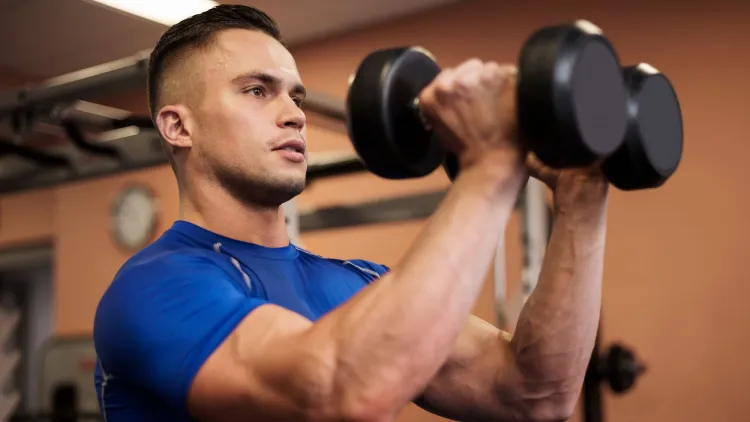
Correct Dumbbell Shoulder Lifts Form
Correct form is crucial in administering dumbbell shoulder lifts.
- Straighten your back.
- Avoid using momentum
- Lift with control
- Engage your core
- Maintain steady breathing
Proper form makes lifting of even light weights, such as 2 k and 5 kg, effective.
Mistakes to be careful of
1. Lifting Too Heavy Too Soon
One of the most common mistakes in dumbbell shoulder lifts is to start with too heavy weights. It frequently results in swinging, poor control, and a decrease in range of motion. Rather, start with attainable weights, and over time, you can add more as you feel stronger.
2. Forgetting about Rotator Cuff Safety
The shoulder joint is a sensitive one, and a lack of proper care will result in injury. In dumbbell shoulder lifts, one should not perform it sports which causes him physically sharp pains. Concentrate on and employ stabilizing exercises that sustain shoulder stability.
3. Overtraining
Unless the muscles have time to rest, it may be safer not to do dumbbell shoulder lifts too frequently. Shoulders also require rest and thus, 2-3 times a week of trainingise normally sufficient to maintain gradual improvements.
4. Poor Technique
Performing ‘wrong form’ decreases the isolative capability of dumbbell shoulder lifts and raises the risk of injury. Ranging problems involve swinging the weights, arching the back, or lifting too fast. Slow, rhythmic movements and correct positioning are always the best when one wants the maximum benefit.
Basic Dumbbell Shoulder Lift Workout
The initial stage of lifters usually suffices with light weights of 2 kg or 5 kg.
- Front Raise – 3 sets
- Lateral Raise – 3 sets
- Shoulder Press – 3 sets
- Reverse Fly – 2 sets
This discipline develops a good base.
Intermediate Routine
Increase intensity gradually:
- Arnold Press – 4 sets
- Lateral Raise – 4 sets
- Front Raise – 3 sets
- Reverse Fly – 3 sets
Advanced Routine
A more complex dumbbell shoulder lift program involves heavier weights and a little bit more difficult methods. You may also employ the use of dropsets, slow reps, or even supersets to stretch your muscles.
For example:
- Shoulder Press – 4–5 sets
- Arnold Press – 3–4 sets
- Lateral Raise – 3 sets
- Reverse Fly – 3–4 sets
These modifications assist in enhancing muscle size, strength,h and endurance without making workouts ineffective and unsafe.
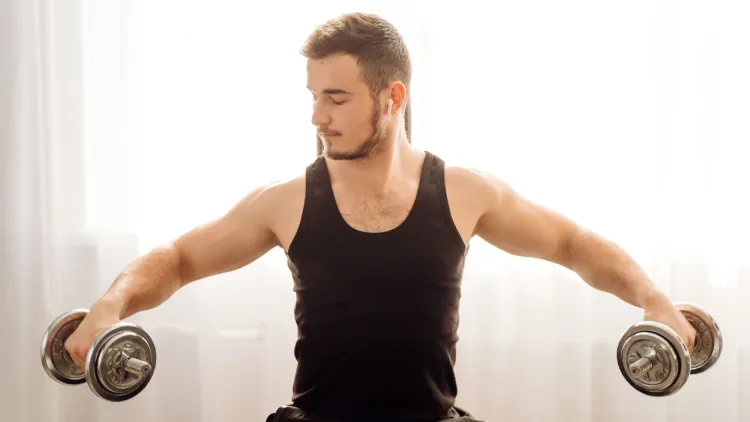
Methods and Techniques of Training
4-2-1 Dumbbell Method
This technique is tempo-oriented:
- 4 seconds lifting
- 2 seconds hold
- 1 second lowering
It prolongs the time under tension, resulting in increased muscle activation.
3-3-3 Rule
This can be governed by:
- 3 sets
- 3 exercises
- 3 times per week
It makes training simple and, at the same time, maintains consistency.
Selecting the correct Dumbbell weight
A common question that arises is the amount of weight of their dumbbells.
- Taxes for beginners: 2 k. to 5 kg.
- Middle: 5 to 10 kg.
- Advanced: 10 kg+
A heavy dumbbell weight (5 kg) is usually sufficient to gain muscle, provided that it is exercised on an ongoing basis. The weight of 2.5 kg may be enough to perform isolation exercises.
Heavy weight is handy, but not unless you can be in good form.
Is it possible to build muscle with just the use of dumbbells?
Yes, it is possible to build muscle with the help of dumbbells only. With the dumbbell shoulder lifts different exercises and resistance, you can get significant muscle growth by increasing the resistance as time progresses.
Among the factors are consistency, progressive overload, and proper nutrition.
Health and Shoulder Training and Rotator Cuff
Some exercises strengthen the rotator cuff, such as:
- Light lateral raises
- Controlled presses
- External rotation movements
Take care to avoid sharp, painful, or unduly straining movements. Some exercises, such as heavy dip,s might not suit everyone.
Light resistance mobility regulator with a short and regular routine can enhance the health of the shoulders over time.
Are Lateral Raises Good For Shoulders?
Yes, the best dumbbell shoulder lifts to add shoulder width and definition are the lateral raises. They effectively isolate the lateral deltoid and can be used at any level of fitness.
Are Heavier Dumbbells Better?
Heavy dumbbells are also capable of building muscle; however, you need to use them in the correct form. In the case of dumbbell shoulder lifts, it is important not to lift too heavy since the risk of poor technique and injury increases.
Slower and more precise movements with lighter weights can be equally effective- particularly in exercises such as lateral raises. Your ideal weight is something that will be challenging, so that you are still in good form throughout your reps.
Additional Exercise Insights
- Even such minimal weights as 0.5 kg can be used in rehabilitation.
- A 20 kg curl is very powerful and not mandatory in this case.
- The development of muscle is more related to continuity than mass.
- Their intricate structure makes it difficult to develop the shoulders.
Shoulders: How Often Do You Train Them?
- It is best to have it every 2-3 times a week.
- Provide process intermittency.
- Fatigue and recovery.
Safety Tips for Dumbbell Shoulder Lifts
- Pre-warming before a training.
- Stretch after workouts
- Break, should, and sounds painful.
- Focus on recovery
How Fast to achieve results?
Consistency in dumbbell shoulder lifts should bring with it a slow yet visible improvement over time.
- 2-4 weeks: Your muscles adjust, and your strength and control develop.
- 4-6 weeks: Shoulders begin to be firmer and more stable.
- 6-8 weeks: The body starts to develop definable muscles.
The outcome is determined by uniformity, correct shape, and weight. It will also assist you to get better and quicker results when you remain consistent with dumbbell shoulder lifts, and you should take a good rest after this.
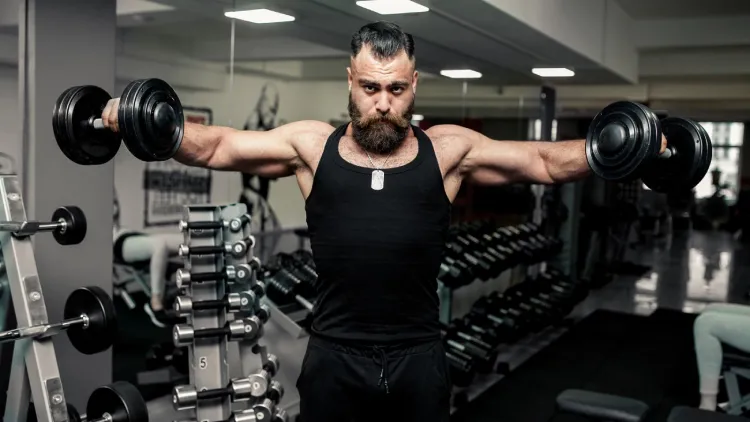
Conclusion
One of the best and most accessible methods of having strong and defined shoulders is through dumbbell shoulder lifts. It is possible to work all components of the shoulder in exercises such as front raises, lateral raises, presses,s and reverse flies and enhance stability, strength, and posture.
It doesn’t matter whether you are using the light dumbbells or the heavier ones, but the point is that it should be a gradual advancement with proper form and consistency. SShoulderDumbbell shoulder lifts enable not only muscle building but also promote joint health, enhance bone density, and fitness.
Frequently Asked Questions
1. Will I be able to gain muscle by doing dumbbell shoulder lifts?
The answer to this question is yes, you can build muscle with just dumbbell shoulder lifts as long as you are consistent, use correct form, and as time goes by, you can add more weight or more reps.
2. What weight should I use when sliding my dumbbells on my shoulders?
The dumbbells you use must be challenging yet permit proper form. Novices can use 2 5 kg, and those more skilled can use more weight during dumbbell shoulder raises.
3. Are shoulder lifts with dumbbells goodfor rotatorr cuff strength?
Yes, when used carefully with light to moderate weights and with due care, dumbbell shoulder lifts could help to strengthen and support the rotator cuff muscle.
4. Which number of times a week do I need to do dumbbell shoulder lifts?
It is possible to do dumbbell shoulder lifts twice or three times a week, giving yourself enough rest time between them so that you can recover and build up your muscles.