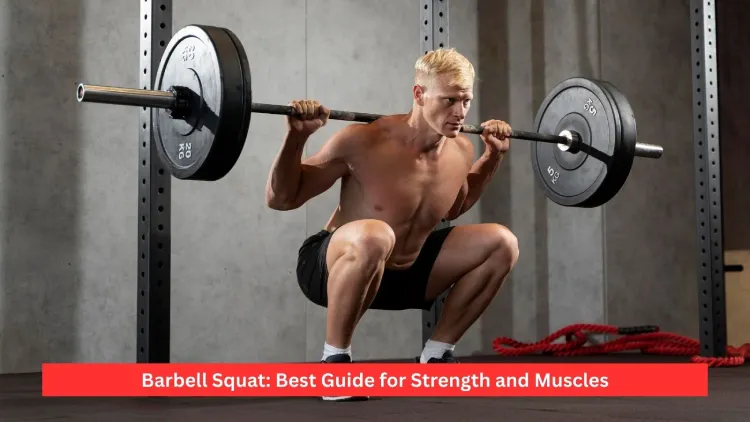

The barbell squat is a strong compound exercise that builds lower-body strength, increases muscle mass, and enhances overall fitness. It focuses primarily on the quadriceps, glutes, hamstrings, and core, while also enhancing bone density, blood flow, and sports performance. Done correctly, the barbell squat can promote posture, increase metabolism, and improve body composition.
Muscles Involved
The barbell squat is a movement that involves numerous muscle groups simultaneously. This is because it is one of the most effective workouts for building overall lower-body strength and muscular balance.
Quadriceps
The front of the thighs consists of the quadriceps, which contribute largely during the barbell squat. These are muscles that straighten the knee when standing up after being in a squat. Look at how different parts of your body move to allow your body to lower and push back. The quadriceps muscles do not stop as long as they maintain the motion to generate force.
Glutes
The gluteal muscles, commonly known as the glutes, are among the strongest muscles in the human body. In squatting with the barbell, the glutes are engaged to enable you to squeeze up with the squat at the bottom. Powerful glutes will also improve posture and protect the lower back.
Hamstrings
The hamstrings are found behind the thighs. They help the hips extend through the glutes and control downward movement when squatting with the barbell. The strength of hamstring muscles is necessary to avoid injury and stabilise the knee.
Core Muscles
The spine is stabilised during the barbell squat by the abdominal muscles and lower back. A good core helps ensure the body remains upright and can withstand heavy loads. A barbell squat is also susceptible to losing strength without proper core engagement, which can make it unstable.
Calves
These squats involve the calf muscles in stabilising the ankles and in standing during the squat. They are not the main movers, but they are an influential factor in controlling the movement and contribute to overall stability.
Hip Stabilizers
Squatting also involves smaller muscles around the hips to become active. These muscles maintain the proper position between the hips, knees and ankles, and they ensure the right shape and the possibility of injury is minimised.
Since there are myriad quantities of muscles engaged simultaneously, the barbell squat is a very efficient method to train the lower body, besides enhancing the supportive muscle groups across the entire body.

How to do it (Step-by-Step)
The Barbell Squat is a technique that should be performed safely and efficiently in order to learn it. Proper form promotes results as well as minimises the risk of injury.
Step 1: Prepare the Barbell
Firstly, a squat rack should be placed with a barbell that is approximately the same height as the shoulders. Place it under the bar and have it cut across your back, which is over the trapezius muscles and not directly over the neck position.
Step 2: Grip the Bar
Get your hands with a little more than shoulder width onto the bar. To form a stable position of the upper body, maintain your chest raised and the blades of your shoulders slightly compressed.
Step 3: Take the Bar off the Rack
Bend your legs straight to remove the barbell from the rack. Move backwards a small step to ensure that you have room to do the movement without any harm.
Step 4: Set Your Stance
Place your feet flat against each other approximately a shoulder length with the toes inclined to the side. Such a position permits the hips and knees to move freely during the barbell squat.
Step 5: Begin the Descent
Bend your hips and knees gradually and maintain the posture of your chest. Slide backwards with your hips like you are sitting in a chair. Bend down until you have at least your thighs parallel to the floor.
Step 6: Drive Upward
Push off with your heels and straighten your hips and knees, and go back to the standing position. Hardcore through the movement and stable pose.
Step 7: Repeat the Movement
Do the repetitions as many as you want, in a controlled movement and technique. Correct breathing is also a key point when performing the barbell squat. Breathe in and out again, then lean down and breathe in again, up and down. This is a way of stabilising the core and balancing.

Advantages of Barbell Squat
Barbell Squat has numerous physical advantages that go beyond mere muscle building.
Builds Lower-Body Strength
The main advantage of the barbell squat is that it enables one to develop powerful leg muscles. This exercise gives the lower body greater strength by firing the quadriceps, hamstrings and the glutes at the same time.
Improves Bone Density
Weight lifting, such as barbell squat, exerts mediated stress on the bones. This activates bone-forming cells and aids in the growth of bone density in the long run. The stronger bones will minimise the chances of osteoporosis and bone fractures in later years.
Enhances Blood Circulation
The big movements taking place when the barbell squat is used assist in enhancing blood flow in the body. Enhanced circulation is known to be healthy to the heart and aids in carrying oxygen and nutrients to muscles under use.
Boosts Hormonal Response
Important hormones like testosterone and growth hormone are triggered by heavy-weight exercises like the barbell squat. These hormones are instrumental in the development of musculature and generally bodily development.
Supports Fat Loss
Despite the fact that the barbell squat is mainly a strength exercise, it utilises the exercise to enhance calorie expenditure. Due to its ability to involve the muscles of large muscle groups, the barbell squat may also help decrease body fat in cases of a healthy diet and frequent training.
Enhances Functional Strength
The barbell squat movement is more or less similar to the daily routines like sitting, standing and picking. This practical advantage renders it useful in the enhancement of general physical ability.
Develops Athletic Performance
The barbell squat is commonly used by athletes as they train in order to build explosive power, speed and agility. Higher performance in athletics like running, jumping and cycling is due to the fact that the legs and hips are stronger and most effective.
Supports Heart Health
Strength training involving the barbell squat done on a regular basis could help maintain healthy blood pressure. Exercise enhances circulation and the efficiency of the heart, making it healthier.

Common Mistakes to Avoid
Although the barbell squat is highly useful, its advantages may be minimised, and more injuries may occur if the posture is incorrect.
Rounding the Back
Rounding of the lower back is one of the worst errors made during the barbell squat. The spine should be kept straight, the chest high, to prevent back injury, and to be stable.
Knees Collapsing Inward
The squat causes the knees to move inwards, resulting in unnecessary strain on the joint. It is also helpful to keep the knees straight with the toes to have correct mechanics.
Heels Lifting Off the Floor
The barbell squat puts the feet on their heels, causing the weight to be forward and creating a decline in stability. It is due to the fact that keeping the heels in place will result in the correct distribution of forces.
Using Too Much Weight
In trying to push too heavy a weight without learning the right form, the weight-lifter may come to have bad form, and he/she may even become injured. A gradual increase in weight should also be done with the increase in strength.
Limited Squat Depth
Failing to reduce the body to an adequate extent may result in lesser muscle action. It is possible to make the barbell squat movement in a full range of motion, which guarantees a better result.
Barbell Squat Variations
Despite the high effectiveness of the traditional Barbell Squat, the variations through which the muscles may be targeted.
Front Squat
And in this form, the barbell would be laid over the shoulders in front. This pose puts more attention on the core and quadriceps.
Box Squat
Box squat is a squat whereby the body is lowered on a box or bench, and then it is lifted up. Such variation aids in enhancing control and depth of squat.
Pause Squat
Pause squat incorporates a brief pause at the bottom of the range. This makes the muscles more tense and makes them stronger in the weakest part of the squat.
Wide Stance Squat
Widening the stance in the barbell squat will put more stress on the inner thighs and the glutes.
Goblet Squat
Even though it employs a dumbbell rather than a barbell, the goblet squat can be used frequently among novice athletes who need to master good squat form.
In these variations, easier ones are usually used by beginners and are known to be safe during the learning of technique before graduating to using heavier barbell training in the squat.

Barbell Squat Tips
To achieve better results in the workout of the Barbell Squat, you have to practice it regularly and pay attention to the technique.
Warm Up Properly
Prior to exercising the barbell squat, one needs to warm up the muscles with cardio and light mobility activities. These conditions help the joints and prevent injury.
Focus on Technique
Having the right posture is more significant than doing heavy lifting. Learning how to do it correctly guarantees the development in the long term and protection.
Increase Weight Gradually
The current overload development is essential to strength development. Gradually adding the weight over time makes the muscles start adapting safely.
Maintain Core Engagement
By keeping the core tight during the barbell squat, it is possible to stabilise the spine and balance.
Use Recovery Strategies
It is during recovery that the muscles become stronger. Sleep, water, and food help to repair muscles when barbell squats are performed.
Proper nutrition post-training may assist in the replacement of energy levels after physical activities. Protein and carbohydrate foods, such as wheat, eggs, rice, yoghurt, fruits, or smoothies, are essential in muscle recovery and the restoration of glycogen.
Who Should Do Barbell Squats?
Barbell Squat may be helpful to a great variety of people when done properly.
Beginners
Individuals who have never engaged in any form of strength training can begin to learn squat mechanics using lighter weights or even using bodyweight squats and then advance to barbell squats.
Athletes
To achieve explosive power, speed and strength, athletes have the barbell squat as part of their training programs.
Fitness Enthusiasts
Regular barbell squat training can be very useful to individuals who are interested in developing muscles, losing fat, or enhancing their overall fitness.
Individuals with Bone Health Considerations.
Since resistance training is a good way to encourage the development of the bone, certain exercises such as barbell squat can sustain good bone development and limit bone erosion with age.
Nonetheless, some people ought to take the barbell squat with lots of care. Individuals who have severe knee injuries, hip conditions, spinal conditions and balance difficulties need to ensure that they seek medical advice or a trained professional prior to doing this form of exercise.
Light variations of the squats can also be safe for some beginners learning proper form. Such options help one develop strength gradually, then progress to heavier barbell squats.

Conclusion
Barbell Squat is one of the most appropriate exercises that are known to make the lower body stronger, increase muscle growth, and maximise fitness. The barbell squat is effective as it utilises several muscle groups simultaneously, making it stronger than the others across the legs, core, and hips, besides enhancing balance and stability.
The barbell squat may help a person become stronger in the bones, improve arterial flow, and enhance athletic capability when performed in good form with consistent practice. The barbell squat may be included in a standard exercise routine to build strength and overall health and improve physical performance over the long term.
Frequently Asked Questions
1. Does muscle building require a barbell squat?
The Barbell Squat is one of the best and most efficient exercises for developing lower-body muscles, as it engages several of the largest muscle groups at once.
2. What is the recommended number of barbell squats?
Starting with three rounds of eight to twelve repetitions is the most common when beginning. Weight and intensity can be increased slowly as the strength increases.
3. Is it possible to do barbell squats as a beginner?
Yes, newcomers may do Barbell Squats, using whatever light weights they can, but before going further, learn the proper execution of Squats.
4. What is the frequency of barbell squats?
A barbell squat is a common exercise that many training programs incorporate into their routines two to three times a week. This frequency enables the muscles to rest while also promoting strength and muscle development.