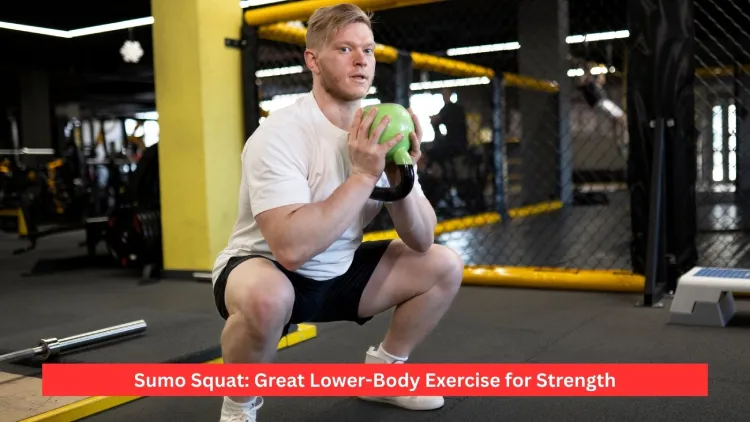

A multi-purpose exercise targeting the lower body, the sumo squat focuses on the inner thighs, quadriceps, hamstrings, and glutes. It aids in the tightening and strengthening of your lower body, expands the hip movement and can be combined with other exercises to achieve the best outcomes. It can be done with weight, dumbbells or barbells, but it is good to build muscles, work out legs more heavily and overall make the lower body more functional.
- What Is a Sumo Squat?
- How to Do a Sumo Squat
- Worked Muscles in the Sumo Squat
- Benefits of the Sumo Squat
- Sumo Squat Variations
- Sumo Squat and Traditional Squat
- Common Mistakes to Avoid
- Sumo Squats Performance and Body Transformations.
- Sumo Squats in Comparison to Other Exercises.
- Safety and Considerations
- Tips for Maximising Results
- Final Thoughts
- Frequently Asked Questions
What Is a Sumo Squat?
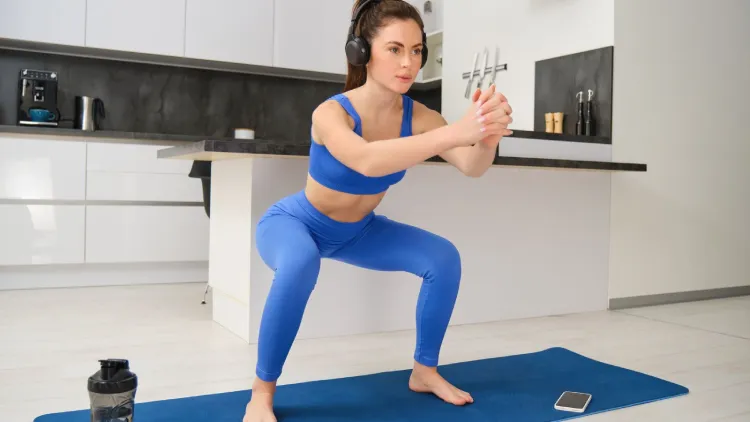
The sumo squat of the traditional squat is done in a more spacious position with slightly turned-out toes. This stance makes the inner thighs (adductors) work in comparison to regular squats but involves the glutes, the quadriceps, and the hamstrings.
The wide stance taken by the sumo squat, compared to the more conservative position of the feet, which is approximately five inches apart, makes the bottom of the hips and the groin more active in the squat. This turns it into an excellent choice by a person willing to shape their lower two body parts, particularly the inside thighs and glutes. This exercise may be done with body weight when one is just starting to train, but when training more intensively, it may be done using additional resistance, typically dumbbells, kettlebells, or a barbell.
Not only the these squats an aesthetic exercise, but they also enhance hip mobility, leg solidity and functional strength in general, thus being applicable in both sporting and everyday movement.
How to Do a Sumo Squat
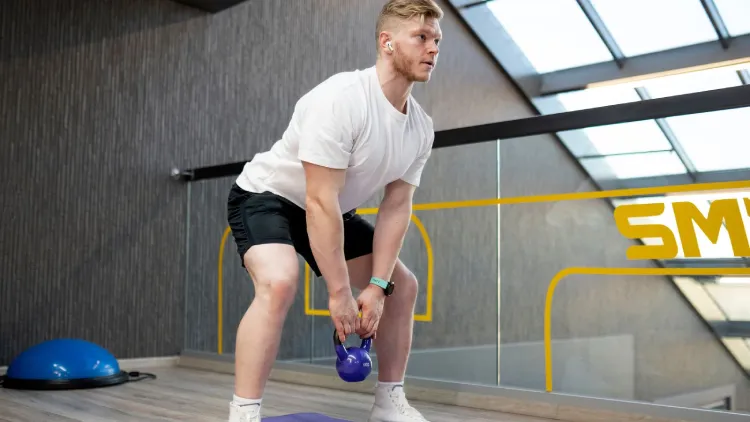
The correct way of doing the sumo squat is what will help achieve more benefits and not hurt.
Step-by-Step Instructions
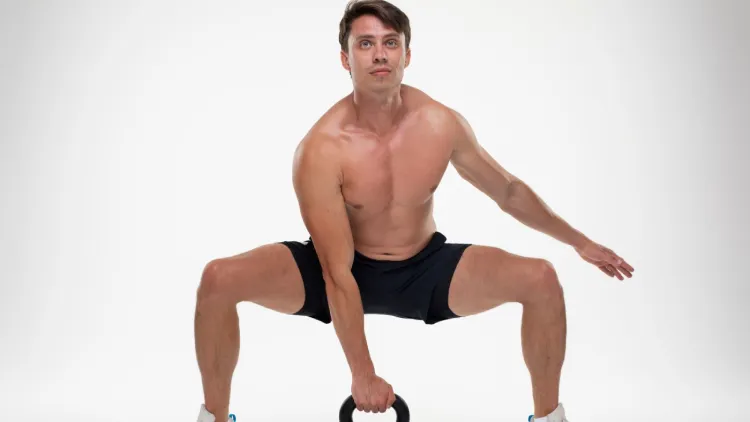
- The legs should be apart, more than shoulder-width.
- Rotate your toes outwards by approximately 30 to 45 degrees.
- Activate your back muscles and hold up your chest.
- Lean backwards with your hips and bend your knees to lower to a squat.
- Your knees should not be bent out of alignment with your toes as you go down.
- Bend down till your thighs are straight along the floor or as far as you can bend.
- Use your heels to press off in order to start all over again.
To enhancers who want to gain more glutes and inner thigh contraction, a rest at the bottom of the squat or a pulse can serve to add intensity to the exercise. Proper form is important, particularly in the event of added weight.
Worked Muscles in the Sumo Squat
The sumo squat is a compound exercise utilising several major muscle groups, which makes it very effective in lower body strength and building:
- Glutes ( Gluteus Maximus and Medius): Deep hip involvement provides the greatest benefit to this area.
- Inner Thighs (Adductors): These muscles are more focused by the wide stance in comparison with the normal squats.
- Quadriceps: Change songs; the knees assist in lifting.
- Hamstrings: They help in extending the hips and provide stability in general.
- Hip Flexors and Core: Refiners: Stabilisation of the action and posture.
The combination of the two reasons why sumo squats are effective in individuals who want leaner and stronger legs, and an overall workout of the lower body.
Benefits of the Sumo Squat
Strengthens Inner Thighs
The outer position of a sumo squat targets the muscles on the inner part of the thighs, which are useful in maintaining stability and leg power. This renders it suitable, especially in tightening and shaping the thighs of females.
Builds Glute Strength
In most instances, these squats work the glute muscles better than the usual squats, which adds to a more rounded and firm buttock. Although the hip thrust is viewed as the optimal exercise method of glute development, these squats can be added to the exercise regimen to improve the general development of the glutes.
Enhances Hip Mobility
The broad position extends the hips to become more flexible and mobile in the long run. It comes in handy in day-to-day activities, sports and injury prevention.
Enhances Stability and Balance of the Lower Body.
These squats improve coordination, leg stability, and strength since they involve several stabilising muscles.
Multifunctional and Easy to Use
These squats can be done with body weight or with resistance added to them to accommodate the novices, yet remain a serious challenge to the more experienced lifters.
Helps in Fat Burning and Shaping.
Although these squats are not going to help much in getting rid of belly fat, they will help increase the number of calories burned and build lean muscle mass, which will help improve the general body composition, along with a proper diet.
Sumo Squat Variations
The introduction of diversity to sumo squats challenges the muscles and enhances improved values.
1. Pdb or Ket Sumo Squat
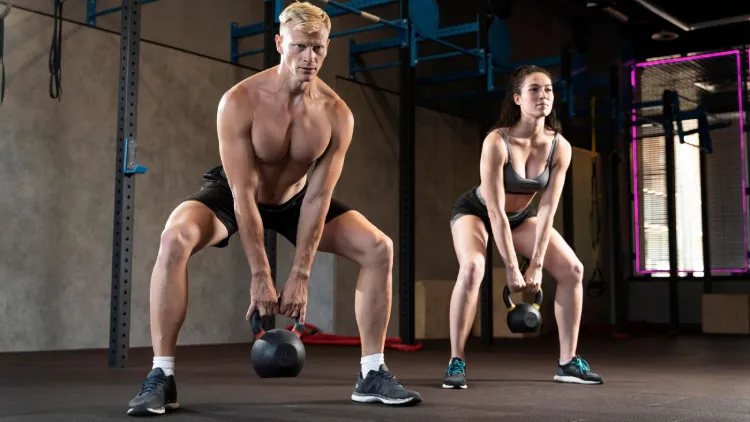
To increase muscle engagement, reverse place a weight ahead of you. This variation increases glute, thigh and core activity.
2. Sumo Squat Pulse
Squat down and do little pulses so that there is tension on the inner thighs and glutes to achieve maximum burning.
3. Jump Sumo Squat
A plyometric form that enhances strength, cardio endurance and explosive strength.
4. Barbell Sumo Squat
It is most suitable for advanced lifters, which makes it possible to work with progressive overload and reach peak strength in the lower body.
5. Sumo Squat to Calf Raise
Once you get out of the squat, do a calf raise with the lower legs in use and a challenge of balance.
Sumo Squat and Traditional Squat
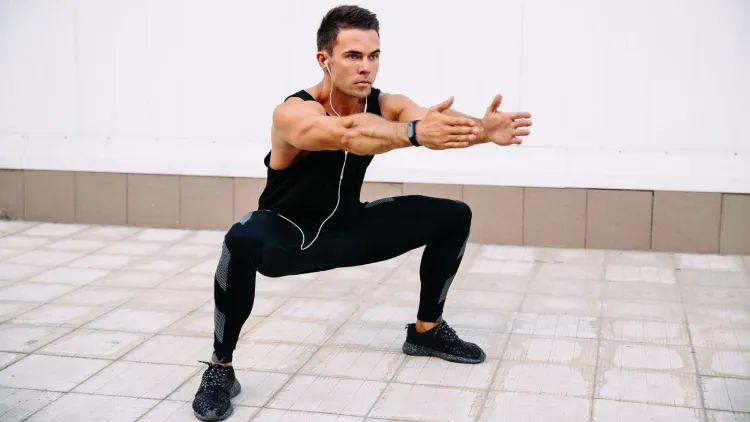
Although both of the exercises address the same muscles, there are attractive differences:
- Foot Position: These squats have a broader posture and are more focused on the inner thighs, whereas regular squats are positioned at shoulder-width distance.
- Hip Activation: These squats use more glutes and hips, and therefore, they are better at shaping the glutes.
- Quadriceps Involvement: Classic squats have a tendency to overload the quads a little bit.
- Body Shaping: The sumo squats prove to be better in creating the widening of the hip proximity as well as toning the inner thigh.
In the case of a larger, rounder glute, the combination of these squats and hip thrusts or Romanian deadlifts (RDL) can be regarded as the most effective one. Gates (2010) notes that RDLs are often better at engaging the glutes and hamstrings than stiff-leg deadlifts (SDL).
Common Mistakes to Avoid
- Knees Caving Inward: Stanley: Keep your toes and knees together.
- Bending Forward: There is a need to have the chest erect so as to avoid back pain.
- Too Wide Stance: This stance will fit only your hip range.
- Lifting of Toes: This helps to increase stability by holding heels down.
- Overtraining: Excessive reps, such as 100 sumo squats in one day, can cause fatigue or strain on the knee, but are not necessarily helpful.
Sumo Squats Performance and Body Transformations.
- Glute Growth: Sumo squats are good at attacking the glutes. Along with some other exercises, such as hip thrusts, glute bridges, and RDLs, they may be used to round and lift the buttocks.
- Inner Thigh Development: The large pose directly works adductors, assisting in making inner thighs slim and toned, at least in women.
- Hip and Leg Shaping: Doing these squats monthly may cause the hips to look broader through the build-up of the glutes and the outer thighs, which makes them look more hourglass.
- Body Fat Reduction: Though they do not directly burn belly fat, these squats make more energy and build muscle mass, which is an indirect way of burning fat.
- Overall Lower-Body Strength: These squats would enhance your functional strength, mobility, and endurance as an added benefit to other exercises such as deadlifts and lunges.
Sumo Squats in Comparison to Other Exercises.
- Hip Thrusts versus Sumo Squats: Hip thrusts are more intense with regard to the glutes, but sumo squats involve using more muscles of the lower body and enhance mobility.
- RDL or SDL: Unlike stiff-leg deadlifts (SDLs) that isolate hamstrings, RDLs achieve glute and hamstring activation.
- King of Exercises: Simple squats, and these squats are referred to as the king of all exercises due to the overall benefits they have on the body and their ability to be used as a strength and shape tool.
- Walking Replacement: Although walking is a cardiovascular activity, these squats are much better for lower-body muscle development and toning.
Safety and Considerations
In Pregnancy, these squats are safe in an appropriate posture and under the medical authority.
Moderate weights should be emphasised, and heavy weights should be avoided.
- Frequency: There is no need to have high-rep sessions daily; the number of 2 to 3 times weekly is effective in terms of growth and strength.
- Excessive Ego: To avoid strain on the knee or hip, competency in the squat should be practised severely. It needs recovery and proper programming.
Tips for Maximising Results
- Progressive Overload: Build up over time, either in weight or in reps.
- Functional Form: The Functional Form technique is more important than load to prevent injury.
- Benchmark These with Other Exercises: Hip thrusts, lunges, and RDLs can be combined with them to create an overall lower-body exercise.
- Consistency: It takes about 2-4 weeks of regular training after which results are usually evident.
- Well-Rounded Routine: Do not go without upper body/core exercising to keep your body in balance.
Final Thoughts
These squats are a necessary activity when a person seeks to make their lower body stronger, shaped, and toned. It works solely on the glutes, inner thighs, quads, hamstrings, and stabilising muscles, which makes it very functional in muscle building, fat burning, and also general functional strength.
Although no exercise will cover it all, a combination of these squats and hip thrusts, RDLs, and other compound exercises will guarantee all-around development of the lower body. In order to achieve the desired fitness objective, whether building a bigger, rounder butt, more flexible inner thighs, or becoming stronger, sumo squats can assist you in your pursuit of fitness objectives safely and effectively.
Frequently Asked Questions
1. Do sumo squats make the butt bigger?
Yes. The glute development of sumo squats is enhanced since the hips and other muscles of the glutes are more involved compared to the common squats. They should be used together with hip thrusts, glute bridges and Romanian deadlifts in order to achieve optimal results.
2. Will sumo squats make the inner thighs thin and harden the core?
Yes. The hairy broad position and a bent-out toes are effective at the inner thighs and are useful in slimming and strengthening the thighs is really useful to women who want to slim up on the inner thighs.
3. What are the results of sumo squats are results?
The regular practical sessions of the squats 2-3 times a week, with gradual and consistent development of the program-sumo, normally bear the results of the program in 2-4 weeks. Add them to lunges, hip thrusts, and RDLs to achieve even higher results.
4. Can you exercise sumo squats daily?
The fatigue or strain on the joints may arise as a result of daily squats in sumo. The high reps are good at enhancing endurance; however, 2 to 3 times a week with rest are safer and more appropriate for bodybuilding.