
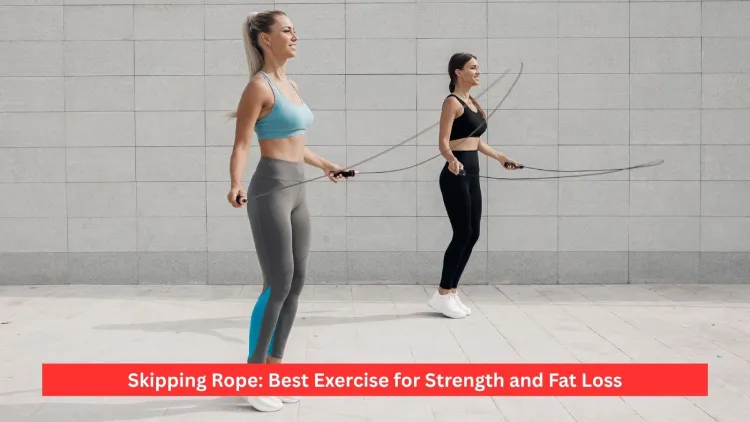

One of the most effective exercises is the process of skipping rope. It is healthier to the heart, burns calories, builds muscle, and is better at coordination. It is also effective for body fat reduction as well as a stamina boost, and weight loss in the long term. Skipping rope, even 10 minutes of it, can produce similar results as longer low-intensity exercises. Knowing how and doing it with style, rest, and consistency can successfully turn your body around.
- What is Skipping Rope Exercise?
- Advantages of Skipping Rope Exercise
- Muscles Worked during Skipping Rope
- How to Do Skipping Rope Correctly
- Types of Skipping Rope Exercises
- Jumping Rope Workout Plan
- Skipping Rope for Weight Loss
- Common Mistakes to Avoid
- Safety Tips for Skipping Rope Exercise
- What Is the Recommended Frequency of Skipping Rope?
- Skipping Rope vs Other Cardio Exercises
- Who Should Avoid Skipping Rope?
- Final Thoughts
- Frequently Asked Questions
What is Skipping Rope Exercise?
Skipping rope is a high-intensity exercise and involves rhythm jumping, and involves its user jumps over a rope that passes beneath the feet and over the head. It has found great application in fitness programmes due to the fact that it incorporates cardio, coordination, and muscular endurance in one movement.
Accessing the whole body, skipping rope is not like most exercises: they concentrate on a particular muscle or part of it. Your calves up to your shoulders, your movements help to keep time and to keep straight. This explains why athletes, as well as fitness and beginner students, tend to use the rope.
The simplicity of skipping rope is one of its greatest strengths of skipping rope. There is no need to have costly equipment and join a gym. All that is needed is a rope and a small space. This simplicity notwithstanding, skipping rope has similar results when compared to sophisticated training regimes.

Advantages of Skipping Rope Exercise
Skipping rope has a great variety of advantages, which are not limited to just cardio.
1. Improves Cardiovascular Health
Leaping alone raises your heartbeat, after which your heart and lungs become efficient. Frequent training will boost your heart and increase stamina.
2. Burns Calories Quickly
The most asked question is whether skipping rope is useful in the process of fat loss. The answer is yes. Skipping rope also burns a lot of calories in a short period; therefore, it is useful in decreasing the overall body fats, which include the ugly ones like the belly.
Although the process of losing fat does not concentrate in one particular area, a steady, regular skipping rope exercise translates to a calorie deficit, which will slowly burn belly fat in the long term.
3. Improves Co-ordination and Balance
This takes great timing in skipping a rope, the time between your feet and hands. This enhances coordination, balance, and rhythm that are critical to overall athletic output.
4. Strengthens Muscles
Jumping rope involves several muscle groups; they are the calves, thighs, core, and shoulders. In the long run, this results in well-built and tough muscles.
5. Enhances Agility and Speed
Using a skipping rope, athletes improve their reaction and swift movements. It improves agility that is applied in sports and day-to-day life.
6. Favors Weight Loss Objectives
Most individuals wish to lose 5kg or more through exercise. This objective can be achieved through skipping rope in conjunction with proper nutrition and regularity. Though it may be cumbersome to work at getting rid of so much weight within a few days, skipping rope would assist in burning fat faster when taken on a regular basis.
7. Efficient Fat-Burning Exercise
When compared to walking, skipping rope is more vigorous and efficient in terms of calories burnt in a lesser amount of time. As an example, it might be possible to use a lot of time on 10 000 similar steps compared to an athletic session with a skipping rope.
Muscles Worked during Skipping Rope
Skipping is a heavy body exercise that engages a variety of large muscles.
Lower Body
The major muscles that are utilized during skipping rope are the calves. They cushion and provide the impetus to jump. Quadriceps and hamstrings are also useful in stabilizing your legs.
Core
To keep your posture and balance, your core muscles are continuously used. This assists in firming up the abdomen and lower back with time.
Upper Body
The movement of the rope is governed by your shoulders, your arms, and your wrists. The results of this constant movement enhance endurance and coordination of the upper body.
Since skipping rope involves a great number of muscles simultaneously, it leads to a general body workout. With regular training, a lot of people can see a change in their legs, core, and arms.
How to Do Skipping Rope Correctly
The right technique is important in order to be safe and effective.
Step-by-Step Guide
- Select the Appropriate Rope Length: The rope is to be of the appropriate size that would allow easy movement and minimize tension.
- Maintain Proper Posture: Back straight, shoulders at ease, head forward. Proper posture eliminates unnecessarily stressful positions on the body.
- Hold Your Wrists, Not Arms: The rope should be rotated in your wrists. The mobility of the arm could lead to fatigue and inefficiency in case of excessive movement of the arm.
- Jump Lightly: Remain on toes and maintain low jumps. This has the least possible impact, as well as protects your joints.
- Maintain a Rhythm: Consistency is key. Begin slowly, then increase gradually each time you get comfortable.
When one knows how to skip properly, the outcomes are higher, and the chances of injury are lower.
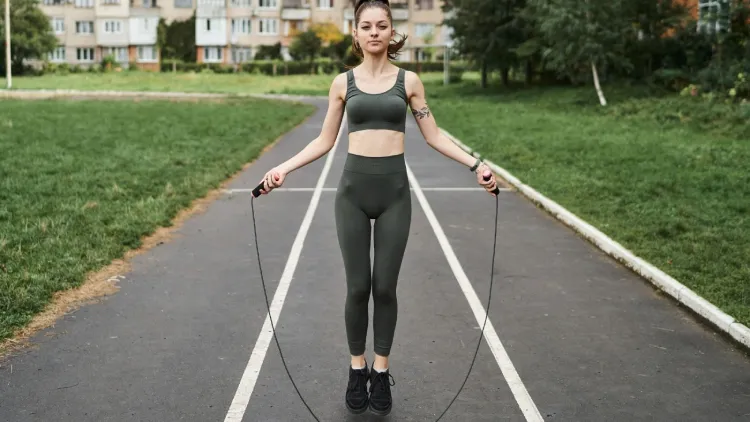
Types of Skipping Rope Exercises
To make your exercises interesting and effective, it is possible to add various variations to skipping rope.
- Basic Jump: This is what is at the basis of all skipping rope exercises. It contributes to stability and perseverance.
- Alternate Foot Step: This motion resembles jogging and lessens the stress on the feet at the same time.
- High Knees: A more severe one that beats the heart faster and makes the lower body stronger.
- Double Unders: The next step is an advanced step; the rope goes over your feet twice in a single jump.
- Side-to-Side Jumps: Enhances agility and coordination with lateral movement.
- Criss-Cross: Makes it more difficult and involves coordination of the upper body.
Such differences help to make the act of skipping rope more vibrant and assist in achieving various fitness objectives.
Jumping Rope Workout Plan
An appropriate skipping rope exercise program can help you build stamina, improve coordination, and gradually burn more fat. It is important to go one step at a time without overtraining.
Beginner Routine (10–15 Minutes)
Begin with brief sessions to become familiar with skipping rope. Pay attention to rhythm and good form.
- Skip for 20–30 seconds
- Rest for 30 seconds
- Repeat for 8–10 rounds
Skipping 100 times a day can be used even to improve coordination and basic level of fitness. The better you become, the fewer rest periods and the more time you skip.
Intermediate Routine (20–25 Minutes)
This is the point where you should intensify and add variety. You wish to have better stamina and calorie burning.
- Basic jump – 1 minute
- Alternate foot – 1 minute
- High knees – 30 seconds
- Rest – 30 seconds
- Repeat for 6–8 rounds
This level can be used to enhance endurance, coordination, and aid in the gradual burning of fat when it is performed regularly.
Advanced Routine (30 Minutes)
Intermediate exercises concentrate on performance and a high level of intensity. These lessons are more calorie-burning and enhance general fitness.
- Basic jump – 1 minute
- High knees – 1 minute
- Double unders – 30 seconds
- Rest – 30 seconds
- Repeat for 8–10 rounds
Such a practice may result in quicker outcomes, such as increased endurance, an increase in muscle definition, and observable physical changes.
Skipping Rope for Weight Loss
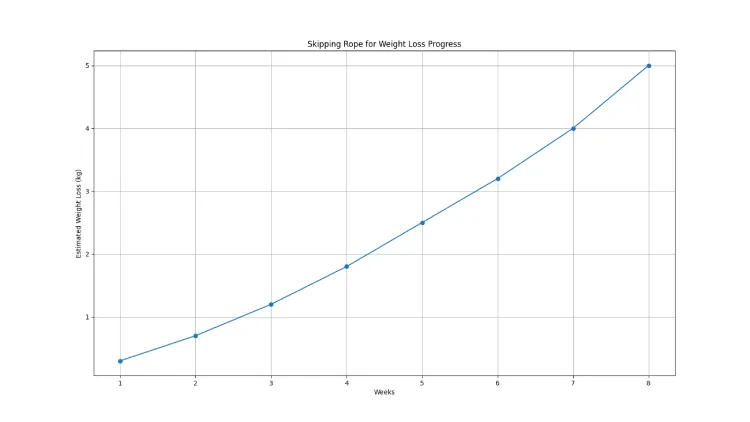
Skipping rope is the best for weight loss since it has a great potential for burning calories.
To lose 1 kg of body weight, you will have to develop a calorie deficit of calories in the long-run. Jumping rope will speed up this process because it burns calories fast. The number of skips depends on the weight and intensity of the body, as well as diet.
To lose 10 kg or more in the long run with proper diet and lifestyle, the regular use of a skipping rope can help in the process of weight loss. Nevertheless, weight loss is a process that requires patience and consistency to be sustainable.
Another benefit of skipping rope is the enhanced metabolism, which allows your body to burn additional calories at rest.
Common Mistakes to Avoid
- Excessive jumping enhances fatigue and stress of the joints.
- The hands should be used to reduce efficiency with arms.
- Not warming up before the exercise heightens the risk of injury.
- Bad posture results in discomfort.
- Without rest during overtraining, fatigue may result.
These errors can be avoided to achieve success in skipping rope in the long term.
Safety Tips for Skipping Rope Exercise
- Wear supportive shoes
- Work on an appropriate surface.
- Start gradually
- Stay hydrated
- Listen to your body
However, the side effects rarely include joint or fatigue as long as the training is properly selected and does not involve using the rope improperly; otherwise, the side effects of skipping are inevitable.
What Is the Recommended Frequency of Skipping Rope?
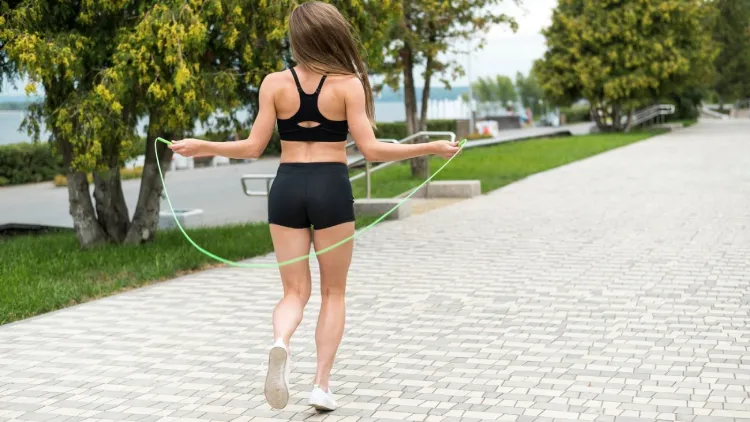
The frequency at which best to skip rope is determined by fitness and goal, as well as the strength of recovery needed. Essentialists are also advised to start slow, and experienced ones can gradually progress with frequency and intensity.
To start with, 3-4 lessons per week suffice to develop the ability to coordinate and simple endurance. This will enable your muscles and their joints to adjust without involving too much strain. The frequency of the sessions can be increased to 4–6 sessions a week after you feel more energetic.
Individuals attempt to skip 30 days and feel a definite change in stamina, weight, and tone of their bodies. Although daily practice may prove to be effective, such as losing body fat and conditioning, one should remember to plan on the light days or brief sessions to prevent overuse injuries.
Even twice a week, jumping rope can be advantageous, especially to an amateur jumper or roper who does it with some other physical activity. Nevertheless, more frequent training will tend to produce quick improvements in stamina, energy expenditure, and general fitness. Consistency is the key, not the intensity.
Skipping Rope vs Other Cardio Exercises
Skipping rope can be regarded among high-intensity cardio workouts that bring fast results within a limited period of time. It is more energy-consuming and utilizes more muscles at any one time as compared to other activities, such as walking.
As an example, a brief skipping rope exercise will burn as many calories as a significantly longer walk. This contributes to making it a time-saving option among individuals who prefer to gain fitness or lose weight.
Walking, however, is less demanding and less weight-bearing on the joints, thus it is good enough for individuals who are trying to start the exercise or those who are reprimand in an injury. It does not, however, offer the same amount of cardiovascular power as skipping rope.
Compared to walking, skipping rope is typically more effective in fat loss and conditioning, and walking is more helpful in terms of keeping activity levels and saving on the recovery process.
Who Should Avoid Skipping Rope?
The skipping rope is a really efficient fitness though not everyone can use it. Individuals who have certain conditions must be careful or consult a professional beforehand.
Individuals who have problems in their joints and knees or ankles may not feel good because of the repetitive impact. Likewise, severely obese people may be too uncomfortable with skipping rope at the beginning of work, so low-impact activities may be suitable.
Individuals who have fallen and suffered injuries or those with chronic pain conditions are also not advised to do high-intensity skipping rope training until they are healed.
It is, in such instances, better to seek the advice of a fitness professional or healthcare provider. They are able to advise on less dangerous options or changes on how to be active without causing harm to oneself.

Final Thoughts
One of the best exercises to enhance overall fitness is the use of the rope. It improves the tone of muscles, increases stamina, and helps in losing fat.
Through practice, you can shape your body, enhance coordination, and give yourself confidence through practicing skipping rope. You may be trying to lose some weight, run long distances, or stay fit; either way, skipping rope is an effective and strong option.
Frequently Asked Questions
1. What is the length of time I must jump rope to get results?
The majority of individuals begin to see the results in 2 to 4 weeks of regular skipping rope exercises.
2. What will become of me should I jump rope each day?
Skipping rope exercises are good exercises to promote stamina, burn calories, and increase muscle tone, but take time to rest and relax.
3. What is the first body part to lose fat?
Whether a person loses fat depends on the individual, but skipping rope is effective in the long run for losing body fat.
4. What are the main benefits of skipping rope?
Jumping helps in better health of cardiovascular health, helps in burning calories, makes muscles stronger, and allows better coordination.