


Seated cable row is an excellent back workout that builds the strength of your lats, rhomboids, traps and arms. It strengthens posture, increases the strength of pulling and builds a stronger and more defined back. It can also aid in the loss of fat, boost endurance, as well as bring about fitness with the correct form, grip, and intensity. Regardless of what your strength, beauty, or overall health goals are, the seated cable row is one of the most adaptable exercises for your upper body.
- What Is a Seated Cable Row?
- Muscles used in the seated cable Row
- Seated Cable Row: How to do it right
- Common Mistakes to Avoid
- Seated Cable Row Benefits
- What is the Effectiveness of the Seated Cable Row?
- Gripping Choices and Their Effect
- Comparisons and Alternatives
- Rowing and Fat Loss
- How Can You get More out of Your Seated Cable Row?
- Conclusion
- Frequently Asked Questions
What Is a Seated Cable Row?
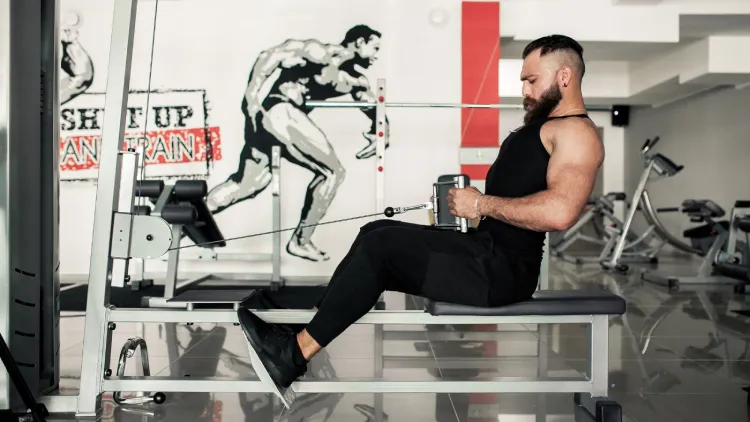
Sitting cable row is a compound strength training as it aims at strengthening the back muscles, especially the middle and upper parts. It entails the act of sitting on a cable machine, holding a handle, and pulling the weight slowly in the direction of the torso. This is the motion that resembles the process of pulling rods in water, which is why this kind of movement is commonly associated with the workouts in a rowing style.
As compared to the free-weight rows, the cable system also offers constant tension applied to the whole movement and your muscles are engaged throughout the movement. This constant resistance assists in building not only the size but also the endurance of muscles, besides maintaining stability and good posture. It is popular among sportsmen, bodybuilders, and other fitness enthusiasts who would prefer to gain strength and become more symmetrical as well as minimise the chances of being stricken by a back injury.

Muscles used in the seated cable Row
The cable row in the sitting position mostly works your latissimus dorsi (lats), the broad muscles which make your back so wide. However, it also triggers several other muscles:
- Rhomboids: These are the muscles that draw the shoulder blades back to make the posture and shoulders look better.
- Trapezius: Aids in the raising of the shoulders and aids in the stabilisation of the upper back.
- Posterior deltoids: Give the shoulder motion as well as provide back shoulder power.
- Biceps brachii: Helps in the pulling part of flexion of the elbow.
- Erector spinae: Use your spine in a neutral position in the back.
- Forearms and grip muscles: Train to grip firmly to the handle when doing the exercise.
These muscles work together in order to come up with a strong pulling movement that makes the seated cable row an excellent exercise to develop the whole back and the strength of the arms.
Seated Cable Row: How to do it right
The seated cable row is an important exercise that requires the correct form of the exercise in order to achieve the best results and avoid harm. Here’s how to do it correctly:
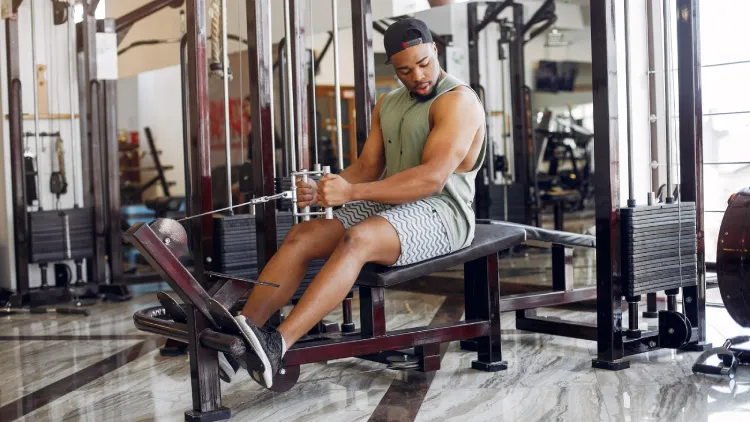
- Position: Sit on the machine with the feet on the platform with a slight bend in the knees. Select a close-grip V-handle or wide-grip bar depending on your objective.
- Grip and Posture: With both hands, you should reinforce your grip on the handle and keep your back straight and use your core muscles. Avoid rounding your spine.
- The Pull: Breathe out and pull the handle to your abdomen. Elbows should be held close and shoulder blades squeezed.
- Controlled Return: This is like the controlled inhalation except that you slowly return the handle to the starting position, keeping the tension throughout the movement.
- Repetition: Repetition is done in the form of 10-15 repetitions per set, based on your training objective.
The seated cable row, when performed properly, will strengthen, give definition and better overall control of the upper body.
Common Mistakes to Avoid
Although the seated cable row appears to be easy, improper posture may decrease the effectiveness of the exercise as well as risk of getting injured. Avoid these common errors:
- Rounding the Back: To avoid lower back strain, you have to be straight with your back, with your chest held up.
- Momentum: Do not swing your body or jerk the weight; make the motion steady and even.
- Failure to Retract the Shoulder: Be sure that you are squeezing your shoulder blades together, not only pulling along with your arms.
- The overextension of the Arms: Do not lean too far forward or backwards when doing the exercise.
- Too Much weight: Select a weight that is not too easy, but one that is challenging to a point.
One should always remember that the form is more important than the figure on the weight stack. Any good seated cable row with moderate weight can always beat a heavy, sloppy one.
Seated Cable Row Benefits
Before considering the numerous physical advantages that the seated cable row has in muscle development, there is a plethora of other advantages that it has to the person:
- Tones Up: Your mid back and upper back are strengthened, thereby righting your bent shoulders and encouraging proper sit up.
- Develops Well-defined, Rounded Back: It aids in building back thickness and width to make you look more athletic with a V-shaped physique.
- Increases Pulling Power: The strength acquired is transferred into the other lifts, such as pull-ups, deadlifts, and bent-over rows.
- Aids in Fat Loss: Although the seated cable row does not constitute a cardio exercise on its own, it helps in building mass and consequently aids in improving metabolism.
- Strengthens Cardiovascular Endurance: Rowing will strengthen cardiovascular endurance and stamina when it is done at a moderate level and conducted over extended periods of time.
- Lessens Risk of Injury: The strengthening of the stabiliser muscles surrounding the spine and shoulders prevents any imbalance and injuries.
Routine exercise, such as the seated cable row, would be a significant addition when it comes to the appearance of the back and its performance.

What is the Effectiveness of the Seated Cable Row?
One of the best exercises for back building is the seated cable row since it is a variation that targets more than one muscle at a time. It develops the strength and size, as well as enhances posture and symmetry. It is prescribed by many professional trainers as an introductory type of movement to people who want to improve the strength of the upper body and the tone of the muscles.
The seated cable row has an advantage over other back exercises because, in comparison, it ensures a controlled resistance that enables you to focus on the back muscles more effectively and eliminates the possibility of straining your back. It is also useful to those with back problems who desire a less stressful version of free-weight rows.
Gripping Choices and Their Effect
The grip is a significant part of which muscles the seated cable row is:
- Close Grip (V-handle): This is more focused on the middle back and lats.
- Wide Grip (Bar Attachment): Both the upper back and rear delts are better involved.
- Underhand Grip: The biceps are used to a greater extent, and the variation of contraction is stronger.
- Neutral Grip: Tension is evenly distributed on the back and on the arms, thus minimising the strain on wrists.
Grip experimentation allows you to work various muscle fibres and makes your training exciting.
Comparisons and Alternatives
On the one hand, the seated cable row is great, but on the other hand, other types of rows may be used to supplement it or in place:
- Barbell Row: This is excellent at adding strength and bulk to the body.
- T-Bar Row: Strengthens the mid-back.
- Dumbbell Row: Strengthens the muscles and the body on one side.
- Lat Pulldown: It is more concerned with vertical pulling and lats.
- Inverted Row: Body-weight-based exercise that builds core strength.
What is meant is that any of these exercises, though they can be included in or swapped with any routine, are capable of achieving optimal growth. The seated cable row is, however, the most friendly and the most controlled.
Rowing and Fat Loss
Although sitting cable row majorly builds muscle, fat loss can also be supported by a rowing machine for 20 to 30 minutes and moderate intensity. Rowing is a workout that involves working the large muscle groups and increases heart rate, and therefore, is a good workout for burning calories. Rowing alone will not help to pinch off belly fat, but when paired with a clean diet and regular exercise will cause a total loss of fat, including the midsection.
A 20-minute rowing exercise is a good place to begin with regard to fat loss. You would require approximately 30 minutes of moderate rowing to cover the number of calories burned in 10,000 steps of walking. When you want to be shredded, a combination of resistance training, rowing, and correct nutrition would provide the most optimal results.
How Can You get More out of Your Seated Cable Row?
- Light exercise before a workout so that your spine and shoulders loosen.
- Keep motions even — do not use jerky motions.
- Concentrate on flexing back muscles at the apex of the pull.
- When doing a complete back workout, combine seated cable rows using deadlifts, pull-ups, and face pulls.
- Apply progressive overload – continue to increase resistance slowly in order to continue gaining strength.
- Breathe and hold steady throughout the sets.
- Include rest days in order to permit muscle rest and development.
The seated cable row will make you have a stronger, wider and more defined back with the proper consistency over time.

Conclusion
The seated cable row is among the most inclusive exercises in terms of back building, strength, as well as enhancement of posture. It is so diverse that it can be incorporated in most workout programs regardless of what the desired outcome is: building muscle mass or burning fat, or just making yourself a better athlete. With the correct form as a mastery and playing with various grips and consistency, you are in a position to discover the full potential of this potent workout. The seated cable row is invaluable to anyone serious about developing an all-around built back.
Frequently Asked Questions
1. What is the number of seated cable rows that one should perform?
Shoot for 3-4 sets of 10-15 reps, depending on your objective – fewer reps to become stronger, more reps to become more enduring.
2. Is it possible to get a larger back with seated cable rows?
Yes, with the use of your lats, traps or rhomboids, this exercise can have a thicker and more muscular back.
3. Which exercises would be substitutable when it comes to a seated cable row?
T-bar, dumbbell, and barbell rows are good alternatives that exercise the same body muscles.
4. How many minutes do I row to lose fat?
It is strongly recommended to row for 25-30 minutes of moderate intensity, 4 times a week, with a balanced diet, to optimally burn fat.