


The use of a sauna is also common in fitness programs, as it aids muscle recovery and relaxation. The primary sauna benefits are better circulation, a decrease in soreness, an increase in flexibility and training uniformity. Taking between 10-20 minutes in the sauna that is well heated post exercises aids in making the body recuperate more quickly. Although the weight loss is temporary as one sweats, the primary beneficial effect of the sauna sessions is to assist in recovery, but not fat burning. Maintenance of fitness coinciding with safe and efficient use can only be achieved by being hydrated and moderate in the sessions.
- What do Sauna and exercise training mean?
- The interaction of Sauna with Exercise Physiology
- Sauna Benefits on Exercise-induced muscle recovery
- Sauna Benefits on Exercise Performance
- Sauna Benefits of Flexibility and Mobility
- Sauna Benefits on Strength Training
- Sauna Benefits on Post-workout Fatigue
- Sauna Benefits in exercise sweating as a means of detox
- The most appropriate time for a sauna is after physical exercises
- Suggested Sauna Workout for Exercisers
- Sauna and the Various Types of Exercise
- Safety Measures in Sauna Exercising
- Major errors athletes commit when using the sauna
- When to use a sauna as a method of exercise recovery?
- Final Thoughts
- Frequently Asked Questions
What do Sauna and exercise training mean?
A sauna is not just a relaxation room in the exercise setting; it is a form of heat-based recovery system with the aim of helping in adapting to physical training. Gyms and sporting activities have saunas since exercise is only supplemented by controlled heat exposure, which aids the body in muscle recovery and restoring energy (and enhanced fitness).
A sauna will typically be hot (between 70 °C and 100 °C in dry heat conditions or between 158°F and 212°F), and a steam room will be cooler (although with increased moisture). The optimum temperature of most exercisers is between 75 °C and 90 °C, where the sweat is well produced, and the cardiovascular system is not overtaxed.
Muscles acquire metabolic byproducts and, at the same time, can suffer microscopic stress during workouts. The heat of a sauna invigorates the flow of blood and sweat, and it accelerates the healing. That is why workouts in the sauna are frequently mentioned by athletes as part of the period of regular training instead of the sphere of relaxation activities.
Fitness settings use three commonly used types:
- Dry sauna: The heat is high, the humidity is low; it is the best one to stimulate the heart.
- Steam sauna: Moist heat; promotes breathing ease and hydration awareness.
- Infrared sauna: Low temperature, however. direct heat of the body.
Both types offer close substitutes in terms of sauna benefits when used appropriately in combination with sporting exercises.

The interaction of Sauna with Exercise Physiology
This fact was explained by knowing the ways in which heat influences the body, which is the reason why the benefits of using a sauna are closely related to performance in exercises.
When entering a sauna, the body temperature increases slowly.
The nervous system is responsive since it starts cooling me down:
- Heart rate is subject to an increase, just like in light cardio exercise.
- Vasodilation in blood vessels.
- Sweat glands are very aggressive.
- Circulation enhances within the muscles.
This reaction resembles low to medium aerobic exercising. Heart rate levels equal to brisk walking can be achieved with about 20 minutes of time in a sauna, and there exists slight cardiovascular conditioning even at rest.
Plasma volume is also increased with time as a result of heat exposure. The adaptation will assist African American athletes in combating exercise stress more effectively to enhance endurance and minimise fatigue during exercise.
The frequently used rule of 200 in sauna culture is a combination of temperature (degrees Fahrenheit) and percentage of humidity. They are to be used together in approximately the same amount, say 200, to allow for comfortable and safe exposure to heat. An example includes a 180 degrees F hot sauna that is 20 per cent humid, which aids individuals in not overstraining themselves.
Sauna Benefits on Exercise-induced muscle recovery
1. Reduces Muscle Soreness
Post-exercise soreness is considered one of the most acknowledged sauna effects. Several vigorous exercises bring about the destruction of microscopic muscles, resulting in the stiffness referred to as delayed onset muscle soreness.
Heat boosts blood flow to diseased tissues, carrying oxygen and nutrients to repair the tissue. Warming of muscles results in reduced tension, and this means that the fibres will be able to heal more quickly.
Athletes often notice:
- Less next-day soreness
- Shortened intervals between training sessions.
- Improved movement comfort
Frequent use of the sauna will also preserve the consistency of the workouts, as recovery will be shortened.
2. Improves Blood Circulation
Circulation is of vital importance with respect to exercise adaptation. Blood supply to the skin and muscles is severe during sauna.
This enhanced circulation:
- Eliminates substances of metabolism that result from exercise.
- Speeds tissue repair
- Enhances the movement of nutrients.
Healthier blood pressure reactivity is also associated with improved driving. Exposure to heat stimulates blood vessels to dilate and helps the blood gather efficiency in the long run.
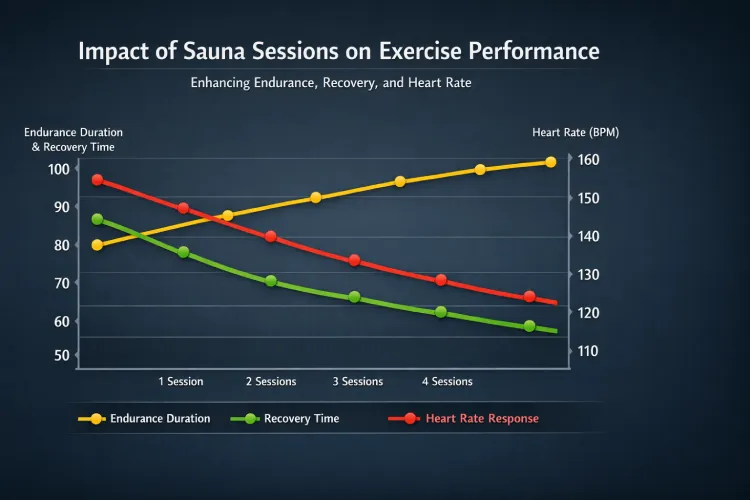
Sauna Benefits on Exercise Performance
3. Increases Endurance Capacity
Regular use of a sauna may enhance the performance of endurance. Heat adaptation conditions the body to work efficiently in the body in terms of temperature regulation.
In the long run, exercisers can undergo:
- Better stamina
- Delayed fatigue
- Improved oxygen delivery
The endurance athletes also turn into using the sauna sessions following the cardio training sessions to imitate heat acclimation, thus improving the performance during extended training.
4. Promotes Cardiovascular Training
Even though a sauna is not substitutionary to exercise, it enhances cardiovascular reactions.
During sessions, the pumping of the heart might increase to 120-150 beats per minute. These low-strain conditions allow the cardiovascular system to function safely without straining the joints.
In addition to the benefits of using the sauna regularly, they include:
- Increased efficiency of circulation.
- Reduced resting heart rate with time.
- Increased recovery in extreme workouts.
Exposure to heat can also be used to control blood pressure because of increased vessel flexibility.
Sauna Benefits of Flexibility and Mobility
5. Improves Joint Mobility
The warm muscles relax better than the cold muscles. Heat in a sauna auto-diminishes the rigidity in the joint connective tissues.
As a result:
- Range of motion increases
- Movement feels smoother
- Injury risk decreases
It is common to find that athletes who do mobility exercises following the use of saunas can get significantly deeper into the stretch without going hard.
6. Promotes Stretching Exercise
Stretching right after exposure to the sauna is very effective because the tissues stretch and become more elastic.
This leads to:
- Quickened adaptation of flexibility.
- Reduced muscle tightness
- Better posture alignment
There is a strong tendency to use the combination of heat exposure and mobility exercises that are often applied together by yoga practitioners who find them to be the most effective.
Sauna Benefits on Strength Training
7. Promotes Muscle Relaxation
Exercise, when a person is lifting weights, results in muscular strains and nervousness. The heat in a sauna promotes relaxation by relaxing muscle fibres.
This will allow lifters to get back to training at a faster rate and at the same level of performance.
A lot of athletes have been saying that they get better sleep after doing sessions in saunas, which also leads to better recovery and muscle development.
8. Stimulates Growth Hormone Response
Temporary hikes in growth hormone discharges may be aided by short sessions in a sauna, which helps in healing.
Although the use of a sauna alone does not build muscles, it improves the body’s capacity to restore damaged tissues in resistance training. This, in combination with appropriate exercise, indirectly aids in strength development.
Sauna Benefits on Post-workout Fatigue
Exercise serves as a stress factor on both muscles and the nervous system. The relaxation reactions evoked by exposure to saunas make one feel less fatigued.
In twenty minutes in a sauna, one can usually get:
- Deep physical relaxation
- Reduced mental tension
- Better recovery preparedness.
Enhanced recovery enables athletes to have more regular training without getting tired.

Sauna Benefits in exercise sweating as a means of detox
One of the natural cooling processes of the body is the process of sweating. Sweating after exercises lasts in sauna sessions and is aimed at healing the fluid balance.
The process is not entirely new since the body already operates to clear through the liver and kidneys; however, sweating helps to eliminate the surplus salts and other minute waste caused by metabolism. This brings about general recovery ease.
The need to stay hydrated is also necessary since the loss of sweat may temporarily cause the loss of body weight, instead of burning fat.
The most appropriate time for a sauna is after physical exercises
Timing will determine the intensity of exposure to the sauna’s benefits regarding its training objectives.
After Exercise (Best Option)
After workouts, it is possible to use saunas, which maximise the recovery time as the muscles are already heated, and circulation is high. This is a time-saving schedule for a repair.
Before Exercise (Short Sessions Only)
Moving on to short exposure can help the muscles to be ready to move, and gradually working out long sessions in pre-workout may lead to fatigue or dehydration.
Some athletes find that morning sauna sessions give them energy, whereas evening sessions enable them to relax and sleep better. The most suitable time would be according to personal training programs.
Suggested Sauna Workout for Exercisers
When adhering to a well-planned regimen, it is possible to achieve the sauna benefits to the max and at the same time make sessions effective and safe in terms of exercise recovery. A moderate regime enables the body to unwind, recuperate and acclimatise without dehydrating or overworking it.
An effective sauna program by the majority of exercisers consists of:
- 10- 20 Minutes per session: This time is sufficient to boost circulation and enhance sweating, but not exceeding the body’s limits. Complete beginners ought to begin with 5-10 minutes and gradually add time as they get warmer.
- 2-4 sessions every week: Consistent yet moderate sessions contribute to rest between exercises. The use of the sauna daily may be safe in case of experienced usage when in hydrating condition, but rest days are beneficial to the majority of the population.
- Temperature around 80–90°C: This is thought to be effective in muscle relaxation and cardiovascular stimulation, but comfortable for exercise recovery. Reduced temperatures can be desirable to beginners.
- Cooling and hydration afterwards: Drinking water prior to and after exercises aids in the replacement of fluids lost in sweating. A quick cool-off session or a warm shower will enable the heart rate and body temperature to normalise slowly.
Being in a sauna for approximately thirty minutes can influence the loss of calories slightly since the heart rate accelerates, but the amount of energy burned is negligible in comparison with real exercise. The loss of weight following sessions is primarily due to loss of water, and not fat.
Workouts and a brief period of cooling down should be the best way to enter the sauna. As time passes, the session length can be raised slowly, thus enabling the body to adjust suitably as well as enhancing comfort and consistency in recovery.

Sauna and the Various Types of Exercise
The recovery of all kinds of workouts can be aided by the use of sauna sessions, as they assist the muscles in relaxing and enhance the proper flow of blood following physical exertion. The benefits of the sauna can slightly differ with the type of exercise that is performed, but in general, it works to make the body recuperate more effectively.
Cardio Training
The sauna is used after such activities as running, cycling, or swimming to enhance the mobility of blood in the body and unwind overworked muscles. This helps in the recovery of endurance and the mitigation of fatigue after a prolonged cardio exercise.
Strength Training
Exercise of weight lifting usually results in stiffness and soreness of muscles. The heat in the sauna room eases stiffness, soothes muscles, and shortens the amount of time between strength training.
Flexibility Training
To stretch, do yoga or any mobility exercises, it is used to prepare muscles and make tissues more flexible, via the sauna sessions. This would enhance the efficiency of stretching andther range of motion.
High-Intensity Interference Training (HIIT)
HIIT exercises are strenuous to the body. Close sauna, related to cooling down, assists in restoring the energy level, fatigue, and relaxation following intensive exercise.
All in all, the use of a sauna is an effective recovery mechanism that is beneficial in almost all forms of exercise when moderated.
Safety Measures in Sauna Exercising
To enjoy the benefits of going to saunas, it is important to:
- Consume water pre-session and post-session.
- Don’t drink before going to the sauna.
- Lie or sit down when feeling lightheaded.
- Set sessions to a safe time interval.
Some people are not supposed to take a sauna, or consult the doctor, such as those who have uncontrolled cardiac diseases, severe dehydration, or hypersensitive people.
Major errors athletes commit when using the sauna
A lot of exercisers make the use of the sauna ineffective due to bad habits:
- Staying too long
- Skipping hydration
- It is bowing down to the ground right after strenuous exercises without resting a bit.
- Anticipating weight loss rather than weight gain.
Fat does not reduce in a sauna. The weight loss that followed is mostly due to fluid loss, which is regained upon being rehydrated back to normal.
When to use a sauna as a method of exercise recovery?
Typically, sauna therapy can be beneficial to most of the active people since it aids in muscle recovery, relaxation and enhanced circulation following exercises. Sauna benefits are particularly evident among those who are engaged in habitual workouts and who desire more time to recuperate between training modes.
Use of the sauna is especially appropriate concerning:
- Gym beginners: Helps alleviate pains and stiffness that are usually experienced in the initial stages of the training program.
- Weightlifting strength athletes: The tightness of muscles goes away after the workouts and helps to recover before the intensive exercises.
- Runners and cyclists: Enhances circulation of the leg muscles and reduces fatigue following an endurance exercise.
- Yoga meditation: Provided to practitioners- improves flexibility and enables the muscles to refresh after stretching or balance-oriented exercises.
- Mobility-oriented exercisers: Enhances movement of joints and range of movement as part of recovery programs.
Frequent exercisers who exercise many times every week can also use sauna time since heat will aid the body to recover better and keep their performance intact.
But the use of a sauna cannot be applied to all people. The exposure of sauna should be avoided in pregnant people, individuals with unstable heart conditions, severe dehydration, and other individuals with difficulty in tolerating heat unless directed by a medical practitioner. This is achieved by listening to your body and using moderate sessions to recover effectively and safely.

Final Thoughts
The increased attendance of saunas and fitness circles speaks to their strong effectiveness in the recovery and support of performance. The best sauna benefits are enhanced circulation, accelerated muscle healing, increased flexibility, decreased fatigue and heightened cardiovascular conditioning.
A well-developed sauna program enables athletes to exercise more regularly, as it makes the recovery better instead of substituting exercise. It is recommended that relaxation, enhanced circulation, and body preparation be achieved by spending about 15-20 minutes in a sauna as preparation before the next training session.
The most healthy solution includes moderation, hydration, proper clothing in the form of towels or breathable clothes, and a post-exercise cool down. Taking a shower following the sauna will eliminate sweat, and this will restore comfort, whereas intense activities following the sauna should be avoided since they will stabilise the body.
Safely and regularly practised, sauna therapy creates a strong continuation of exercise itself- it helps build strength, endurance, flexibility, and long-term fitness improvements.
Frequently Asked Questions
1. What is the optimum time for exercisers to stay in a sauna to achieve the desired results?
The majority of exercisers get the advantage of 10 to 20 minutes of staying in a sauna per session. This time frame will enable the body to undergo some of the most important benefits of the saunas, like blood circulation and muscle relaxation, without the risk of excessive dehydration and exhaustion. The procedure should be taken in shorter sessions by beginners, and eventuall,y the time taken as tolerance is established.
2. Does the use of a sauna promote the recovery of a workout?
Indeed, saunas are extremely efficient in the recovery from exercise. Exposure to heat assists in relaxation of muscles, soreness, and enhancement of blood circulation that expedites post exercise recoveries. It will be easier to receive regular training by reducing fatigue and stiffness over time.
3. Does the sauna burn fat or help you lose weight?
A sauna has the effect of temporarily losing weight through sweating and loss of fluid, but does not actually burn off body fat. The benefits of the main sauna are associated with recovery, relaxation and circulation, other than calorie burning. Weight loss in a given session is normally regained through rehydration.
4. What should be the optimal temperature before, during, or after exercise?
After the exercises are the most appropriate time to take a sauna is when the body cools a bit. Sauna sessions after exercising aid in the quicker recovery of muscles and the assurance of relaxation. Preferably, the short sessions preceding exercises might warm the muscles, whereas the long sessions preceding them may lower the energy levels.