
Quads are the main muscles that ensure the extension of the knee, the strength of the legs, and the power of the lower body. They are significantly involved in walking, squatting, running, jumping, and the routine. The process of building up the quad demands compound exercises, isolation exercises, proper volume, clever recovery, and appropriate technique. This article is all about quad exercises- what are their functions, which activities activate them the most, how they develop fastest, the mistakes one makes, injury issues and the safest manner of making quads strong to be used long term and to maintain good health in the knees.
Best Quad Exercises on Best Bodyweight
The best and safest method of stimulating the quads is bodyweight training, and this is particularly done by beginners or those who have sensitivity where the knee is concerned. The controlled bodyweight actions would be great for strengthening without an undue joint load, as the quads are involved once the knee straightens.
Four muscles collaborate to extend the knee; these are known as the quads. These are the muscles that are in constant motion when one walks, climbs the stairs and gets on their feet after sitting. Such muscles are usually recommended at the beginning of training because even the simple movement may become problematic in this case.
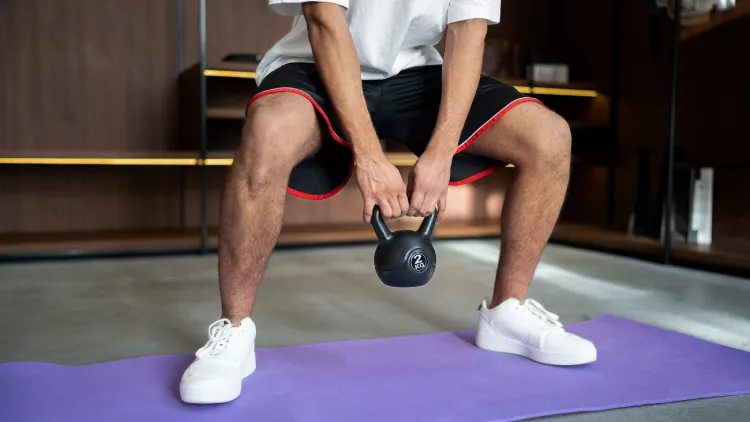
1. Bodyweight Squats
One of the best exercises to strengthen the quads is bodyweight squats, since the deep flexion and extension of the knee are possible without compromising balance and control. Of all the movement types, the squats are known to be highly active in the quadrant muscles in the event of being properly performed.
A squat conditions the quads so that they have to regulate the downward motion and propel an upward motion. A significant number of individuals consider squats as the quickest method of starting to strengthen quads safely.
Regular squatting helps:
- Improve knee stability
- Increase quad endurance
- Proper imbalances in muscle between the legs.
Since squats can be progressed, they will be practical both for beginners and for the advanced.
2. Wall Sit
Wall sits ensure an endless tension of the quads, and that is why they are superior in endurance and joint stability. Wall sits, as opposed to dynamic motions, put the quads under isometric tension, or, as in the case of wall sits, the muscle remains under tension.
This is one of the exercises most beneficial for those with poor knees, as it strengthens the quadriceps without overworking the arthroplasty. Wall sits are also regularly applicable when doing a rehabilitation program on quad weakness and knee pain.
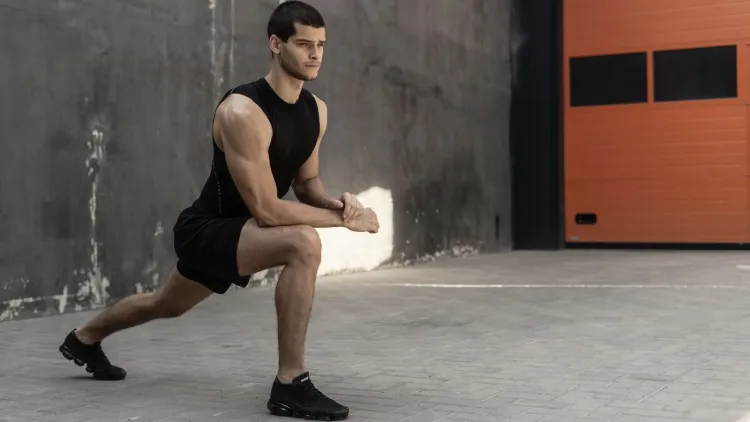
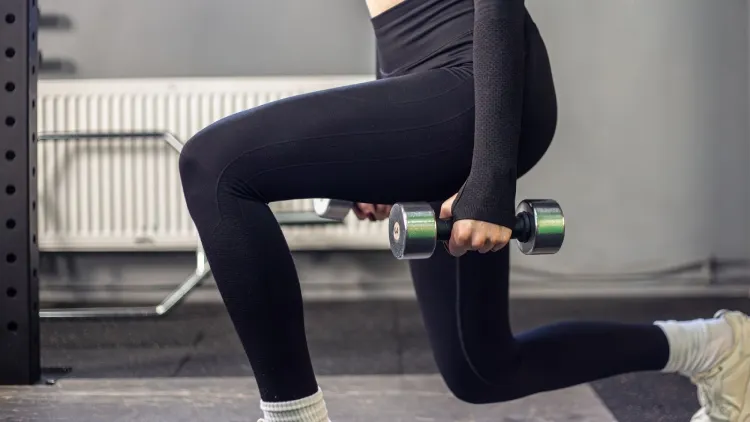
3. Forward Lunges
Forward lunges put a strain on quads, one leg after the next, and so they are efficient in detecting discrepancies in strength. One leg tends to be stronger than the other as a result of dominance, movement pattern, or injury of history.
Lunges are good exercises that bring strength to the quads by pushing the front leg to take over the body weight and exertion. They also enhance coordination and balance that prevents injury risk in the long term.
4. Step-Ups
Step-ups are very close to things that one can do daily, such as ascending steps. The quads need to pull the body upwards, ensuring the knee is stable.
Step-ups can be effectively used when:
- Receiving treatment for quad injuries.
- Bearing up quads without heavy weights.
- Solving weak quads when walking and experiencing knee pain.
Regular training, testing, and strict step pushes make those who walk around feel less pain and sore in their quadrants.
Gym-Based Quad Exercises
Progressive overload is necessary in muscle development, and this is made possible by gym-based training. Although exercises involving body weight gain a foundation, exercises involving heavy resistance are more efficient in making the quads bigger and stronger.
5. Barbell Back Squats
One of the best exercises that can be used to build up the quads is the back squat. Squats are among the best exercises for growing quads, as the quads are the muscles that extend the knees under loads.
Proper squat depth provides a high level of quad activation. Shallow squats decrease the participation of the quads and divert the strain off the muscles.
The use of back squats is also a major factor that makes the quadriceps one of the strongest muscles in the human body.
6. Front Squats
Front squats place more weight in front, and this makes the quads work more than with the back squats. They relieve stress in the lower back, and are more frequently risky to those who have back restrictions.
Due to the straight posture, front squats are amongst the exercises that have maximum quad engagement under correct performance.
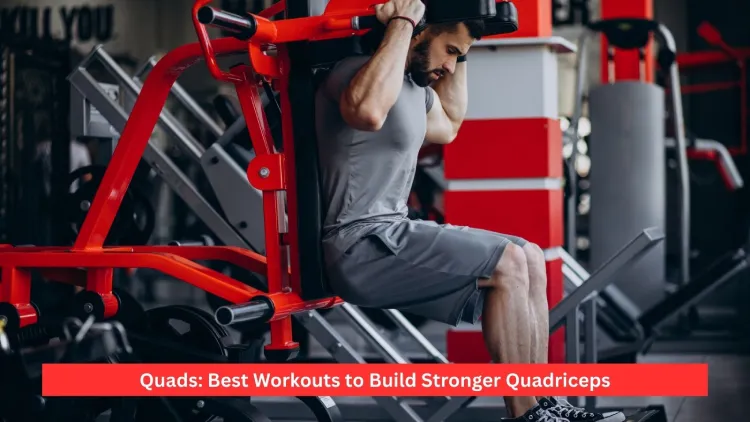
7. Leg Press
The leg press enables heavy loading as well as minimising the demands of the quads. The position of the feet plays a crucial role in the intensity of quadengagement, whereby a low position of the foot values knee extension.
This exercise is specifically of use in hypertrophy, where the amount of volume can be controlled, and excessive loading of the spine can be avoided.
8. Leg Extensions
Direct isolation is that which is obtained with leg extensions, which are the best option when completing workouts or reawakening flabby quadriceps. This movement involves pure knee extension that targets all four quadrant muscles.
Extending leg movements are also popular in order to enhance the strength of the quadriceps following an injury, as long as they are performed against light to moderate resistance.
Advanced Quad Exercises
Quad exercises are advanced and bring out mechanical tension and muscle recruitment; they are effective for lifters who are experienced.
9. Bulgarian Split Squats
The quads are seriously tested with Bulgarian split squats owing to the joint flexion and bilateral loading. They can be considered as one of the quickest methods of developing quads, not to mention that they enhance balance and stability.
10. Hack Squats
Deep knee flexion can be done using hack squats, and the quads are kept under constant tension. The movement has great effectiveness in growing the size of the thigh and also in knee tracking.
11. Sissy Squats
Sissy squats are the most basic quad isolation exercises and can be regarded as one of the hardest quad exercises. They put severe pressure on the quadriceps and little strain on the hips.
Due to the pressure involved, it has to be introduced slowly with sissy squats.
Plyometric Quad Exercises
Plyometric training puts emphasis on strength and speed. Quads are significant in the explosive motion, primarily jumping and sprinting.
12. Jump Squats
Jump squats involve strength, as well as explosiveness. They exercise the quads to generate power in a short time span, which is a way of enhancing performance in sports.
13. Box Jumps
Box jumps are done with the fast contraction of the quads to cause the lifting of the body vertically. They enhance the coordination as well and minimise ground impact forces when done correctly.
Quad Workout Routines
Having properly designed quad workout exercises is crucial towards building strength, size and stability of the quads. Quad training effectiveness requires more than just the selection of exercise but also relies on volume, intensity and recovery. The following are easy, medium, and advanced quad workouts that would step by step tighten the quads without posing a high risk of injuries and maximise the outcomes.
Beginner Quad Workout
This practice builds strong quads while also stressing the joints minimally. It is the best in case of individuals that are beginning to train, and those that have limited lower body strength and those that are comeback athletes after an injury or a long period of inactivity.
The major objective of a novice quad exercise is muscle stimulation, motor skill, and stability of the knee, instead of the heavy load. Correct technique is more emphasised at this stage rather than the augmentation of resistance. The majority of exercises rely on gravity or minimal resistance to get the quads more comfortable to use.
Workout Structure:
- Frequency of training: 2 times a week.
- Rest between sets: 60–90 seconds
- Improvement: Good movement and full range of movement.
Exercises:
- Bodyweight Squats – 3 sets × 12–15 reps
- Wall Sit – 3 sets × 30–45 seconds
- Forward Lunges – 2-3 sets 10 reps each leg.
- Step-Ups – 2–3 sets × 12 reps per leg
Such a routine is useful in giving the quads coordination with the other surrounding muscles. The discrepancies between expected and measurable changes include lessened knee pain, increased walking stamina, and improved balance. The progression to be done is gradual, such as the repetitions and light resistance are added after the right form has been understood.
Intermediate Quad Workout
In intermediate training, quantity and resistance will be enhanced, which will result in faster growth in the quad, as well as enhance muscle definition. This exercise plan can be used by people who possess a basic degree of strength and can do squats and lunges correctly.
At this rate, the quads will be in a position to bear more mechanical tension. The exercises that are performed in a combination form the main part of the exercise, and the isolation moves are introduced to enhance muscle fatigue and induce hypertrophy.
Workout Structure:
- Frequency of training: 2-3 times a week.
- Rest between sets: 90–120 seconds
- Purpose: Gradual overload and muscle exhaustion.
Exercises:
- Front Squats or Back Squats – 4 sets x 6-10 reps
- Leg Press – 3–4 sets × 10–12 reps
- Bulgarian Split Squats 3 sets of 8 10 reps per leg
- Leg Extensions – 3 sets × 12–15 reps
This routine emphasises more time under tension, which is necessary in quad development. The intermediate trainees usually report visible changes in thigh size, better knee control in athletic movements and also general leg symmetry.
Advanced Quad Workout
Progressive routines are the best in maximising mechanical tension and metabolic stress, which are the major factors of muscle hypertrophy. The exercises are suitable to use among lifters who are experienced and the witherings of the joints are good and movement control is excellent.
Quad exercises at this point are vigorous and strenuous. Advanced isolation and plyometric movements are combined with heavy compound lifts in order to empty the quads. Warm-up and recovery are important to ensure against overtraining.
Workout Structure:
- The frequency of training: 1-2 times during the week.
- Intermediate set: 23 minutes between sets with heavy lifts, 60-90 seconds with accessory work.
- Concentration: Fatigue and maximum muscle recruitment.
Exercises:
- Barbell Back Squats: 5 sets, 4-6 reps.
- Hack Squats or Heavy Leg Press: 4 sets × 8-10 reps.
- Sissy Squats or Bulgarian split squats: 3 sets × 8 reps.
- Leg Extensions (slow tempo): 3- 4 sets, 12-15 reps.
- Jump Squat or Box Jump: 3 sets, 8 to 12 reps.
Developed quad training causes massive muscle bulk, increases in muscle strength and attains explosive power. Nevertheless, she needs rest time, and these exercises ought never to be done on days in succession.
Effective Quad Training Tips
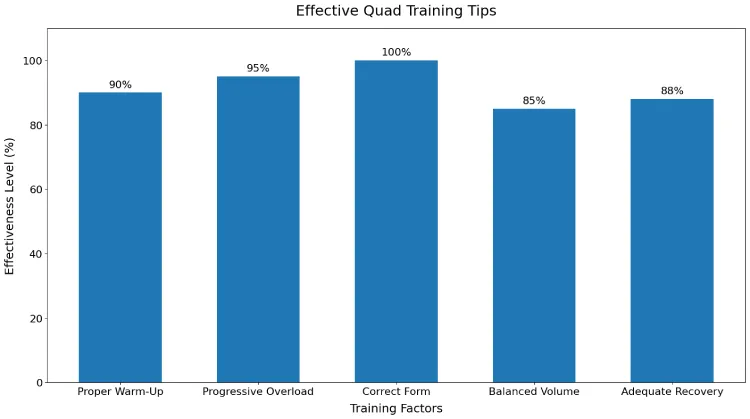
A combination of moderate and high repetitions is the most effective for quads. The fewer reps make one stronger, whereas the more reps one performs, the bigger and stronger his or her muscles are. The most suitable range of reps is 8-15 for the majority of people.
A combination of consistency and progressive overload with adequate rest is the quickest method of quad building progress. Quads are also relatively quick in growth as compared to smaller muscles, but overtraining may cause slower advancement.
Signs of weak quads include:
- Knee pain during walking
- Problems with standing when in the sitting position.
- Ineffective balance on single legs.
Most people do not have the safety of training their quads daily. The muscles must have a rest period, and overtraining symptoms comprise constant soreness, loss of strength, pain in the joints and exhaustion.
The quads are strengthened on account of walking, but they are not generally greatly expanded. The development of muscle needs to exceed the daily life.
The most common mistakes made in quad exercises are:
- Using excessive weight
- Poor knee alignment
- Failure to have a full range of motion.
- Ignoring recovery
To those with bad knees, quads strengthening using a controlled sitting-up as wall, step-up, and light leg extensions would enhance stability of the knee. A knee brace can be effective in the management of quad tendonitis due to decreased strain, although it cannot substitute adequate exercise.
Quad tendonitis has the quickest healing speed when load is reduced, incidence is controlled, and there is slow resurgence to action.

Final Thoughts
Quads are considered to be one of the most dominant and powerful muscles in the human body. They are critical in leg size, strength and efficiency of movement. Although the growth rate of quads indeed depends on genetics, regular training, correct choice of exercises, and intelligent recovery make the real difference.
With proper quad exercises, avoiding major errors, and recovery once more, you can have strong, healthy, and more muscular legs in the long run without damaging your knee.
Frequently Asked Questions
1. What is the optimal frequency of training quads?
Training quads 2-3 times a week with no less than 48 hours between the intense sessions should be considered to deliver the best results to most people. Novices need to begin with two sessions a week, and it can be intense, but with a lower frequency, as advanced lifters are supposed to. Quad training daily may elevate the risk of overtraining and knee pain.
2. Which exercise is the best one that works the quads?
The variations of squat exercises, in particular, front squats and deep back squats, are generally regarded as the most active in terms of their quad activation. The quads are loaded completely in every direction of movement of the knee by these movements, which makes them highly effective for building strength as well as muscle.
3. Does walking alone form strong quads?
Walking will also stimulate and exercise the quads, especially when learning or within the recovery period. There is, however, the exception that walking alone does not offer sufficient resistance to produce any considerable growth in quad size. Exercises involving resistance e,xercises like squats, lunges, leg presses, and step-ups, will be required to notice quad growth.
4. Can I train my quads when I have pain in my knee?
Quad training, however, when done correctly, can be safe and even helpful for knee pain. Wall sit, step up, and light leg extensions are some of the exercises that are monitored and can be used to strengthen the quads and enhance the stability of the knee. Do not introduce sudden load changes, poor knee positioning and impacting movement in case of pain. In case pain continues, the intensity of the training ought to be decreased.