

The neck muscles play a key role in the support of the head and its movements of the head. To avoid their pain, improve their appearance, and increase their overall physical performance, it is possible to strengthen and stretch them. This guide encompasses the best exercises that will help build and strengthen neck muscles, eliminate stiffness, and sustain long-term neck health.
- Knowing Neck Muscles and their significance
- Neck Muscle Warm-Up Exercises
- Strengthening Neck Muscles
- Advanced Techniques in Strengthening the Neck
- Neck Muscles Stretching and Flexibility.
- Relieving Neck Pain
- Typical reasons for the weak or stiff neck muscles
- Neck Muscle Development and Cosmetic Values.
- Neck Muscle tips on how to be better at improving
- Conclusion
- Frequently Asked Questions
Knowing Neck Muscles and their significance
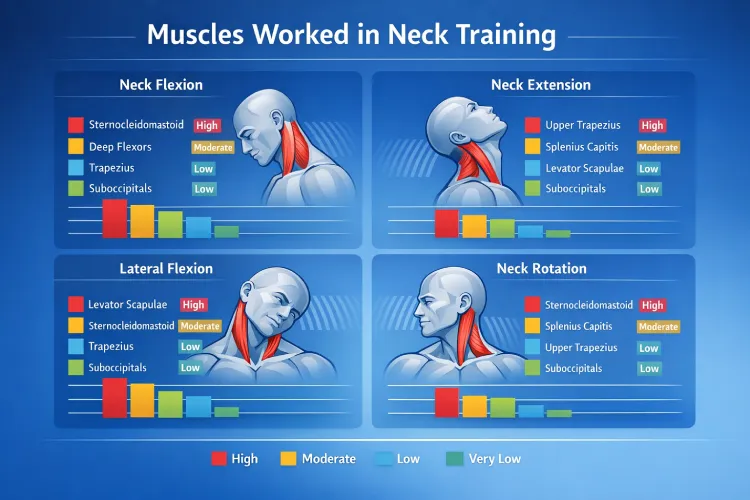
Neck muscles are a system of complex muscles that involve the movement of the head as well as its stabilisation and support. These are the sternocleidomastoid, trapezius, levator scapulae, splenius capitis, and suboccipital muscles. All these muscles assist in different forms of movement, which include rotation, flexion, and extension, as well as lateral bending. The weak neck muscles may cause pain, bad posture and lack of mobility, whereas strong neck muscles assist in the overall body strength, prevent injuries as well and may even go the extra mile of improving the sporting performance.
Neck stiffness, compromised posture, restricted mobility and frequent headache discomfort or tension tend to be signs of weak neck muscles. Strong neck muscles in children are reflected in their ability to comfortably support the head, maintain good posture with relaxed shoulders, and stay energetic during activities that involve head movement and control.
Neck Muscle Warm-Up Exercises
Warming up the neck muscles is essential to avoid limiting the neck before there is any strengthening routine.
- Neck Rolls: Turn your head clockwise and anticlockwise slowly. Do the same 10 times on each side. This relaxes the muscles in the area of the cervical spine.
- Shoulder Shrugs: Raise your shoulders and pull them towards your ears, and then release them in 2 seconds. Repeat 10–15 times. This heats the upper trapezius and scapula levator.
- Chin tucks: sitting or standing, with a slight forward movement of the chin to the chest, hold a tight squeeze for 5 seconds, then relax. Repeat 10 times. This turns on the deep neck flexors and better posture.
Strengthening Neck Muscles
Necks that have been developed well make one look good, besides preventing injuries and chronic pains. To produce substantial results, consistency and appropriate technique should be employed.
1. Isometric Neck Exercises
- Sit or stand upright.
- Put the palm of your forehead and resist the movement, but do not move your head.
- Wait about 5-10 seconds and release.
- Repeat and push at the back and the sides of your head.
This workout is aimed at the peak neck flexors and sternocleidomastoid. It is much better to use with novices and advanced trainees to build strength in the neck without the use of heavy equipment.
2. Neck Flexion with Resistance Bands
- Fix a resistance band behind your.
- Gradually press your head forward against the band resistance and then get back to the neutral position.
- Perform 2–3 sets of 10–15 repetitions.
Neck flexion exercises are good for developing anterior neck muscles and cervical spine stabilisation. They are actually helpful to guarantee skinny-necked people who would prefer to gain some weight.
3. Neck Extension
- Lie supinated (on his back) on a bench or a stability ball.
- You want to raise your head a little, maintain a straight posture and then you are to fall slowly.
- Repeat 12–15 times for 2–3 sets.
The exercises mostly work the upper trapezius, splenius capitis and cervical extensors, which are necessary in order to thicken the back of the neck. This is an exercise that boxers normally employ to counteract the impact of injuries.
4. Lateral Neck Flexion
- Turn your head towards one side, struggling with one hand.
- Remain 5 seconds on one side, followed by the other.
- Repeat 10 times per side.
This works on the lateral neck muscles, such as levator scapulae. It also assists in enhancing the stability of the neck, avoiding debilitating neck pain and promoting the overall look of the neck.
5. Scapular Retraction
- Sit or stand upright.
- Pressing of the shoulder blades for 5 seconds and release.
- Repeat 12–15 times.
Although it is more of a shoulder exercise, scapular retractions indirectly support the muscles of the neck, which enhances posture and decreases the tension in the weak neck muscles.
Advanced Techniques in Strengthening the Neck
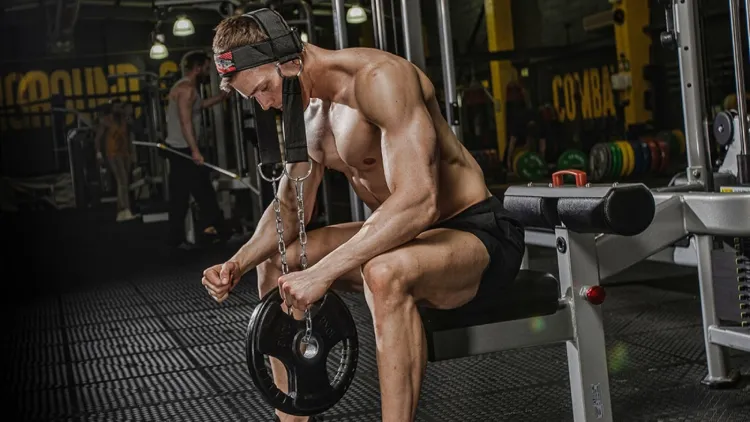
Advanced exercises are required to build the neck of those individuals eager to put on more muscle mass in the neck or obtain a powerful and boxer-style neck.
- Weighted Head Neck Exercises: To use weighted exercises, you will need a harness strapped to your head and will work on flexion, extension, and sideways movement exercises with small weights.
- Cobra Neck Exercise: Lie with your face down and slightly raise your head without touching the ground, and keep the shoulders loose. Hold between 5-10 seconds and release. This type of repetition creates endurance in deep neck muscles.
- Partner Resistance Exercises: These exercises are a good method to exercise the neck muscles in a dynamic and safe way by pushing against the hands of a partner in various directions.
Some of the players, such as Mike Tyson and other professional boxers of the past, care a lot about training their neck so that they do not get any injury that may easily result in a knockout. The example of Tyson is that he used resistance bands, bodyweight exercises and weighted neck extensions to develop a thick and powerful neck. On the same note, Joe Rogan has focused on neck resistance exercises and pressing on the neck to keep the neck strong.
Neck Muscles Stretching and Flexibility.
Exercises performed on the neck are not only about power, but flexibility is also significant to avoid stiffness, tension, and permanent pain.
1. Upper Trapezius Stretch
- Bend your head leftwards and keep the right shoulder low.
- Hold for 20–30 seconds.
2. Levator Scapulae Stretch
- Turn your head 45 degrees to one of the sides and extend your chin to your chest in an easy motion.
- Hold for 20–30 seconds on each side.
3. Sternocleidomastoid Stretch
- Head– Tip backwards on one side.
- sit-squeeze-20 sec, change position.
4. Chin Tucks with Stretch
- Puck the chin and squeeze for 510 seconds.
- Repeat 10 times.
Stretching is an effective way to alleviate the stiffness that may be a result of physical inactivity or posture, lack of certain vitamins (such as magnesium or vitamin D), or prolonged sitting. Stretching is also recommended
mended frequently to ensure the strengthening exercises are effective as well by ensuring the full range of movement.
Relieving Neck Pain
Neck muscles tend to be the cause of pain because of either stress, poor posture or injuries. These exercises may be done to enhance both strength and flexibility:
- Light Isometrics: Waking up the muscles without straining them avoids increasing the agonies.
- Chin Tucks and Cervical Extensions: Enhance the motor activity of the deep neck and posture.
- Scapular Mobility exercises: Lessen the strain on the upper trapezius and levator scapulae.
In children, the pain can be safely relieved by using gentile neck exercises, correcting posture, and physical therapy. Persistent or intense pain along with neurological symptoms is an important sign that encourages timely evaluation, helping identify conditions like disc issues, nerve compression, or other health concerns early. In this scenario, seek the advice of a medical practitioner.
Typical reasons for the weak or stiff neck muscles
- Sedentary lifestyle and backaches.
- Regular participation in physical activity and exercise.
- Muscular or neurological disorders.
- Adequate levels of essential vitamins—especially magnesium and vitamin D—play a vital role in supporting overall health and well-being.
- Repetitive strain, trauma, or sports injuries.
Poor posture and limited mobility may result from weak muscles of the neck, which may result in a saggy neck and poor posture. Regarding the frequency and intensity of strengthening exercises, it may require 4-12 weeks to indicate a significant change.

Neck Muscle Development and Cosmetic Values.
The progressive resistance, nutrition and regular training can contribute to muscle development in the neck. The muscles around the neck react rapidly to exercise as compared to the larger muscles. It is not only useful that athletes develop thick and muscular necks, but many would also consider it to be aesthetically pleasing.
The average size of the male neck is normally about 15- 16 inches, yet with specialised exercise, the neck muscles can be tightened, and the balance and the physique of the organisation can be better. The type of exercises performed by professional boxers, including weighted neck extensions by using a harness, lateral flexion, and neck bridges, is very useful in creating mass and strength.
Neck Muscle tips on how to be better at improving
- Couple Strength and Stretching: Flexibility minimises injuries.
- Proper Posture: Helps to optimally activate the body’s muscles.
- Nutrition and Recovery: It is necessary to consume enough protein and vitamins.
- Find a Well-Balanced Routine: There is no need to overtrain, such as having 1000 push-ups per day.
Conclusion
Neck muscles play a crucial role in mobility, posture, and health. Pain can be avoided by means of strengthening, stretching, and regular care, which will advance the appearance and athletic performance. Starting with simple exercises such as chin tucks up to an exercise as complicated as expending harness training, anyone can build bigger and stronger neck muscles with safety and effectiveness. Regular training, paying attention to flexibility and paying attention to posture will make sure that your neck will be healthy, strong and resilient over the years to come.
Frequently Asked Questions
1: What is the time taken to tighten neck muscles?
It normally requires 4-12 weeks of regular training to achieve the desired tightening effect of neck muscles, depending on the intensity, the type of exercise and fitness levels of an individual. Within a few weeks, beginners can also report an improvement in posture and lessening of stiffness, but obvious muscle growth will take years of commitment.
2: Does neck exercise alleviate neck pain?
Yes. Combination strengthening and stretching exercises on the neck, like chin tucks, cervical extensions and scapular mobility exercises, can help in relieving pain related to bad posture, muscular weakness or tension. In case of children or when it comes to severely pained people, then taking soft exercises and consulting the specialists is advisable.
3: Does the neck depend on training to have a stronger neck?
Absolutely. Some of the exercises that are effective in training neck muscles include isometric neck presses, weighted neck harness exercises and the lateral flexion movements. Strength is better, injuries are avoided, and even necks can be improved as a result of regular training.
4: What exercises can one use to fix up a sagging neck?
Exercises designed to specifically strengthen the neck, by chin tucks, neck extensions, and cobra neck exercises, can be used to improve a saggy or weak-appearing neck. Together with proper posture, stretching programmes and practice, these exercises aid in tightening and toning neck muscles with time.