


In order to make the back powerful, wide and defined, Lat workouts are needed. Compound lifts, isolations, technique, and intelligent programming are effective in speeding up growth. Knowledge on exercise choice, grip differences, rest, and posture can provide the proper development of muscles, and therefore, lat exercises can be effective and safe.
Why Lat Workouts Are Crucial
Lats or latissimus dorsi muscles are the biggest muscles in the back. They are essential in drawing motions, posture and general upper body strength. The properly built lats not only make you look like a V-shape but will help you in doing a pull-up, a row or a press. Lat exercises must be a part of your workout routine to become both attractive and strong.
One of the major myths is that lats are not easy to develop. When it comes to this, the appropriate volume, intensity and change of exercises are the key to success and a better-built upper body. The most important thing is consistency because the occasional training tends to limit growth capacity.

The Best Lat Exercises
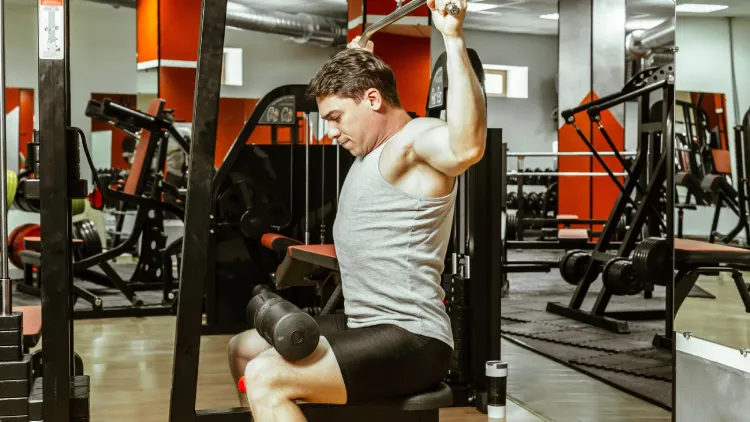
The main element of any lat workout plan is the choice of effective exercises. Some exercises are universally known to be the most efficient in targeting lats. Of them, the pull-ups are regarded as the king of all lat exercises. They use a complete range of motion to use the lats, as well as employ supporting muscles such as the biceps and traps. Lat pull-downs, barbell rows, and single-arm dumbbell rows are all good substitutes or alternatives to those who want variety or want to do things differently.
Another thing about lat workouts that one should take into consideration is grip variation. A wide grip is the one that focuses more on the outer lat, hence the width, and a neutral grip or an underhand grip focuses on the lower part and thickens the back. The balance of development is ensured by rotating grips through workouts.
To add to the list of highly effective lat exercises, one can mention straight-arm pulldowns, seated cable rows, and inverted rows. Those can be of a strict form and lessen the risk of injury, and improve muscle activity. Although they do not directly work the lats, lift-on-compounds such as deadlifts are the best exercises that help thicken the back in general.
How to design your Lat Workouts
A normal workout has 3-4 targeted exercises at a time. Some gym-goers may be wondering whether three exercises are sufficient in developing their backs, but the reality behind it is that strategic choice is more important than the number of exercises. The use of compound movements and then isolation exercises as a priority is the most effective way to recruit the greatest amount of muscle without overtraining.
The most used technique is the 3-3-3 rule, where the tendency is to do three exercises, three sets per exercise and three angles to exercise the muscle uniformly. Others apply the 4-8-12 rule with each set being structured into a rep range characterised by strength (4 reps), hypertrophy (8 reps) and endurance (12 reps). Such frameworks can be used to make sure that there is balanced growth and that the muscular imbalance is avoided.
The 70/30 rule is another principle that is frequently used, and it says that you should devote 70 per cent of your time to heavy compound exercises and 30 per cent to isolation ones. This enables the development of the highest strength and shapes, as well as fine-tuning of the lats.
How to Maximise Lat Growth
Lat growth requires progressive overload, mind-muscle association and due recovery. The use of the lats on each repetition is of the essence, provided that you experience the biceps or forearms overpowering your grip or shape, change your grip or form. Monitoring exercises and step-by-step weight or repetition gain encourage constant adjustment and development.
It is also important to have nutrition and rest. To get stronger and be able to grow, muscles require enough protein, calories, and sleep. Symptoms of poor recovery are continued fatigue following exercises, failure to improve, or even a feeling of tiredness. The knowledge of these signals may eliminate overtraining that may halt gains and raise the chances of getting injured.
Prevention of Overtraining and Injury
The problem of overtraining is usually associated with serious trainees. The symptoms of stage 1 overtraining syndrome include fatigue, decreased performance and irritability. Some of the signs in the initial stages are excessive soreness, sleeping problems, and slow recovery. These problems are avoided by listening to your body and changing the intensity of training.
Overtraining symptoms that are unique to the lats are constant tightness, decline in pull-up or rowing, and lower-back pain. The average lifter can easily maintain a moderate amount of weight-training (12-15 sets per week in most cases) in the muscles. Back strain and strain during daily activities are also minimised by stretching and mobility work, and appropriate posture.
The lat function is commonly prone to muscle imbalances caused by posture. Slouching, strain in the neck muscles and pain in the back could be caused by weak lats, tightness of the chest, and improper positioning of the scapula. The exercises that involve strengthening of the lats and opening of the chest can be included in order to keep the person straight, even for people who spend long hours sitting.

Targeting Lats Effectively
To make sure that you are working the lats at each session, make sure you concentrate on the following:
- Full Range of Motion: Pull back to a full length extent of motion and then to maximum contraction.
- Mind-Muscle Connection: Visualise the pulling of the weight with the lats and do not allow the arms to work hard.
- Controlled Movement: There should be no momentum, jerking or swinging, and this minimises lat activation.
- Different Angles and Grips: Different wide, neutral and underhand grips to strike all the parts of the lats.
- Progressive Overload: Continuously add weight, reps or time under tension to encourage growth.
- These concepts are applicable in exercises such as pull-ups, rows and pulldowns so that every set produces broader and thicker lats.
Building a Huge Back
It does not happen that building a strong back only involves lats, but traps, rhomboids and erector spinae are also part of the thickness and strength. Deadlifts, rows, and pull-ups are the big three exercises in the back, which will be the basis of an effective routine. These compound lifts involve more than one muscle, which enables one to gain strength and build up mass.
The barbell row, which is commonly referred to as the queen of all exercises, supplements the pull-ups in terms of thickness and density. These, in combination with some specific lat exercises, will guarantee width and depth, resulting in a balanced and powerful back.
To develop the neck, there are exercises such as heavy rows and shrugs, which are useful for thickness. Having a good neck not only enhances beauty but also stability in heavy lifting and contact sports. Neat examples of athletes who were found to have remarkably well-built necks, such as Mike Tyson, were a result of combined weight training.

Frequency and Recovery
The frequency should be optimised. Most lifters will be happy to train lats twice per week and not risk over-training. The symptoms that you can be overworking are persistent soreness, decreased performance, and tiredness following exercises. Sleeping enough, eating enough, and deload weeks are the keys to continuous improvement.
The use of other muscle groups intelligently avoids imbalances. The supporting musculature, such as traps, rear delts and rhomboids, should also be strengthened to make sure that lat exercises are effective and free of injuries. Strong lats are also known to support the spine, maintain a proper posture and enhance performance in the pressing exercises.
Posture, Lats and Everyday Life
Lats are developed in a functional sense. They normalise the spine, support the lifting movements, and avoid slouching. Flattened lats, on the other hand, are the cause of round shoulders, a strained neck, and a backache in prolonged sitting.
To have a healthy posture when sitting long hours, make sure that your back is supported, and feet are flat on the floor, and your shoulders are pulled in. Frequent stretching and periodic mobility exercises help avoid tightness of the chest and cause the hip flexors, which indirectly suppress the lat.

Conclusion
Lat exercises form an important part of any upper body program. With compound lifts, isolation exercises, grip variations, a well-rounded routine, and adequate rest, you can develop a broad, thick, and strong back. Knowing how to identify fatigue, overtraining and muscle imbalance will help to make growth safe and sustainable.
It is essential to remember that lat exercises will contribute to overall strength, improved posture, and the desired V-shape. Insane lats could be attained with hard work, discipline and intelligent programming, and you could have a strong and attractive upper body.
Frequently Asked Questions
1. What is the best exercise for lats?
Pull-ups are also considered to be the king of lat exercises, since they work effectively on the whole latissimus dorsi. Lat pulldowns, barbell rows and single-arm dumbbell rows are other great choices. Grip variations may be incorporated to highlight various sections of the lats in order to grow to the optimum.
2. What frequency should I use for training my lats?
Two sessions a week are usually sufficient to stimulate the growth of the lats of most lifters without causing overtraining. The combination of the compound lifts and the isolation exercises will not only give width and thickness, but also sufficient recovery.
3. Do you think three exercises suffice to develop your back?
Yes, three well-thought-out exercises may be enough, provided they contain a few compound lifts and touch upon a variety of angles of lats. Routine activities such as the 3-3-3 rule (three exercises, three sets, three angles) can be ideal to maximise muscle activities and balanced development.
4. What is the answer to the question, How do I know when I am overtraining my lats?
Some indicators of overtraining are constant fatigue, decline in performance during pull-ups or rows, tightness of the upper back, and slow recovery. To ensure that you are not overtraining, make sure you get enough rest, eat properly, and keep track of your volume of workouts.