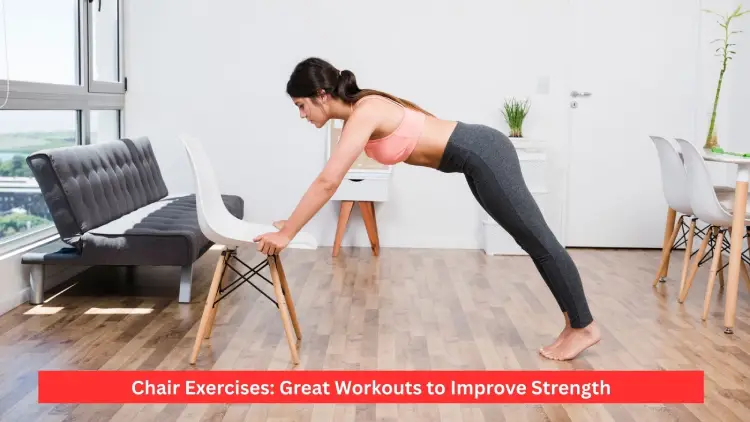

Low-impact seated exercises that are firming towards the muscles, enhancing flexibility and mobility without undermining the joints, are called chair exercises. These exercises are long-lasting and perfect when seniors, beginners, those injured or those who find it difficult to move around, and even people who want to lose some weight. Consistent practice can be used to become more balanced and improve blood flow, as well as to simplify daily body motions without making workouts unsafe or uncomfortable.
What Are Chair Exercises?
Exercises that take place on a chair are carried out when someone is sitting on it or would be seated on a chair with the aid of the chair. They enable the body to operate under a safe, controlled, and stable position, unlike the conventional floor exercises that an individual with limited mobility or balance problems can perform. The exercises also work on the various muscle groups like the upper body, core, and lower body.
Chair exercises are one of the greatest advantages since they are modifiable to most fitness objectives, such as the formation of body strength and fat burning. Most individuals ask themselves whether or not chair exercises are effective, and scientific studies and experience attest to the fact that when done regularly, they are possible to enhance body tone, body flexibility, as well as general health. Even though the chair exercises are not as effective as high-intensity cardiovascular regarding the of calorie expenditure, they are directly related to proper diet and movement, and as a part of the weight loss regime, they would help in the abdominal region, along with other parts of the body.
Benefits of Chair Exercises
There is an enormous scope of physical advantages of chair exercises:
1. Improved Mobility
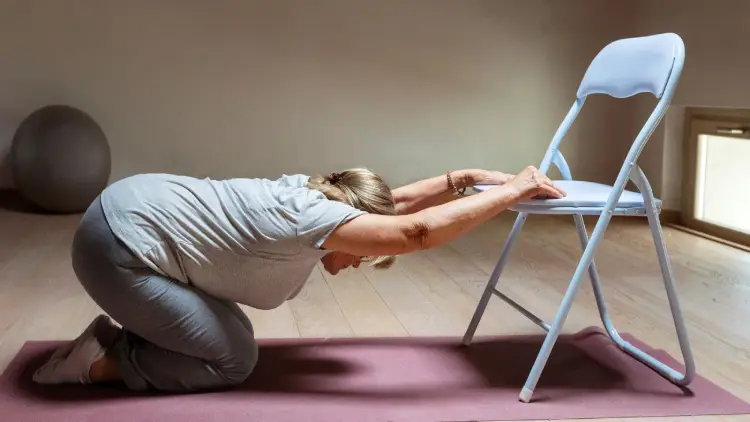
Sitting exercises are beneficial in preserving, as well as improving, the degree of movement in the shoulders, hips, knees, and spine. Through a controlled movement, you are able to minimise stiffness and enhance daily functional dislocation.
2. Strength Building: Low-Impact
Chair exercises are safe exercises in which the muscles can be strengthened without putting stress on the joints. This would be suitable for old people or individuals who have just been injured. The exercises are useful in the long-term building of strength because you can engage in noticeable muscle tone with gradual resistance.
3. Better Posture
When you use your core when exercising on a chair, muscles surrounding your spine become stronger, thus encouraging good posture and reducing the chances of getting back pains. The weak muscles that are usually indicated by lower back pain, lack of balance or stomach protrusion can also be improved with frequent seated exercises.
4. Enhanced Flexibility
The benefits of chair stretches and sitting exercises, which enhance the length of major muscle groups, such as hamstrings, calves, and shoulders, are that they do not involve floor work. Seven-day routines, such as chair yoga routines, have been proven to enhance flexibility and mobility.
5. Increased Circulation
Prolonged sitting may decrease blood flow, causing stiffness or swelling. Chair work enhances circulation, which brings fatigue down as well as promotes cardiovascular wellbeing.
6. Safe for All Fitness Levels
These are very flexible exercises. The novices can make movements of low intensity, and the advanced users can add resistance or intensity. Although brief exercises, such as a 7-minute chair workout or a structured 28-day chair program, can yield visible results in case of regular practice.

The 15 Best Chair Workouts to Do a Full Seated Workout
Chair exercises may be on the upper, core, and lower body. Routine activities are to maximise the results and may be adjusted to the level of fitness.
Upper Body Chair Exercises
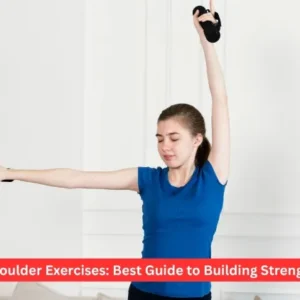
1. Seated Shoulder Press
- Strauss, back as straight as you can.
- Bring the arms to the level of the shoulders and press.
- Lower slowly.
Shoulders and triceps are developed by this exercise, and the endurance of the upper body is enhanced. A little weight can also be incorporated to induce more muscle growth, and this proves that chair exercises can build strength.
2. Chair Arm Circles
- Extend arms sideways.
- Draw petite circles up and down.
- This is a good activity to exercise the shoulders and warm up upper body muscles, hence it is a good practice to do in a day at work.
3. Seated Bicep Curls
- Sit straight, pull your arms against your chest, and squeeze downwards.
- This is a mere workout that supplies the arms with toning and builds up arm strength over time. It is a matter of consistency – even the sessions of the day can have to bring some improvements.
4. Chair Chest Squeeze
- Place your hands of the hands before your chest and squeeze.
- This exercise will target the chest and shoulders and will increase the muscles of the upper body, where posture and functional power are required.
- Core-Centred Chair Reefs.
5. Seated Knee Lifts
- Sitting on the edge of the front of the chair, bend one knee towards the chest.
- This is a safe strength of the abs and hip flexors. The critical factor here is core engagement with a weak core in most cases, presenting as back pain, aches, or a problem with daily activities.
6. Seated Torso Twists
- Move the upper part of the body sideways.
- Enhances the movement of the spine and concentrates on abdominal fat, as it burns fat combined with the calorie content in general.
7. Chair Sit-and-Hold
- Sit up, contract the core, and hold for 10- 20 seconds.
- It is a good way of strengthening deep core muscles. The sit method of losing weight can be used, or a 30 30 30 rule, where exercise, rest and repeat are alternated, can be used to increase the effectiveness of the chair exercises in terms of burning calories and building up fitness.
8. Seated Side Bends
- Lean tupsily on his side and upwards with one arm.
- This enhances the side flexibility and builds up obliques, aiding the creation of a trim waistline. Regularity of this and other core activities is what leads to general core resilience and prevents frequent injuries.
Lower Body Chair Exercises
9. Seated Leg Extensions
- Raise forward one leg quickly, and hold it up, then bring the leg down.
- Boosts the power of the knee joints and the thighs. The repetitions can be completed in accordance with the rules, like the 4 8-12 rule, which consists of 4 sets of 8-12 repeats in order to build strength gradually.
10. Chair Marching
- March on the knees, keeping the back straight.
- Enhances the power of hip flexor muscles, activates blood flow as well and boosts the heart rate without danger.
11. Seated Hamstring Stretch
- Bring one leg forward and place the heel against the floor, and bend forward.
- Increases the range of the manual hamstring muscles and aids in facilitating movement in the lower body, which holds great importance in the general posture.
12. Chair Calf Raises
- Heel lifts with toes on the floor.
- Makes calves stronger and improves the blood flow, which leads to improved balance and endurance of the lower legs.
Full-Body Chair Exercises
13. Sit-to-Stand
- Sit slowly, standing on the legs, not the hands, on the chair.
- This develops leg power, butt and abdominal strength. Daily chair squats would help in improving muscle tone and may also assist in weight management.
14. Seated Jumping Jacks
- Sit in open and closed arm and leg positions.
- Increases cardiac rate at a safe level, thus effective in burning calories and promoting good cardiovascular health.
15. Chair Side Leg Lifts
- Put a leg at a right angle and support the chair.
- Makes the outer thighs and hips stronger, increasing the mobility of the lower parts of the body.

Timing and Frequency
Chair exercises are best done according to the individual’s schedule, but the middle of the day or the morning can help increase the energy flow and the circulation. Novices should be allowed to sit for 7-10 minutes per day, and the extended programs, like 28-day chair exercise, offer an orderly progress. The safe progression can be achieved through following the rule, such as 2-2-2 (two exercises, two sets, and two repetitions as a beginner) or 3-3-3 in the case of an intermediate user.
Mistakes In Chair Exercises
- Sitting in a way that makes him less effective.
- Holding your breath
- The jerky movements rather than the controlled motions.
- Omitting warm-ups and cool-downs.
However, optimising benefits and minimising the risk of injury is attainable through the correction of these mistakes.
Weight Loss and Effectiveness
One can use chair exercises to decrease belly fat and total weight, provided he or she incorporates calorie-conscious practices. Exercises such as a 7-minute chair workout or chair yoga can help in losing fat, and this is when the exercise is carried out regularly. Although accelerated weight loss (such as 510kg) takes much more rigorous activity and diet mobilisation, chair exercises will be safe and supportive of gradual fat loss.
To achieve the best outcome, use the chair exercises together with core-strengthening movements – this will work on weak core muscles, and this will manifest as back pain in the lower back or poor sitting posture. Stability is more relevant than intensity in long-term gains.
Conclusion
The beauty is that chair exercises are versatile exercises that are effective and accessible to everyone, regardless of fitness level. They can gain strength, enhance mobility, help to lose weight, as well as enhance posture, and strengthen the core. Practice has proven to have significant results regardless of how you are in the structured 28-day chair program, 7-minute daily routine, or just working chair yoga into your schedule. The exercises are also especially useful to the elderly, novices, and those who require a low-intensity workout. Created and practised correctly, every day, and with conscious progress, even sitting exercises can enhance nutritional power, as well as well-being, and prove that even seated workouts can generate a significant change.
Frequently Asked Questions
1: Do chair exercises work?
Sure, strength, increased flexibility, or improved posture can be achieved through exercises using a chair. Regular training is one way of tightening the muscles and enhancing flexibility without undue danger.
2: Does sitting in a chair exercise lose belly fat?
Practice is one of the activities that will help lose belly fat gradually, in particular, when it is done in a chair and accompanied by a healthy diet and physical activity. Specific exercises such as seated knee lifts and twists of the torso prove really useful.
3: What is the frequency of chair exercises?
For beginners, 7-10 minutes a day is recommended. It is possible to add more exercises, repetitions or sets gradually in order to improve strength and endurance in the long term.
4: Can the seniors or those with little mobility depend on chair exercises?
Yes, they aren’t very strenuous or rough, so they are ideal for seniors or people recuperating after an injury. They enhance power, balance, and flexibility, and circulation in a safe manner.