


The benefits of sauna as an exercise are not just limited to relaxation. Post workout Sauna is beneficial in ameliorating muscle fatigue, expanding circulation, alleviating pain, and aiding regular training. Exposure to heat increases heart rate, stimulates a cardiac light workout, loosens tight muscles, and improves flexibility. When combined with hydration and safe use, 10-20 minutes of short sessions can contribute to recovery, improve skin health, and temporarily reduce water weight.
- What Is a Sauna in Fitness Training?
- Why is sauna helpful during exercise
- Key Benefits of Sauna as an Exercise
- When to Use a Sauna
- What is the Maximum Time to stay in a Sauna?
- Hydration and Safety in Sauna
- Sauna vs Active Recovery Exercises
- Exercisers Weekly Sauna Routine
- Common Mistakes to Avoid
- Who Should Be Careful?
- Other Exercise-Related Considerations
- Post-Sauna Recovery Practices
- Limitations and Negative Effects
- Devices and Technology within Saunas
- Top Sauna workout to get fit
- Mental Relaxation and Passing Time
- Conclusion
- Frequently Asked Questions
What Is a Sauna in Fitness Training?
A sauna in a fitness environment is not just any relaxation room; it is a heat-based recovery device; it is used after a workout. The heat is typically maintained at levels of 70 °C to 100°C, which induces a state of controlled heat stress which initiates physiological responses that are comparable to low-intensity cardiovascular activity.
Exercisers and athletes also use sauna sessions as part of well-defined recreational procedures, as the body can respond to heat through features that favour post-workout adaptation. The raised sweating, the raised heart rate and enhanced blood circulation are all factors that amplify the growing awareness of the benefits of sauna in contemporary sport science.
Exercise results in the build-up of metabolic wastes in the muscles, like lactate, microscopic damage to the fiber and fatigue in the nervous system. The use of saunas promotes circulation, which aids in the delivery of nutrients and oxygen into the tissues, as well as aids in waste elimination.
Use of sauna in fitness will normally happen after:
- Resistance training sessions.
- Endurance or running exercises.
- HIIT programs
- Movement or stretching exercises.
- Sports training practices
In contrast to the spa-based application, exercise-associated sauna regimes are more coordinated and take less time and emphasis is put on the recovery effects more than the overall consequences of relaxation.
Why is sauna helpful during exercise
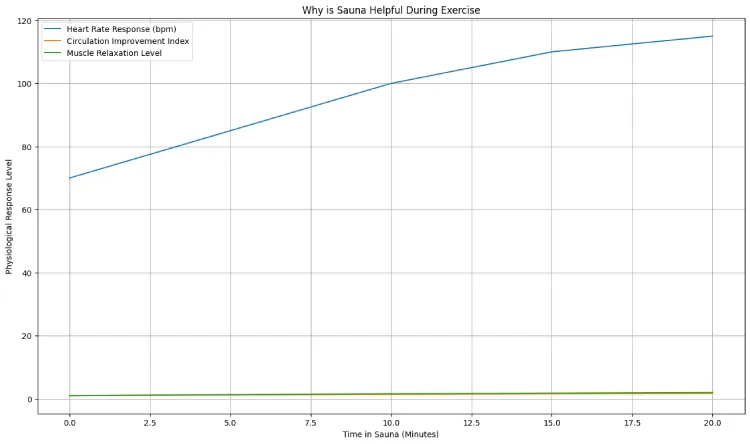
The reaction of the human body to heat stress is rather surprising, as it is very similar to an aerobic workout. An increase in core temperature when one gets into a sauna results in expansion of blood vessels and an increase in blood circulation.
Heart rate can increase to 100-150 beats per minute, mimicking an average exercise. This reaction justifies the popularity of using a sauna as an extra conditioning stimulus among athletes who have no mechanical repetitions due to the joints.
The most important physiological effects are:
- Increased plasma volume
- Improved oxygen delivery
- Quickened blood flow to muscles.
- Heat shock protein activation.
- Relaxation of muscle tissue
Proteins are heat shocking and can aid in cell defence against stress and muscle adaptation after exercise. This is one of the reasons why endurance athletes occasionally resort to the use of a sauna in terms of increasing heat tolerance and endurance.
Saturnine relaxation and better recovery can be manifested with a 20-minute post-workout sauna. Muscles during this period switch control to restoring and renewing the body.

Key Benefits of Sauna as an Exercise
1. Faster Muscle Recovery
Another commonly known advantage of a sauna is faster recuperation following exercise. Heat raises the flow of blood to the muscles to make available nutrients to repair tissues.
Muscles take up microtears after strenuous exercise. Workout with the help of the sauna stimulates circulation, which carries amino acids and oxygen required for the fibre reconstruction of the body.
Athletes often notice:
- Reduced recovery time
- Less stiffness the next day
- Better preparedness for the second run.
- Regular recovery results in better long-term performance profits.
2. Less Soreness in the Muscles (DOMS)
Late-onset muscle pains may restrict the frequency of training. The heat is generated in the sauna to relax the muscle fibres and make them less tight by enhancing the circulation.
Regular saunas mention reduced levels of soreness, which enables them to continue workout regimes and do not have to take long breaks. Sauna gains its advantages particularly after leg days, intense workouts or new training programs.
3. Increased Cardiovascular Conditioning
Sauna exposure causes an augmentation of cardio workload just like the light cardio exercise. There is an increase in the size of blood vessels, circulation and cardiovascular efficiency with time.
Even though the use of the sauna cannot substitute aerobic exercises, it complements endurance training because it enhances mental adaptation of the circulatory system.
Regular exposure may help:
- Enhance the flexibility of the blood vessels.
- Support heart efficiency
- There is an increase in post-exercise recovery circulation.
4. Improved Endurance Performance
Heat acclimation has a significant role in endurance sports. The benefits of sauna are that they increase tolerance to heat in the workouts of the athlete, enabling him or her to perform for a longer duration.
Adaptations may include:
- Increased sweat efficiency
- Improved regulation of temperature.
- Delayed fatigue onset
Cyclists and runners occasionally combine post-training in the sauna to remind them of training in hot conditions.
5. Better Flexibility and Mobility
Loose muscles contract to be stretched better. Exercise that is followed by a sauna session helps to relax connective tissue, and therefore, after the workout period, stretching becomes safer and more fruitful.
This combination improves:
- Joint mobility
- Muscle elasticity
- Movement efficiency
It is also common to find athletes who use the sauna, accompanied by some stretching exercises, suffer fewer injuries.
6. Better Stress Reduction to Improve Training Recovery.
Exercise puts stress on the muscular system as well as the nervous system. The heat in the sauna is known to stimulate relaxation because of encouraging the parasympathetic nervous system to be active – this is the mode of relaxation in the body.
Better recovery leads to:
- Improved sleep quality
- Reduced mental fatigue
- Enhanced workout focus
The ultimate benefits of sauna in exercise practice are a secret, though an effective part of mental healing.
7. Detoxification with Sweating During Exercise Recovery.
The level of sweat becomes greater within a sauna. Although the body is self-conducted to clean itself by different organs such as the liver and the kidneys, sweating aids the body to get rid of minute residual outputs through the skin.
Sweating in exercise recovery primarily functions to cool the body and to keep blood circulating, as opposed to being a major form of detoxification. Nevertheless, a lot of others are relieved and even easier after sessions.
8. Enhanced Growth Hormone Response
Music of the short saunas, which is used after resistance training, can significantly increase the levels of growth hormone (at least in the short run), facilitating muscle repair and adaptation.
This hormonal action plays a role in healing activities that assist muscles in restoring greater strength after a stress induced by exercise.
9. Joint Pain Relief After Exercises.
The heat rehabilitation minimises the stiffness of the joints overloaded during exercises. Better circulation lubricates the connective tissues, which relieve pain in the knees, hips, shoulders and lower back.
The benefits of sauna are particularly useful to those who engage in high-intensity physical activities of high intensity or those who practice intense strength training.
10. Better Workout Habits.
It is consistency that makes the difference between success and failure in fitness. With the recovery, the exercisers can train more and with no high fatigue.
The use of saunas promotes consistency by:
- Reducing soreness
- Promoting relaxation
- Supporting recovery cycles
When to Use a Sauna
After Exercise (Recommended)
The best recovery benefits are offered by performing saunas after working out. Muscles will be warm, circulation will be increased, and a person will change into a recovery mode easily.
After exercise, 10-20 minutes in the sauna will help people relax and recover.
Pre-Exercise (Short Session Only)
Sessions related to less than 5 minutes can warm muscles slightly, whereas protracted exposure to it before exercising can result in exhaustion or dehydration. According to most fitness professionals, the advisable use of the sauna is after an exercise and not before an exercise.
What is the Maximum Time to stay in a Sauna?
It takes time, depending on the level of experience and the capacity to bear it.
- Beginners: 5–10 minutes
- Regular exercisers: 10–15 minutes
- Proficient ones: up to 20 minutes.
Approximately 20 minutes is the time within which more sweating, increased heart rate and deepening relaxation are achieved. Remaining longer offers the same benefits but at a decreasing rate and addition of more risks of dehydration.
Even ten minutes can already trigger circulation and relaxation, proving that even little exposure has its share of the benefits of sauna.
Hydration and Safety in Sauna
However, hydration is crucial since, through sweating, the fluid is lost.
Guidelines include:
- Drink water before entering
- Rehydrate afterward
Such as our intensive exercises, replace electrolytes.
Consumption of water promotes circulation and reduces dizziness. The consumption of small portions of drinks during sessions is acceptable when necessary.
Sauna vs Active Recovery Exercises
| Recovery Method | Main Benefit | Exercise Role |
| Sauna | Muscle relaxation | Post-workout recovery |
| Stretching | Flexibility | Mobility improvement |
| Walking | Circulation | Light recovery |
| Foam rolling | Tissue release | Muscle maintenance |
Combining methods maximises the overall benefits of sauna within exercise routines.
Exercisers Weekly Sauna Routine
A healthy diet may consist of:
- Strength days: 10–15 minutes sauna
- Cardio days: 10 minutes
- Rest day: optional rest session.
One to two or four meetings a week generally suffice. Working out three times a week is already showing some substantial difference in recovery for most exercisers.
Other athletes do two sessions a day that are brief, but beginners should not do them very frequently until they become used to them.
Common Mistakes to Avoid
Incidents of simple mistakes diminish the utility of the sauna recovery:
- Entering dehydrated
- Staying too long
- Ignoring dizziness
- Skipping cooldown periods
Electronics and phones are usually advised against because they can be damaged by heat, since batteries and internal systems can be damaged by an overheater.
Who Should Be Careful?
Some must not or should not use the sauna so much:
- Individuals with heart disorders.
- An individual with unregulated blood pressure.
- Heat-sensitive people.
- Everyone who recovers from a disease.
Expectant human beings, or anyone who has been guided by a doctor to avoid exposing themselves to heat, should seek medical advice before using a sauna.

Other Exercise-Related Considerations
Body Fat and Waist Size
Sauna sessions can help lose body weight through loss of water. It can take off a few inches of the waist shortly, though the loss of fat is only possible by way of exercise and getting to a calorie balance.
Thus, sauna does not directly work to lose belly fat, but only promotes workouts.
Skin Benefits for Exercisers
Through sweating, pores are cleansed, and more circulations are blocked to the skin surface. This can help in making the skin clearer after exercises, coupled with good hygiene.
Bacteria and Hygiene
Some bacteria can grow in the saunas as they have moisture and warmth as long as they are not well-maintained. It is more hygienically safe when you sit on a towel and take a shower.
The “200 Rule”
Other patrons of clubs using saunas adhere to a guideline that states that temperature (°F) and humidity percentage should not exceed about 200 to be comfortable and safe. This will allow for avoiding undue heat stress.
Daily Use
Healthy people can safely use a sauna on a daily basis as long as the time in it does not exceed one hour and that hydration is undertaken. There is, however, variation in the recovery needs of the people.
Post-Sauna Recovery Practices
After a sauna session:
- Cool down gradually
- Rehydrate
- Stretch lightly
- Once the temperature has returned to normal, take a shower.
The beginners sometimes avoid the immediate cold showers due to the sudden change of temperature, which might not be comfortable, but the more experienced can switch between heat and cold exposure with purpose.
Washing of hair before going to the sauna is not compulsory; some people like washing after sweating.
Limitations and Negative Effects
Even though the advantages of sauna are far-reaching, overuse can bring about:
- Dehydration
- Dizziness
- Overheating
- Fatigue
The doctors discourage the use of a sauna by people with medical risks or bad hydration habits. It is not the sauna that is of concern, but rather the unsafe habits of usage.
Devices and Technology within Saunas
Electronic machines are vulnerable to heat. Smartphones such as the advanced ones are not intended to work in a sauna environment. Extended exposure can minimise battery life or cause it to overheat.
The same applies to wearable machines or LED masks, which are, in most cases, not recommended for use unless it is indicated to forgh levels of heat.
Top Sauna workout to get fit
A proper workout-based sauna:
- Complete workout.
- Cool down for 5 minutes.
- Enter the sauna for 10–15 minutes.
- Exit if uncomfortable.
- Rehydrate and stretch.
The routine helps to maximise the risk benefits of sauna and reduce risks.
Mental Relaxation and Passing Time
Several exercisers spend time in the sauna to recover mentally.
Popular activities include:
- Deep breathing exercises
- Meditation
- Student visualisation applied to athletic objectives.
- Quiet relaxation
Distraction should be avoided to optimise the recovery of the nervous system.

Conclusion
The above advantages of sauna make it one of the best recovery aids for the exerciser when properly utilised. Saunas aid in improving blood flow, muscle recovery, decreasing soreness, increases optility and cardiovascular conditioning. Although they do not substitute exercise, and they do not directly burn fat, they enhance the quality of recovery and provide more constant and efficient training.
Brief and regulated sessions that are supported by hydration and exercise habits are the most beneficial. With the inclusion of saunas in a fitness regimen, people will be able to recover more quickly, train more comfortably, and ensure a long-term level of physical performance without any problems.
Frequently Asked Questions
1. Is a post-work sauna superior to pre work sauna?
Yes, related to exercise, it is true that the use of a sauna aids in relaxation of the muscles of the body and leads to better healing as a result of the increased circulation. It can make one feel tired or dehydrated if workouts are prolonged and used before.
2. Are exercise sessions in a sauna effective in losing weight?
It is not losing fat, but molten water in saunas, which causes a merely momentary loss of weight. The real weight reduction needs regular exercise and nutrition.
3. What is the frequency of use of a sauna by exercisers?
The majority of exercisers do so 2-4 times per week. The most effective recovery outcomes are achieved with the help of short, frequent sessions with adequate hydration.
4. What is the best thing to do after a sauna, after exercising?
Wind down slowly, ensure that you drink water and stretch in a straggling manner to aid in recovery. After body temperature is normal, take a shower to improve hygiene.