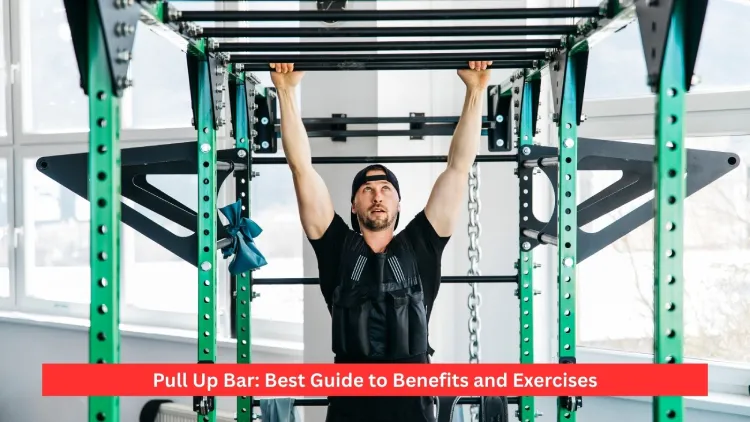

One of the most effective and inexpensive pieces of equipment to use in upper-body strength, muscle mass, grip endurance, and core stability training is a pull up bar. It works your back, biceps, shoulders, forearms and abs and pulls almost 90-100 per cent of your weight. Regular training enhances postures, endurance, body fat burning and body physiques, even among amateur runners and professional athletes.
- What Is a Pull Up Bar?
- Muscles Worked using a Pull Up Bar
- Advantages of a Pull Up Bar
- Types of Pull up Bars
- The Difference between Pull Up and Chin Up
- How to Master Your First Pull-up as a Beginner
- Proper Pull Up Technique
- Pull Up Bar Exercise: Introduction
- Pull Up Bar Advanced Exercises
- Pull Up Bar for Core Training
- Pull-Up Bar for Fat Loss
- Can You Pack on Muscle using a Pull up Bar?
- Do Pull-Ups Change Your Figure?
- Usually, the disadvantages of Pull-Ups are
- Pull-Up Bar vs Push-Ups
- Frequency and Recovery of Training
- Grip and Dead Hang Standards
- Lifestyle, Hormones and Recovery.
- Conclusion
- Frequently Asked Questions
What Is a Pull Up Bar?
A pull up bar is a horizontal pull carrying bar arranged specifically for vertical pulling features like pull-ups, chin-ups, hanging leg raises, and higher callisthenics techniques. It may be mounted in a door, permanently attached to a wall or a ceiling, or incorporated into a power tower which is free-standing.
A pull up bar is mainly advantageous because it is simple. No complex machines, cables or adjustments. You take the bar and raise yourself, defying gravity. Due to the fact that you are not pushing a weight against the external resistance, but rather moving your own body weight on the way of a guided track, all the stabiliser muscles are engaged.
In doing a strict pull-up, in which you do not swing, you are lifting nearly your entire body weight. This is the reason why five clean repetitions are an acceptable strength index for many adults.

Muscles Worked using a Pull Up Bar
Pull up bar is one of the best compound exercises of the upper body, as many muscles work together.
- Latissimus Dorsi (Lats): These are the major muscles that help in drawing your body upwards. Tough lats make you have a broad back and a better posture.
- Biceps: Severely engaged, particularly when doing chin-ups. There is no doubt that the bicep muscle grows with successful pull-ups in the right form and with a gradual increase in weight.
- Deltoids (Shoulders): Help keep and control the movement.
- Trapezius and Rhomboids: Shoulder- draw-ins and assist with good alignment of the upper back.
- Forearms and Grip Muscles: The grip is built up by hanging and pulling.
- Core Muscles: Lower back, abs and obliques hold your torso still so that it does not swing.
Due to this body interaction, a pull up bar is not just a single-muscle isolator.
Advantages of a Pull Up Bar
1. Builds Functional Strength
Pull-ups entail coordination and brute strength. Pull-ups require close to full body weight resistance, as compared to push-ups, which utilise approximately 60-70 per cent body weight resistance, respectively, based on the form of the push-ups. This is the reason why a pull-up is more difficult than a push-up for many individuals.
2. Increases Muscle Size
Progressive overload applies to bodyweight training as well. The extra 5 kg of pull-ups will be a good intermediate lifter goal. Small weight changes are found to increase muscle stimulation to a great extent.
The weighted pull-ups prove to be effective, particularly in the development of the back and biceps. This increases as time passes, resulting in obvious upper-body bulk.
3. Improves Grip Strength
One minuteof dead hang is strong for the average individual. Endurance of grip is a transfer of better performance in other lifts and sports.
4. Enhances Posture
Rounded shoulders may be the result of modern lifestyles. Pull-ups help in strengthening the upper back and reversing the bad posture patterns due to the long duration of sitting.
5. Supports Hormonal Balance
The heavy-compound exercises arouse the involvement of several large muscle groups. Although no one movement significantly increases testosterone in the long term, regular resistance training promotes a normal hormonal activity. Even more than any given workout, sleep, stress management and nutrition contribute to a significant role.
6. Boosts Muscular Endurance
Higher-repetition pull-ups are stamina-building and increase work capacity. It is possible to do 20 pull-ups a day and become enduring and strong, provided that recovery is taken care of.

Types of Pull up Bars
The choice of the proper pull up bar will be related to the space and the objectives of the training.
1. Doorway Pull Up Bar
- Easy installation
- No permanent drilling
- Budget-friendly
- Ideal for small spaces
This is ideal to first time home workouts.
2. Wall-Mounted Pull Up Bar
- Extremely stable
- Supports heavier athletes
- Ideal for weighted pull-ups
Recommended when serious training is required in the long term.
3. Ceiling-Mounted Pull Up Bar
- Great for garages
- Allows full body extension
- Allows room to develop higher skills.
4. Free-Standing Power Tower
- No wall drilling
- Includes dip handles
- Larger footprint
Applicable in entire bodyweight training.
5. Outdoor Pull Up Bar
Usually found in parks and callisthenics. Training outside promotes functional fitness and control ofthe body.
The Difference between Pull Up and Chin Up
Pull-ups involve using an overhand grip, which is more concerned with the lats and upper back. When chin-ups are done, it is underhand, which enhances the use of the biceps.
The two variations work well. A large number of individuals will be able to do more chin-ups than pull-downs because there will be more assistance on the arms.
How to Master Your First Pull-up as a Beginner
Their initial repetition becomes a problem for many adults. When you can do five consecutive strict pull-ups, then you are already in the relative upper-body strength above average.
Begin with:
- Dead hangs
- Assisted pull-ups
- Resistance band support
- Negative pull-ups
The most difficult part of a pull-up is the initial upward pull when one is in a dead hang position. Enhancement of this stage enhances general performance in a short time.

Proper Pull Up Technique
To make the best profit and prevent harm:
- Start from a full dead hang.
- Use your midsection and squeeze your butt.
- Move your chest towards the bar.
- Avoid swinging or kipping.
- Lower slowly under control.
Controlled 3-3-3 tempo (3 seconds up, 3 seconds hold, 3 seconds down) makes the muscles more tensed and enhances the strength.
Pull Up Bar Exercise: Introduction
Sample Routine
- Dead Hang – 3 sets (30–60 seconds)
- Assisted Pull-Ups- 3 sets of 6-8 reps.
- Negative Pull-Ups – 3 sets
- Push-Ups – 3 sets
The optimal frequency of training is 2-4 times per week to build muscles. An individual can do daily pull-ups, but they need to be of different intensities to prevent overuse injuries.
Pull Up Bar Advanced Exercises
When basic pull-ups are easy, it is important to progress.
- Wide-grip pull-ups
- Close-grip chin-ups
- Archer pull-ups
- L-sit pull-ups
- Muscle-ups
- Weighted pull-ups
Increasing weight by 5kg is a good point to start weighted training. Gradually developing resistance gains solemn strength.
Pull Up Bar for Core Training
One of the best pieces of equipment for developing the abdomen is apull-upp bar.
- Hanging knee raises
- Hanging leg raises
- Toes to bar
- Windshield wipers
These motions involve the lower abs much better than conventional crunches.
Pull-Up Bar for Fat Loss
Pull-ups are an intense workout to develop the strength of the upper body, with muscles of the back, shoulders, and arms, as well as the core. Although pull-ups do not directly work out the belly fat, it aids in gaining more muscles, and therefore, this helps in burning the fat over time because bodywork can burn the fat by increasing the metabolic rate.
With a well-balanced diet plan and constant exercise, pull-ups will help in the gradual secretion of body fat even in the midsection. Involving the core in the process of pull-ups is also going to be of assistance in working out abdominal muscles, which will enhance a better posture and a trim look.
The best way to achieve maximum benefits through fat loss is to integrate pull-ups into other fitness routines, such as cardio and full-body strength training. Regularity, good shape, and a healthy lifestyle are some of the foundations for achieving results.
Can You Pack on Muscle using a Pull up Bar?
Yes. Starting and intermediate athletes can develop great strength in the upper body with the help of a pull up bar only.
By combining:
- Pull-ups
- Chin-ups
- Isometric holds
- Slow tempo reps
- Weighted variations
You make gradual congestion devoid of machines.
Do Pull-Ups Change Your Figure?
Absolutely. The training on the pull up bar can:
- Broaden your back
- Increase arm size
- Enhance the definition of shoulders.
- Tighten your core
- Improve posture
Observable change is based on consistency and nutrition.
Usually, the disadvantages of Pull-Ups are
Although good, pull-ups have certain limitations:
- Challenging for total amateurs.
- Strains shoulders or elbows when it is not done right.
- Reduced lower-body activity.
- Installs need to be installed appropriately.
Mistakes can be prevented by an appropriate method and gradual advancement.
Pull-Up Bar vs Push-Ups
Both pull-ups and push-ups are good body-weight exercises, though they work different sets of muscles and are not equal in their intensity. Pull-ups tend to be more strength-oriented movements that need a lot of pulling power on an upper body. They also mostly involve the back muscles, biceps, and shoulders, hence are good to build the strength of the upper-body, to adjust the posture.
Push-ups, on the other hand, emphasise more on the chest, triceps, and front shoulders. They are relatively less difficult for the majority of beginners and can be modified to other fitness levels, either by incline, decline, or diamond push-ups. Whereas the push-ups work on the pushing muscles, the pull-ups will work on the pulling muscles; this is the reason why the two are complementary to each other. Using a combination of the two exercises in an exercise schedule is a way of creating a well-rounded upper body.

Frequency and Recovery of Training
Recovery and frequency of training are important elements in the development of strength and injury prevention. High intensity pull-ups done daily may result in overuse injury like tendonitis or joint strain in joints. Nonetheless, in case of light or moderate pull-up sessions with different intensities, skill, endurance, and strength can be enhanced safely even when performed daily.
One should not forget that muscles are built not only in cases of exercise, but also when resting and in cases of rest. With proper sleep, nutrition and rest days, the muscle fibres are also able to repair and become stronger, lessening the chances of injury and increasing performance. The strategy that involves both hard physical exercises with adequate rest periods will guarantee gradual improvement and permanent gain in strength.
A combination of push-ups and pull-ups in a designed program and proper rest periods would build a balanced body structure, enhance practical strength, and give the maximum outcome in fitness.
Grip and Dead Hang Standards
Pull-ups and other exercises that involve the upper body require a strong grip. The dead hang is one of the regularly administered tests of grip strength, as you simply hang, holding on to the pull-up bar with your arms straight. The ability to do a dead hang of 60 seconds would be a good expectation for the majority of recreation trainees. To foster the higher levels of greater practitioners, where they can reach 90 seconds or above, depicts excellent grip endurance and upper body strength.
The most restricting factor in the performance of pull-ups is grip strength. It also happens that though your back and arm muscles may be strong, the grip is so weak that it does not allow you to do more reps. Grip-specific training exercises like farmer carries, towel hangs, and finger-strengthening programs can be used to enhance this important area of training.
Lifestyle, Hormones and Recovery.
It is not only through training to gain strength and be more fit, but also through lifestyle choices and rest. The resistance exercise helps in maintaining normal levels of hormones, such as testosterone, essential in muscle development as well as weight loss. But the lifestyle issues of sleep deprivation, chronic stress, high alcohol intake, and poor diet can change the hormone balance in a negative direction much more than the frequency of training itself.
Regular healthy practices such as sleeping well, eating balanced and healthy and exercising, among others, are much more critical to long term outcomes than fads and drastic programs. Rest between workouts is a way of ensuring that the muscles are recovering and developing, as well as helping the body through hormones, energy storage and general performance.
To conclude, a pull-up performance improvement needs physical training together with grip strength, as well as a comprehensive lifestyle approach, which facilitates recovery, hormonal and long-term improvement.

Conclusion
A pull up bar is most definitely a worthwhile purchase if you want to train on upper-body strength, muscle growth, and an increase in endurance without wasting your money on costly equipment. It exercises your whole body almost against its nature.
Once you have five strict pull-ups, then you have good functional strength. Any increase in weight by even 5 kg is an indication of significant improvement. A pull up bar is one of the best and most effective pieces of equipment that you can use to build muscle, enhance stamina, and naturally change your physique with or without the help of the gym, whether at home or in the gym. The secrets of long-term success consist of consistency, use of proper technique and progressive overload.
Frequently Asked Questions
1. What are the pull up bar working muscles?
A pull up bar not only works your back, biceps, shoulders, forearms, and core, but it is also one of the most effective exercises that builds strength, posture, and functional fitness of your entire upper-body.
2. Does a pull up bar aid in the process of fat loss?
Yes, pull-ups are lean muscle-building exercises, boost metabolic rate and enhance body composition in general and help cut fat cumulatively with an appropriate diet and regular exercise.
3. What are the available kinds of pull up bars?
There are doorway bars, wall-mounted, ceiling-mounted, free-standing power towers, and outdoor bars, depending on the different spaces and training objectives.
4. How should beginners start?
Dead hangs, assisted pull-ups, resistance band support, or negative reps are the recommended starting level of strength training because beginners should train 2-4 times a week, have good form, and safely achieve strength.