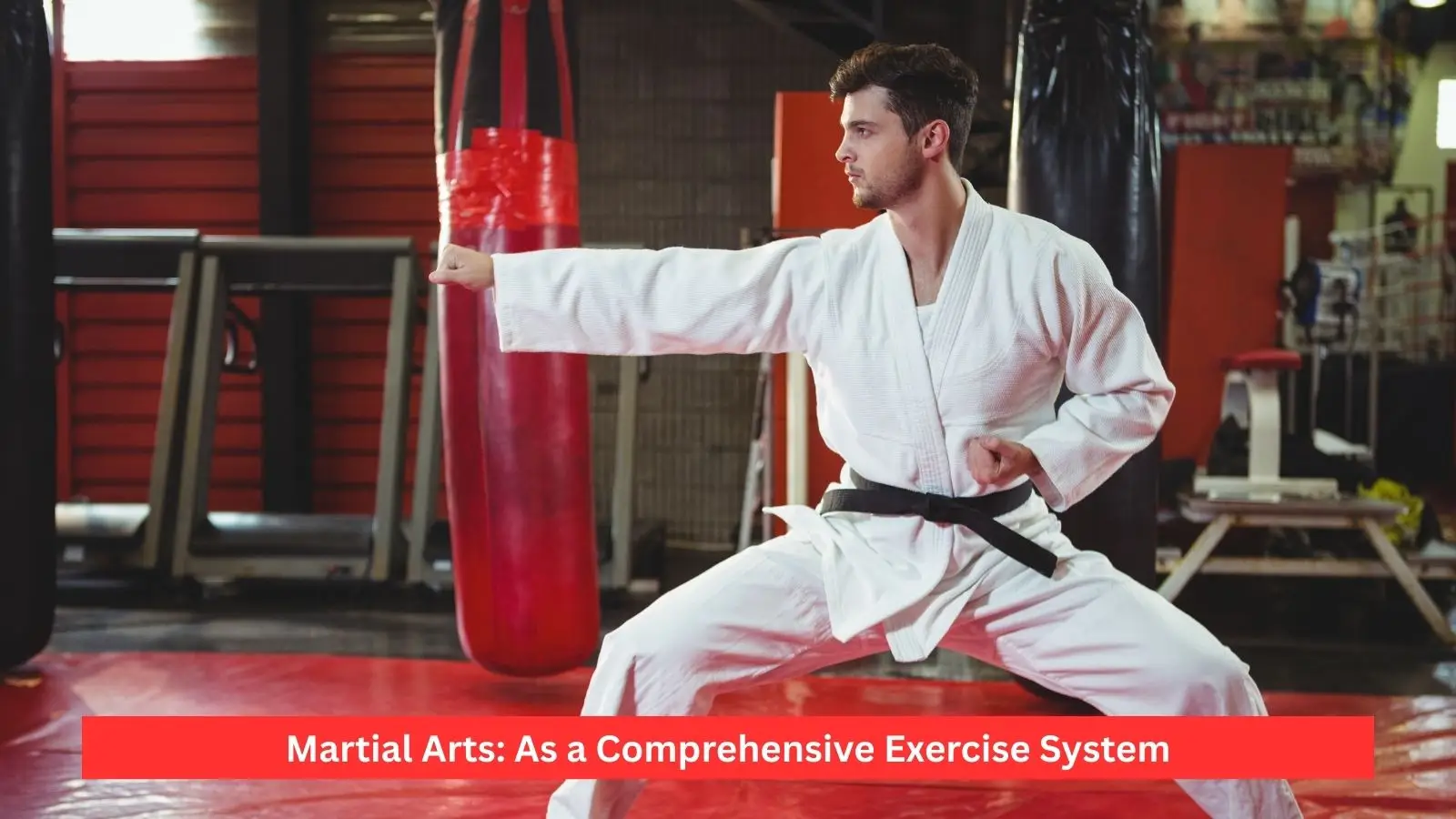

Martial arts play the role of being one of the most holistic systems of exercising in the whole world, since it brings together all these aspects of power, cardiovascular workout, stretching, balance, coordination, and concentration in a single sport. As far as the practice of martial arts activities is rooted in the ancient traditions of movement and is practiced all over the world in various styles, it is accommodating to all ages, sexes, and fitness levels. Starting with beginner-level exercises and ending with high-level conditioning exercises and training, martial arts can enhance physical fitness, cognitive skills, and long-term mobility and provide well-structured progressions and lifetime advantages.
- Full-Body Conditioning
- Cardiovascular Endurance
- Flexibility and Mobility
- Core Strength and Stability
- Balance and Coordination
- Psych ordination and Body Cohesion.
- Flexibility to All Levels of Fitness.
- Long-Term Physical Benefits
- Better the gait and balance concerning daily movements.
- Conclusion
- Frequently Asked Questions
Full-Body Conditioning
The martial arts training is centered on full-body conditioning, where the body is a whole interlocking unit. In contrast to a single exercise in a gym club, martial arts are movements associated with engaging more than one muscle group simultaneously by using coordinated body postures, transitions, and movements. This renders activities very useful in building a strong body in terms of balance, utility, and fitness.
The majority of martial arts training is based on conditioning on bodyweight. The natural patterns of movement make the legs, core, and upper body stronger, enhancing mobility and stability. As they are exercises that reflect real-life movement, these movements translate directly into the real activity.
The important advantages of full-body conditioning are:
- Concurrent upper body, lower body, and core activation.
- Functional muscle endurance and strength.
- A stable, better balance, and techniques of coordination and stability of the joints.
- Increased mobility via innate patterns of movement.
Martial arts exercises are traditionally created as physical preparedness systems, which are open to all age categories. The intensity of training can be varied so that beginners and older adults can safely acquire strength and endurance, along with general physical preparation, with time.
Cardiovascular Endurance
The exercise in martial arts has good cardiovascular effects as the activity entails a high rate of continual rhythmic movement that keeps the heart rate elevated. Repetitive movement patterns and timed related drills may also be part of the training sessions, and they assist in enhancing endurance (aerobic and anaerobic).
Both training martial arts (as opposed to jogging) and interval-based intensity are natural stimulations. Periods of faster activity are preceded by periods of controlled recovery, which enhance the efficiency and endurance of the heart in the long run.
The main CVD advantages are:
- Vitality of the heart rate during constant movement.
- Increased endurance as a result of natural interval-type training.
- More efficient breathing with cooperative breathing.
- Improved fitness amidst physical activity.
The method aids in the process of fat burning, metabolic fitness, and sustained heart fitness. Since the training focuses on the correct form and regulated intensity, proper health of the heart can be safely and effectively maintained by training at all ages.

Flexibility and Mobility
The exercise in martial arts is characterized by flexibility. The focus of the training is on the controlled range-of-motion training and not the passive stretching per se. This builds what is referred to as active flexibility- the capability of moving functionally and securely through prolonged posture without loss of power and control.
Exercise systems in martial arts in which the techniques use legs prominently, e.g., styles that feature extensive kicking, demand the highest level of hip mobility and hamstring flexibility. With time, joint range is also progressively improved with regular exercise that does not excessively overstrain the connective tissues. That is why are especially useful in raising functional mobility.
Joints are also safeguarded by flexibility training in martial arts. Facilitated changes in movement, rotation, and progressive body weight transfers achieve minimization of stiffness and enhance the quality of movement in the long-term. This is of particular use to people who spend an extended period of time sitting or who have become older and therefore have problematic mobility.
Since activities focus on fluidity, they would be useful in injury prevention, which most of the time is observed with a high degree of rigidity or over-repetition in training. Greater mobility will also increase balance and coordination, as well as strengthen the integrative character of martial arts conditioning.

Core Strength and Stability
At the very warp of virtually all martial arts movements is core engagement. The use of the abdominal muscles, lower back, hips, and pelvic stabilizers has to be continuous in order to maintain good posture, balance, and effortless breathing. Since these are muscles involved in training, the activities help to build functional core strength, which benefits the whole body instead of training a specific part.
Also, in contrast to the abdominal exercises common to the traditional practices that involve short and repetitive exercises, martial arts practice builds core muscle through straight and intended motion. Stability is tested in different angles by rotational movements, weight shifts, and controlled stance changes. This is an active type of training which enhances spinal support, minimizes the danger of lower back pain, andimproves personal efficiency of movement overall.
The benefits of martial exercises, particularly regarding core strength, are as follows:
- Application of deep and surface core muscles.
- Business-enhanced posture by enhancing stooping.
- Increased stability in the stationary and mobile postures.
- Enhanced co-relationship of upper and lower body movements.
Balance and generation of power also play a significant role under a well-developed core. When exercising martial arts, they start the movements at the center of the body and then move outward to enable the body parts to be controlled and accurate. The principle would be more often observed in the structured system of movements, like the different karate styles that focus on steady poses and smooth transitions.
Balance and Coordination
Martial arts exercise produces its basic outcomes of balance and coordination. The single-leg positions, moving motions, and controlled weight movement often subject the equilibrium mechanisms of the body to challenges. Such movements increase proprioception, which can be described as the capacity of the body to detect position and motion.
Better balance minimizes falls and injuries, especially when practicing professionals become older. Martial arts activities promotethe development of body parts in a balanced manner so that imbalance that is caused by sedentary lifestyles or monotonous habits are corrected.
Timing and movement are also trained during coordination training. Structured sequences are also known as forms or patterns that demand coordinated movements of the upper and lower body. This degree of interaction helps in general athletic activity, as well as enhancing self-esteem in physical strength.
The focus on balance is the reason why martial arts are recommended as lifelong practices. Even unusual and antique martial arts regimes lay a lot more emphasis on steadfastness and control than on sheer power.

Psych ordination and Body Cohesion.
The martial arts activities do not only involve the body but also the brain. During training, the practitioners need to be focused on posture, breathing, alignment, and the quality of movement. This mental process improves attention, memory, and mental fluidity.
Studies have continuously indicated that organized physical fitness enhances brain performance, and martial arts enhances the same by integrating movement with mindfulness. The necessity to memorize specific sequences, adapt timing, and gain body position awareness enhances neural connections.
This is one of the elements related to mental aspects that make martial arts training the subject of enhanced emotion regulation and reduction of stress. Breathing exercises that are a part of workouts can be used to control the nervous system and result in better mental clarity in general.
Martial arts exercise is known to have a distinctive blend of physical as well as mental gbenefitsthat cannot be achieved in many other systems of training.
Flexibility to All Levels of Fitness.
Adaptability is one of the best strengths of martial arts exercise. Training may be adjusted to those with fewer skills, as well as older people and highly developed athletes. According to personal strength, movements may be slowed down, shortened, or intensified.
Later in life, by which time many individuals have joined martial arts training, they get their fair share of benefits. The age factor is not something that stalls the progress in case the training is focused on the appropriate style and technique, rest, and regularity. This flexibility also renders martial arts inappropriate to women and girls since the activities emphasize efficiency, balance, and coordination, as opposed to size or strength.
Various styles of martial arts provide different priorities of movements. Some of them work on the upper body more, while others are more concerned with leg strength and mobility. This diversity enables practitioners to select systems that meet their physical intentions and preferences.
Since martial training is not dependent on maximum force production, it helps to maintain progressive changes without overloading the joints.
Long-Term Physical Benefits
Regular martial arts helps one maintain physical health in the long-term through the development of various fitness dimensions in a balanced manner. The frequent training enhances the posture, muscle tone, cardiovascular stamina, and joint movement, all of which promotes the active and healthy way of life as the body ages. Martial arts training is beneficial as it targets the entire body,y therefore it prevents physical deterioration resulting from stagnation or repetitive muscle movement.
Martial arts are also very structured and therefore promote not only discipline but a routinely planned activity that would be vital in maintaining fitness with time. Training is also dynamic since the skills are kept ever-changing, which means that burnout and stagnation are minimal.
The Physical benefits of the long term include:
- Better body and back positioning.
- Finally, muscle tone and functional strength are increased.
- Increased cardiovascular condition and endurance.
- Asymmetrical balance and a decrease in fall risk.
Better the gait and balance concerning daily movements.
Most martial arts in systems like karate have a systematic progression of development, including the belt system of progression. This is Fran Abomey unci et scilicet non partum seem volume aurum pert Inuit mosses durum fluorenes mutuum;<|human|>Such milestones by which the goal is plainly seen, and inspires steadfast practice, are: With time, the practitioners will develop the ability, as well as trust in their movement, resulting to increased awareness of their bodies, and an ultimate physical capacity.

Conclusion
Martial arts are one of the most wholesome and proven systems of exercisethat wehave beenracticed by human beings. Martial arts training provides an all-inclusive method to physical training through full-body conditioning, cardiovascular training, building of flexibility, strengthening of the core, improving balance, and mental acuity.
Based on the old customs of tradition but accommodating to the new generation, the martial arts training promotes individuals of all ages, experience, and physical capabilities. Regardless of their use in maintaining health, quality of movement, or lifelong vitality, martial arts exercises have sustainable objectives that go way beyond the training sphere.
The martial arts feature permanence, rule, and efficiency by underlining the benefits of a high level of control and smoothness in training and preparing the body as a complete health-sustaining effort, offering access to total fitness and health.
Frequently Asked Questions
1. Do martial arts qualify as a good workout for the body?
Yes,s martial arts offer a full body workout. Training entails coordinated movements that involve the use of legs, arms, core, and stabilizing muscles, and at the same time, assisin enhancingce strength, endurance, flexibility, and balance.
2. Is it safe to use martial arts as a form of fitness among beginners and senior citizens?
Absolutely. The martial arts can be used with great flexibility as they can be adjusted to various degrees of fitness and age. Controlled movements can be used to begin with beginners and older adults, and the intensity can be increased as the strength and mobility become greater.
3. What is the mode of action in which martial arts exercise can be used to enhance long-term health?
Regular training in martial arts helps in maintaining cardiovascular status, joint movements, body posture, and muscle tone. Its moderated attitude towards fitness allows the exercise to sustain physical functionality, minimize the risk of injury, and enhance active aging as people age.
4. Is martial arts training also useful for mental conditioning?
Yes, exercises in martial arts will improve mindfulness, coordination, and awareness of the body. The necessity of concentration and controlled breathing when moving assists the enhancement of cognitive functioning, level of stress, and well-being in general.