
The elliptical machine is the tool used to train cardio, heart, and muscles with minimal impact on the joints and at the same time burns calories and helps in weight loss. Elliptical machine exercises can be performed regularly and help build muscle strength on the legs, arms, core and glutes, without putting a strain on the knees and hips. The elliptical machine provides a versatile workout time, the results appear with time, and the long-term fitness conditions in case of proper form and rehabilitation.
- What Is an Elliptical Machine?
- Muscles Worked on the Elliptical Machine
- Elliptical Machine exercise has the following benefits
- Elliptical Machine of Proper Form
- Elliptical Machine Workout Exercises
- Weight Loss Exercise
- Elliptical Machine vs Other Cardio Exercises
- Mistakes in Elliptical Exercises
- Conclusion
- Frequently Asked Questions
What Is an Elliptical Machine?
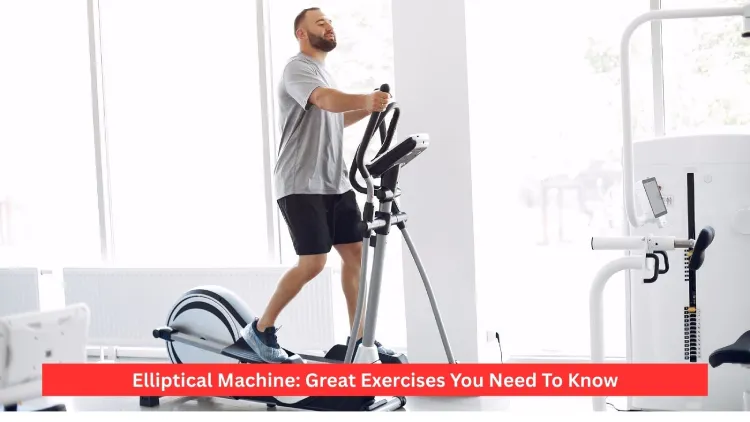
An elliptical machine is a cardiovascular exercise tool designed to simulate walking, running, and stair climbing, providing an effective workout while being gentle on the joints. Foot positions follow a smooth, oval direction and keep the joints in alignment, eliminating needless strain along the ankles, knees and hips.
The elliptical machine keeps the feet on the pedals as opposed to moving them around like the treadmills. This constant contact will provide the ability to continue moving without pounding. Elliptical exercise is good to use when one is starting, older adults, has joint issues, and is a cross-trainer.
The elliptical machines have adjustable resistance and incline, giving users an opportunity to manage the intensity of the workouts. Often, there are mobile handlebars in it, making the elliptical machine a total body workout, instead of a lower body exercise.

Muscles Worked on the Elliptical Machine
The ellipsoid machine helps work more than three types of muscles simultaneously, resulting in it being one of the most effective cardiovascular activities that can be used to condition the entire body. In comparison to the use of single plane cardio exercises, the elliptical movement is a combination of pushing, pulling and stabilising and therefore causes a balanced muscle involvement in the lower body, upper body, and core. The intensity, gradient of the incline and the direction of movement all change the type of muscles focused during an elliptical exercise.
Lower-Body Muscles
Most of the work is done by the lower body in the elliptical machine since the legs propel the movement of the pedals in the course of the exercise. Endurance, strength, and muscle tone. All these muscles are in a continuous motion, which keeps them constantly in tension.
The major muscle groups that are involved are the lower-body, and include:
- Quadriceps: Quadriceps are the muscles which are greatly engaged during the forward push of each stride. They assist in knee extension and manipulate the leg movement, especially at an increase in resistance or speed.
- Hamstrings: During the pull-through stage of the stride, hamstrings are involved. Using the elliptical machine, which pedals backwards, the hamstring activity is growing much higher, enhancing balance and muscle symmetry.
- Glutes: The glute muscle is engaged with every step, especially when either incline or resistance is raised. Planting with heels and not toes makes the glute more active, which helps in shaping the legs and strengthening the lower body.
- Calves: The calves help in the stabilisation of the ankle and can also aid in the transfer of power. During the movement, keeping the pressure on the feet under control is also beneficial to calf stamina and form.
- Hip Flexors: Hip flexors are useful in lifting and dragging the legs during the stride. These muscles are particularly engaged when the workouts are more hectic and those exercises with high cadence.
A trend towards either more or less resistance or inclination on the elliptical machine will increase the proportion of work on the glutes and hamstrings, and therefore, an elliptical exercise process will be more effective in tightening legs and enhancing functional lower body strength, without excessive stress on the joints.
Upper-Body Muscles
With proper usage of the moving handlebars, the elliptical machine is more of a full-body exercise and not a leg-centred exercise. A vigorous arm workout does contribute much to burning calories and engaging the muscles.
The muscles of the upper body engaged are:
- Biceps: The biceps are involved in the pulling part of the handle movement, especially when the resistance is increased and when the movements of the arms are regulated.
- Triceps: The triceps muscles come into play when the person is pushing, and they assist in lengthening the arms and stabilising the shoulders.
- Shoulders: The front and the back deltoids will help move the arms forward and backward that will help develop strength and endurance in the shoulders.
- Chest: The chest muscles are working in case of forward pushing, and this is primarily found when one is in an upright position, and their arms are busy.
- Upper Back: The muscles of the upper back aid in pulling exercises and posture, and aid in avoiding slouching in longer, more elongated exercises.
Constant pushing and pulling by the handles will ensure that the elliptical machine works the arms efficiently, so long as the user does not sit back and do nothing on the handles.
Core Muscles
This is because of the important stabilising role of the core in elliptical exercise. Though the elliptical machine does not require any twisting or bending motion, the balance and posture during the workout are also obligatory due to constant core interaction.
The engaged body muscles are:
- Abdominals: the abdominal muscles are involved in stabilising the torso and ensuring it is upright during increased resistance or more vigorous exercises.
- Obliques: The obliques work out the balance and coordination, and allow to manage the side-to-side motion and the prevention of smooth movements.
- Muscles (lower back): The lower back also supports the back position and spinal alignment, lessening fatigue and enhancing the effectiveness of exercises.
In the long term, better posture and regular core engagement in the elliptical machine have the potential to firm up abdominal muscles and will help to make the midsection slimmer when used with overall weight loss.

Elliptical Machine exercise has the following benefits
Low-Impact Cardio
The elliptical machine has one of the greatest benefits, which is the joints safety. The rounded gait pattern is perfect when one has poor knees, hip pain, or even ankle sensitivity.
Good workout of the heart
An elliptical workout is elliptical has a great way of raising heart rate. The elliptical exercise, regardless of 20 minutes or 45 minutes, is definitely beneficial with regard to endurance, circulation, and the effectiveness of the heart.
Calorie and Fat Burning
The calorie-burning system of the elliptical machine is efficient with the resistance or intervals applied. Although it is impossible to reduce fat in a spot, overall fat can lose belly over a period of time with the assistance of elliptical exercise.
Suitable for Daily Exercise
Since the elliptical machine is a low-impact machine, it can be applied daily as long as intensity is well managed. Those hard days need to be accompanied by easier days to prevent them.
Balanced Muscle Engagement
Assessment: The benefit of elliptical exercise over machines is that there is symmetrical utilisation of muscles, resulting in better coordination and balance.
Elliptical Machine of Proper Form
Proper form improves the elliptical machine by enhancing safety, ease, and improving outcomes.
- Also, hold yourself straight with slack shoulders.
- Use the core during the workout.
- For more than just a purpose, pull and push the handlebars.
- Push upon the heels rather than the toes.
- Avoid locking the knees.
- Move smoothly and in a controlled manner.
Maintaining upright posture and using the handles correctly maximises calorie burn and engages muscles effectively, enhancing elliptical workout results.

Elliptical Machine Workout Exercises
1. Constant State Elliptical Exercise
The steady elliptical exercise is associated with sustained speed over a long period.
- Duration: 20–45 minutes
- Resistance: Moderate
- Difficulty: Slightly challenging, does not feel too bad.
This method provides answers to what a good elliptical period would be like in regard to overall fitness and stamina. To the average individual, a daily elliptical session of 30 minutes is sufficient to maintain health and weight if it is regular.
2. High-Intensity Interval Training (HIIT)
HIIT in elliptical machine is the alternation of short bursts of high intensity with short periods of relaxation.
- 30 seconds frenzied, high resistance.
- 60 seconds slower recovery
- Total time: 15–25 minutes
Such a format burns more calories than a less intense format and is more efficient in burning body fat. Neither does it conflict with such popular organised training approaches as alternating work recovery designs typical of metabolic training.
3. Incline Elliptical Workout
The change in inclination causes an increase in workload in the glutes and hamstrings.
- Keep posture upright
- Push through the heels
- Maintain a steady cadence
This difference makes legs lean and enhances lower body contours, hence the elliptical machine is efficient in slimming and defining the lower body.
4. Elliptical Exercise of the Upper-Body.
To stress arms and shoulders:
- Vigorously pull and push the handles.
- Slightly reduce leg speed.
- Keep the movements of the arms under control.
This makes the elliptical machine not only a leg-only machine but a real full-body exercise machine.
5. Reverse Elliptical Motion
Reverend peddling alters muscle activity.
- Attacks hamstrings and buttocks.
- Enhances self-balance and coordination.
- Reduces repetitive strain
Reverse motion is also used to rectify the muscle imbalance of forward movement only.

Weight Loss Exercise
The things leading to weight loss are regularity, intensity and time. The elliptical machine promotes fat burning, as it promotes calorie deficit, which is maintained in an inert state of movement.
The majority of those individuals who want to lose weight gain the advantage of:
- 30–45 minutes per session
- Moderate to high resistance
- 4–6 sessions per week
It is possible to do elliptical exercises every day and speed up the improvement, although the intensity should be different, and rest should be taken into account. Even the rest days can be positive to help the muscles and to be motivated.
Elliptical Machine vs Other Cardio Exercises
The elliptical machine provides an intermediate position between running and walking. The elliptical exercise burns more calories in a short period as compared to walking because it has more resistance, though it involves all the body parts. It causes less impact on the joints than treadmill running, yet it provides equal cardiovascular results.
Leg slimming and fat burning. In many cases, the machine allowing resistance and incline, such as the type of elliptical, may be better than steady walking. The most important factor when it comes to which one is preferable between an elliptical machine and a treadmill is the life of the joints and comfort, combined with long-lasting consistency.
Mistakes in Elliptical Exercises
Although the elliptical machine is simple to use, maximising results depends on proper technique. Maintaining an upright posture and avoiding leaning on the handles engages more muscles, improves calorie burn, and reduces strain on the lower back.
Using moderate resistance rather than relying on momentum ensures the legs and glutes work effectively, making each workout more dynamic and efficient. Actively using the moving handlebars turns your session into a full-body exercise, engaging the arms, shoulders, and upper back for a complete workout.
Keeping a controlled pace with smooth, deliberate movements enhances stamina, improves form, and protects the joints. Incorporating a brief warm-up and cool-down prepares the muscles, supports recovery, and reduces stiffness.
By focusing on these techniques, every elliptical session becomes safer, more effective, and rewarding, helping you achieve better calorie burn, muscle tone, and overall fitness.

Conclusion
The elliptical machine is among the most psychologically diverse exercise devices to enhance cardiovascular results, fat burning, and overall body strength. It allows for a long period of workouts, can be used daily, and has low-impact movement, yet provides visible results. It is possible that the elliptical machine exercises can enhance stability, build strength, boost belly fat burning, and bring about a better fitness level with proper shape, balance of intensity, and continued exercise.
The elliptical machine is a stable and efficient mode of exercise regardless of the level of fitness, whether during steady workouts, interval trainings or on a recovery workout.
Frequently Asked Questions
1. What is the duration of an elliptical machine workout?
An average elliptical machine exercise is between 20 and 45 minutes. To most individuals, a thirty-minute workout is sufficient to enhance fitness and help in weight management when performed regularly.
2. Does the elliptical machine help one slim?
Yes, the elliptical machine aids in weight loss as it burns calories and aids fat loss, just in case the exercise involves moderate resistance or short-course workouts.
3. Does the elliptical machine work the arms and the core?
When posture is maintained straight during the workout and moving handles are actively used, the elliptical machine engages the arms and core.
4. Is it possible to make use of the elliptical machine daily?
An elliptical machine can be applied every day because of less impact on the human body, although the intensity of this process can be varied to prevent fatigue and aid in recovery.