
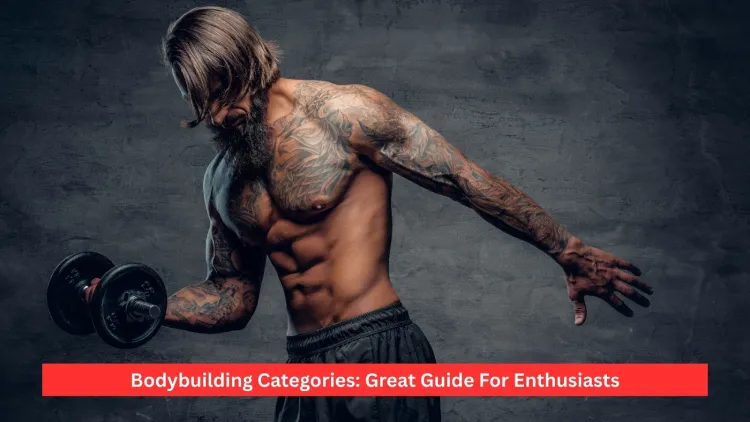

There are numerous branches of bodybuilding, including bodybuilding for men and bodybuilding for bikini and wellness. Each one draws attention to the size, agreement, or performance. Other than these, it also incorporates special modes of training, bodybuilding federations, such as NPC and IFBB, and organised diets. You are either competing or a fan, but to recognise the bodybuilding categories is to appreciate the variety and effort it takes.
1. Men’s Bodybuilding
Men’s bodybuilding is the division people refer to most when it comes to the foundation of the sport. The goal of competitors is to develop as much muscularity, symmetry and razor-sharp conditioning as possible.
There are some lightweight to super-heavyweight athletes competing in weight classes, which allows fairness in the different body sizes. Competitors are required to perform the front double biceps, side chest, and back double biceps, which allows the judges to judge each part of the body in its own pose.
At the top is the Mr. Olympia Men’s Open general title, which is the highest bodybuilding title that is regarded as the peak of the sport. It is the ultimate aim of bodybuilding and has been under the belt of such muscle-building supermen like Arnold Schwarzenegger, Ronnie Coleman and Phil Heath, amongst others.
2. Classic Physique
Classic Physique is featured to restore the appearance of the Golden Era of bodybuilding. Instead of excessive mass, it emphasises appearance, symmetry and proportion. The competitors are evaluated according to a broad V-taper, narrow waist, and desirable muscle sizes.
Cutoffs limit the height and weight of different athletes and make sure they are not too big so that their bodies look just like their heroes, such as Frank Zane and Arnold. This group will attract sportspeople and spectators who are attracted to beauty and movement rather than the sheer size.
Classic Physique is increasing its popularity as it is a combination of the arts and science. It is thought by many to be the real essence of bodybuilding.
3. Men’s Physique
Men’s Physique lends a more realistically achievable beach-ready appearance to the stage. Rivalry features board shorts and is evaluated based on the beauty and symmetry of the upper body instead of sheer size.
This is because only frontal and back poses are used, so it does not emphasise the detail of the muscles as much, but rather flow and evenness. Men’s Physique is another rapidly evolving type of bodybuilding categories that includes younger athletes who desire a slim body, less masculine and more reminiscent of an athlete.
It can also be a gateway to men who want to compete yet dislike the insane bulk of the typical bodybuilding.

4. Women’s Bodybuilding
Bodybuilding among women focuses on as much muscularity, definition, and presence as possible while on stage. It is not so popular as it used to be in the 80s and 90s, but it is still respected.
Athletes are subjected to highly developed hypertrophies, conditioning and posing routines comparable to bodybuilding in men. This section has been ruled by female legends, such as Iris Kelly, who has become an example of extreme muscular development.
5. Women’s Physique
Women’s Physique Built as a midline between bodybuilding and figure, the stature hinges between volume and beauty. Athletes are curvy, but softer in lines and more feminine.
The competitors turn quarter turns on music and do a posing routine showing symmetry and conditioning. This category would suit females who like to test their bodies but do not pursue the extreme mass of feminine bodybuilding.
6. Figure
The competitors featured in the figure division are lean, athletic, with less muscle mass compared to those in the physique category. It focuses on proportion, symmetry and feminine presentation.
Figure athletes wear decorated two-piece suits and high heels and do quarter turns instead of complicated posing jumps. The fashion is sports-like and sophisticated, which is attractive to women who train actively, but want to sport a more sophisticated and modest look.

7. Bikini
The bikini bodybuilding category is one of the most famous female bodybuilding which focuses on beauty, figure and a well-built, marketable body.
Judging pays attention to curves, buttocks and general appearance on the stage more than on muscle size. Boot rivals wear bikini-style suits complete with heels, performing model-esque postures to place an emphasis on the feminine aspect.
Bikini captures the interest of the athletic population that exemplifies the lifestyles within a slender-looking appearance.
8. Wellness
The wellness range is created with the idea that women have naturally fuller lower bodies. Legs and glutes are stressed (but the upper body is no more than three-fifths the size).
This department praises body diversity and has gained popularity all over the world. It is attractive to many women because it gives memorable results without extreme dieting or excessive size on the upper body.
9. Fitness
Fitness is performance across the physique. Contenders show both body aesthetics and a choreographed routine accompanied by body gymnastics, strength moves and dance.
This group emphasises athleticism in general, which requires flexibility, endurance, and ingenuity as well as muscle growth. Fitness is one-and-a-half, in the sense that it measures performance and physique equally.

Beyond the Categories: Bodybuilding Culture, Terms, and Methods
Bodybuilding is not only a sport by classification but also a culture with its own vocabulary, associations, and concepts of training. It is knowing these that will give you a better understanding of the sport.
- NPC (National Physique Committee): This is the biggest amateur bodybuilding association in the U.S. Most athletes come here first and then become professionals.
- IFBB (International Federation of Bodybuilding and Fitness): The international organisation of bodybuilding that governs professional bodybuilding. It is a big accomplishment to win an IFBB Pro Card.
- OCB (Organisation of Competitive Bodybuilders): This is a natural bodybuilders’ federation in the U.S.
- ICN (I Compete Naturally): An association of drug-free competitions spread across the world.
- GBO (Global Bodybuilding Organisation): This is another body that provides both amateur and professional athletes with opportunities.
- NFF (National Fitness Federation): an expanding organisation that offers natural contests.
Training and Science in Bodybuilding
The bodybuilders take advantage of the established training techniques to increase their levels of hypertrophy (muscle growth). Most generic methods, such as the 3/7 (sets with a brief rest period to make the muscles feel fatigued) and the 3-2-1 (increasing the workload from heavy to light) method, in addition to the 250% method (completely shocking the muscles to grow), are meant to flatten the muscles to grow.
The foundation of mass building and strength is the big 3 lifts (squat, bench press, deadlift) and the big 5 lifts (overhead press, add rows). The concept of training intensity is based on repetition ranges (RM, or repetition maximum) and the conditioning aspects are presented by EMOM (every minute on the minute) training.
Athletes normally use PRs (personal records) and PBs (personal bests) as a measure of improvement. These minor successes motivate in between training cycles.
The Role of Science and Hormones
Science is a very important aspect of bodybuilding. Acronyms IGF (Insulin-like Growth Factor) or GH (Growth Hormone) are some of the common terms used when talking about muscle development and recovery. Big peptides such as CJC DAC and BPC 157 have been investigated regarding their ability to heal and repair the muscle.
Given that ttherehaveen performance-enhancing substances, athletes are tested by the natural bodybuilding federations. Examples of such questions include: Does IFBB test steroids? Reflect ongoing debates. Testing is not the norm in the IFBB Pro League, but in a natural federation, it is very strict.

Nutrition and Lifestyle
Training is not as important as nutrition. To sustain energy levels, stay full and keep protein production at a high level, bodybuilders often consume meals 2 to 3 times a day. This treatment aids hypertrophy and healing.
It is also common to tan before the coma petitcommotion stage, lights make those with dark skin look leaner and win a fair competition against the rest of the athletes.
Stages of Bodybuilding and Peak Age
The bodybuilding process is usually divided into several steps: bulking (mass), cutting (fat) and peaking (before the test). The majority of athletes reach their physical peak at ages between 30 and 40, but champions can be found among athletes younger and older.
Body Types and Natural Strength
Bodybuilding has three predominant body types: ectomorph (naturally lean), mesomorph (muscular and athletic) and endomorph (softer and stockier). Learning to be the right type is a way to direct the training and nutrition plans.
Although certain competitions are linked to the use of steroids, many athletes are natural. Sports associations such as OCB and ICN demonstrate that there are bodybuilding categories that are attended by natural bodybuilders. The subject of raw power has also found its place in history, as legendary bodybuilders have always argued over who was the strongest.

Final Thoughts
The universe of the bodybuilding categories is extensive and accommodating, and it features a category of physics and character to cover almost any body shape. Even between the giant bodybuilding German monster and the beauty in a bikini and an athlete in fitness, there is a place where each athlete belongs.
In addition to classifications, it involves discipline, science and lifestyle. There are training processes, nutrition and federation that influence competitors. Whether you drool over the shiny Golden Era appearance of Classic Physique, the achievable appearance of Men Physique, or the muscularity of Women Bodybuilding, there is something within the sport to get each person excited.
It all hinges on muscle, but it is not simply that; bodybuilding is commitment, perseverance and physical perfection.
Frequently Asked Questions
1. What are some bodybuilding categories of major competitions, such as Mr. Olympia?
Mr. Olympia now offers both men and women various bodybuilding categories, which include Men, Open Bodybuilding, Classic Physique, Men, Physique, Women, Bodybuilding, Physique, Figure, Bikini, Wellness and Fitness. Within each category, specific judging standards are provided to each athlete with varying physiques an opportunity to compete.
2. What is the reason why bodybuilders get tan before competition?
Tanning is used to increase muscle definition, where bright stage lights are used. Darker areas of skin colour will produce more emphasis in cuts, separation and symmetry, thus competitors can be judged equally and their bodies can be depicted in a photoglossy look on stage.
3. What do the key bodybuilding preparation steps include?
Bodybuilding is common and consists of three sections: bulking (adding weight in the form of muscle), cutting (removing body fat without causing a decrease in muscle volume), and peaking (polishing the body to near perfection before competition). They are the stages under which athletes will appear at their best on the stage.
4. Do bodybuilding competitions drug-test everyone?
Not every federation carries out drug testing of athletes. Strict anti-doping guidelines are in place in natural federations such as ICN, OCB and NFF, even though some, such as the IFBB Pro League and NPC, do not regularly test. That is why sportsmen often select a federation in accordance with their interests in natural or open competitions.


2 thoughts on “Bodybuilding Categories: Great Guide For Enthusiasts”
That is the appropriate weblog for anyone who desires to find out about this topic. You realize so much its almost exhausting to argue with you (not that I truly would want…HaHa). You undoubtedly put a brand new spin on a subject thats been written about for years. Nice stuff, just nice!
That is the appropriate weblog for anyone who desires to find out about this topic. You realize so much its almost exhausting to argue with you (not that I truly would want…HaHa). You undoubtedly put a brand new spin on a subject thats been written about for years. Nice stuff, just nice!