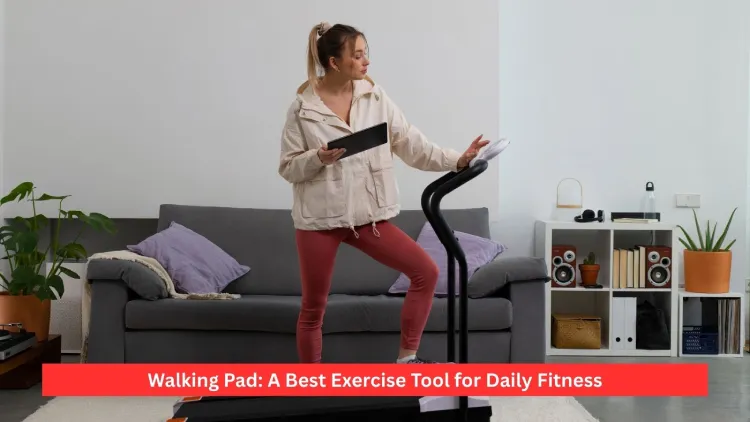

A walking pad comprises a compact indoor exercise machine, which is used to perform walking exercises. It offers a high-effort/low-impact exercise solution with a high success rate in terms of calories burnt, cardiovascular stamina, the number of calories burned every day, and healthy weight loss. Frequent exercises on a walking pad can also remove belly fat, improve endurance and develop consistency without straining the joints. A walking pad would be a working and effective exercise solution performed at home with limited effort due to how it can be used correctly, working out regimens, and appropriate body posture.
- What Is a Walking Pad?
- Best Walking Pad Exercises
- A Walking Pad Workout Plan (Weekly Sample)
- Walking Pad Exercise Advantages
- Fat Reduction and Weight Loss
- Walking vs Running Steps
- Walking Pad and Traditional Treadmill
- Indoor vs Outdoor Walking
- Safety and Limitations
- Daily Use Effects
- Walking Pad Workouts Tips
- Final Thoughts
- Frequently Asked Questions
What Is a Walking Pad?
A walking pad is a narrow treadmill which is compact in size and is aimed at walking, not running. It is designed to hold a stable movement with adjustable speeds, and this is perfect for exercising power in homes. In contrast to the large gym equipment, a walking pad can be pushed under the furniture, as it usually folds and can be placed in tight apartments or offices.
A walking pad is as simple as it sounds; it is intended to make you move more. With sitting taking an overbearing role in the working and relaxing regime of contemporary life, this gadget simplifies life and makes it more convenientdailys. You will also be able to complete organised walking exercises in the room rather than depending on the natural climate or gym memberships.
Although it might appear comparable to a treadmill, a walking pad is more streamlined to slow down and be smoother. Light jogging is permitted on some models, but the majority of them concentrate on brisk walking. This specialisation also renders it safer and reached by new people, the elderly and the injured.
Why It’s Perfect for Exercise
Low-impact movement
- Knees and hips also experience less stress when walking as opposed to running.
- This renders exercises long-term sustainable.
Controlled speed settings
- There is an opportunity to control intensity.
- Perfect for interval exercising and stamina training.
Compact workout solution
- They are easy to keep and can be used on a daily basis.
- Promotes active and regular inconsistency.
Beginner-friendly design
- No complex setup required.
- Permits progressive improvement in fitness.
Supports daily step goals
- Enables one to walk between 8,000 and 10,000 steps in a room.
- Helps rebels with seated habits.
Best Walking Pad Exercises
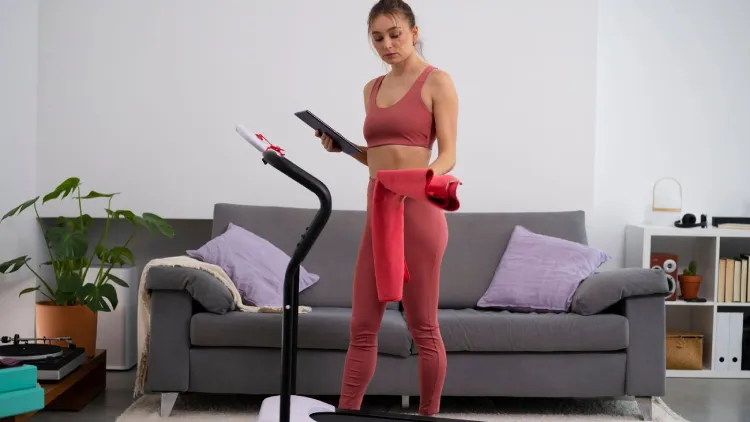
Variety is important to achieve maximum outcomes. Here are the detailed exercises that will make ordinary walking sessions work as fat-burning and energy-giving exercises.
1. Steady-State Walking
All the indoor walking workouts are based on steady-state walking. It is staying on a steady pace over a long duration.
This training makes the heart stronger as well as increasing the capacity of the lungs, and metabolism of fat is encouraged. In the majority of cases, daily 30-minute regular physical activity is sufficient to promote general health indicators.
Moderate Pace Walk (20–40 minutes)
- Keep a slow pace which increases breathing slightly.
- Strengthens and promotes slow weight gain.
Fat-Burning Walk (30 minutes)
- Pace one should be a conversation pace, though a little bit difficult.
- Recommends consistent fat metabolism.
Novice Conditioning Walk (15 to 20 minutes)
- Begin decently and pick up speed.
- Warm up the muscles and joints.
Long-Duration Walk (45–60 minutes)
- Ideal for advanced users.
- Helps to increase caloric expenditure and calorie burning.
People are asking themselves the question of whether indoor walking really helps. The solution is in steadfastness. Regular walking has a great deal of beneficial effects on cardiovascular health and energy levels when performed on a regular basis.
2. Incline-Free Power Walking
Although without incline features, the intensity can be enhanced by the changes in the speed and the posture.
Glutes, hamstrings, and core muscles are better engaged by power walking in comparison with slow walking. It is a very good plan when one wants to lose belly fat.
Brisk Power Walk (15–25 minutes)
- Speed up with a straight back posture.
- Elevates heart rate quickly.
Posture-Focused Walk (10 -15 minutes)
- Use the main muscles and pull back the shoulders.
- Enhances stability and back flexibility.
Arm-Swing Power Walk (20 minutes)
- Drive arms purposefully.
- Improves energy consumption and activity of the upper body.
Though there is no fact that belly fat can be reduced on the spot, activities that regularly use a lot of calories, like power walking, help in losing fat, including belly fat.
3. Interval Walking Workout
Interval training involves explosions between high and slow speeds. The technique improves metabolic rate and performance of the cardiovascular.
It is also time-saving, and 20-30 minutes is efficient.
Basic 1:1 Interval
- 1-minute fast and 1-minute slow rest.
- Repeat for 20–25 minutes.
Pyramid Intervals
- Raise quick periods slowly, thereafter lower.
- Enhances endurance advancement.
30-Second Speed Bursts
- Short high-intensity pushes.
- Maximises calories burnt within a shorter period of time.
When combined with a balanced diet, interval walking can be of great benefit in losing fat.
4. Walking Pad Core Activation Exercise
Muscular awareness makes walking an effective activity.
Core Tightening Walk (15 or 20 minutes)
- Maintain uterine muscles in a relaxed position.
- Makes the midimages more stable.
Heel-to-Toe Focus Walk
- Emphasise full foot roll.
- Strengthens the ankle and calf muscles.
Light Dumbbell Walk
- Carry light weights when taking a stroll.
- Provides slight resistance in the upper body.
Most of them cannot run at high speed, though some of the models allow jogging. In case jogging is undertaken, speed must be moderate and controlled.
5. Endurance Building Workout
Long-lasting workouts are major in long-term weight control.
45-Minute Continuous Walk
- Keep the intensity at moderate levels.
- Helps maintain cardiovascular health.
Step Goal Challenge
- Aim for 10,000 steps indoors.
- Promotes physical exercise routine.
Progressive Speed Walk
- Add speed after every 5 minutes.
- Builds aerobic capacity.
Making 10 000 steps will take 75 to 100 minutes at the same pace. An average of 30 minutes of moderate exercise can be equivalent to 3,000 or 4,000 steps.
A Walking Pad Workout Plan (Weekly Sample)
Plateaus and overtraining are prevented by a structured weekly routine.
- Day 1: 30-Minute Steady Walk
- Day 2: 20-Minute Interval Session
- Day 3: 40-Minute Moderate Walk
- Day 4: Light 15-Minute Recovery
- Day 5: 25-Minute Power Walk
- Day 6: 60-Minute Endurance Walk
- Day 7: Rest or Light Stretch Walk.
Exercise on a walking pad is usually safe in healthy people, provided there is some variability in the intensity of the activity. Recovery days will aid in avoiding fatigue and muscle pain.
Walking Pad Exercise Advantages
Frequent meetings have many physical as well as mental benefits.
- Enhances cardiovascular levels: enhances heart muscles and blood circulation.
- Lowers weight: Produces a deficit of calories together with nutritional control.
- Americas muscle muscles: Uses lower body muscles.
- Alleviates stress on the joints: Less risky compared to the high-impact exercises.
- Improves daily productivity: Light exercise enhances attention and mood.
- Meets the definition of workout: Exercise is any form of structured movement that becomes increasingly harder because of an elevation in heart rate.
Fat Reduction and Weight Loss
Calorie balance is necessary for sustainable fat loss. Regular walking is one of the exercises that can be used to lose body fat, including areas like the stomach, which are very difficult to lose weight in.
The challenge of losing 5 kg by walking alone within a month is not hard, yet it is possible, in case of control of the diet and strict daily sessions. The bigger objectives, like weight loss of 10 kg, take more time, the right nutrition, and increasing the intensity of exercises.
Aggressive goals also tend to be unhealthy and short-term, such as major weight loss within a period of two weeks. Safe loss of fat occurs slowly.
Even thirty minutes of vigorous walking each day can make a difference in the reduction of weight over time, provided that it is regularly done.
Walking vs Running Steps
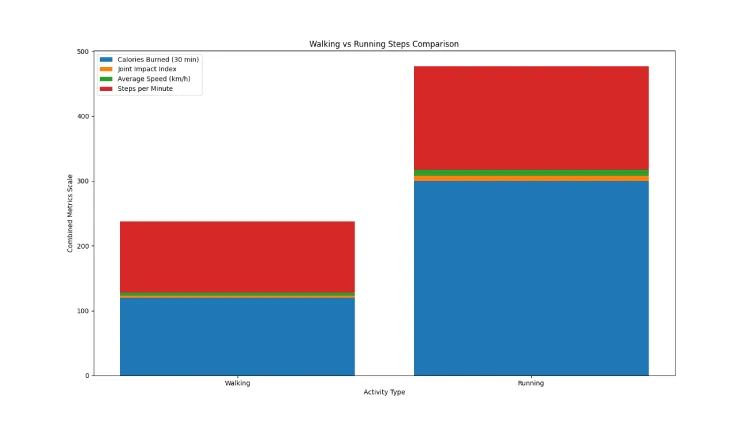
To perform 10,000 running steps does not mean to make 10,000 walking steps. Running is more calorie-burning as it is more intense and has a higher cardiovascular load. It also uses more muscles and puts higher strain on joints, and this may result in injury when overdone.
Instead, walking is of low impact and can be considerably more convenient to maintain daily. It is used to burn more fat per minute; nonetheless, it has a chance to spend more time on it and to exercise every day, which is essential in losing fat and keeping the heart fit.
Generally, routine jogging on a walking pad offers enough energy expenditure as well as assists in maintaining weight and developing the heart, which is also not hard on the joints like jogging. The most important aspect of long-term results is consistency and not intensity.
Walking Pad and Traditional Treadmill
A conventional treadmill is constructed with faster-paced exercises. It generally promotes high speed of running, inclination and progressive training programs. This makes it perfect for runners or individuals who desire sprint sessions and hill-type cardio exercises in their homes.
On the contrary, a walking pad is primarily used during moderate walking. It is centred on simplicity, silent functionality and small storage. The majority of the models are thin and foldable, and thus they can slide under a bed or a sofa during off-use.
Space and cost are more expensive since treadmills are larger and, in most cases, have additional features as well as more powerful motors. A walking pad will be cheaper and more adapted to home offices or small apartments.
Both machines can be effective in the case of weight loss and daily activity, provided that they are used regularly. Nevertheless, a walking pad is preferred in terms of all low-impact and constant calorie-burning exercises, and a treadmill can be used to engage in more serious exercises such as running and climbing inclines.
Concisely, a treadmill is recommended in case you desire rapid running and sophisticated training. Select a walking pad in case you want to take a convenient, low-impact walking exercise at home.
Indoor vs Outdoor Walking
Outdoor Walking Benefits:
- Brings in fresh air and natural sunlight.
- Differing terrain will enhance balance, coordination, and different muscles.
- Contact with nature is capable of decreasing stress and improving mood.
Indoor Walking Advantages (Walking Pad):
- Protected against weather such as rain, intense heat or snow.
- Eschews external risks like districts and pollution.
- Free to walk at any moment, including watching television or listening to music.
- Offers a regulated heart rate and low-risk workout, perfect when the person is a beginner or has been injured.
Practical Consideration:
- Walking pads that are used inside the house will ensure regular daily exercise despite the weather conditions.
- Indoor and outdoor types of walking help in burning calories, cardiovascular conditioning and general fitness.
- Selection is control over place, time and taste.
Safety and Limitations
Although mostly safe, the following should be considered:
- Limited incline options.
- Unsuitable for sprint training.
- The monotony of May is boring to some users.
Individuals who have severe balance disorders, untreated cardiovascular conditions, or acute injuries to joints should not be used without consulting medical professionals.
Treadmill errors are common and may include links to holding handrails at an excessive rate, forward-leaning, excessive settings in relation to speed, and neglecting warm-ups.
Muscle exhaustion or shin splints could result from excessive use without relaxation.
Daily Use Effects
Exercise during weight loss enhances stamina, a steady mood, sleep, and metabolic health. Nonetheless, a lack of balance may lead to burnout, where one is overtraining without taking a rest.
The concept of the so-called 30 mora is also commonly used to refer to the necessity to engage in at least half an hour of moderate activity on most days of the week to reap the general health benefits.
The 3-3-3 concept of walking can be counted by walking three times a day with a time of three minutes each time, gradually increasing in intensity to generate a sum of nine productive minutes, and is commonly applied to people who are starting a habit.
Walking Pad Workouts Tips
- Five minutes of warming up and then speed up.
- Spinal position should be neutral, and shoulders should be tense.
- Gradually increase intensity.
- Wear supportive shoes.
- Hydrate properly.
- Track steps and duration.
- The strongest results factor is consistency.
Final Thoughts
A walking pad is a convenient and efficient method of integrating structured walking workouts of walking into everyday life. It is an effective fitness company regardless of your goal, whether you want to have a better heart, slow fat gain, or even just move more.
This small machine helps in sustainable development when implemented wisely with different practices, adequate rest, and dietary concerns. Even though walking appears to be simple, it can be rated among the most effective long-term health and weight management instruments when done on a regular basis and in a calculated manner.
Frequently Asked Questions
1. Do walking pads help to lose weight?
Walking pads are indeed useful in losing weight, provided that one applies them regularly. They offer low-impact exercises that burn calories, enhance metabolism and help in reducing fat in a gradual manner. Daily walking sessions and a balanced diet can be used to complement the results and be used to reduce belly fat after some time.
2. Is it possible to be on a walking pad every day?
Absolutely. Most healthy individuals can safely walk on a walking pad on a daily basis, especially when the intensity and duration are varied. Fatigue can be prevented by shorter sessions, rest days, or light walks without losing regularity in the activity habit.
3. What is the distinction between a walking pad and a treadmill?
A treadmill is created to run at high-speed, do some exercises on an incline and high-level training, and, therefore, it is larger and pricier. A walking pad is portable, foldable and targets moderate walking, making it ideal for home, low-intensity exercise and daily step objectives.
4. Is it better to walk on a walking pad as opposed to outside?
The advantages of both indoor and outdoor walking are present. Strolling outside will offer air, sunlight, and an uneven surface, which will enhance balance and coordination. Walking on a walking pad assures uniformity, outdoor-free exercises, and regulated speed, so it can be considered a viable option in everyday exercises.