

One of the foot conditions that responds best to natural interventions is plantar fasciitis stretches that help alleviate heel pain, restore foot movement, and avoid stiffness in the long term. Stretching the plantar fascia, calves, Achilles tendon and intrinsic foot muscles regularly can reduce inflammation, increase blood flow and aid the healing process at any age or stage of life, pregnancy, menopause and childhood. When it is performed in the right manner and regularly, then it is an instance of plantar fasciitis stretching, which eventually is the honesty that ends up finalising heel pains and prevents further pain.
- 1. Towel Stretch
- 2. Calf Stretch
- 3. Plantar Fascia Stretch
- 4. Rolling Stretch
- 5. Toe Stretch and Flex
- 6. Wall Stretch with the Arch of the foot.
- 7. Seated Foot Stretch
- Addresses to Concerns That Are Usually Raised
- Stretching vs Other Foot Conditions
- Function of Recovery and Self-Care
- Conclusion
- Frequently Asked Questions
1. Towel Stretch
One of the best recommended plantar fasciitis stretches is the towel stretch, as it actually extends to plantar fascia and Achilles tendon simultaneously. This activity is particularly effective in the morning when all the fascia contracts during the night.
How to do it:
- Sitting on the bed or floor, keeping your legs straight in a full position.
- Wrap a towel, belt or resistance band around the ball of one of the feet.
- Take the two ends of the towel, and draw your foot with them towards you.
- Stand with your knee straight, with your toes relaxed but lengthening.
- Wait 20-30 seconds, and then release.
- Repeat 2–3 times on each foot.
This is to enhance the lumbar back chain of the lower leg, which is very important since taut calves tend to strain the plantar fascia further. Stretching of towels regularly reduces morning and heel pain and could stop further stages of plantar fasciitis in more advanced stages.
2. Calf Stretch
The significant causes of plantar fasciitis include calf tightness. In case of shortened calf muscles, they restrain the ankle movement and augment pulling forces with the use of the heel and the plantar fascia.
How to do it:
- Facing a wall, and keeping both hands at the level of the shoulders.
- Lift one leg back and stand in a straight position with the heel on the ground.
- Flex forward bend, with the knee in front.
- Feel the tension in the rear leg calf.
- Hold for 20–30 seconds.
- Cross over and cross over 2-3 times.
This is a stretch that helps in healing because it can enhance the mechanics of the ankle, and hence, the pressure during walking and standing is limited. It has been noted by most individuals that regular calf stretching is what ultimately helped them to clear their plantar fasciitis after months of suffering.
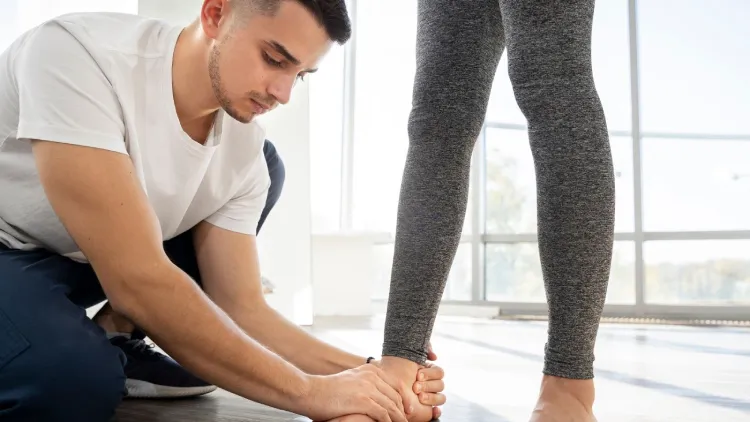
3. Plantar Fascia Stretch
It is a heavily localised stretch of the plantar fasciitis targeting the fascia as opposed to the adjacent muscles.
How to do it:
- On the opposite knee, cross the affected foot on the chair.
- Using the bottom part of your toes, pull them back to your shin.
- One should have a feeling of tension across the arch of the foot.
- Hold for 15–30 seconds.
- Repeat 2–3 times.
It is especially functioning well before rising after prolonged sitting or sleep. It also serves to rule out plantar fasciitis- like Dudley in the event that one gets a known stretch-pain experience along the arch with this action, then it is most likely to be plantar fascia-related pain as opposed to a nerve issue.
4. Rolling Stretch
Rolling exercises are a form of stretch and self-release method, which breaks up the tissue stiffness and creates better blood flow.
How to do it:
- Lightly sitting or standing on a tennis ball, a massage ball or a frozen water bottle.
- Rotate the object beneath the arch heel to the forefoot.
- Use mild and acceptable pressure.
- Keep doing so, 1-2 minutes per foot.
This oscillation movement works as an autorelease technique for plantar fasciitis. Especially, it may be beneficial when the rigidity develops as the day progresses. Recovery programs in many people accompany rolling with natural anti-inflammatory measures, including post-exercise recovery programs, to increase the outcomes.
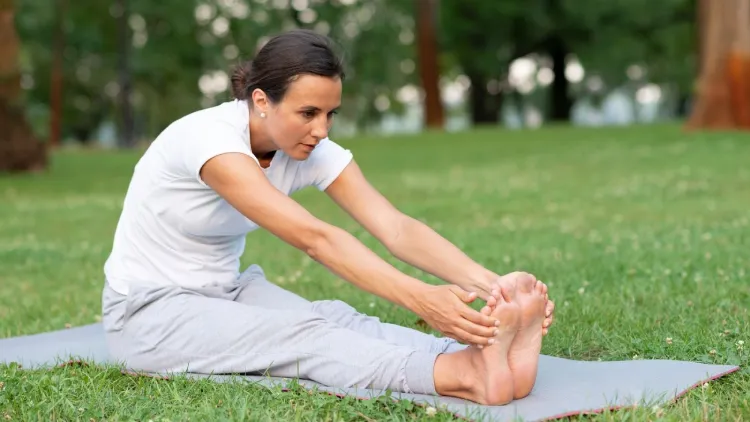
5. Toe Stretch and Flex
Toes and extend to reduce the strain on the plantar fascia through enhancing foot stability and a good distribution of loads.
How to do it:
- Sit in a flat position.
- Place a towel on the ground.
- Wrap up the towel with your toes.
- Release and repeat 10–15 times.
This will tighten the intrinsic foot muscles that are significant in the support of the arch. The weak foot muscles are commonly described to be those that are linked with flat feet or excessively high arches; each elevates the stress levels on the plantar fascia.
6. Wall Stretch with the Arch of the foot.
This exercise is a combination of calf, arch and ankle motions in a single movement.
How to do it:
- Stand facing a wall.
- Put a foot behind, forward toes up.
- Stomp down on the heel of the ground.
- Slide a leg forward when having a straight continuous leg with the back leg held straight.
- Hold for 20–30 seconds.
This is the area that is most beneficial when the patients experience plantar fasciitis that is aggravated by standing for many hours or using non-supportive shoes. It helps in the healing process through normalising of foot mechanics.
7. Seated Foot Stretch
It is one of the most convenient stretches for plantar fasciitis that can be carried out at any location.
How to do it:
- Sit comfortably in a chair.
- Lay one knee on the opposite knee.
- Gently, withdraw the toes till a stretch in the arch is experienced.
- Hold for 15–30 seconds.
- Repeat a few times in the day.
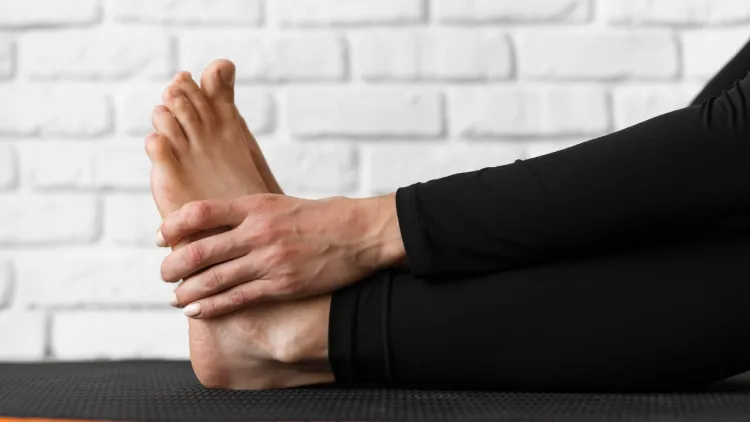
This is an area that is typically done as part of physiotherapy in the treatment of plantar fasciitis and is usually safe when performed by most individuals, even during pregnancy or when menopause is in effect, when the connective tissue becomes more sensitive.
Addresses to Concerns That Are Usually Raised
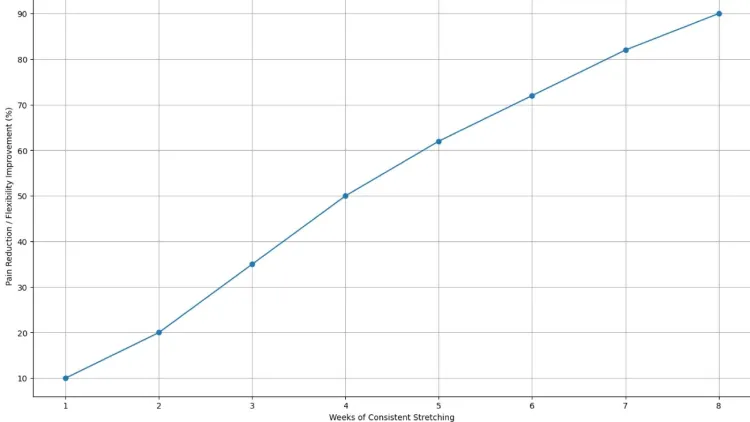
Plantar fasciitis stretches can restore mechanical problems that are the originators of heel pain. Stretching enhances tissue elasticity, minimises micro-tearing and increases blood flow, which are fundamental factors in the healing process. Stretching itself in most instances removes the symptoms without the use of drugs or surgery.
Sudden onset plantar fasciitis is commonly associated with variation in the activity, footwear, weight distribution or changes in hormone levels. Stretching aids in the adaptation of the foot to these changes in a safe manner.
Necessary stretching exercise reverses the rigidity of the connective tissue and the distorted recovery ability of the affected people due to menopause-related plantar fasciitis. On the same note, the mild stretching exercises can be beneficial to the kids and women in a state of pregnancy, as long as they are done in a proper manner.
Stretching vs Other Foot Conditions
Plantar fasciitis stretches are easily mistaken for bursitis, neuropathy, or foot pain as a result of arthritis. Models of stretching may be used to distinguish between these conditions. Gradually improving movement-sensitive pain that is promoted in response to plantar fasciitis stretches is thus a more probable fascial than nerve-associated pain. By comparison, neuropathy is frequently characterised by burning or tingling pain that is not relieved by stretching.
Stretching is necessary in the case of advanced or stage 3 plantar fasciitis, but it should be carried out gently and consistently, as compared to being done in an aggressive manner.
Function of Recovery and Self-Care
Although this paper is about exercises, stretching goes hand in hand with other recovery methods. The effects of plantar fasciitis stretches can be improved by gentler forms of self-massage, compression, and supportive shoes. During the recovery period, compression socks can be used to reduce swelling and increase circulation.
Stretching also lowers compensating movement patterns, which may cause secondary conditions like tension headaches or knee pains.
Conclusion
Stretches in plantar fasciitis should be the most useful, available, and viable method in the management of heel pain. These exercises treat the underlying mechanical causes of the problem instead of merely covering up symptoms by causing the activation of the plantar fascia, calves, Achilles tendon and foot muscles.
Regularly done, the plantar fasciitis stretches enhance flexibility, decrease the inflammation, reestablish the normal movement patterns, and prevent the recurrence. One of the most effective approaches to foot pain is a regulated stretching program, regardless of the stage of pain you are working with or how many years you have spent living with pain.
Frequently Asked Questions
1. Is stretching enough to cure plantar fasciitis?
Yes, in many cases. Regularly performing plantar fasciitis stretches may decrease the pain and enhance the flexibility as well as the normal movement of the foot, particularly in mild to moderate cases.
2. What is the duration of plantar fasciitis stretches?
In the majority of cases, the patient can realise improvement after 2404 weeks of daily stretching, although in chronic research cases it can take several months of practice.
3. Is the use of plantar fasciitis stretches safe across all ages?
Yes. Done with caring, it is safe to perform the plantar fasciitis stretches in pregnancy, during the menopause and even in childhood, to relieve the stiffness and heel pain in an entirely natural way.
4. Is it better to have plantar fasciitis stretches every day?
It is advised to stretch daily. Regular plantar fasciitis stretching lessens inflexibility, enhances blood flow, and eliminates the potential reappearance of pain.