

Mountain climbers are a vigorous all-body workout that builds your core, builds heart endurance, and enhances endurance. They burn fat, build muscles, agility, which makes them the best exercises at home, gym, or high-energy conditioning interval training (HIIT). Flexibility and posture. This is achieved through regular practice, which contributes to enhanced posture and greater flexibility, and may serve as an effective benefit in the handling of weight.
- What Are Mountain Climbers?
- Muscles Engaged by Mountain Climbers
- Advantages of Mountain Climbers
- The Effects of Mountain Climbing on the Body
- Do Mountain Climbers Burn Belly Fat?
- The Right Way to Do Mountain Climbers
- Mountain Climber variations
- Common Mistakes to Avoid
- Mountain Climbers: How Long and How Often?
- Pros and cons of Mountain Climbers
- Mountain Climbers vs Planks
- Mental and Emotional Advantages
- Weight Loss and Mountain Climbers
- More Effectiveness Tips
- Conclusion
- Frequently Asked Questions
What Are Mountain Climbers?
Mountain climbers are an exercise that involves the use of no equipment, an exercise with high intensity, which is categorised as a bodyweight exercise, and can be done almost anywhere. The movement is performed in the plank position, and the knees are alternately pulled towards the chest in a running style, keeping your hands on the ground. The exercise is very efficient as one uses numerous muscle groups at the same time, i.e., the core, shoulders, arms, and legs. The exercise may seem to be easy, but it is very effective.
Such a mixture of movements not only makes the body strong, but also puts the cardiovascular stamina to the test. Mountain climbers increase the heart rate by holding the body in a plank as the legs move fast, hence an all-around fitness as well as cardio workout. The twofold advantage of this is that they are the best option to consider when one wants to lose some heat, increase stamina and build muscle without participating in any weight or machine-based exercises.
The mountain climbers are also diverse. They can also be modified according to the level of fitness- the beginners can do them slowly and concentrate on the correct posture, whereas the more advanced members can do them so fast to raise the intensity. The voluntary motion of the exercise makes it different from the static exercises, such as the conventional planks; both the conditioning of muscles and cardiovascular value are realised in a similar moment.
Mountain climbers are an effective and efficient full-body exercise that can be performed whether it is part of a home workout, a gym regimen, or a high-intensity interval training (HIIT) exercise session, which strengthens muscles, coordinates, and enhances fitness in general.
Muscles Engaged by Mountain Climbers
This is because some of the reasons behind the effectiveness of mountain climbers are that they exercise (or work on) several muscles simultaneously:
Core Muscles:
The rectus abdominis, obliques and transverse abdominis are the main muscles utilised by mountain climbers. This causes them to be a good workout for a tight core, which helps in their daily activities and other activities.
Upper Body:
Plank posture involves the exercise of the shoulders, the chest, and the triceps. This assists in enhancing upper body strength, stability and avoids injuries that are caused by the weak supporting muscles.
Legs and Hips:
Every knee-driving exercise targets the hip flexors, the quads, and the hamstrings, which is why mountain climbers represent an effective workout that is a little discreet but efficient at the same time, with the focus on the lower body.
Cardiovascular System:
Quick repetitions increase heart rate, which improves the endurance and stamina of cardiovascular functions with time.
Advantages of Mountain Climbers
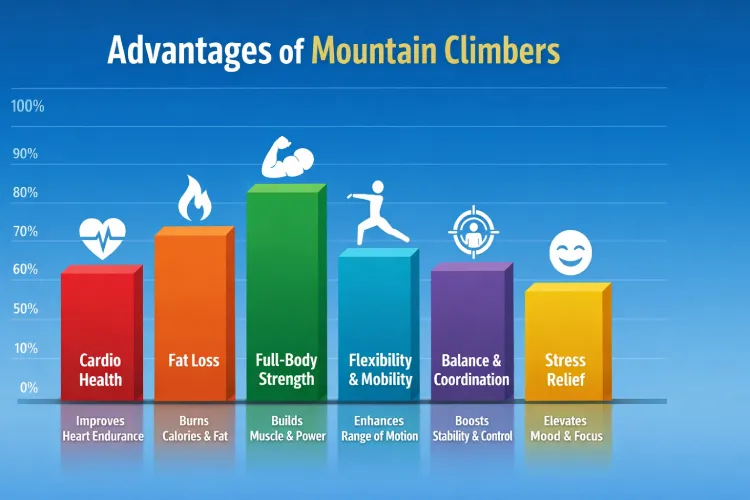
Mountain climbers present a spectacular list of body and mental advantages:
- Cardiovascular Promotion: The high-intensity movement elevates the rate of the heart, enhancing heart resilience and health.
- Fat Loss and Calorie Burn: This may be used in combination with proper diet and other exercises to burn calories, especially in the belly and thigh area.
- Whole-Body Strength: Mountain climbers work on strengthening the arms, the chest, the legs, and the core together as opposed to those that only work one part.
- Flexibility and Mobility: The alternating knee drive promotes the functioning of the hip mobility, enhancing the range of movement and functional mobility.
- Synchronisation and Dexterity: Powerful moves given under slow speed increase the sense of balance and coordination, and concentration.
- Emotional Benefits: With frequent practice, stress can be relieved, mood can be elevated, and one can get the feeling of achievement.
Mountain climbers will be helpful to perform your daily workouts, perhaps three times a week, as they will improve overall fitness, facilitate weight loss, and strengthen muscle endurance, yet it is necessary to complement them with other exercises to be overall developed.
The Effects of Mountain Climbing on the Body
Mountain climbing programs are also a unique phenomenon in that they integrate the power and cardio workout. Frequent performance brings about:
- Enhanced Core Stability: Mountain climbers train the torso to stabilise repeatedly using the abdominal muscles, thereby tightening the midsection.
- Increased Cardiovascular Health: The high-speed movements sustain the heart rate, increasing the efficiency of the heart and lungs.
- Improved Muscle Tone: Arms, legs, shoulders, and core are strengthened with time.
- Increased Calorie Burn: The whole-body activity of mountain climbing causes the exercise to be great at burning body fats, such as belly and thigh fats.
- Posture and Balance Improvement: Lifting the body in the plank posture with motion of the legs helps in strengthening the muscles used to stabilise the body.
The body becomes used to it, and it develops tolerance that is stronger, more nimble and efficient.
Do Mountain Climbers Burn Belly Fat?
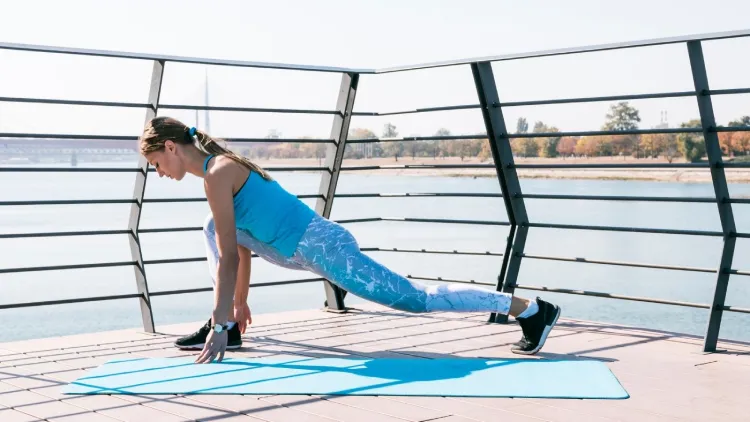
Yes, mountain climbers would be very effective in aiding in reducing belly fat. Being a vigorous workout, they boost your heart rate and burn more calories, which helps in total fat burning. Although it is impossible to burn body fat exclusively in the belly, mountain climbers assist in burning calories and fat all over the body, including in the belly as well.
Meanwhile, mountain climbers tighten and involve themselves with the core muscles: the abs and the obliques. This assists in tightening the stomach as well as making it leaner since the fat level gets reduced. Regularity is a major consideration, and doing mountain climbers properly will yield the best results when done regularly. Taking them in addition to a balanced diet and the other exercises further promotes the reduction of belly fat and enhances fitness.
The Right Way to Do Mountain Climbers
Performing mountain climbing in the correct technique will give maximum benefits and avoid injury:
- Starting Position: Start by lying in a high plank, keeping the hands bent at shoulder width and body in a straight posture.
- Engage Your Core: Hold the core tight, no sagging hips or arched back.
- Alternate Knee Drives: Bend one knee into the chest and then immediately switch to the other one, imitating a running movement in plank pose.
- Maintain a Steady Pace: Carry out controlled motions. Novices get away with it slowly, and sophisticated ones can accelerate to cardio gain.
- Breathing: Breath in and out consistently in time with motion in a bid to sustain momentum and shape.
Mountain Climber variations
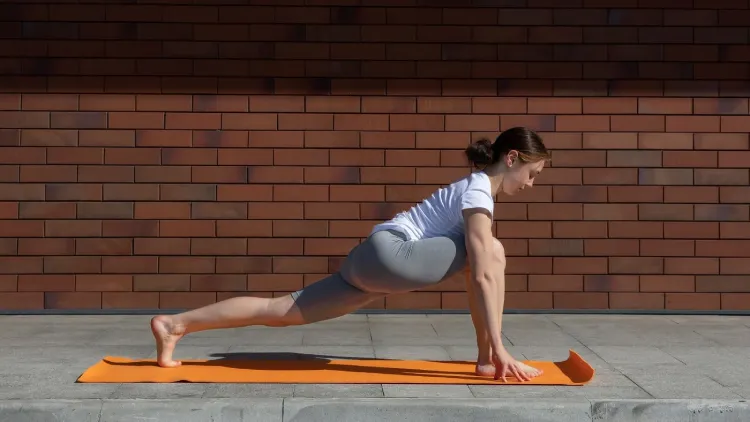
Mountain climbers are adjustable to accommodate disparate fitness levels:
- Slow Mountain Climbers: Pay attention to accuracy and involvement of the core.
- Cross-Body Mountain Climbers: The movement involves pushing knees with opposite elbows to engage the obliques.
- Elevated Mountain Climbers: These require hands on a bench, making them lower in intensity when a beginner.
- Weighted Mountain Climbers: This is done by wearing a light vest to gain strength and endurance.
The variations are something different, and that is why it avoids a stationary spot of workouts and encourages further improvements.
Common Mistakes to Avoid
To derive the best out of mountain climbers:
- Hips too high or too low: Hips must be straight to avoid strain to the back.
- Wrong Place of Hands: Hands are to be below the shoulders to be stable.
- Controlled Movements: Performing the exercise at a steady pace ensures proper form and maximises effectiveness.
- Engage Your Core: Keeping your core tight throughout the movement strengthens your midsection and improves stability.
- Shallow Knee Drives: With a full range of motion, it is able to engage maximum muscle activity.
These errors can be removed to optimise the calorie expenditure, muscle activity, and safety.
Mountain Climbers: How Long and How Often?
Timing and frequency are relative to your goals related to fitness:
- Novice: 20-30 seconds per set, 3-4 sets, 3-4 times per week.
- Intermediate: 45-60 seconds per set, 46 sets, 45 times a week.
- Advanced: 1-2 minutes per circuit during HIIT training, 5-6 days a week.
Even 100 mountain climbers in one workout will enhance cardiovascular health and core muscle strength. Time continuity is very beneficial in terms of fat, muscle and endurance losses.
Pros and cons of Mountain Climbers
Advantages:
- No apparatus needed, home workouts will be appropriate.
- Performs cardio and strength training together.
- Burns fat and aids in the management of weight.
- Improves balance, agility and coordination.
- Adaptable to any fitness level.
Disadvantages:
- Proper wrist, shoulder, and knee alignment ensures safe and effective exercises.
- With correct technique, mountain climbers can be adapted to suit all fitness levels, including those with joint considerations.
- Working too hard without taking a break may lead to fatigue or strain.
Mountain Climbers vs Planks
Both mountain climbers and planks work on the core, but they are used for different purposes:
- Planks: very still pose, the best pose in respect of stability and endurance.
- Mountain Climbers: Intensive, active multiple muscle groups, and raise heartbeats.
In fat burning and cardio, mountain climbers are the best, whereas in endurance of the core planks are the best. A combination of both can give a good balance of core exercise.
Mental and Emotional Advantages
Psychological benefits also exist in having mountain climbers:
- Stress Relief: Physical activity facilitates the secretion of endorphins, thus alleviating stress.
- Focus and Discipline: Involves the ability to concentrate and be rhythmic, thus enhancing mind clarity.
- Mood Boost: Intense exercise may raise the level of energy and fight lethargy.
Exercises such as mountain climbing are often held regularly to help in enhancing mental health in addition to the physical health benefits.
Weight Loss and Mountain Climbers
Mountain climbers are high-intensity exercises that may help one lose weight greatly:
- They consume a large amount of calories per minute when done at full intensity.
- Large muscles are used, resulting in higher metabolism both during and after exercise.
- Together with an appropriate diet, mountain climbing athletes can speed up the fat-burning process, even in the most difficult parts of the body, such as the belly and the thighs.
- One of the surest methods to maximise calories burned is the use of mountain climbers in HIIT or circuit training.
More Effectiveness Tips
- Complement Other Exercises: Triple mountain climbers with squats, push-ups, and lunges to make a whole body workout.
- Use Intervals: Work in short bursts (i.e. 30-60 seconds on, 15-30 seconds off) in order to get the maximum calorie burn.
- Keep Track: Add sets, duration or speed progressively over time.
- Strength Gain and Injury Prevention: The stress must be on the right activation, as it is associated with increased strength and a decrease in injury risk.
Conclusion
Mountain climbers are not just a cardio workout; it is a body workout that does the good of strengthening the core, toning the muscles, burning fat, as well as giving strength and endurance. They enhance agility and coordination, physical posture and fitness when practised correctly regularly.
Mountain climbers are simple, fun, and convenient exercises, whether to be used as a weight loss tool, strength building, or to clear their head. Suitable for any kind of fitness, regardless of being a beginner or an advanced athlete, this move can be modified to match any level of fitness and be implemented in everyday training or into a circuit or high-intensity workout.
Mountain climbers demonstrate that mere bodyweight exercises can have amazing outcomes as long as they are practised regularly and properly.
Frequently Asked Questions
1: Do mountain climbers make good fat burners?
Yes, mountain climbers are very effective when it comes to weight loss. They are a whole body and intensive fitness that drives up your heart rate and burns calories very easily. Although they do not specifically attack belly fat, they assist in reducing the overall body fat with a combination of a balanced diet and other workouts besides toning the core, arms and legs.
2: What is the number of mountain climbers that I must do each day?
The mountain climbers are dependent on how fit you are. Novices may represent 20 -30 seconds per set of 3-4 sets, 3-4 times per week. The intermediate exercisers need 45-60 seconds per set, 4-6 sets. Mountain climbers are a 1-2-minute per set type of exercise that can be included in a HIIT program 5-6 times per week and performed by advanced practitioners. Stability is the key to the appearance of the results.
3: Which are the muscles that mountain climbers use?
Mountain climbers use a variety of muscles at the same time. They mostly work the key muscles (abs and obliques) to some extent the shoulders, chest, triceps, legs and the hip flexors. This turns them into a whole body workout that enhances strength, stamina, and the ability to coordinate.
4: Is it safe to begin as a mountain climber?
Yes, even the novices can safely learn mountain climbers when running them correctly and on time. Commence gradually, make sure your arms are below your shoulders, keep the core tight and maintain a straight line of body frame. Slowly increase the speed and duration of the process with the progressive rise in strength and endurance. Beginners can also be made to use variations such as elevated mountain climbers to decrease the intensity.