
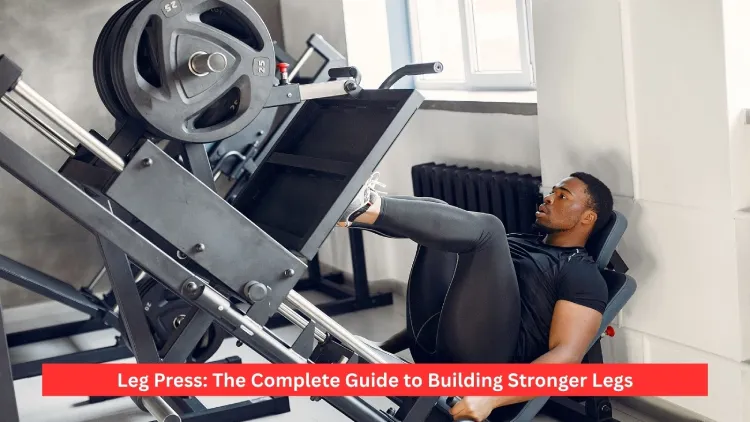

The leg press is also an item of fitness routines everywhere around the world, with great popularity among the fit folks who tend to carve out some strong, muscular legs. The leg press also enables you to concentrate on the muscles of the lower body because the exercise does not involve balance and coordination, even though, in a free-weight exercise, balance and coordination must be considered. It is a machine workout that offers great assistance to the spine, hence it is ideal for both novice and advanced lifters. It may significantly enhance the strength, size and overall leg performance when done properly.
- What is the Leg Press?
- Muscles engaged in the Leg Press
- Benefits of the Leg Press
- The Leg Press: How to Properly Do It
- Common Mistakes to Avoid
- Leg Press Variations
- Leg Press vs Squats
- How heavy are you supposed to leg press?
- Safety Tips for Leg Press
- The Leg Press and Weight Loss
- Final Thoughts
- Frequently Asked Questions
What is the Leg Press?
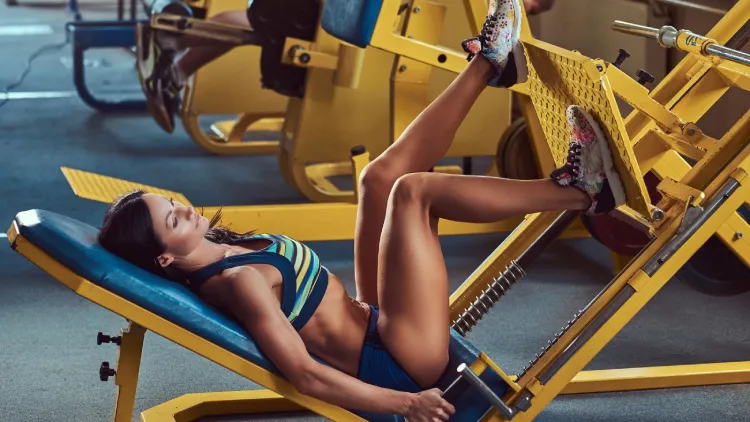
A leg press is a resistance exercise done on a special machine in which the patient drives a platform that contains weights using his or her legs. The primary objective is to build on the lower body, specifically, the quadriceps, glutes, and hamstrings. It has two major styles: the 45-degree leg press, which operates on an inclined plane, and the horizontal leg press, which operates straight forward.
The press is very useful and safe, which is a strong asset. It is excellent for those who do not want to strain their spines to lift heavy objects. Light loads should be used by beginners; about 70 kg should be a moderate starting weight, although advanced athletes may use heavier weights, such as 240 kg, regularly, or heavier. Indeed, there are even elite powerlifters and strongmen who have attempted to lift more than 1,000 kg, and this has shown how high the potential of this exercise can be pushed in terms of extreme strength gain.
Muscles engaged in the Leg Press
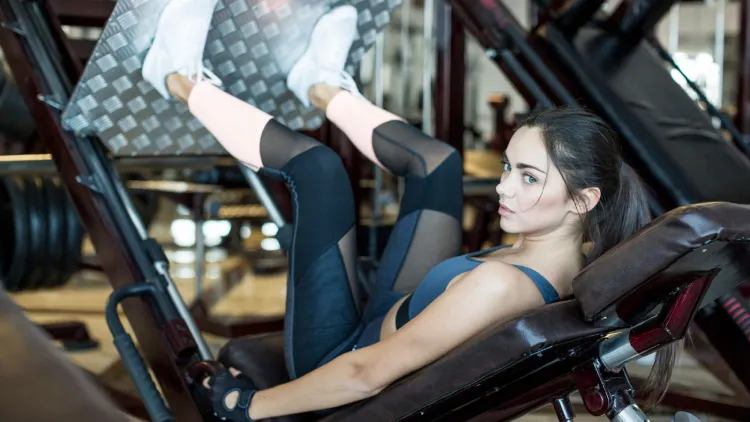
The leg press works nearly all the major body muscles below:
- Quadriceps: These are the pulling muscles that are used to push off the weight.
- Glutes: They work during the extension and are involved with the general power and hip drive.
- Hamstrings: These help in making the movement steady and ruler of the downward movement.
- Calves: Calves are supportive in stabilising the ankle and also help in the push off.
Depending on the position of the feet on the platform, another type of muscle may be targeted. The point of a higher placement is more on the glutes and hamstrings, whereas the one at the lower is more on the quadriceps. The inner thighs are better engaged with a wide stance, and the outer ones are better engaged with a narrow stance.
Benefits of the Leg Press
1. Increases Strength and Muscle Mass
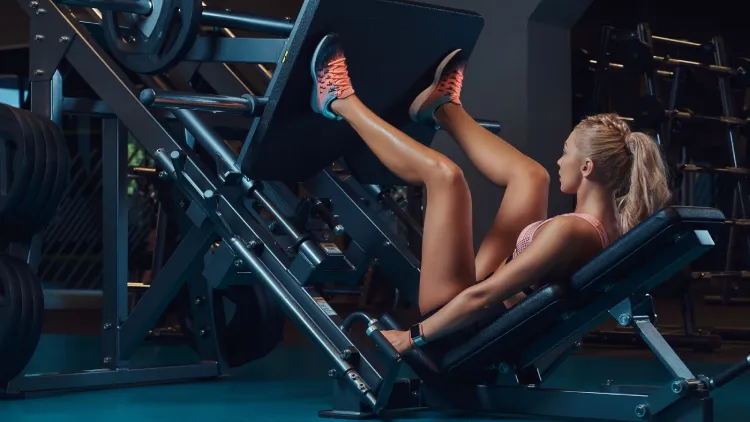
Leg presses are very good for developing the size and strength of the legs. It gives a sense of isolation on the lower body and enables one to lift heavier weights as compared to squats, which promote hypertrophy. The continuous overloading on the leg press during a certain time period may result in a visible increase in the size of the thighs and glutes. Then yes, the leg press will shape large legs, assuming that you are consistent and gradually add resistance to the weight.
2. Facilitates Functional Movements
Although commonly referred to as the king of exercises, the leg press can be used to supplement and improve the strength of another exercise, squats. Another reason why many athletes employ its use is to enhance the condition of specific muscles that are utilised in running, jumping, along sprinting skills that legends such as Usain Bolt depend on to exploit explosive abilities.
3. Reduces Injury Risk
The leg press machine offers back support and reduces spinal tension, unlike the free-weight squats, where the person has to maintain balance. It is excellent when one is recuperating after an injury or an individual who is willing to lift heavy without having the same risk of losing control.
4. Aids in Fat Loss
Although the leg press is mainly strength-building, at a higher rep and intensity, it also burns calories. Together with good nutrition and exercising of the heart, it may also decrease body fat, especially fat on the belly. An example is a leg press exercise, which is a high-intensity exercise that is capable of burning up to 500 calories in 30 minutes; therefore, it is worth considering it in a fat-loss program.
5. Appropriate to All Fitness levels
The leg press is suitable for all lifters, from beginners lifting 70 kg to those who are advanced and are able to lift 240 kg and above. Even such professionals as Thor Bjornsson, who used to manage a 505 kg deadlift, use leg presses to help raise power and endurance.
The Leg Press: How to Properly Do It
- Adjust the Seat: When on the platform, sit up in such a way that the knees form a 90-degree angle with the ground.
- Foot Placement: Have your legs bent parallel to one another and lie on the platform.
- Grip the Handles: Use the handles to hold onto, but do not use them to drag yourself.
- Control the Movement: Bend down until the knees make a right angle.
- Push Back Up: With the platform in the starting position, do not lock your knees.
Stylistic Hint: Don’t release the tension during the movement. Getting overweight too early can put a strain on your knees or hips. Begin at the weight that you can do 10-12 reps with good form.
Common Mistakes to Avoid
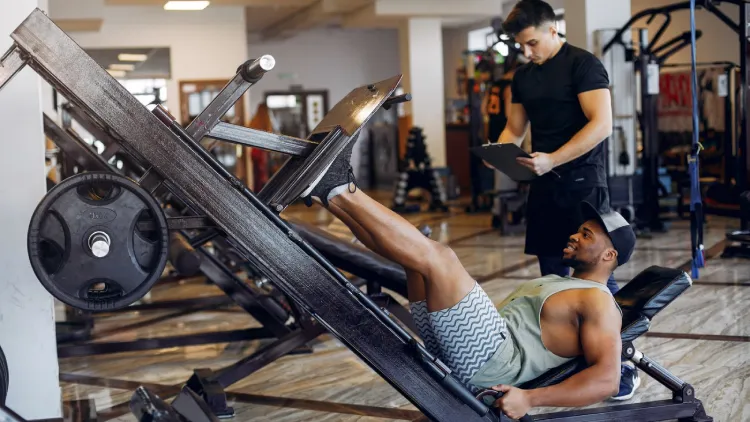
Squeezing your knees: May result in strain in joints. Always keep a slight bend.
- Raising your hips out of the seat means excessive weight or improper technique.
- Going overboard: lead to a reduction in the range of motion; limited muscular movement.
- Wrong foot position: It may lead to knee or hip pains. Keep your knees in position with your toes.
When you want to be strong and build muscles, the 3-3-3 rule at the gym, three sets with three repetitions with 90 per cent of maximum effort, is the rule to follow. This technique helps build power and excites the muscle fibres of fast-twitch effectively.
Leg Press Variations
- Single-Leg Press: Train legs separately to correct the imbalances and enhance coordination.
- Wide Stance Press: Brings involvement of inner thighs and adductor muscles to facilitate equal leg growth.
- Narrow Stance Leg Press: Focuses on the outer quadriceps to develop a better definition of the legs.
- High Foot Placement: Bears more on glutes and hamstrings – excellent at strengthening athletes in the posterior muscles.
- Low Foot Placement: Works the quadriceps, which are used to shape and define the front thighs.
Leg Press vs Squats
Leg press and squats are basic lower-body exercises; however, their use is not similar. Squats are said to be the king of any exercise as they can bring a complete engagement of the body, but the press is deemed to be safer and more controlled. Others refer to squats as the king and deadlifts as the queen of exercises, as both of them provide total body strength.
When comparing them:
- Squats enhance core stability.
- The leg press will use isolated muscles and minimise the risk of injury.
- Strength is gained in both exercises, with optimal results from a combination of them.
Which one is better of the two depends on your objective. Squats are preferable in cases of functional power, and the leg press is preferable in cases of muscle isolation.
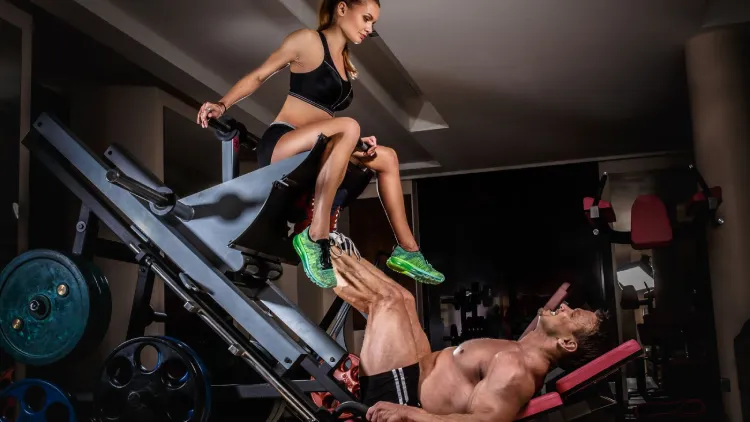
How heavy are you supposed to leg press?
A good leg press weight will be based on experience and weight:
- Beginners: 70–100 kg
- Intermediate: 180–240 kg
- Advanced: 300+ kg
The leg press weight of some of the strongest men in the world, such as Eddie Hall, well-known due to his unnatural diet and 500 kg deadlift, is over 1,000 kg during training. The maximum press is more than 2400kg by bodybuilder Patrik Baboumian.
Nonetheless, excessive weight could lead to stress in the joints. Always remember to develop on the form rather than the weight. Also, don’t forget that it is not only about the movement of heavy loads; it is necessary to manage them safely and efficiently.
Safety Tips for Leg Press
- Warm up before lifting heavy.
- Shoulder and head against the seat.
- Never lock your knees.
- Increase weight gradually.
- Never rush momentum; have a constant pace.
The good form and proper weight are used to guarantee the maximum benefits and avoid knee and lower-back harm.
The Leg Press and Weight Loss
The leg press adds to calorie burn, although the main contribution it makes is the strength building. It can be included in a circuit where other cardio-based movements can be used to assist in fat loss. Such as body weight leg presses with treadmill sprint, cycling or HIIT may raise your heart rate and allow you to experience over time the change in your body composition.
It will not necessarily focus on belly fat; nevertheless, combined with a calorie deficit and balanced nutrition, it will help to lose fat in general.
Final Thoughts
Leg press can be referred to as one of the most effective forms of lower-body exercise to strengthen, gain power, and endurance. It enables safe lifting and heavy lifting, muscle building, and enhances sports activities. Regardless of your aim of building muscles or burning fat, or even becoming more powerful, the leg press can always make it in your routine.
Frequently Asked Questions
1. Is the leg press long effective to help beginners?
Yes, the leg press is ideal for she/he who are beginning as it is stable and has control. It assists beginners to gain some of the fundamental strength of their legs without the balance difficulties that are posed by free-weight exercises such as squats.
2. What is the frequency of the leg press?
To maximise its effects, the leg press needs to be done 2–3 times a week. Give each session a rest period of at least 48 hours so that your muscles can have time to rest and get stronger.
3. Will the leg press enable me to gain strength in my squats?
Absolutely. Leg press also exercises the same body parts as the squats, which include the quads, glutes, and hamstrings. The leg press helps in strengthening these muscles and will eventually improve your performance in the squats.
4. Should I use heavy or continue with more reps on the leg press?
That depends on your goal. In case you desire to gain strength, a heavy load with 6-8 reps per set. To achieve endurance or toning, light weights should be used, and 12-15 reps should be done. Even heavy lifting should not be done improperly.

14 thoughts on “Leg Press: The Complete Guide to Building Stronger Legs”
Hello, I enjoy reading all of your post. I wanted to write a little comment to support you.
Thank you so much for your kind words and support! Your encouragement truly means a lot and motivates me to keep sharing helpful content. 😊
Aw, this was a very nice post. Taking the time and actual effort to create a great article… but what can I say… I hesitate a whole lot and never seem to get nearly anything done.
Thank you so much for your kind words, I really appreciate it! Don’t be too hard on yourself—progress takes time, and starting small is the best way forward. You’ve got this!
Great ?I should definitely pronounce, impressed with your site. I had no trouble navigating through all the tabs and related info ended up being truly easy to do to access. I recently found what I hoped for before you know it in the least. Reasonably unusual. Is likely to appreciate it for those who add forums or anything, site theme . a tones way for your client to communicate. Excellent task..
Thank you so much for your kind words! I’m glad you found the site easy to navigate and helpful. Your feedback means a lot!
Hey there! Do you know if they make any plugins to help with SEO? I’m trying to get my blog to rank for some targeted keywords but I’m not seeing very good gains. If you know of any please share. Kudos!
Hey! Yes, there are several great SEO plugins you can try, like Yoast SEO, Rank Math, or All in One SEO. They help with on-page optimization, sitemaps, and keyword tracking.
Thanks , I’ve recently been searching for information about this topic for ages and yours is the best I have discovered till now. But, what about the bottom line? Are you sure about the source?
We appreciate your comment! Our articles are based on trusted sources and careful research. If you’d like, we can also provide references for further reading.
Wow! This blog looks just like my old one! It’s on a totally different subject but it has pretty much the same layout and design. Great choice of colors!
Glad you like the layout and colors, great minds think alike
Oh my goodness! an amazing article dude. Thanks Nonetheless I’m experiencing concern with ur rss . Don’t know why Unable to subscribe to it. Is there anybody getting equivalent rss drawback? Anyone who is aware of kindly respond. Thnkx
Thanks a lot for your kind words! 😊
Sorry to hear about the RSS issue — it might be a temporary feed or browser problem. Please try refreshing or subscribing using a different RSS reader. Let us know if the problem continues!