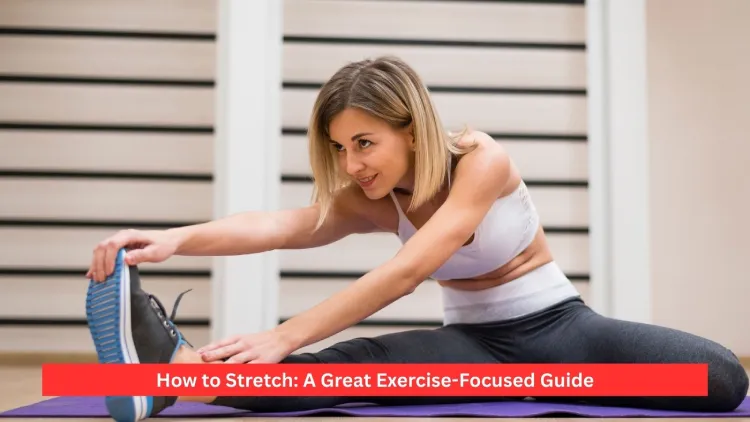

Learning how to stretch is important to become more flexible, reduce injuries, and perform better in exercises. Stretching is best used together with the exercises, whereas dynamic stretching is performed before the exercise and static stretching is performed after the exercise. Most of the tight muscles are loose with a daily workout of approximately 15-20 minutes with a plan of key muscle groups, enhancing any form of movements and aiding in recovery. Regular training of good form and deep breathing allows movement to be healthy in the long term and minimises stiffness and the development of overtraining.
- What Does Stretching in Exercise Mean?
- The importance of learning how to stretch for exercise
- Stretching Exercises
- Step-by-Step Instructions on How to Stretch Properly
- Finest Stretching Workouts According to Muscle Group
- At what time should you stretch during Exercise?
- 10 Errors of Rushing Stretches
- How Long Should You Stretch?
- Stretching routines are advised for those who enjoy running.
- How Often Should You Stretch?
- Signs that You are Stretching Correctly
- Who should concentrate on the stretching exercises?
- Understanding Tightness and Overtraining
- The Four Core Rules of Stretching
- Risks of Stretching Too Much
- Final Thoughts
- Frequently Asked Questions
What Does Stretching in Exercise Mean?
Stretching is an organised exercise technique that increases the length of the muscles, enhances joint movement, and preconditions movement in the body. Stretching in the training environments is not merely about relaxation but rather an active tool of performance which assists the muscles in moving effectively during the workouts.
Without fail, each time you work out, muscles shorten and lengthen. The temporary shortening of muscle fibres during strength training and the repetitive stress that loves joints and connective tissues during cardio activities all remove bodily tissue. Knowing how to stretch enables both athletic and non-athletic individuals to regain muscle length and functional movement patterns.
Stretching exercises affect:
- Muscle elasticity
- Joint range of motion
- Neuromuscular coordination
- Movement efficiency
- Exercise endurance
A small body becomes restrictive since limited muscles cause other muscles to undertake it. With time, this disproportion may result in inefficient workouts and the development of an injury.
The lengthening of muscles is achieved by activation of relaxation via the nervous system. Muscle fibres are able to adjust to movement and enable a person to move more without straining them, especially when these changes are made gradually. This is how it comes to pass that with regular training, the flexibility is enhanced, not through vigorous stretching.
Stretching is usually combined with mobility training in the science of exercise. Mobility is deemed as controlled power within a scope of movement, with stretching providing the elasticity required to make this range a safe aspect.
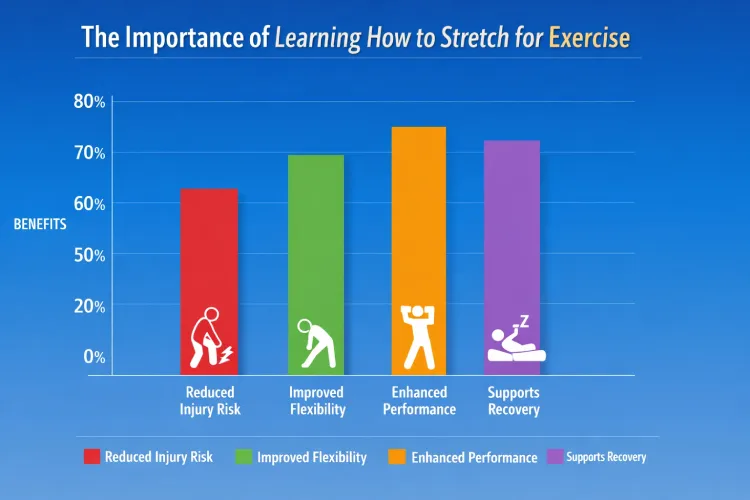
The importance of learning how to stretch for exercise
Knowledge of proper stretching forms the basis of any fitness program.
Improves Flexibility
The ability to squat deeper, run more easily and create an improved posture when lifting is possible due to flexible muscles. Greater flexibility creates less control of movement and promotes the form of exercise.
Reduces Injury Risk
Strains of tight muscles are more likely. The gradual tension causes the tissues to become ready to take the strain, thereby reducing the possibility of pulls when exercising.
Increases Performance
Learners who know how to stretch are known to experience an increase in power output. Free-moving muscles produce muscle forces more effectively.
Supports Muscle Recovery
Stretching promotes circulation to supply the exercised muscles with nutrients. This is also able to minimise rigidity following strenuous exercises.
Helps Loosen a Tight Body
Several individuals feel tightness in their bodies when seated, performing some activities repeatedly, or experiencing a lack of variety in movement. Being regularly stretched will put muscle groups back in balance and make movement more comfortable.
Practices Healthy Training Frequency
Stretching is beneficial in exercise programs that are undertaken thrice in a week or more. Frequent training at this rate is normally safe, provided that recovery, including stretching, is well maintained.
Stretching Exercises
To know how to stretch, one has to start by deciding the right kind of stretching to do during a workout session.
Dynamic Stretching (Before Workout)
Dynamic stretches are movement-based and not position-based.
Examples include:
- Leg swings
- Arm circles
- Walking lunges
- Torso rotations
Dynamic stretching enhances blood flow and muscles and does not decrease strength output. This is a very convenient pre-workout.
Static Stretching (After Workout)
Static stretching is the positioning of a muscle in an extended form.
Benefits include:
- Relaxing muscles
- Improving flexibility
- Supporting recovery
Stretches following exercise enable muscles to stretch easily when they are warm.
Active Stretching
Active stretching involves the strength of the muscles that are used to maintain a position. To illustrate, with the benefit of hip muscles, attempting to number the leg and lifting would stretch, and also to gain control.
Passive Stretching
Passive stretching is made through supporting its outer parts, such as the bands or body weight. It enables further relaxation, though it is to be done in a gentle way.
All types have different contributions to learning, such as workout routines that involve stretching.

Step-by-Step Instructions on How to Stretch Properly
The right technique is whether stretching enhances performance or leads to strain.
Step 1: Warm Up First
Working of cold muscles predisposes to injuries. Start with light activities like walking or jogging of 5-10min.
Flexibility training works on warm muscles.
Step 2: Step It Into the Stretch
Slow movement will indicate muscle relaxation. The abrupt movements cause protective reflexes which oppose stretching.
Stretching should not be resembling pain, but pleasant tension.
Step 3: Hold the Stretch
The majority of workout regimes involve the 4-8-12 guideline:
- Novices 4-8 seconds to start.
- Advance response as flexibility increases to 12-30 seconds.
This slow output makes sure that it is not overstretched.
Step 4: Stretching Both Sides Evenly
Imbalance may occur in the muscle where all the attention is on one side. Symmetrical stretch facilitates symmetrical strength development.
Step 5: Focus on Breathing
The breathing patterns are an important factor in learning to stretch. A slower rate of breathing leads to relaxation of the muscles and deeper relaxation.
Step 6: Apply the 3-3-3 Gym Principle
Numerous trainers adhere to a mere pattern:
- 3 active exercises before a workout.
- 3 targeted stretches in each of the major muscles.
- 3 stretches with 3 controlled breaths.
- This system makes routine lean and mean.
Finest Stretching Workouts According to Muscle Group
Learning to stretch involves stretching the whole body. The workouts below are the combinations of the most efficient stretches in the training programs.
- Neck Stretch: Lift the head slightly on one side to loosen the tension on the upper body that results from the lift or desk position.
- Shoulder Stretch: Pull the arm, crossing the chest, in order to stretch the shoulders after pushing exercises.
- Chest Stretch: When the chest is opened, the tightness that has been formed by the push-ups and pressing movements is countered.
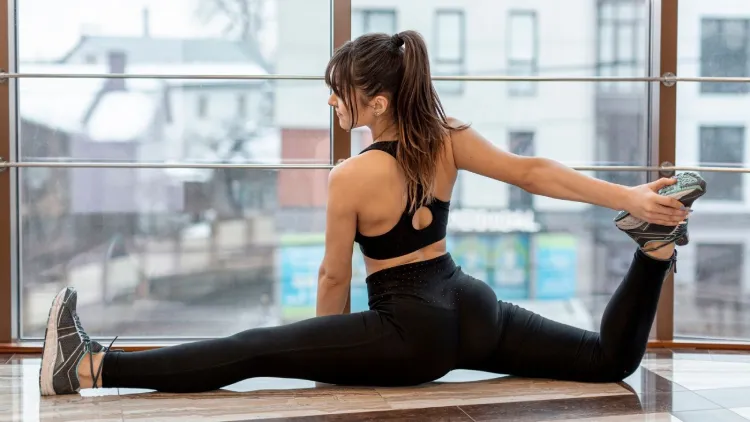
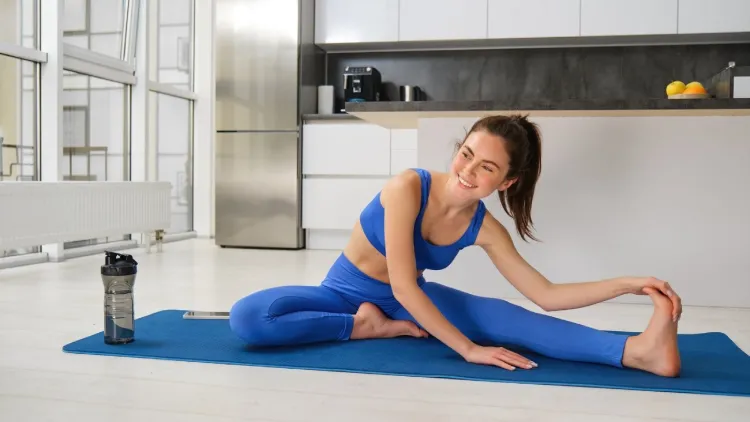
- Hamstring Stretch: Necessary in running and leg-brisk training, to enhance hip suppleness.
- Quadriceps Stretch: Removes the tension following squat or bike exercise.
- Hip Flexor Stretch: It is one of the most significant stretches that can be done by individuals who have tight hips due to sitting a lot or repetitive training of the leg.
- Calf Stretch: Enhances the ankle movement as well as minimises tension on the ankle during running or jumping.
- Child’s Pose Stretch: A dainty full-body stretch, in most cases, is the easiest stretch for a beginner since it does not need much strength.
- Seated Spinal Twist: Enhances the flexibility of the spinal area and core.
- Standing Side Stretch: Extends the torso and enhances the breathing mechanisms during exercise.
These are the movements that comprise a balanced flexibility program.
At what time should you stretch during Exercise?
The time of applying the principles of how to stretch is very important.
Before Exercise
Dynamic stretching is the preparation of what takes place in muscle to move. Stretching before taxing exercises is better done in a form of movement since doing so can temporarily decrease power output; therefore, movement-based stretching is better.
After Exercise
The types of muscles best stretched following workouts are the inertial ones, due to the fact that the muscles are warmed up and are more flexible.
Best Time of Day
The process of stretching may be made at any time, but muscles tend to react optimally:
- After workouts
- After light activity
- During the evening, when the body is warm.
Stretches in the morning are supposed to be easy, as the muscles are known to be stiff after sleep.
10 Errors of Rushing Stretches
One does not always get the idea of stretching correctly, even when active.
- Stretching Too Hard: Pain does not equal progress. High intensity can destroy muscle fibres.
- Skipping Warm-Ups: The strain risk is amplified through cold stretching.
- Holding Breath: There is no controlled breathing, and muscles are in a tense state.
- Bouncing Movements: Uncontrolled ballistic stretching may result in injury.
- Ignoring Tight Areas: Hamstrings, tight hips, and tight shoulders are to be given regular focus since the present-day lifestyle favours rigidity.
- Overstretching: Excessive stretching may result in instability of the joints and weak performance.
How Long Should You Stretch?
A healthy person has a normal schedule, which will consist of:
- 5-10 minutes pre-exercise dynamic stretching.
- Afterwards, 10-20 minutes of stretching, which is not dynamic.
- Studies indicate that very little time, such as 20 minutes of stretching every day, is enough to enhance the flexibility of most people, while also promoting mobility.
- Regularity is much more significant than multiple sessions that are occasionally done.
Stretching routines are advised for those who enjoy running.
This entry-level practice shows a practical implementation of how to stretch:
- Arm circles – 30 seconds
- Leg swings – 30 seconds each side
- Hip flexor stretch – 20 seconds
- Hamstring stretch – 20 seconds
- Quad stretch – 20 seconds
- Shoulder stretch – 20 seconds
- Child’s pose – 30 seconds
This exercise relaxes the body without much exhaustion.
How Often Should You Stretch?
Stretching every day is usually safe in case the intensity is moderate.
Guidelines:
- Beginners: 3–4 sessions weekly
- Active exercisers: daily stretching of a light nature.
- Athletes: pre- and post-exercises.
The daily stretch will keep joints moving, particularly for people who are feeling stiff due to physical activity or sitting.
There is no excess in training three gym sessions per week, in case of some recovery strategies, such as stretching.
Signs that You are Stretching Correctly
Clues that you know how to stretch well are:
- Slow increase in flexibility.
- Reduced muscle stiffness
- Increased exercise range of movement.
- Breathing stretches without strain.
- No lingering pain afterwards
Who should concentrate on the stretching exercises?
The perks of stretching have a significant influence on people in physical training:
- Strength trainers
- Runners
- Home exercisers
- Athletes
- Amateurs entering fitness programs.
This is useful to people who complain of tight hips, especially since the stiffness of the hips is usually attributed to hours of sitting or repetitive lower-body exercises.
Understanding Tightness and Overtraining
Tightness in muscles is also an indicator of excessive training load instead of low flexibility.
These symptoms of overtraining comprise:
- Persistent soreness
- Reduced performance
- Fatigue despite rest
- Poor sleep
- Increased injury frequency
Exercise is beneficial to the recovery process, but it cannot substitute proper rest.
The purpose of walking and stretching is different. Stretching enhances cardiovascular fitness, and walking enhances flexibility. It is more balanced as a mix of both is better for exercising.
The Four Core Rules of Stretching
Successful stretching exercises are based on a few principles that are aimed at enhancing flexibility in a safe way. These are some fundamentals that one needs to understand in order to know how to stretch during exercise properly. These four rules continue to stretch out to perform well, coupled with the minimisation of chances of discomfort or injury.
Stretch After Warming up
Warm up first before stretching. Cold muscles are more likely to be strained. A dose of mild aerobic exercise, like walking, jogging, or simple bodyweight exercises, will enhance the blood flow and will prepare the muscles to stretch in a safer way.
Stretch Slowly and Gently
Exercises should be slow and gradual. Gradually get into the stretch until there is a slight tension, not pain. Never bounce, push or compel the position; it may lead to muscle strain rather than augmenting the flexibility.
Keep the breathing in Control
The benefits of breathing include relaxation of muscles in the process of stretching. Breathe slowly and steadily, and do not hold your breath. Taking a stretch and taking deep breaths can enable the muscles to relax on their own.
Stay Consistent Over Time
The flexibility is enhanced in the course of frequent practice as opposed to heavy practice. Stretching exercises of a short duration and regularity following a workout or a number of times a week can be used to maintain mobility and discourage stiffness.
These rules are helpful to maintain safe progress and make you realise how to stretch in an effective and balanced manner.
Risks of Stretching Too Much
Though stretching is good for exercising performance and flexibility, when overdone, there are undesirable issues that may be caused. To learn how to stretch, one should know that the stretching should not overstretch the body, but rather assist in maintaining strength and mobility. Safe training would require a balance between stability and flexibility.
Joint Instability
Excessive stretching may cause excessive laxity of joints. Muscles and connective tissues assist in ensuring that the joints remain stable during exercise, but too much flexibility can weaken this. In case joints are unstable, such exercises as squatting, lunging, or weight lifting can be less controlled, which puts the risk of improper form higher.
Reduced Muscle Strength
Temporarily, trailing at the strength and power of the redundant muscles, in particular, the pre-workout stretching can overstretch them. The muscles require some degree of tension to be efficient in creating force. Excessive stretching can be too long or too intense, and this can cause over-relaxation of the muscles, thus making performance during exercise difficult.
Ligament Strain
Ligaments do not stretch as much as muscles. Overstretching or practising stretching for excessively long periods can overstretch these tissues. As compared to muscles, ligaments heal slowly, and thus continued overstrain may cause pain and a lack of supporting the joint.
Increased Injury Risk
Proper stretching prevents injury, but excessive stretching does just the opposite of that. Floppy muscles lack sufficient stability, and this can result in strains or minor injuries to muscles if a person engages in workouts.
When gaining the knowledge on how to stretch safely, it is important to have a balance between strength and flexibility. The so-called moderated and regular stretching is much better than overstretching or oversstretching.

Final Thoughts
Learning how to stretch is among the easiest methods to achieve greater performance and greater movement health in the long-term. Stretching is a way to prepare the muscles and make them ready to be active, allowing the muscles to recover better and loosen tight areas, which is beneficial to exercise in the right mechanics. The stretching program should never entail extreme flexibility and lengthy sessions. Frequently, and correctly, it will take approximately 15 to 20 minutes per day to generate significant improvements.
With dynamic stretching before exercising, the combination of dynamic stretching with the help of static stretching to follow the condition with less activity, controlled breathing, and moderate intensity, every person can create a long-term flexibility routine which will sustain the strength and endurance, avoid injuries, and maintain physical fitness. They do not represent an optional addition to any exercise: stretching is an essential exercise skill that aids all the movements your body does.
Frequently Asked Questions
1. What is the frequency of the benefits of stretching to exercise?
Stretching can be an advantage to most individuals at least 35 times a month, and some light stretching can be done safely on a daily basis. Long sessions are not as important as consistency. Stretching is an activity that should be practised regularly to keep the body flexible and minimise any stiffness, and aid in workout recovery.
2. When is it better to do, before or after exercise, ductile?
The most suitable way to do dynamic stretching is prior to an exercise, as it warms up the muscles to move and also improves blood circulation. When muscles are warm within a post-exercise period, they can achieve the benefit of static stretching that facilitates the enhancement of flexibility and relaxation. The timing of the use of both is an essential component of learning to effectively stretch.
3. What is the duration of the stretching session?
A good balance of stretching exercise lasts approximately 15-20 minutes. This involves brief dynamic exercises prior to the exercise and more permanent stretches following the exercise. It is better to have short periodical sessions rather than infrequent, extensive stretching exercises.
4. Can you stretch daily?
No, stretching on a daily basis is usually safe provided that it is done softly and correctly. Stretching must cause no pain whatsoever. The proper way of learning to stretch will enhance mobility without posing a risk of injury.