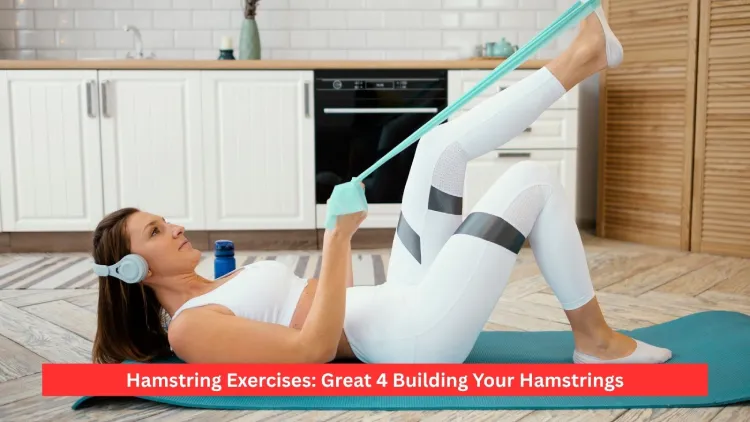

Hamstring exercises play vital roles in the strengthening of the legs and enhancing flexibility, knee health, and preventing injured knees. A combination of stretching/strengthening exercises can help eliminate tightness, speed up recovery after knee or other muscle injuries, such as ACL tears, and get the muscles working to provide stability, as well as enhance athletic performance. You need to relieve yourself of tightness fast, or you need to restore your post-operative strength. The correct hamstring exercises can aid in muscle mobility, keep your joints safe, and generally improve the overall functionality of your legs.
- 1. Romanian Deadlift (RDL)
- 2. Glute-Hamstring Raise
- 3. Hamstring Curls (Machine)
- 4. Single-Leg Deadlift(Romanian)
- 5. Nordic Hamstring Curl
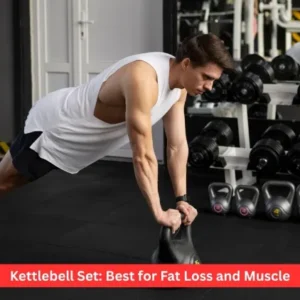
- 6. Kettlebell Swing
- 7. Stability Ball Hamstring Curl
- 8. Good Morning Exercise
- 9. Slider Hamstring Curls
- 10. Standing Leg Curl (Cable)
- Final Thoughts
- Frequently Asked Questions
1. Romanian Deadlift (RDL)
The Romanian deadlift is one of the most effective hamstring exercises of the entire body, courtesy of its deep muscle action due to a controlled hip-hinge movement. The whole chain of the back is impinged, and suitable mechanics that assist in knee stability are also taught through this movement.
How to Do It:
- Stand tall with dumbbells or barbells.
- Bend the knees a little more and bend forwards slowly.
- Continue to reduce the weight until you experience a stretch in the hamstrings.
- Lift slowly up on controlled tension.
Why This Matters:
This is an exercise that works very well in individuals whose hamstring muscles are too weak as a result of injuries or surgeries. Since RDL pays much attention to eccentric loading, it aids in the reconstruction of muscle fibres and the reconstruction of lost strength among muscles that tend to diminish or decrease their power with extended recovery periods. It is also very suitable for promoting the tendons’ health as the controlled movement allows collagen repair.
Best For:
- Rehabilitative strength after serious rehab.
- Enhancing muscle activity.
- Nowadays, it is recommended to reduce stress on support muscles to support ACL recovery.
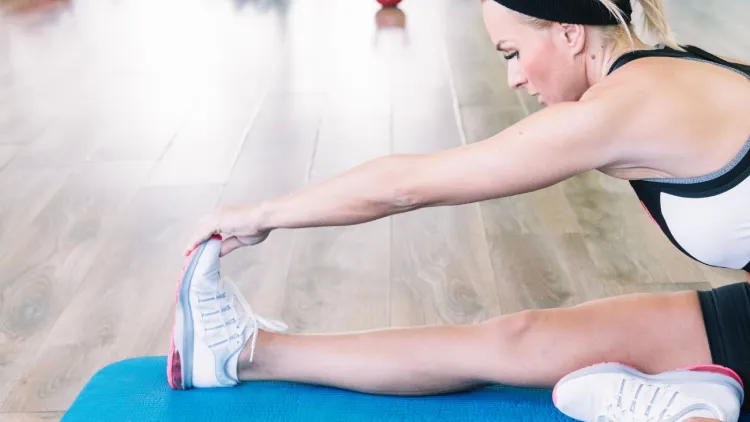
2. Glute-Hamstring Raise
The glute-hamstring raise happens to be the most intense of hamstring exercises and the best ones that isolate the muscle group. It generates very high activation and is therefore preferable to those who prefer gaining strength within a brief period.
How to Do It:
- Wrap your legs around a glute-ham developer.
- Slowly bend down, bending the torso but leaving the core still.
- Using your hamstrings, draw yourself up.
Why It’s Important:
The high demand of this movement is on eccentric strength, which is known to minimise the risk of injuries. Among the most typical causes of instability along the knee is a weak hamstring. The glute-ham raise encourages muscle density behind forward movement of the shin and reduces strain on the knee joint, and offers greater protection.
Best For:
- Sports people with posterior chains.
- Increasing the speed and the explosiveness.
- Developing the flexible tissue of the hamstrings.
3. Hamstring Curls (Machine)
Machine curls are one of the simplest hamstring exercises and are a great exercise to do in case one is a novice or has been away due to an injury. The controlled movement assists you in exercising the isolated muscle without the aid of the balance or hip movements.
How to Do It:
- Sit or lie on the curl machine and fix your legs.
- Curl the pad toward your body.
- Reduce gradually to achieve the most impressive.
Why It’s Useful:
Machine curls may be one of the first strengthening motions that a person gets used to after surgeries such as ACL reconstruction. They aid in re-establishing hamstring size and power, particularly when the harvested tendon makes the part weak. The movement is also directed, hence keeping the knee safe and avoiding strain on recovering ligaments. Nevertheless, time points– most surgeries are postponed for several weeks in case of graft healing, so medical help is essential.
Best For:
- Secure power building in rehabilitation.
- Rebuilding muscle symmetry
- Training effective hamstring involvement.
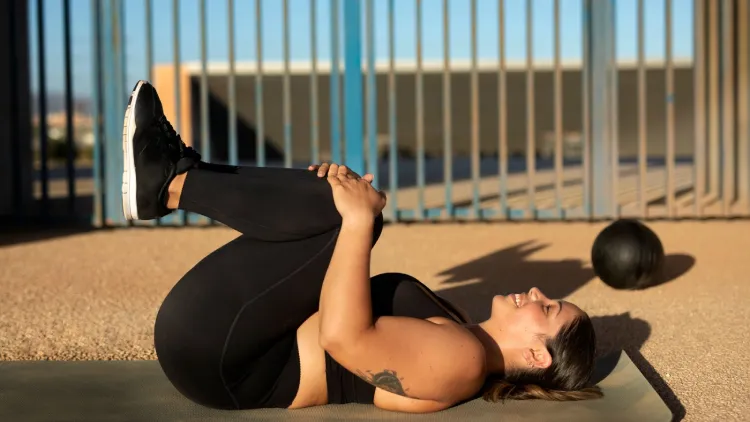
4. Single-Leg Deadlift(Romanian)
Single-leg RDL is among the most effective hamstring exercises due to the fact that it causes a challenge not only to balance and the coordination of each leg but also to its strength.
How to Do It:
- Have a dumbbell and stand on one leg.
- Bend forward and maintain the straightness of your back.
- Bring the opposite leg behind.
- Slowly go back to the beginning point.
Why It Works:
Immobilisation causes one leg to be smaller and weaker than it was before the injuries, like ACL tears. The given exercise can be used to correct the imbalance and enhance the knee stability by strengthening the muscles that prevent inward knee collapse. It also enhances neuromuscular control, which is essential at the early phases of recovery as the brain finds difficulty in re-linking up with weakened muscles.
Best For:
- Correcting imbalances
- Improving hip control
- Bending stabilisers of the knee.
5. Nordic Hamstring Curl
The Nordic curl is popularly known as the exercise with the highest activation that has been measurable in the hamstrings. It is so efficient, and it is very difficult.
How to Do It:
- On your knees, with ankles fastened under some solid anchor.
- Bend your chest forward gradually.
- Pull yourself up, with a little help from your hands.
Why It’s Special:
It has been demonstrated that Nordic curls greatly lower the risk of injury and enhance tendon resilience. The conditions that lead to tight hamstrings are frequently weak hamstrings and not necessarily tension, and thus the exercise that is being done is a remedy to lower the cause of the tight hamstrings, which is the strength building of the hamstrings by lengthening poses. It is also among the most effective movements among the athletes requiring forceful sprinting actions.
Best For:
- Maximizing activation
- Injury prevention
- Eccentric strengthening
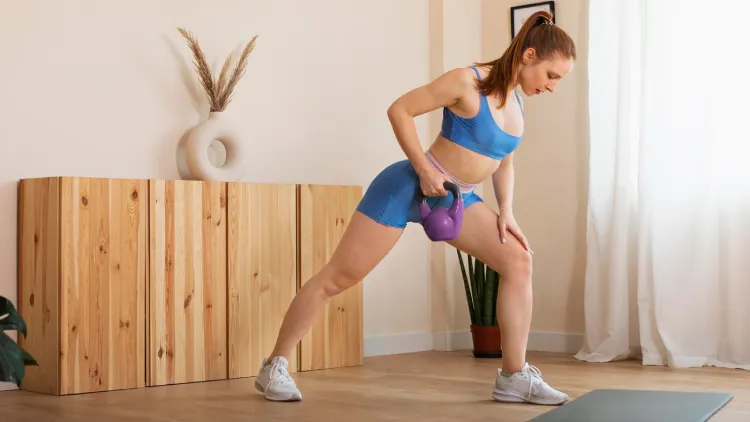
6. Kettlebell Swing
Although it is a body experience, the kettlebell swing pays significant attention to the hamstrings because of repeated hip extension. It is among the most effective dynamic exercises for the hamstrings to develop power.
How to Do It:
- Stand up with your feet apart, and stand holding a kettlebell.
- Bend it back between your legs.
- Hip lift on one hand to lift the kettlebell.
Benefits:
This motion will assist in stretching stiff hamstrings, instructing the correct technique of hip hinges and improving blood circulation, enhancing the healing process in case of strain or soreness. It also builds up glutes and core muscles and takes the pressure off its hamstrings when it comes to everyday activities.
Best For:
- Improving explosiveness
- Loosening tight muscles
- Enhancing endurance
7. Stability Ball Hamstring Curl
It develops stability and strength, and is best suited when doing exercises at home or in a rehabilitation program.
How to Do It:
- With heels resting on a stability ball, lie on your back.
- Lift your hips.
- Bend the ball base upwards and bend it back.
Why It Helps:
Because this movement uses stabilising muscles, it also works to correct the weaknesses that begin to form following an injury or surgery. A tightness occurs in many individuals because of either ineffective glute activation or restricted motion in muscle surrounding muscles. Stability ball curls also facilitate retraining of correct movement patterns, besides enhancing joint support.
Best For:
- Improving mobility
- The recovery of lost strength.
- Increasing joint stability
8. Good Morning Exercise
This is a simple, though very efficient, way to work the hamstrings with a barbell movement.
How to Do It:
- Keep a barbell in the rear part of your back.
- Bend forward with a straight back.
- Keep standing with the help of the hamstrings.
Why It’s Effective:
Good mornings are also used to stretch and tighten the hamstrings at the same time. They are particularly helpful in individuals who have long-lasting tight hamstrings due to the reason of a long sitting position or muscle imbalance. This full-range movement has long-term relief as tightness is usually caused by weak hamstrings and weak glutes, which can be strengthened by means of the given movement.
Best For:
- Improving flexibility
- Developing the posterior chain.
- Supporting hip mobility
9. Slider Hamstring Curls
This is a workout that offers a high-intensity burn without the use of equipment.
How to Do It:
- Lying on your back with your feet on sliders.
- Ascend your hips and move your feet in your direction.
- Extend back out slowly.
Why It Works:
Slider curls are beneficial in the development of tendon strength and muscle endurance. They also promote smooth, controlled movement and hence are good in rebuilding strength at the early stages, and enhancing knee stability. Clenched hamstrings are also a result of poor stabilisers, and this workout boosts the entire chain.
Best For:
- Home workouts
- Tendon strengthening
- Re-establishing the normal movement forms.
10. Standing Leg Curl (Cable)
With the cable machine, the hamstrings are effectively isolated, and a constant tension is ensured during the motion.
How to Do It:
- Fasten a strap to the cable on the ankle.
- Curl your leg backwards.
- Lower with control.
Why This Helps:
This motion is extremely adjustable, which makes it good in cases where one is regaining strength after having suffered injuries or those who are undergoing knee operations. It offers non-stressful isolation of tissues without the need to place unhealthy stress on them. This exercise is possible as some hamstring tendons will be utilised in ACL reconstruction, and this exercise will keep the graft a little overloaded.
Best For:
- Controlled isolation
- Strengthening safety in rehabilitation.
- Putting definition in the hamstrings.
Final Thoughts
Strong, injury-resistant, and flexible legs can only be achieved through hamstring exercises. A regular regimen of eccentric strengthening, hip-hinge, and controlled isolation exercises would help in correcting weakness, enhancing tightness, and aid recovery after injury, such as ACL tears. As an athlete with some chronic tightness or post-surgery, proper hamstring exercises would build muscle, knee protection, and full functionality in the long run.
Frequently Asked Questions
1. What is the frequency of hamstring exercises?
It is not too much or too little to train 2-3 times a week, which is sufficient to gain strength but still have time to rest.
2. Do hamstring exercises alleviate lower back pain?
Yes. Well-developed hamstrings enhance the stability of the hip and also help alleviate the stress on the lower back.
3. Is it safe to do hamstring exercises following ACL or knee surgery?
They will not harm under the guidance of a therapist. Begin with light curls and proceed gradually.
4. How can tight hamstrings be relaxed in the quickest time possible?
Light strengthening combined with mobility and dynamic stretching relieves the pain in a short time.