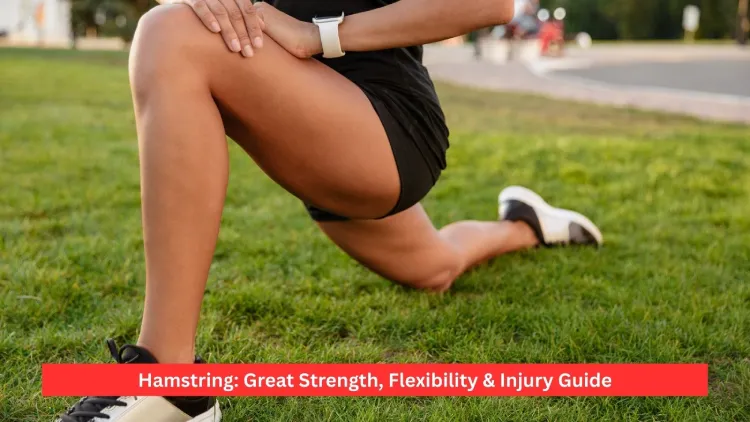

To develop strong, flexible, and injury-resistant legs, it is necessary to do exercises on hamstrings. The hamstring muscle group is a group of muscles that run along the backside of the thigh, thus being very important in walking, running, bending, and performance on the sports fields. The cause of injuries, particularly those that are strains and pulls, is weakness, tightness, or sudden overload. Exercise choice- strengthening, stretching, mobility, and slow rehabilitation moves are the types of exercises that can be used correctly,y showing the effect of reducing pain, acceleration of recovery, and avoidance of reinjury.
- The importance of hamstring exercises
- Warm-Up Exercises
- Best Hamstring Strengthening Exercise
- BodyWeight Exercises
- Stretching Activity
- Beginner Exercising Routine
- Intermediate Workout
- Advance training program
- Common Exercise Mistakes to Avoid
- Tips for Better Hamstring Exercise Results
- Weekly Exercise Plan Example
- Recovery Exercises
- Who Should Do Hamstring Exercises?
- Understanding Hamstring Pain Through Exercise
- Exercises to Avoid During Injury
- Fastest Ways to Improve Flexibility and Strength
- Long-Term Prevention Strategy
- Conclusion
- Frequently Asked Questions
The importance of hamstring exercises
These muscles aid almost all the patterns of movement of the lower body. They stabilise joints and enhance efficient movement when trained appropriately.
Frequent exercise offers several advantages:
- Enhances the power of hip extension.
- Increases sporting speed and jump.
- Reduces lower-back stress
- Helps provide knee joint stability.
- Prevents muscle imbalance.
- Enhances the performance of walking and posture.
Muscle imbalance, along with an abrupt acceleration or overstretching,g is the most frequent cause of pulled hamstring. Once the quadriceps have become stronger than the hamstring muscles, there develops excess strain in the process of movement.
Regular physical activity balances this situation by making the muscles of the backside of the body stronger.
Light walking activates the hamstring and moderate walking can be used to sustain the baseline strength. Nevertheless, the only thing that would benefit the development of the person is walking alone; more specific exercises are required to become really strong.

Warm-Up Exercises
A proper warm-up is necessary to precondition the hamstrings to move and also avoid injury significantly. Cold muscles are muchmore susceptible to strains.
1. Leg Swings
How to perform:
- Stand augmented supported erectly.
- One leg forward and backward swing.
- Keep motion controlled.
- Perform 20 repetitions per leg.
Dynamic leg swing exercises provide a gentle stretching exercise to the hamstrings and stimulation of the muscles around them.
2. Walking Toe Touches
Flexibility and coordination are merged in this movement.
Steps:
- Step forward slowly.
- Extend one leg straight.
- Reach toward toes.
- Alternation on both sides.
This stretch works to loosen tight hamstrings and works in a safe manner.
3. High Knees (Own Version)
- Raise legs with slow movements, keeping inan upright position.
- This enhances blood flow and warming up of muscles to extended exercise levels.
It is the warming-up that is so necessary, as the tighter the hhamstrings the higher the chances of being torn during sudden motion. The overall result of gradual activation is the enhancement of elasticity and preparedness.
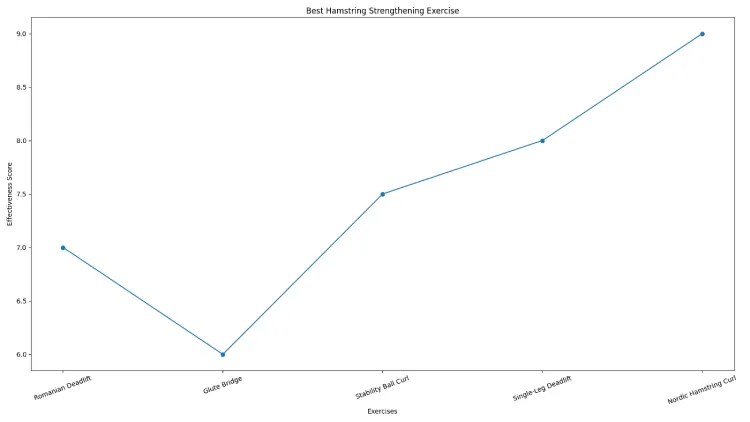
Best Hamstring Strengthening Exercise
The best method to prevent injuries as well as enhance performance is through strength training.
1. Romanian Deadlift (RDL)
The Romanian deadlift has been regarded as the best hamstring-strengthening activity.
Execution:
- Weighs in front of the thighs.
- Hinge at the hips.
- Keep spine neutral.
- Lower until a stretch is felt.
- Return slowly.
The slow eccentric lowering enhances muscles that reduce injuries in the body.
2. Glute Bridge
Though this seems to be a glute working exercise, it also highly engages the glutes.
Steps:
- Lie on your back.
- Feet flat and knees bent.
- Lift hips upward.
- Stop and slightly then repose.
It is a great exercise that can be performed by patients who have mild pain while making the joints less burdened.
3. Stability Ball Curl
An effective strengthening exercise of the functions.
Instructions:
- Put heels on the ball of stability.
- Lift hips.
- Curl the ball toward the body.
- Extend slowly.
The movement educates coordination and muscle control.
4. Single-Leg Deadlift
One-sided training shows weakness in the legs.
Benefits include:
- Improved balance
- Reduced injury risk
- Enhanced muscle symmetry
The pattern of domination is common to cause an injury-prone leg.
Strength training exercises enable the hamstrings to adapt to load, thus sudden injuries are unlikely.
BodyWeight Exercises
Home workouts are best achieved through body movements.
1. Nordic Hamstring Curl
It is one of the most powerful exercises that has been observed and recorded in terms of injury prevention.
Steps:
- Kneel with ankles secured.
- Lean forward slowly.
- Control descent.
- Push back up lightly.
The practice of this enhances the muscle in lengthening, a process through which injuries normally take place.
2. Hip Hinge Drill
Hip hinging provides good movement mechanics. Several injuries are a result of people bending over the lower back rather than the hips.
3. Reverse Lunges
- Reverse lunges use the hamstrings and decrease the stress on the knee.
- They also enhancethe coordination and endurance of the muscles.
Home exercises demonstrate that it is possible to support all the hamstring muscles without using gym equipment.

Stretching Activity
The flexibility exercises increase the tension and recovery.
1. Standing Hamstring Stretch
- An easy exercise done every day lengthens muscle fibres.
- Grip without shaking.
2. Seated Forward Fold
This movement enhances flexibility in the posterior chain, and it eliminates stiffness brought about by a sedentary position.
3. Lying Hamstring Stretch
Usually applied in the context of rehabilitation, as the intensity can be easily regulated.
Stretching of tight hamstrings, compared to passive rest, is a faster way of manually loosening tight hamstrings.
Beginner Exercising Routine
The focus of new participants should be on the control rather than the intensity.
Routine:
- Glute Bridges — 12 reps
- Reverse Lunges- 10 on each side.
- Stability Ball Curl — 10 reps
- Standing Stretch — 30 seconds
Repeat three rounds.
At this point, the muscles become accustomed to it, minimising pain and potential harm.
Intermediate Workout
With improvement in strength, add resistance.
Workout:
- Romanian Deadlift — 10 reps
- Single-Leg Deadlift — 8 each leg
- Nordic Curl — 6 reps
- Seated Stretch — 30 seconds
This stage develops the strength required in sports and increased activity.
Advance training program
The advanced training is based on power and eccentric control.
Routine:
- Heavy Romanian Deadlifts
- Nordic Curl Progressions
- Single-Leg Ball Curls
- Explosive Lunges
These activities train the muscles in racing and running.
The hamstring that is affected most is the biceps femoris part since it is highly stressed during a movement of acceleration.
Common Exercise Mistakes to Avoid
- Rounding the Back: Decreases hamstring agitation and augments spinal strain.
- Overstretching: Violent tension may enhance an already existing strain.
- Ignoring Pain Signals: Therapeutic intervention of hamstring pain usually occurs as the unexpected tightness or sharp pulling in the back of the thigh. Damage is aggravated by further high-intensity exercise.
- Skipping Recovery: Muscles do not get stronger when they are in workouts, but rather when they are at rest.
Tips for Better Hamstring Exercise Results
- Progress gradually.
- Warm up thoroughly.
- Focus on slow movements.
- Train twice weekly.
- Have even leg strength.
When done with good engagement of the hips and in a deep squat, hamstrings may be developed with squats, but the main muscle is the quadriceps.
Weekly Exercise Plan Example
- Day 1 — Strength: Deadlifts and bridges.
- Day 2 — walking: Bending.
- Day 3 — Stability: Single-leg exercises.
Mild hamstring strain usually does not pose any problems; however, walking must be done cautiously, and the footsteps must be limited. Cautious exercises enhance supply and recovery.
Recovery Exercises
The speed of a hamstring healing is dependent on recovery.
When assisted by proper progression of exercises, a mild pull usually cures itself.
- Light Walking: Facilitates without overloading pressure on blood flow.
- Gentle Stretching: Reduces stiffness.
Foam Rolling
Relaxes spas around the injured site.
Ice is also usually better than heat, and at low stages of injury,y as it helps to reduce the inflammation. Heat can also be used later when hardness prevails.
Light massage may be used in case it is done after the disappearance of acute pain, but violent pressure should be avoided at the initial stage.
Healing timelines vary:
- Mild strain: 1–3 weeks
- Moderate strain: 4–8 weeks
- Severe tear: several months
This is because untreated injuries can result in chronic tightness, weakness, and constant pain.

Who Should Do Hamstring Exercises?
Virtually all individuals are the beneficiaries of hamstring training:
- Runners
- Athletes
- Office workers
- Beginners
- The elderly are becoming more mobile.
Tough hamstrings prevent knee, hip, and lower back damage.
Working at home, the bridges, lunges, hinges, and curls can be used in order to increase strength without equipment.
Understanding Hamstring Pain Through Exercise
The pain in it is typically associated with the following:
- Tight pulling sensation
- Sudden sharp discomfort
- Tenderness when bending
- Weakness during movement
A strain consists of overstretched fibers, and a tear is more serious damage of structure. Ripping injuries are severe conditions that can have to be medically controlled and take a lengthy period of time to recover.
A pulled or strained hamstring is usually cured by rest and gradual change of exercise, and leaving symptoms unattended may deteriorate the condition.
Rest, controlled mobility work, and over-the-counter anti-inflammatory medication are among the common methods of pain relief in the case where proper. Exercise is the long-term solution,n as exercise makes the tissue tolerant.
Exercises to Avoid During Injury
When injured, avoid:
- Sprinting
- Deep explosive lunges
- Heavy deadlifts
- Sudden stretching
- Jump training
These movements excess heal tissue.
Rather, start with isometric freezes and light bridges and then go up.
Fastest Ways to Improve Flexibility and Strength
The combination of specific exercises and daily routines is the best and safest method of enhancing the flexibility and strength of the hamstrings. Tight hamstrings, which are mostly a result of long-seated posture, inactivity, or new training intensity, should be treated both in terms of mobility and strength; hence the importance of incorporating both.
Daily dynamic warm-ups
are a good method of loosening the hamstrings into action. The exercises such as leg swings, walking lunges, and controlled high knees are used to enhance the blood flow, loosen tight muscles, and activatehamstringssbeforeo any exercise or physical activity. A short warm-up will also decrease the chances of injuries during sports or exercise.
Light stretching after activity
assists in avoiding rigidity. The simple stretches that need to be done are the static ones, like seated forward bends or lying hamstring stretches, which should be done in a mild way and held for between 20 and 60 seconds. Stretching is effective after the activity; they result to better muscle elasticity, recovery, and alleviates soreness.
Eccentric neuromuscular strength training
where the lengthening of the hamstring is done with the weight on, is most effective in promoting strength and injury prevention. Exercises such as Romanian deadlifts, Nordic hamstring curls, and single-leg bridges train the muscle to safely withstand tension, which is usually the cause of strains.
Consistent hydration and movement
have a misconstrued influence on hamstring health. Hydration will ensure muscles remain loose, and frequent low-impact exercise, such as walking or riding a bike, will ensurehamstringsg remain taut and inactive (Williams, 2005).
Uniformity is more important than vehemence.
Long-Term Prevention Strategy
To avoid injury, it is necessary to combine three types of exercises:
- Strength exercises
- Mobility work
- Stability training
These factors combine to ensure that the hamstring adapts to stress much better and that the hamstring gets stronger and more flexible with time. A balanced training method will assist the muscles to cope with the daily movements and hard physical activity without overstraining.
Strength exercises
continue to be deadlifts, bridges, and lunges, which help to expand the capacity of the muscles and enhance their ability to withstand pulls and strains. Well-developed muscles can absorb a better force when running, lifting, or making sudden movements.
Mobility work
stretches the hamstring and prevents rigidity due to a long but sedentary time. The effects of dynamic stretches and controlled movements are the improvement of the range of motion and preparation of the muscle for exercise.
Stability training
enhances the level of control and coordination as the hamstring is, via training, made to work in tandem with the core and glutes. The imbalances between the two legs are best corrected during single-leg exercises.
When these three categories of exercises are combined on a regular basis they always form the comprehensive strategy to prevent and avoid healthier movement, better performance, and lower predisposition in case of injury.

Conclusion
Workouts on hamstring will help to gain strength, flexibility, and prevent one of the most widespread lower-body injuries. You may be able to keep your muscles healthy and strong through a gradual process of training, progressive movement, and setting up a balance of what you can do as well.
The majority of the minor hamstring injuries heal effectively through monitored exercises and time. Fortification exercises done at the gym or at home mean mobilisation, lessening pain, and augmenting performance in general.
Frequently Asked Questions
1. What is the average duration of time a hamstring injury takes to heal?
The time period can take on the recovery time, depending on the injury. Mild injury in the hamstring can be cured within 1 to 3 weeks, whereas moderate hamstring injuries require 4 to 8 weeks. A severe tear can take several months of rehabilitation and exercises before full recovery.
2. Is hamstring pain an exercise respondent?
Yes, one of the best methods of eliminating hamstring pain is through controlled exercises. Lightweight bearing exercises, mobility exercises, and stretching will enhance blood circulation, restore flexibility, and enable the muscles to recover their strength in a safe way over time.
3. Which exercises are effective in the case of hamstring strengthening at home?
Good exercises to be performed at home consist of exercises like glute bridge, reverse lunges, single-leg deadlifts, hip hinge, and single-leg Nordic curls. These exercises involve hamstring muscles without having to use gym equipment and assist in strengthening and enhancing stability.
4. Can you walk with a pulled hamstring?
The first type of hamstring strain is usually harmless with light walking, provided that the pain is not sharp. Light activity is good; however, until regaining strength and flexibility, there should be no walking long distances, running, or walking too briskly.