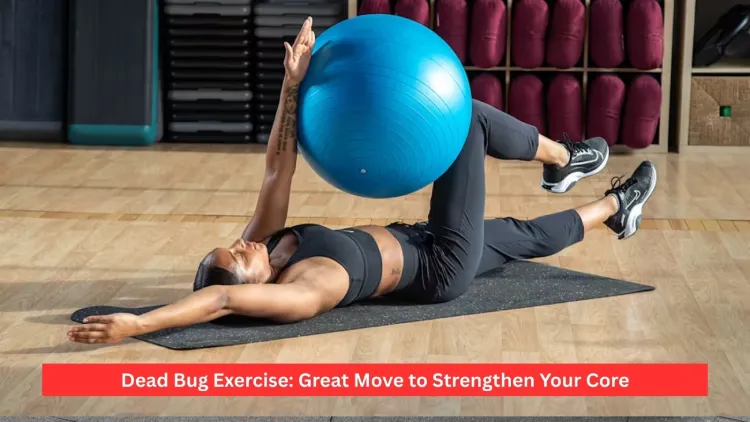

Dead bug is a basic yet very effective core exercise that helps to strengthen abdominal, lower back, and stabilising muscles. Contrary to the conventional sit-ups, it improves posture, minimises lower back pain and assists in flatter stomach constructions. The exercise is suitable for both beginners and high-level fitness enthusiasts, as it is likely to enhance sports performance, prevent injuries, and achieve functional strength when performed correctly and repeatedly.
- Advantages of Dead Bug Exercise
- The procedures for doing a Basic Dead Bug Exercise
- Derivations of the Dead Bug Exercise
- The Comparison of Dead Bug Exercise and Other Ab Exercises
- Maximizing Effectiveness tips
- Common Mistakes to Avoid
- Other Lessons of Core Strength.
- Dead Bug Exercise in Thorough Fitness.
- Conclusion
- Frequently Asked Questions
Advantages of Dead Bug Exercise
The dead bug exercise is not a simple core exercise. It is constructed in such a way that it utilises several muscles simultaneously, ensuring the weight is distributed evenly between strength and stability. Among the benefits of this exercise, another one is that it is able to exercises the muscles of the abdomen as well as the lower back without exerting excessive stress on the spine. This is why it is especially helpful with users who want to get out of lower back pain or cannot do the conventional exercises, such as the sit-ups.
The dead bug technique enhances the stability and posture of the whole body by tightening the deep core muscles. It assists in imbalances due to sedentary lifestyles/ weak core muscles. Furthermore, rectus abdominis, transverse abdominis, obliques, and even hip flexors are also involved in this exercise, hence engaging the abdomen in totality. As opposed to crunches, the movement is not limited to one single area but promotes functional core strength.
The neuromuscular coordination is also developed because of the controlled movements in the dead bug exercise. These gains are translated to increased athletic performance in running, lifting weights or even the day-to-day activities. Moreover, due to the slow, gentle movements involved in the exercise, the exercise will stimulate mind-muscle relations that are essential in developing long-term strength and muscle recognition.
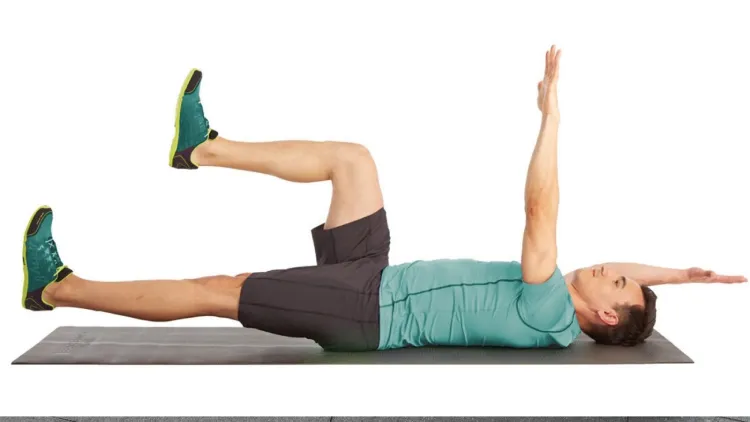
The procedures for doing a Basic Dead Bug Exercise
The correct performance of the dead bug exercise is key to the maximisation of advantages and injury elimination. Here is a step-by-step guide:
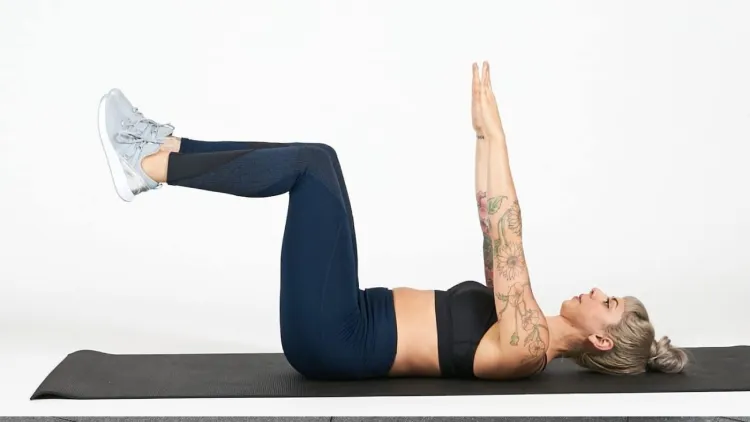
Start Position
- Lying on your back on a soft pad.
- Bend your knees at a 90 angle and rest them in a traditional perpendicular position to your hips.
Straussen planket! von der Ceil isful Ent stieg undabl!
Movement
- Gradually bring your right arm behind your head, and at the same time bring the extended leg of your left to the ground.
- Make sure you have maintained your lower back, squirming into the mat during the move.
- Go back to the same position and do the same with the opposite arm and leg.
Repetitions and Duration
- Do 2-3 sets of 8 -12 reps per side.
- Amateurs can start with smaller sets, but more experienced ones can take 3-5 seconds to hold every extension to make them more intense.
This is achieved by keeping the limbs in long postures for a couple of seconds, which are very useful in boosting core working. Given the fact that the deep core muscles are best strengthened by controlled, still positions in exercises, as is the case with the dead bug, research indicates that those exercises that use rapid and uncontrolled repetitions are less effective in the exercise.
Derivations of the Dead Bug Exercise
After getting familiar with the dead bug exercise in its simplest form, it is possible to add variations to the exercise and to make the workout more challenging and effective:
Weighted Dead Bug
- Resistance is brought about by holding a light dumbbell or a medicine ball in your hands.
- This movement improves muscle action in the arms, shoulders and the core.
Resistance Band Dead Bug
- The tension is imposed by the resistance band on your legs, which you are extending.
- It is perfect for developing endurance and stability.
Swiss Ball Dead Bug
- When performing the exercise, you use a stability ball between your hands and knees.
- This puts a strain on the balance and coordination, but it focuses more on the stabilising muscles.
Single-Leg Dead Bug
- Apply concentration to one leg and leave the other one bent.
- This isolates every side of the core and assists in correcting muscular imbalances.
Separating them by switching would ensure that you get to push yourself to the core without exposing yourself to stagnation.
The Comparison of Dead Bug Exercise and Other Ab Exercises
The dead bug exercise is commonly likened to sitting up, crunching and planking exercises. Although the traditional sit-ups and crunches centre their attention on the rectus abdominis, they may put a strain on the lower back and hip flexors. The dead bug, on the other hand, focuses on the controlled movement and spinal stability and is, therefore, a safer and more efficient choice of core strengthening.
The dead bug offers more freedom of movement in the limbs and is still able to engage the core, which can result in improved functional strength compared to the planks. Others go further to describe it as the king of core exercise due to the multitude of muscle groups it trains at the same time, being mild on the spine.
To all those individuals who question the premise that dead bugs flatten the stomach, the answer is yes, with time. The deep core muscles can be developed by constant training and could serve to improve posture, tighten the midsection, and improve the look of the abdomen. Although there is no direct move that burns belly fat, a combination of dead bugs and cardio, together with the right diet, can make one appear slim.
Maximizing Effectiveness tips
Maximise the benefits of your dead bug routine:
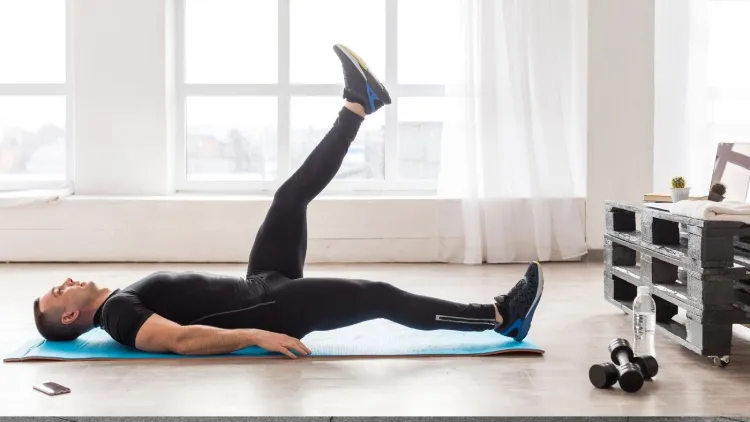
- Keep Your Back Flat: Do not arch your lower back, which will decrease the effectiveness and may cause strain on the spine.
- Move Slowly: You can use slow controlled movements, which are more effective than fast repetitions and are more involved in using core muscles.
- Breathe Correctly: Breath out as the limbs stretch and in as they go back to the initial position.
- Start with No Weights: Learn the fundamental motion without resistance before adding the resistance.
- Pay attention to Form: It is important to pay attention to quality rather than quantity; gradual and gradual movements can bring the best outcomes.
Fitness-lovers tend to adhere to guidelines such as the 3-3-3 rule or the 5-3-1 rule to organise their exercises, including sets of different intensity, reps, and intensity to obtain maximum strength with safety. These principles may be applied to the dead bug exercise and overload the muscles progressively, and increase core strength in the course of time.
Common Mistakes to Avoid
Even such a simple exercise as the dead bug exercise can be performed with pitfalls:
- Raise your hips off the floor.
- Finding usages of momentum rather than controlled movements.
- Erecting your head or your shoulders too high.
- Breathing in during the execution.
By eliminating these errors, it will be possible to work on the correct muscles with no harm. The other wrong thing that many individuals commit is that they engage in a very large number of reps, believing that quantity is superior to quality. To achieve good outcomes, concentrate on good technique and controlled movements as opposed to a high number of repetitions.

Other Lessons of Core Strength.
Dead bug exercise belongs to the larger group of really successful core exercise. Others are planks, hanging leg raise, as well as stability ball rollouts. These exercises are also known as the big three core exercises due to their overall stability and strength advantages.
Also, some people can ask themselves whether or not exercises such as 100 sit-ups per day or 100 crunches per day are enough; however, the reality is that core strength requires diversity, intensity and proper body position. Functional core exercises (dead bugs, planks, etc.) are also more effective scientifically to build abdominal muscles, strengthen the lower back, and improve general stability.
Consistency is crucial to those who would like to observe a tangible outcome. Cores gain power and improve posture in most individuals after 46 weeks of consistent workouts, but six-packs or much less belly fat depends on diet, fitness as a whole and genetics.
Dead Bug Exercise in Thorough Fitness.
Besides enhancing core stability, the dead bug exercise will help in performance during athletics, the prevention of cardiac accidents, and functional movement in everyday life. It is low-impact, so it can be applicable to people who are either recovering after injury or those with lower back pain. It has been deemed by many trainers as one of the best exercises to help one feel good about their core and lower back, as it helps one to strengthen deep stabilising muscles, which most exercises do not work on.
Live bugs are also useful in endorsing balance and coordination. This improves the neuromuscular control and makes the limbs move separately with a stable core that is essential in sporting and daily life. This may, in the long run, enhance the quality of the posture, decrease the chances of falls, and assist the body with more complicated exercises.

Conclusion
The dead bug exercise is a core exercise that is versatile, highly effective, and helps strengthen the abs, lower back and the stabilising muscles, as well as enhancing good posture and reducing the risk of injury. It is less dangerous and in many cases, more efficient than the conventional sit-ups or the crunches, thus a necessary supplement to the fitness program.
Being an amateur or a professional athlete, one can develop a strong functioning core with the aid of variations of the dead bug exercise, correct usage of exercises, and the use of organised principles of the workout. The dead bug exercise, together with proper nutrition and cardiovascular exercise, not only helps to some extent to flatten the stomach, but also improves the overall performance as well as functional power of the athlete.
Frequently Asked Questions
What are the muscles that the dead bug exercise targets?
The main muscles involved in a dead bug exercise are the rectus abdominis, transverse abdominis, obliques and the hip flexors. It also involves the lower back and stabilising muscles and is therefore a complete core-strengthening workout.
What is the number of dead bug exercises that I do during a session?
In the case of the majority of individuals, 2 to 3 sets with 8-12 reps on each side are applicable. Novices may begin with smaller reps, less hold time and eventually extend the hold time with repetitions as core strength is enhanced.
Are dead bugs better than sit-ups or planks?
No, dead bugs are usually safer and more effective compared to traditional sit-ups, as they decrease the load on the lower back and involve deep core muscles. They also restrict the stability of the core but provide more movement of the limbs as compared to planks.
Does the dead bug exercise have a flattening effect on the stomach?
The deep core muscles, posture and tightening of the midsection are enhanced by regular practice of the dead bug exercise. Although it is not a fat-burner on its own, it should be used in combination with cardio and strength training alongside adequate nutrition in order to attain a flatter belly.