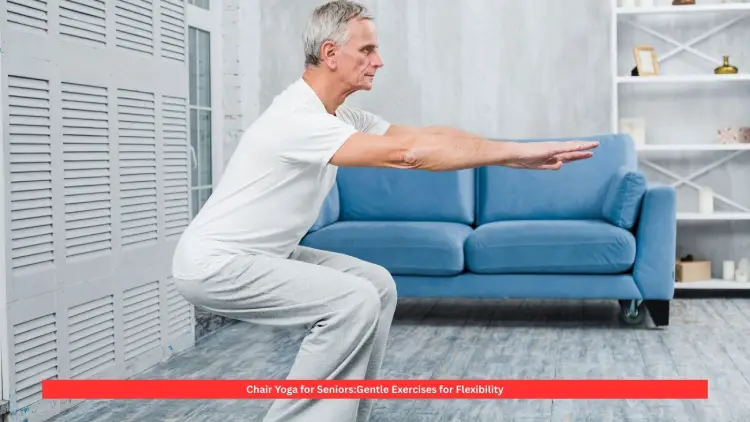

Chair yoga for seniour with seniors offers less strenuous therapy that allows them to remain active, enhance balance, flexibility, and muscle strength with less strain than standing and floor workouts. The seniors can make numerous movements with the help of a strong chair, thereby improving circulation, relieving tension, and improving the general health of elderly people. It may also help with weight control, improve posture, and improve mood when exercised regularly.
Why Chair Yoga for Seniors is Effective.
Chair yoga for seniors is specific to older adults or any person with limited mobility. It can also be practised by anyone, unlike traditional yoga, which requires one to be on the floor. Carefully designed movements can help the seniors develop a sense of strength, flexibility and balance, and the best part is that they are not vigorous to the joints, and movement is simple to follow. Research and personal experience indicate that regular workouts are a good solution to prevent stiffness, improve posture, better circulation and even weight loss in conjunction with other healthy behaviours.
Chair yoga for seniors also suits a variety of seniors better than walking or other stress-free activities,s as it involves more muscle groups at the same time and encourages them to move attentively. The variations can also be built up to gradually intensify, which can result in a steady loss of fat, an enhanced core strength, and an improved balance, especially when used together with regular walking or any other mild aerobic exercise.

Preparing for Chair Yoga for Seniors
Preparation is the most important factor in the process to be safe and make the best out of it:
- Selecting the Right Chair: A firm chair that is not on wheels, with a straight back, is recommended because it offers firm support. Avoid soft or rolling chairs.
- Relaxing Clothing: Relaxing clothing that is substantial and free-flowing.
- Warm-Up: Muscles go through neck rolling exercises, shoulder circular exercises and ankle rotations to warm up and decrease the risk of an injury.
- Breathing Awareness: Although breathing is fundamental when performing each movement, deep and controlled breathing promotes oxygen delivery, relaxation and concentration.
- What you need: In addition to a good stable chair, you may add optional support accessories such as a yoga strap, a small cushion to provide support to the back and resistance bands in more difficult versions.

Mainstream Chair Yoga practices with the elderly.
1. Seated Cat-Cow Stretch
Purpose: Enhances the flexibility of the spine, enhances posture, and decongests the tension.
How to do it step-by-step:
- Seldom sit with straight legs, knees bent to the ground.
- Breathe in, bend your back, raise your chest and swing your head slightly backwards (Cow Pose).
- Breath out, hump your spine, pull your belly button in the direction of your spine, and pull your chin in the direction of your chest (Cat Pose).
- Repeat slowly 10–12 times.
Variation: To be more extended, come up to Cow Pose with your arms by your head.
2. Seated Forward Bend
Purpose: The exercise extends the back, hips, and hamstrings and brings relaxation.
Steps:
- Sit at the periphery of the chair, with hips six inches apart.
- Inhale, lengthen your spine.
- Breathe out, bend forward on the hips, towards the feet or shins.
- Have to wait 10-20 seconds and breathe deeply.
- Gradually bring oneself to an upright sitting position.
Hint: When the hamstrings are tight, it is better to bend the knees a little to be comfortable.
3. Chair Twist
Purpose: Increases mobility of the spine, stimulates digestion and the core is made stronger.
Steps:
- Sit erectly, keeping the feet flat on the floor. Lyingg right hand on the back of the chair and the left hand over the right knee.
- Breathe in,n lifting your spine, breathe out, twisting softly and rightwards.
- Maintain a steady breathing duration of 510 seconds.
- Repeat on the opposite side.
Differences: To add extra stretch, raise the other arm opposite on the ceiling during the twist.
4. Seated Side Stretch
Purpose: The sides of the body are opened, and flexibility is also promoted, as well as deep breathing.
Steps:
- Sit erectly, keeping the feet flat on the floor.
- Lift rightarm upward, usethe left hand to support the left chair.
- Lean on the right, trying to stretch the right side.
- Rest 5 breaths apiece on the other side.
Tip: Do not overwork your shoulder.
5. Seated Leg Lifts
Purpose: Engages the quads, hips and the core, as well as increases circulation.
Steps:
- Sit on the edge of the chair with the bottoms flat.
- Keep the leg that is on the right straight and suspend for 3-5 seconds.
- Kick down and down, with the left leg.
- Perform 10–15 repetitions per leg.
Variation: Add ankle circles with the leg suspended in the air to raise the range.
6. Ankle Rolls
Purpose: Increases mobility of the ankle, decreases stiffness and increases circulation.
Steps:
- Seat prostrate, with feet raised slightly above ground.
- Turn both ankles clockwise (turn 10 times) and anti-clockwise (turn 10 times).
- Repeat with the other ankle.
Hint: Deep breathing can be used together with relaxation.
7. Seated Shoulder Shrugs
Purpose: Athletes attempt to relax by easing tension in their shoulders and allowing relaxation to take place.
Steps:
- Sit tall, arms at sides.
- Breath, shoulder-lifted against the air.
- Breathe out, relax your shoulders.
- Repeat 10–15 times.
Variation: Have a light water bottle in both hands in order to provide mild resistance.
8. Seated Eagle Arms
Purpose: Stretches the upper back and shoulders and enhances good posture.
Steps:
- Sit tall, extend arms forward.
- Cross the right arm with the left one, and bend them at the elbow.
- Attempt to press palms together (as much as possible).
- Raise on the elbows and retain 5 counts.
- Repeat with opposite arms.
Hint: Strap hands together in case they are not.
9. Seated Marching
Purpose: Builds legs, involves the core, and augments the circulation.
Steps:
- Sit near the edge of the chair.
- Take the right knee up by the chest, then the left and vice versa in the form of a march.
- Continue for 30–60 seconds.
Variation: Under march with lifting of the knees high or by making the march quicker.
10. Seated Neck Stretches
Purpose: Disperses the tension of the neck, increases flexibility, and promotes relaxation.
Steps:
- Sit tall, shoulders relaxed.
- Tilt your head to move to the right, but ear to shoulder. Hold 5 breaths.
- Repeat on the left.
- Look down, tipping the chin to stretch the back of the neck.
Hint: Do not pull your head; press it gently.

More Chair Yoga Poses among the older adults.
Breathing and Meditation
Breathing is promoted in chair yoga for seniors to improve relaxation and weight control, circulation, and clarity of mind. Deep breathing followed by stretching, inhaling,g and exhaling helps to increase oxygenation of the muscles.
Short Daily Sessions
Already, 10-15 minutes of chair yoga for seniors every day have observable effects. Other programs promote a 5-5-5-30 regime; five minutes of warm-up, five minutes of core stretches, five minutes of balance, plus 30 minutes of low-impact exercise, which will ultimately enhance fitness.
Chair Yoga and Walking together.
Chair yoga for seniors may be used in addition to walking or some light aerobic exercises. The daily workouts in the form of walking (30 minutes) and chair yoga for seniors will be beneficial to burn calories, build muscles, and maintain a stable core, allowing weight loss within a healthy dietary pattern in the long run.
Gaffes in Chair Yoga and the way to prevent them.
- Overstretching: Act within comfort zones to avoid harm.
- Poor Posture Sit upright, keep feet level, and utilise the core.
- Holding Up: Have constant and deep breathing.
- Omission of Warm-Up: Hip-hop: Before exercise, loosen the joints and muscles.
- Rushing Movements: The thoughtful and slow movements are to the maximum of flexibility and balance.
To work without any undue strain, these pitfalls are best avoided to promote effective, safe practice.
Practical Tips for Seniors
- Time of the Day: Morning is the best time to wake up the muscles, but any time would be suitable.
- Daily Practice: Low doses of daily practice are safe and healthy.
- Gradual Progress: To begin with 10-15 min. and continue gradually.
- Use Support: Exercises arefacilitated by the availability of chairs, cushions and straps.
- Monitor Progress: Report about the increased flexibility, balance, and stamina.

Conclusion
Chair yoga for seniors among the elderly is a safe, effective, and flexible exercise method that helps to maintain strength, flexibility, body balance, and cognitive health. It provides an experience of a full workout without falling and straining joints. Through conventional workouts, the elderly will be able to develop their postures, relieve stress and strain, boost blood flow, and even maintain weight.
Regardless of the accompaniment of walking, small daily routines, or light aerobic exercises, chair yoga for seniors offers a full package of keeping the body healthy, active, and vibrant at later ages. It takes almost no equipment and few actions, but demonstrates that it is possible to be as active and healthy at any age, sitting on the chair.
Frequently Asked Questions
1: Does chair yoga effectively keep the seniors active?
Yes! Chair yoga for seniors is a class particularly tailored to seniors and severely limited mobility. It assists in enhancing flexibility, strength, and balance, and it does not strain the joints. There is no need to ha, ve a long, heavy session daily when stiffness, improved circulation, and physical and mental well-being can be supported by even a short session daily.
2: What is the frequency of the senior doing chair yoga?
Chair yoga for seniors can be done safely by seniors on a daily basis. Even 10-15 minutes of some light stretching exercise can deliver some visible benefits. Indeed, the way is to stay consistent, and sessions can be extended progressively over time in duration or intensity as strength and flexibility increase.
3: Do you require any specialised equipment for chair yoga for seniors?
There is no need to have any special equipment. All that is needed is a hard chair with no wheels. Additional materials, such as a yoga strap, resistance band, or cushion, can be added, or can be added to make some of the stretches harder.
4: Does chair yoga for seniors reduce belly fat or weight?
Although chair yoga for seniors is a non-strenuous exercise, it works several of our body muscles, enhances blood flow, and increases metabolic rate with regular workouts. It can be used in conjunction with walking or any other type of light aerobic activity to help manage slow weight gain and preserve a healthy body composition.