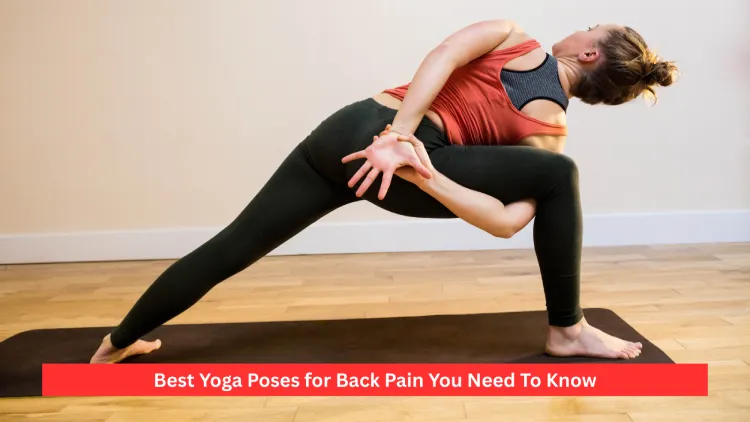

Poor posture, weak muscles, or sitting too long may be the cause of back pain, which may be dull pain or even sharp pain. The best yoga poses for back pain loosen up the spine, enhance flexibility, and release tension. Mellow stretches, backbends and relaxations can be safely learnt at home or during class to help to maintain the health of the spinal cord and increase mobility in general.
Best Yoga Poses for Back Pain
1. Cat-Cow Pose (Marjaryasana-Bitilasana)
How to do it:
- Start on all fours, with the hands placed under the shoulders and the knees under the hips.
- Breathe, bend your back and raise the head and the tailbone (Cow Pose).
- Breath out, round back bending, tuck chin, tailbone (Cat Pose).
- Repeat 15-20 slow controlled rounds.
Why it works:
This type of movement resembles massage as it is a flowing movement that involves the spine, circulates blood, and stretches taut back muscles. It is very helpful, especially among individuals who are relieved of stiffness due to excessive time sitting or slumbering in a bad position. The floating arch and round motion activate the spinal stabilisers, and this prevents injury to the lower back and lumbar.
Pro Tip:
The benefits of maintaining regular practice are a slight drop in blood pressure due to deepening and rhythmic breathing and relaxation. It is a perfect pose, both in the morning and in the evening. Cat-Cow, along with Cobra and Bridge Pose, is viewed as one of the three essential exercises to maintain the lumbar spine in the L 4 -L5 area with respect to developing core strength.
2. Child’s Pose (Balasana)
How to do it:
- Kneel, with the toes facing and knees apart.
- Soon, relax on your heels and extend your arms in front of the mat.
- Lean your forehead on the floor, and shut your eyes.
- Stay 30-60 seconds, deep breathing.
Why it works:
The Pose of Child stretches the lower back and hips and provides spaces between the vertebrae, and decreases complications. It is frequently prescribed as an initial use as a form of alleviation of acute lumbar pain. It is an effective, relaxing pose that is not too inverted or straining for people who have high blood pressure.
Pro Tip:
To make the pose more comfortable for people with tight hips or with discomfort associated with nerves like sciatica due to low vitamin B12 or D, one can raise the hips slightly using a cushion.
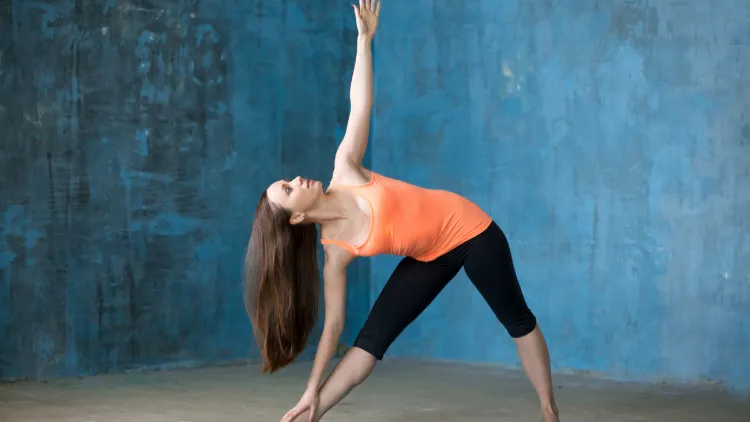
3. Down Dog (Adho Mukha Svanasana)
How to do it:
- It can be started on hands and knees with wrists lower than shoulders.
- Bring the hips, raise to an inverted V.
- Retain the feet at a hip-length distance with the heels pushed downwards.
- Hold 20-30 seconds and concentrate on the lengthening of the spine.
Why it works:
This is a pose that is known to extend hamstrings, calves and spine and involves the shoulders and upper back. These supporting muscles will be strengthened, and lower back strain will decrease, as well as an increased posture will be enhanced. Downward Dog is additionally known to enhance circulation as well as may control blood pressure after a blend with slow, sedate breaths.
Pro Tip:
This pose should be performed very carefully by individuals who have these health conditions, as the neck or other body parts may also have high blood pressure and not be sustained over long periods of time. Similar to other yoga based treatment, the pose is compatible with other gentle approaches to traditional Chinese medicine, including qigong and tai chi, which involve slow and controlled motions to aid spine health.
4. Cobra Pose (Bhujangasana)
How to do it:
- Lie on his back with his legs straight at the foot of the floor.
- When hands are placed under the shoulders and lift the chest off the mat.
- Elbows are to be kept slightly bent, shoulders not against the ears.
- 15-30 Seconds of holding, with a slow release.
Why it works:
The Cobra Pose also makes the lower back muscles stronger and more flexible in the back. It is one of the three exercises of the lumbar health group, alongside Cat-Cow and Bridge Pose, especially in the stabilisation of L4-L5 vertebrae. This is also an exercise that enhances the stability of the core, thereby limiting the chances of recurring back pain.
Pro Tip:
Stretching the front body and opening the chest, the Cobra Pose will assist in better breathing, which, in turn, will positively influence cardiovascular processes and the normal functioning of blood pressure.
5. Sphinx Pose
How to do it:
- rest in a market on your back, legs straight.
- Lay forearms on the floor along with shoulders.
- Everything is to engage the chest, but leave the forearms off the ground.
- Stay 30-60 seconds, deep breathing.
Why it works:
Sphinx Pose is a milder substitute for stricter backbends; it can be used with patients with chronic or acute back pain. It makes the lumbar spine strong, and it induces nice curves and tension that arises due to sitting is alleviated. Its light interaction also does not overload the lower back, which is overloaded by heavier movement.
Pro Tip:
It can be further engaged by adding a few variations to it, including lifting one arm at a time to further engage the spine and its stability.
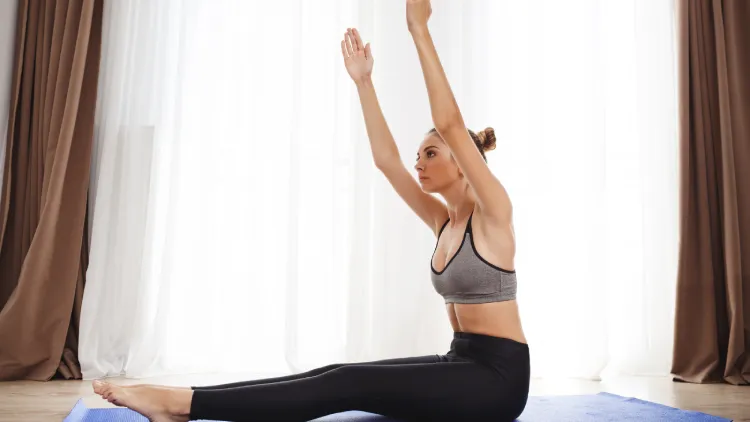
6. Seated Forward Bend (Paschimottanasana)
How to do it:
- Depose straight on the knees.
- Breathe in order to elongate the spine, breathe out to flex the hips and lean forward to your feet.
- Hold 20-30 seconds and ensure your back is straight.
Why it works:
This position is a close of the back line- spine to hamstrings- which extends and relieves tension and enhances its flexibility. It is especially useful in the case of mild sciatica or tight hamstrings, which are a major cause of lower back pain.
Pro Tip:
Have a strap between your feet in case they are hard to reach. With this alteration, the stretch does not stretch out the lower back. It is also able to supplement other short stretches like the 30-second knee-to-chest stretch, which can be used to relieve pain instantly.
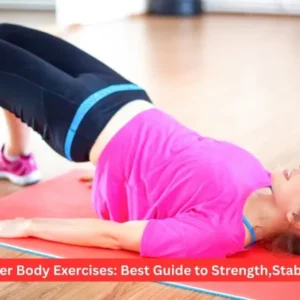
7. Bridge Pose (Setu Bandhasana)
How to do it:
- Back with knees bent and feet hip-wide.
- Put your feet and arms on the floor to raise your hips.
- Wait 15-30 seconds, and settle down.
Why it works:
Bridge Pose will benefit the glutes, hamstring and lower back as it opens up the chest. Well-developed glute and core muscles are vital in the stabilisation of the L4-L5 area and avoidance of disc load. It is also able to stretch the hip flexors, which might decrease the amount of pressure on the lower back.
Pro tip:
Promoted bridge variation (place a yoga block below the sacrum) can ease the load and permit longer rest to relax more. This pose, combined with Cobra and Cat-Cow, is the keystone of the lower back rehabilitation activities.
8. Supine Spinal Twist (Supta Matsyendrasana)
How to do it:
- Back in bed, knees to chest.
- Bring knees down on one side, with shoulders on the ground.
- Bend arms to both sides and keep 20 to 30 seconds on each side.
Why it works:
This rotation action will aid in the realignment of the spine, the low back muscles will be stretched, and the tension around the sacrum and lumbar region will be released. Internal organ stimulation and increased circulation, which is the indirect stimulation of blood pressure, can also be induced by twists such as these. They are mild and can be used at home without danger, hence they are applicable for use in everyday life with the aim to alleviate back pain.
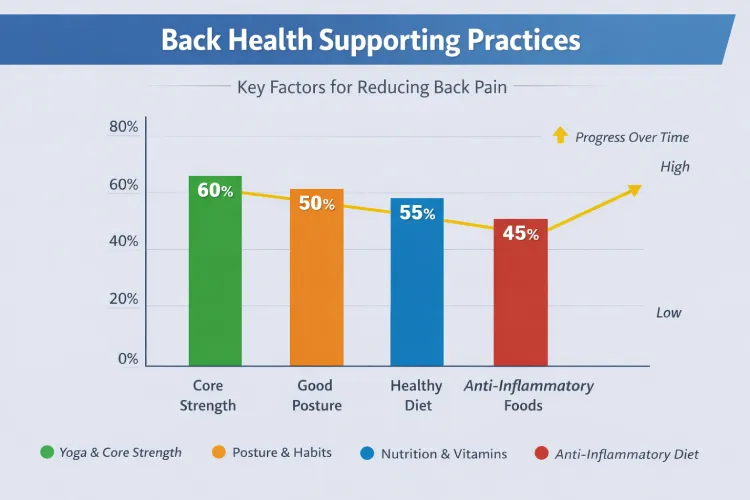
Back Health Supporting Practices
Although yoga exercises are most effective, a combination of supplementary practices can increase the outcome:
- Core strengthening: The exercises focus on the L4-L5 area (modified planks, pelvic tilts), which enhance the stability of the spine and prevent the pain that occurs after a while.
- Daily habits: A bad posture with a seated position, lifting heavy objects and taking a lot of bed rest lead to low back pain. Yoga recommends appropriate posture patterns and awareness involved in movement.
- Nutrition and vitamins: Vitamin deficiencies of vitamin D or B12 may aggravate pain as a consequence of nerves, such as sciatica. Fortified foods and fish, eggs and greens help in keeping the nerves good and are complementary to the yoga therapy.
- Anti-inflammatory diet: Dietary restriction, including processed sugar, refined grains, and very inflammatory foods, can help to reduce back pain and promote the general healing process.
Yoga and Blood Pressure
Light, healing yoga, which involves forward bends and supported backbends, can be used to reduce high blood pressure naturally. Three slow, conscious breaths during poses activate the parasympathetic nerves, the result of which is to induce relaxation and even decrease systolic and diastolic indicators.
Do not do the poses which are inverted or excessively difficult. Warm up with such spinal relaxation poses as Child Pose, Sphinx Pose and Supine Spinal Twists to benefit cardiovascular fitness as well as the back.

Optimal Duration and Timing
Most people should practice yoga at least 30 minutes a day in order to get the beneficial effects of being flexible, strong, and relieving pain. The morning practice will assist in the mobilisation of rigid muscles, and evening sessions will assist in releasing the accumulated tension. Regularity and careful practice are more significant than the session length.
Home Practice and Safety Guidelines
- Yoga may be practised safely in a home through the use of a mat, support, and a guided series.
- It is not advisable to do poses that result in sharp pain or undue strain.
- You should listen to your body and make changes in poses.
- The duration of relief stretches, such as the knee-to-chest stretch, may be performed between the sessions to help reduce acute discomfort.
Key Takeaways
- Cat-Cow, Cobra, Bridge, Child, Downward Dog, Sphinx, Seated Forward Bend and Supine Spinal Twist are the best yoga positions to use to alleviate back pain and also to work in favour of supporting muscles.
- Light stretching and strengthening of the core make the lumbar area stable and avoid future trauma.
- Meditation helps to relax, regulate blood pressure, and maintain good health.
- Whether it is good practice or it is safe home practice, it is coupled with proper nutrition, good posture and understanding of the high-risk movements that can be made with regard to long-term spinal health.

Conclusion
By including the best yoga poses for back pain in your daily workout, you are able to make your body much healthier by helping your back, alleviating pain, and giving your muscles surrounding your back more strength. Asanas, such as Cat-Cow, Cobra, Bridge, and Child’s Pose, help the body gain better flexibility, stability, and circulation, whereas light stretches, including Seated Forward Bend and Supine Spinal Twist, take off the tension right after the exercise.
In addition to the physical gains, yoga will influence conscious movement, improve posture, and even support the heart with the help of controlled breathing. Yoga can be used together with core strengthening, proper nutrition and healthy daily habits in the prevention and management of back pain in a holistic approach.
Regular conscious yoga at home or in a Reiki-approach class can enable you to control the health of your back and discontinue the need for drugs, move more, and feel healthier and more energetic. This means that by doing these poses as a daily or normal practice, you are not only alleviating pain, but you are also strengthening your back to be stronger and tougher in the long term.
Frequently Asked Questions
1. Will it be possible to do these yoga postures at home to relieve back pain?
Yes. All the poses, such as Cat-Cow, Child’s Pose, Bridge and Seated Forward Bend, can be practised without much difficulty in the house. Take a yoga mat and practice it slowly, breathing under control.
2. How many sessions of yoga will bring in results regarding back pain?
Average hours spent per day of 30 tend to be sufficient to increase flexibility, tone back, and relieve pain. The best results are acquired through consistent practice on a daily basis.
3. Is there a yoga pose that should be avoided for back pain?
Yes. There are inversion poses, back bends and severe twists that strain the spine. Keep to mild stretches and poses to strengthen.
4. Does yoga reduce blood pressure and enhance the well-being of the back?
Yes. Poses such as Child Pose, Sphinx Pose and Supine Spinal Twist are gentle and allow relaxation and slow breathing, which may aid in maintaining healthy blood pressure.