

Arm exercises are needed in order to make the muscles of the upper body strong, well-built, and practical. To become stronger, develop bigger arms, tighten your muscles, or just move better every day, it is possible to concentrate on the right arm workouts to reach the desired results in the minimum time possible. Arms are part of nearly all upper-body movements, such as lifting, pushing, pulling, and gripping; therefore, by training them in a structured, well-defined exercise, one can better perform in the gym and in life on the whole. This guide covers the best exercises to do on the arms, proper execution of the exercises and the development of a work routine that brings actual results.
- Why Arm Workouts Matter
- Best Arm workouts
- 3. Forearm Exercises
- Sample Arm Workouts Routine
- Intermediate Routine
- Advanced Routine
- Tips for Better Arm Workouts
- Adhere to easy training guidelines.
- Manage recovery and sleep.
- Training, unlike muscles, with each other is a mistake
- Effective compound lifts should be applied.
- Final Thoughts
- Frequently Asked Questions
Why Arm Workouts Matter
Arm workouts build strength in almost all the upper-body movement muscles. Powerful biceps are useful in pulling and curling movements, whereas powerful triceps are useful in pushing. Forearms will help in grip, stability and endurance, which is very necessary in a complete fitness program. These are reinforced to enhance the performance in the compound exercises such as rows, bench presses and push-ups.
A lot of individuals train arm workouts to enhance the appearance as well, biceps and full triceps are worked completely to create a balanced and athletic appearance. The triceps constitute almost 70 per cent of the overall mass of muscles in the arm; thus, the key to the outwardly increased arms is through efficient training of the triceps. Through regular arm workouts, you gain better muscular endurance, functional strength and total arm shape.

Best Arm workouts
1. Bicep Exercises
- Dumbbell Bicep Curl: Dumbbell bicep curl is said to be the best exercise in terms of size and strength addition. It activates the heads of the biceps, as well as helps to perform pull-ups more effectively. Moderate to heavy weight and perfect form will increase muscle growth to the maximum. The importance of curls is particularly in that it is the one that directly leads to larger arm sizes, and yes, it definitely does help enlarge arm sizes through progressive overloading.
- Hammer Curl: Hammer curls aim at the brachialis muscle, which stretches the biceps upwards and makes the arms look fat. Two other benefits of this exercise are grip and forearm strength. Due to its ability to attack the inner muscles, hammer curls have a significant role to play when one wishes to correct skinny arms or build their upper arms in a short time.
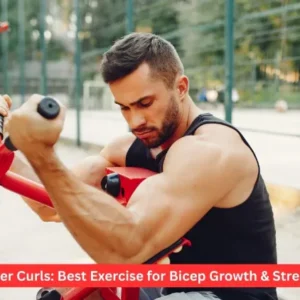
- Concentration Curl: Concentration curls focus on the biceps muscles and enable one to use the complete contraction of the muscle without any momentum. This move enhances the apogee of the biceps to make them rounder. It can also be used in the development of accurate muscle control and which is progressive overload, such as 7-7-7 curl, where you do seven bottom-half curls, seven top-half curls and seven fulls to exhaust the muscle completely.
2. Tricep Exercises
- Tricep Dips: Tricep dips are effective for the development of the long head of the tricep, which gives most of the upper-arm size. Dips are essential since most of your arm muscle is composed of triceps, and therefore, every person aspiring to have bigger, fuller arms cannot do away with dips. They aid in the enhancement of strength, definition and pushing power. To the average individual, dips are more productive than curls in arm development due to their intensity of muscle activation.
- Overhead Tricep Extension: The overhead tricep extension lengthens the long head of the tricep, which forms the optimal stimulus to growth. This exercise is very good in the form of the back of the arms and to increase the strength of pressing. It is important to use the appropriate form since doing too much requires the extension of the elbows, which puts pressure on the joint.
- Tricep Kickback: Kickbacks will be excellent to complete a workout, as they will heavily isolate the triceps. Such a motion intensifies muscle definition and carries out the arm back to tighten. They are also useful in improving the mind-muscle connection that is vital for long-term improvement in beginners.
3. Forearm Exercises
- Wrist Curl: The wrist curls will make the forearm flexors stronger and enhance grip strength. The powerful grip is also necessary in order to move heavier loads, support posture, and avoid overuse injuries. Forearms are used in close to every pulling motion; thus, continuously training them will make all other arm exercises more effective.
- Reverse Wrist Curl: Reverse wrist curls also work on the extensors, rendering a moderate effect on the injury prevention and strength balance of the wrist. A forearm balance helps in keeping the elbow joint stable and enhancing the curls, rows, and carries.
- Farmer’s Carry: Carry by the farmer is an exercise that involves full arm engagement and makes your hands, wrists, forearms, shoulders, and even core strong. Distance and time walking around with a set of heavy dumbbells on your arms boosts general arm stamina and improves the amount of functional strength. It is particularly useful with those lifters who have trouble with grip at heavier lifts.

Sample Arm Workouts Routine
Beginner Routine
- Dumbbell Bicep Curl – 3×12
- Tricep Dips – 3×10
- Wrist Curls – 3×15
Such arm workouts create an underlying power, maintenance of muscle tension, and test newcomers to the discipline. Arms can be toned even with 2-kg dumbbells, with high reps, slow speed, and a regular repetition of the training program (once per week).
Intermediate Routine
- Hammer Curls – 3×12
- Overhead Tricep Extension – 3×12
- Tricep Kickbacks – 3×15
- Farmer’s Carry – 30–45 sec
In between lifters prefer heavier weights and a longer period under tension. The question of how much time in arms people should have is often raised, but yes, in the case of high-intensity and right exercises, the short session is also sufficient.
Advanced Routine
- Concentration Curls – 4×10
- Close-Grip Push-Ups – 4×12
- Skull Crushers – 4×10
- Reverse Wrist Curls – 4×15
High-level trainees may apply such principles as 3-3-3 training, 6-12-25 or even 5-4-3-2-1 techniques. These drills elevate metabolic tension, mechanical tension, and volume, all of which are essential in the maximisation of arm growth.

Tips for Better Arm Workouts
- Use progressive overload
- Increase weight gradually. No matter whether you are curling 2 kg or 20 kg, it is what is progressing.
- Train arms 2–3 times per week
Regular arm workouts should be done twice a week since most individuals grow well, and training on the biceps daily could cause overtraining. Constant soreness, weakness, sleep problems, and declining performance are some of the signs of overtraining.
Adhere to easy training guidelines.
- The 2-2-2 rule, 70/30 rule, 5-5-5-30 or 30/30/30 assists in a balance between strength, endurance and hypertrophy. These guidelines are merely systematic procedures for regulating training load and volume.
- Eating properly pre-workout.
The pre-workout meal must consist of carbohydrates as a source of energy and protein as a source of muscle support. Excellent are oats, bananas, yoghurt, eggs or rice meals.
Manage recovery and sleep.
Others have difficulties sleeping after exercising due to high adrenaline and cortisol levels. To minimise this, make sure you do not have late-night workouts and make sure that you cool down. The afternoon 3 pm training is optimal, and it performs well with regard to energy and performance.

Training, unlike muscles, with each other is a mistake
- Multiplex muscles, such as biceps and back or triceps and chest, are not exercised on the same day due to the risk of fatigue.
- You see, this is because certain muscles develop more slowly.
- Forearms and biceps are more resistant to growth since they are utilised at all times performing daily activities. This implies they should have vigorous and specific workouts for their arms to trigger new growth.
- By knowing when you are being too much, you know it.
Excessive exercise causes fatigue, loss of momentum and the possibility of injury. The length of the workout in the gym does not require 2 hours; 45-75 minutes is a sufficient duration to be followed by most people.
Effective compound lifts should be applied.
According to some trainers, five exercises are enough to have a full upper body:
These establish a powerful base and sustain the development of the arms.
Arm growth at any age
At 50 years and above, you can still build your biceps. Constant effort, proper form, low reps, high-quality protein, and rest are the main keys.

Final Thoughts
A strong and balanced upper body would require arm workouts. Any individual can become more powerful, large, tight, and strong with the correct exercises, correct form, and regular training. The bicep curls, tricep movements, in collaboration with forearm exercises, will effectively develop all the important muscles. Training is regulated arm exercises, be it to build beautiful, powerful, athletic, or physical fitness; at any level, you are going to make progress. Prioritise good nutrition, progressive overload, good reps and smart training rules to have strong arms that are well-developed and sculpted, yet they work as well as they look.
Frequently Asked Questions
1. How many times do I need to train my arms?
It is best to train the arms 2-3 times per week. This helps your muscles to build and gives you sufficient time to rest as well.
2. Will light weights make my arms slim?
Yes, even the weights up to 2-3 kg can tighten your arm workouts, provided they are used correctly with the correct amount of reps and constant training.
3. Is twenty minutes sufficient to have arm workouts?
Absolutely. The particular 20-minute splash of efficient exercises will contribute to reinforcing your arms and making them lean.
4. Is it only the biceps that I need to train?
Yes. These three are to develop full, defined arm workouts that train biceps, triceps, and forearms, as triceps comprise the majority of the arm muscle.