

Arm exercises are critical to strength, performance, and appearance. You can tighten the flabby arms when you attack your biceps, triceps, forearms and shoulders with a combination of compound and isolation movements, develop more muscle mass quicker and increase stamina. The most appropriate method involves a mixture of training 2-3 times per week and emphasising nutrition with protein-rich foods such as eggs, lean meat, and fruits that help to recover the muscles and rest. Consistent and intense results can be seen in 4-8 weeks, although there are instances when the results could be seen sooner.
Why Arm Exercises Are Important
While other body parts, such as the abs or chest, usually grab all the attention when one considers being fit, the arms do not need to take a back seat. Moves related to your arms are almost every upper body movement, especially in picking up, pressing, drawing or even carrying your shopping bags. And the well-structured arm exercises not only make you look good, but they also improve the general functionality, as well as athletics and quality of life.
Power also results in strong arms. In the case of athletes, faster sprint, harder throw, or more powerful punch may come in the form of stronger arms. In normal people, arm strength enhances posture, joint protection, as well as decreases injury risks. Functional characteristics aside, most individuals desire lean, sculpted and defined arms. That bronzed physique is achieved by bringing down body fat, combined with building up muscle size through regular arm exercises.
Key Arm Muscles You Need to Train
To really make your arm muscles change, it is important to be aware of the type of muscles you are working:
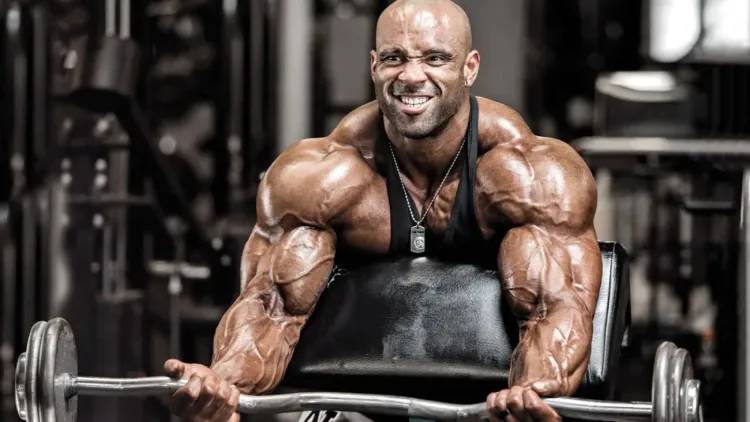
- Biceps (front of the arm): The bicep has the duty to both bend the arm in front and raise it. Probably the most noticeable on flexion, they can be the most noticeable muscle.
- Triceps (behind the arm): These comprise most of your pure arm bulk. These are aimed at pushing strength, and this is aided by extending the elbow.
- Forearms: This involves manipulating grip and wrist stability. Strong forearms assist more in lifting heavy items and even assist with day-to-day routine work, such as opening jars.
- Shoulders (deltoids): The shoulders, which are technically incorporated into the shoulder, relate directly to the movements of the arm and help build the arm.
The largest arm muscle is the triceps, and therefore, when you are aiming at building arms fast, you must put more emphasis on tricep-heavy moves.
Best Arm Exercises for Strength and Definition
If you want to build arms, it will be a combination of isolation and compound motions. The following are the best exercises that you should involve the arms:
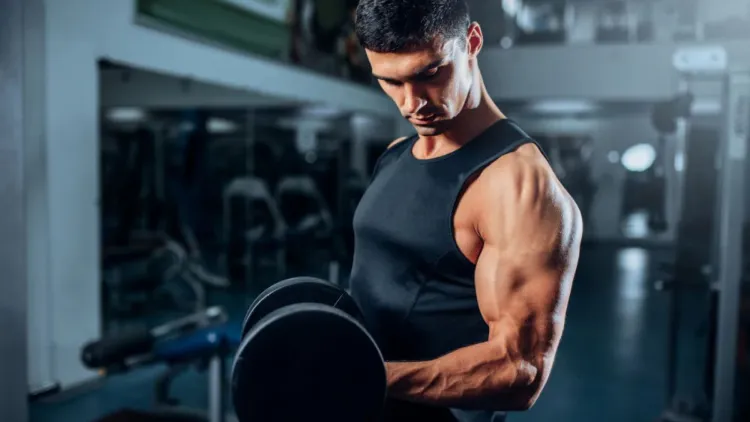
1. Bicep Curls
- Muscle worked: Biceps
- Grab two dumbbells and palm them face upwards and roll them into your shoulders. Slowly reduce the leniency as much as possible to ensure tension is achieved. This workout specifically involves the biceps, and it assists in developing thickness.
2. Tricep Dips
- Muscle worked: Triceps
- Dips are an effective technique practised with a bench/chair and have a proven history of tightening flabby arms whilst filling the triceps with size and strength.
3. Push-Ups
- Triceps worked, chest worked, and shoulders worked.
- Such variants as diamond push-ups stress the triceps even more, and they are some of the hardest and most gratifying types of push-ups.
4. Hammer Curls
- Part worked: Biceps and forearms.
- Curling arms inwards with the palms makes the arms grow bigger and enhances grip strength.
5. Overhead Tricep Extension
- Muscle worked: Triceps
- A wonderful exercise in developing the hind of the arms. Standing with a dumbbell over your head, lower it behind your head, then stretch upwards.
6. Plank to Shoulder Tap
- Worked muscle: Core, shoulders and arms.
- This involves stability training, which involves the core, and it works on the arms. One variation is the Superman hold, which strengthens arms, core and lower back.
7. Pull-Ups and Chin-Ups
- Worked part of the body: Biceps, back and forearms.
- These are wonderful compound exercises in terms of mass and strength. It is possible to accelerate arm growth by using weighted pull-ups.
- These moves have been shown to provide the best arm workout together with progressive overload (also known as gradually increasing the resistance).
Tips for Effective Arm Workouts
1. Training Frequency
You do not have to do exercises for your arms daily. Rather, the ideal number of one to three sessions weekly with a rest in between is best. Overtraining may impede recovery and curtail growth.
2. Sets and Reps
In regards to amount of building size to do, the goal is 3-4 sets of 8-12 reps/exercise. During an arm day, your exercises should consist of about 6-8 exercises altogether, of which at least one is equal on the biceps and the triceps.
3. Workout Duration
The workout on the solid arm should average approximately 45 60 minutes. This is sufficient to overwork the muscles, but not overload them.
4. The 2-2-2 and 3/2/1 Rules in the Gym
The 2-2-2 rule implies that you can add 2 reps to your exercise each 2 weeks until the ability to add weight. The 3/2/1 is a common strength procedure: 3 heavy reps, 2 moderate, and 1 light, so that the intensities will alternate.
5. Progressive Overload
To build arm muscles quicker, add weight, reps or sets slowly. Lack of progression and improvement will lead to your muscles being arrested.
6. Form Over Ego
Running with heavy weights that you can not effectively answer will not put more arm muscles on you sooner- it will carry more risk of injury. Always give importance to the controlled motions.
Nutrition for Arm Growth
No good training will maximise results on its own- nutritional supplementation is equally as important as training to gain muscle.
- Protein: Necessary to build up and develop. Eggs are standard fare- either 2-4 eggs/day is good, depending on what you eat.
- Fruits: Orange, bananas, and berries have an energy source, vitamins and antioxidants to restore energy. In their case, Bananas especially assist in the restoration of glycogen and in the development of the muscles.
- Protein shakes, milk, fruit and oats smoothies make excellent muscle-building drinks. It is also necessary to keep hydrated.
- Balanced Meals: Rice, beans, vegetables, rice, and lean meats should be a staple food.
- Caloric Surplus: When extreme thinness of arm muscles occurs, or you have growth difficulty, consuming higher caloric intake than your expenditure will correct skinny muscles and stimulate fattening.
How Long Does It Take to See Arm Results?
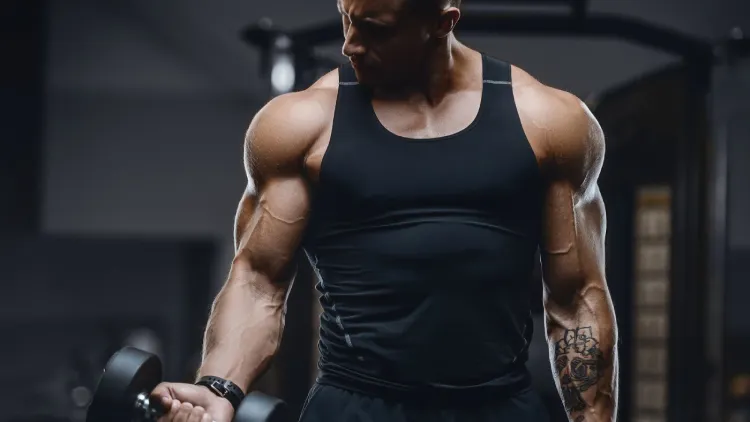
Consistency is key. In the majority of individuals, cardiac embolism manifests itself in a cardiac way, noticeable in 4-8 weeks, in the size and tone of the arms. Nevertheless, they work differently depending on genetics, food and exercise intensity. Others might develop arms within 2 weeks, and in considerably large sizes may need 30 or more days of directed training.
Advanced Insights on Arm Size
- Optimal Size of Arm: This is relative to height and type of body; however, when it comes to men, those with arm circumferences that are around 15-17 inches are said to be muscular.
- 20-Inch Arms: This is uncommon and can only be attained through years of practice, exceptional genes or superior techniques.
- Notorious Arms: The biceps of Arnold Schwarzenegger were notorious, with a diameter of about 22 inches, and the biceps of Mustafa Ismail are registered at a record with over 31 inches.
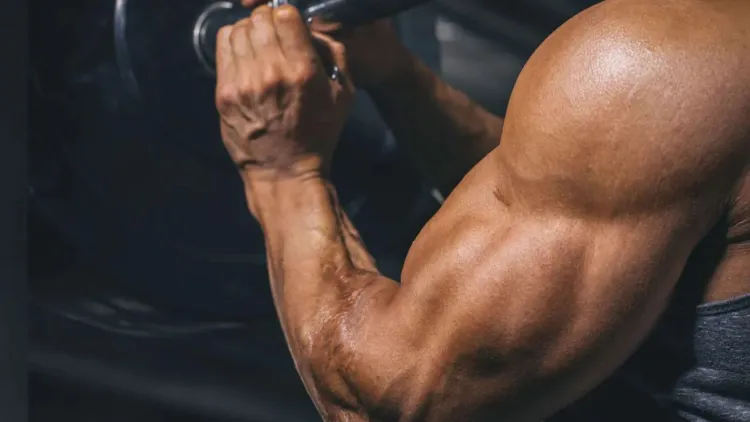
- Veiny Arms: Because of the low body extents and the high density of muscle, it becomes vascular and can be accomplished through regular exercise and healthy nutrition.
Final Thoughts
Working out on your arms is not only a cosmetic affair–you gain strength, power, and confidence. It does not matter whether you are trying to combat skinny arms, toning flabby arms or developing fat, thicker and stronger muscles; it is all about consistency, progressive overload and balanced nutrition.
- Train arms 2–3 times a week.
- Conduct 6 to 8 arm exercises in one session to develop both biceps and triceps.
- Consume high protein diets with fruits, eggs and food shakes to promote growth.
- Give rest days to rest and avoid overtraining.
- Be persistent–hunger bears its own determining grains.
The result of smart training paired with eating properly will bring you to the harder, bigger biceps. You may want to build on definition, size or performance, but the proper approach to arm training guarantees results that you can look at and feel.
Frequently Asked Questions
1. What is the advisable frequency of training my arms?
In order to grow and recover optimally, it is advisable that arms are trained 23 times per week. It is not required to train Hard Every Day, as it can retard growth during overtraining. Rest days enable the muscles to rest and become stronger.
2. How long will it take to see visible arm results?
Through regular training and nutrition, changes are felt by the majority within 4-8 weeks. Novices will have faster progress, and the experienced lifters will require more time as muscles get used to it.
3. Which foods and beverages can be used to make the arms stronger?
Eggs, lean meat, fish, beans, and dairy are all protein-rich foods, which are good for muscle recovery. Fruits like bananas and oranges provide the energy, whereas the protein shakes and milk, as well as smoothies, aid in the rapid increase and mending.
4. So, which arm exercise is the best to train strength and size?
The compound workouts, such as pull-ups, push-ups, and dips, increase strength and total body mass. Isolation exercises, such as bicep curls and tricep extensions, are used to shape and define the arms as desired.