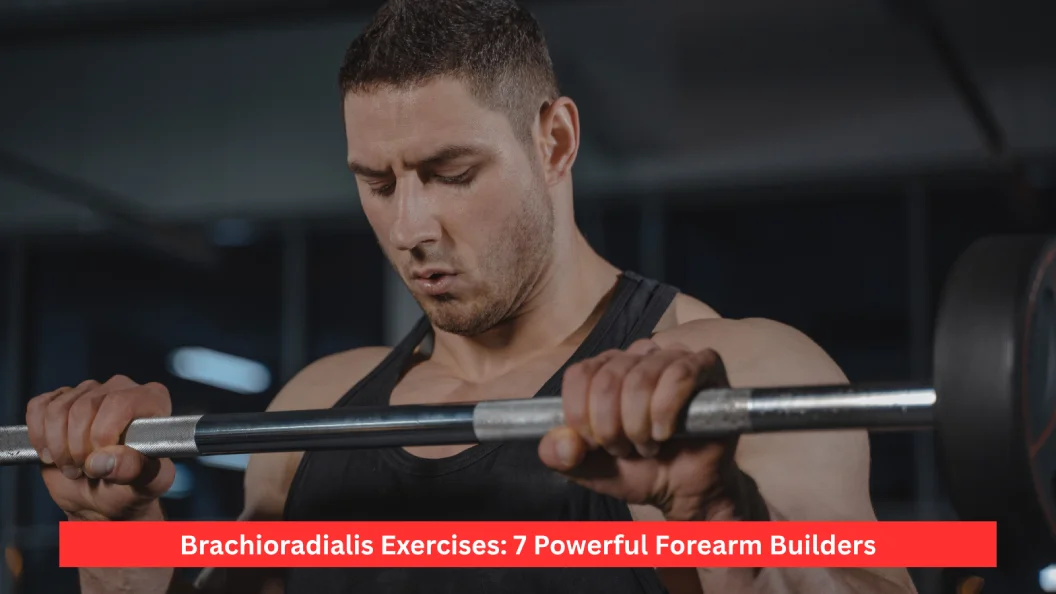

Brachioradialis exercises strengthen and make forearms thicker, which also makes elbows stronger. Experiment with hammer curls, reverse curls, and cross-body curls, twice a week, using correct technique, progressive overload, and sufficient recovery.
- What Is the Brachioradialis Muscle?
- Why Should You Train the Brachioradialis?
- 7 Best Brachioradialis Exercises for Stronger Forearms
- Best Brachioradialis Workout Plan for Beginners
- Can You Perform Brachioradialis Exercises at Home?
- Common Mistakes to Avoid
- How Often Should You Train the Brachioradialis?
- How to Isolate the Brachioradialis
- How to Build Bigger Brachioradialis Muscles
- Which Exercises Build the Strongest Forearms?
- What Is the Best Workout for the Brachialis?
- Are Forearm Muscles Difficult to Grow?
- How Can You Develop Larger, More Muscular Forearms?
- Conclusion
- Frequently Asked Questions
What Is the Brachioradialis Muscle?
The brachioradialis muscle is on the outside (thumb side) of the forearm. It joins the upper arm bone to the radius, which is one of the two bones in the forearm.
It is mainly used to flex the elbow (bend the arm). It is very effective when the palms are facing each other and can also be used to assist in positioning the forearm between palm-up and palm-down.
The brachioradialis acts in conjunction with the biceps brachii. All three muscles flex the elbow, but each serves a specific purpose in the body. Knowing these differences will help you choose exercises to effectively build your forearm and arm muscles, including the brachioradialis.
Why Should You Train the Brachioradialis?
Targeted brachioradialis exercises can improve forearm development and complement your existing arm workout.
- Thicker-looking forearms: Developing this muscle adds definition to the upper outer forearm.
- Stronger elbow flexion: The muscle assists with lifting weights and performing everyday activities.
- Better grip training: Holding dumbbells, barbells, and cable attachments challenges your grip, although other forearm muscles also contribute.
- Balanced arm development: Training the brachioradialis alongside the biceps and brachialis supports a more complete resistance-training program.
- Workout variety: Neutral-grip and overhand-grip curls provide alternatives to traditional biceps exercises.
Results depend on training consistency, genetics, nutrition, sleep, and recovery. No single exercise guarantees rapid muscle growth.
7 Best Brachioradialis Exercises for Stronger Forearms
Choose two or three exercises per session rather than performing all seven every time you train.
1. Dumbbell Hammer Curls
Best used by: Beginners and for overall forearm development.
The neutral grip is a great starting point for hammer curls because they activate the brachioradialis, brachialis, and biceps.
How to perform:
- Standing up, hold a dumbbell in both hands.
- Fold your palms inwards.
- Keep elbows bent; lift weights towards shoulders.
- Do not let wrists bend or body sway.
- Slowly lower the dumbbells.
Reps per set: 8-12 reps per set, 3 sets.
Power tip: Don’t swing heavier weights; swing with controlled movements.
2. Reverse Barbell Curls
Best for: Overhand-grip training.
Reverse curls use a pronated grip, with your palms facing downward. This changes the contribution of your elbow-flexor muscles compared with conventional curls.
How to perform:
- Hold a barbell or EZ-bar with an overhand grip.
- Keep your elbows close to your torso.
- Curl the bar upward without swinging.
- Maintain straight wrists.
- Lower the bar under control.
Sets and reps: 2–3 sets of 10–15 repetitions.
Power tip: Start with a lighter weight because reverse curls can be demanding on your forearms and wrists.
3. Cross-Body Hammer Curls
Best for: Unilateral training.
This variation moves each dumbbell toward the opposite shoulder while maintaining a neutral grip.
How to perform:
- Hold dumbbells beside your body with palms facing inward.
- Curl your right dumbbell toward your left shoulder.
- Keep your torso stable.
- Lower the weight slowly.
- Repeat with your other arm.
Sets and reps: 3 sets of 8–12 repetitions per arm.
Power tip: Avoid twisting your body to lift the weight.
4. Cable Rope Hammer Curls
Best for: Controlled gym workouts.
Cable rope hammer curls maintain a neutral grip while providing consistent resistance throughout much of the movement.
How to perform:
- Attach a rope to a low cable pulley.
- Hold one end in each hand.
- Keep your elbows near your sides.
- Curl the rope toward your shoulders.
- Lower it slowly.
Sets and reps: 3 sets of 10–15 repetitions.
Power tip: Avoid leaning backward or using momentum to complete repetitions.
5. Dumbbell Reverse Curls
Best for: Overhand-grip training without a barbell.
Dumbbell reverse curls let each arm work independently while challenging the forearm muscles and elbow flexors.
How to perform:
- Hold dumbbells with your palms facing downward.
- Keep your elbows close to your torso.
- Raise the weights by bending your elbows.
- Keep your wrists aligned.
- Lower the dumbbells slowly.
Sets and reps: 2–3 sets of 10–12 repetitions.
Power tip: Reduce the weight if your wrists bend or your form deteriorates.
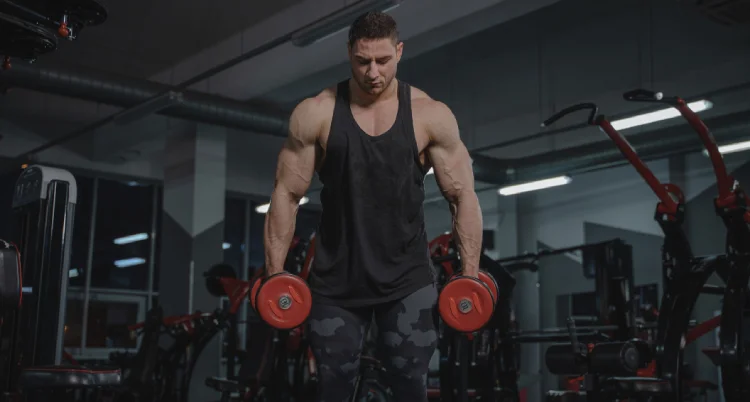
6. Resistance Band Hammer Curls
Best for: Home workouts.
Resistance bands offer an accessible alternative when dumbbells or gym equipment are unavailable.
How to perform:
- Stand securely on the middle of a resistance band.
- Hold both ends with your palms facing inward.
- Keep your elbows beside your body.
- Curl your hands toward your shoulders.
- Return slowly to the starting position.
Sets and reps: 2–3 sets of 12–15 repetitions.
Power tip: Inspect the band before training and make sure it cannot slip during exercise.
7. Dumbbell Hammer-to-Reverse Curls
Best for: Adding variety to forearm training.
This combination exercise uses a neutral grip during the curl and an overhand grip during the lowering phase.
How to perform:
- Hold light dumbbells with your palms facing inward.
- Curl the weights toward your shoulders.
- Rotate your forearms so your palms face downward.
- Lower the weights slowly.
- Return to the starting position and repeat.
Sets and reps: 2 sets of 8–10 repetitions.
Power tip: Start light and avoid rotating your wrists forcefully.
Best Brachioradialis Workout Plan for Beginners
A simple routine combining neutral-grip and overhand-grip movements can help develop stronger forearms.
| Exercise | Sets | Repetitions |
| Dumbbell hammer curls | 3 | 8–12 |
| Reverse curls | 2 | 10–12 |
| Cross-body hammer curls | 2 | 10 per arm |
Perform this workout twice weekly, allowing recovery between sessions. Beginners can start with two sets per exercise and increase their workload gradually.
Warm up for 5–10 minutes with light activity and comfortable arm movements before lifting.
How to Progress Your Forearm Workout
Progressive overload means gradually increasing the challenge placed on your muscles.
- Start with a manageable weight and learn proper technique.
- Increase resistance when you can complete your repetitions comfortably.
- Keep your wrists aligned and avoid swinging.
- Record your weights, sets, and repetitions.
- Allow enough recovery between demanding sessions.
Your forearms also work during rows, pull-ups, and other pulling exercises, so consider your total training workload.
Can You Perform Brachioradialis Exercises at Home?
Yes. Brachioradialis workouts can be done at home with dumbbells or resistance bands.
Hammer curls, reverse curls, and cross-body curls work well. Resistance bands are great for use if you have limited space or equipment.
Gradually add resistance or repetitions as strength builds to build stronger forearms. Do not use non-sporting items of the home to improvise weights.
Common Mistakes to Avoid
Here are some typical forearm training pitfalls to avoid:
- Excessive weight use: Heavy loads can lead to swinging and a loss of control.
- Unnecessary elbow movement: Keep elbows stable when curling.
- Bending wrists: Keep wrists in a relaxed position.
- Under-recovering: Using many pulling movements to train the forearms indirectly.
- Failing to take the long approach – building muscle takes time.
Training through pain: Stop if sharp pain, discomfort in the joints, numbness, or tingling occurs.
The key to good technique and consistent progress is more important than lifting the most weight.
How Often Should You Train the Brachioradialis?
For most healthy beginners, directly training the brachioradialis twice weekly is a reasonable starting point. Two or three exercises per session can provide sufficient targeted work.
Your ideal frequency depends on your training experience, workout intensity, and recovery. If you perform many rows, pull-ups, and curls, you may already be giving your forearms substantial additional work.
Adequate sleep, balanced nutrition, and sufficient protein help support muscle recovery and development.
How to Isolate the Brachioradialis
Complete isolation is not possible with ordinary curls because other elbow-flexor muscles also contribute. However, hammer curls and reverse curls can emphasize the brachioradialis through neutral and overhand grips.
Keep your elbows stable, maintain controlled repetitions, and choose resistance that allows good technique.
How to Build Bigger Brachioradialis Muscles
To build a larger brachioradialis, train consistently, increase resistance gradually, and recover properly. Combine hammer curls with reverse curls to challenge the elbow flexors through different grips.
Adequate protein and sufficient overall food intake also support muscle growth. Track your performance over several weeks instead of expecting immediate visual changes.
Which Exercises Build the Strongest Forearms?
Three useful choices are hammer curls, reverse curls, and farmer’s carries. Hammer curls train elbow flexion with a neutral grip, reverse curls add overhand-grip work, and farmer’s carries challenge grip endurance while you hold weights during walking.
Together, these movements address different aspects of forearm strength.
What Is the Best Workout for the Brachialis?
The brachialis is hidden under the biceps, and it is an important elbow flexor. Hammer curls and reverse curls are beneficial exercises because they help to develop elbow flexion independent of a palms-up grip.
In some positions and movements, the brachialis muscle will be stronger than the biceps muscle. Their relative contributions are task-dependent and forearm-dependent.
Weakness of the brachialis could be one of several possibilities contributing to decreased elbow-flexion strength. If it continues to be weak or if it is not getting stronger, it should be evaluated by a trained health care provider.
Are Forearm Muscles Difficult to Grow?
Forearm muscles can be developed through progressive resistance training, but this is dependent on the individual’s genes, diet, recovery, and training.
If you’re not getting any improvement in the forearms, check out your technique, work volume, and recovery. Slowly increasing the difficulty could help to yield better results.
How Can You Develop Larger, More Muscular Forearms?
With larger forearms, long-term resistance training, good nutrition, and consistent recovery are required. Hammer curls, reverse curls, and farmer’s carries can help to develop forearm muscles, but there are also genetic factors in play that determine muscle shape and size.
Don’t overtrain or train through pain to get quick results.
Conclusion
The best brachioradialis exercises combine neutral-grip movements, such as hammer curls, with overhand-grip variations, such as reverse curls. Cross-body curls, cable curls, and resistance band exercises provide additional options for different fitness levels.
Choose a manageable routine, maintain proper form, and increase resistance gradually. Consistent training, adequate recovery, and balanced nutrition can help you develop stronger, more muscular forearms.
Your next step: Choose two or three exercises from this guide and perform them twice per week. Focus on proper technique before increasing the weight.
Frequently Asked Questions
1. What are the top brachioradialis workouts?
Hammer curls, reverse curls, and cross-body hammer curls are good workouts for building up the brachioradialis and creating thicker forearms.
2. How many times a week should I work the brachioradialis?
Work the brachioradialis two times a week with 2-3 sets for each exercise. Get ample rest between training sessions to promote muscle development.
3. Can I get bigger forearms at home?
Yes, dumbbells and/or resistance bands can be used at home to strengthen the forearms. Concentrate on the form and build up resistance as your strength grows.
4. Do hammer curls work the brachioradialis?
Yes, the brachioradialis is a muscle that is targeted when performing hammer curls, as are the brachialis and biceps. They are neutral-gripped and are a great addition to forearm workouts.