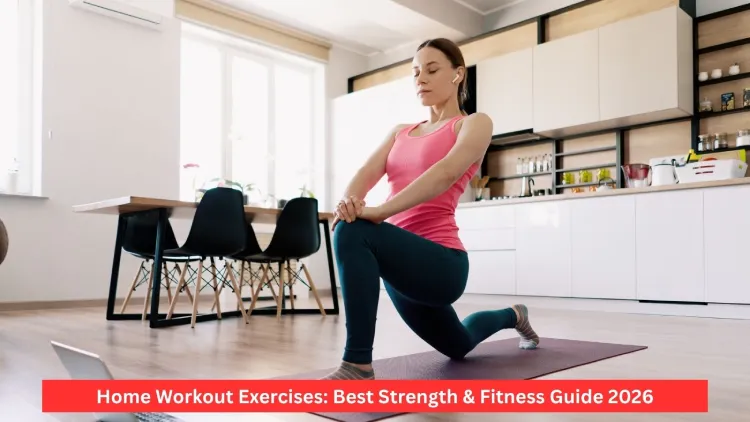

This is a simple and effective program of home workout exercises for strength training, endurance, flexibility, and fitness; no gym membership required. Bodyweight exercises like squats, lunges, planks, burpees, and push-ups can provide a full-body workout from the comfort of your home. They’re easy exercises that don’t necessitate any equipment and are great for gym enthusiasts, players of all skill levels, and beginners alike. Exercises done at home will save you time and money and give you the flexibility to adjust workout timing. As long-term athletes, they can help you settle into your fitness and health objectives if you know how to execute the workout and are consistent and diligent.
Benefits of Home Workout Exercises
Exercises can be performed at home in many ways and provide a host of physical and mental benefits. For some, convenience is the main reason to opt for home fitness exercises, but they are often amazed to discover many other benefits that can support their overall health and well-being in the long run.
Convenience and Flexibility
People opt for home exercise workouts because they can go into the comfort of their own home. Take training at various times of the day as needed, whether early morning, lunch time, or late evening. The flexibility helps to get rid of many of the common reasons to give up on exercising.
Cost Savings
Membership dues, gas, and $200,000 worth of exercise equipment can be expensive and quickly accumulate. They are a cost-effective way of achieving fitness without buying lots of equipment, as most exercises undertaken in the home do not require any equipment.
Improved Physical Fitness
Regular exercise improves muscular strength, endurance, flexibility, balance, and cardiovascular health. Just basic moves with your own body can yield stellar results when done on a consistent basis.
Better Weight Management
Routine activity helps elevate calorie burn, keeping your body at a healthy weight and weight management target. If you are exercising, this is likely to generate even more benefits along with proper nutrition.
Enhanced Mental Health
Exercise releases endorphins, which improve people’s moods and decrease their stress. For many, home workouts promote increased energy and concentration during the day.
Increased Confidence
Once strength and stamina improve and fitness improves as well, more people feel better and are more motivated to keep going and living a healthy lifestyle.
Adaptability
There are ways that the home workout exercises can be customized to fit the fitness tolerances of fitness, physical constraints, and space. This means they can also be used by beginners, intermediate, and advanced users.
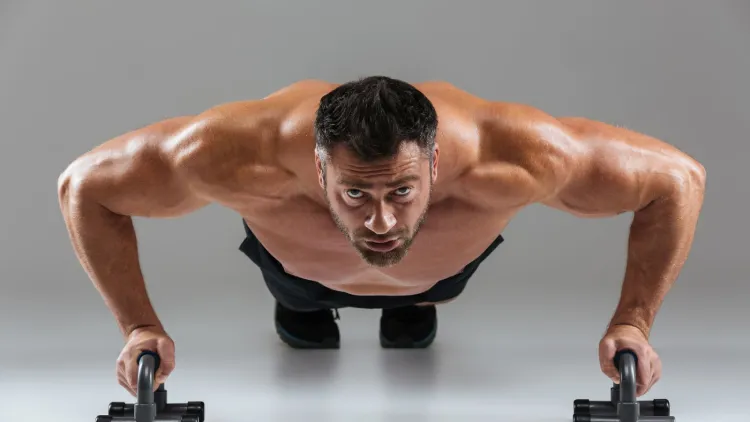
Push-Ups
Push-ups are one of the most popular and effective upper-body exercises. They can recruit several muscle groups at a time, and of course, work the core.
Muscles Worked
- Chest muscles
- Triceps
- Shoulders
- Core muscles
How to perform push-ups
- Start in a high plank position.
- Arms should be slightly wider than shoulder width apart.
- Maintain the straightness of the body from head to foot.
- Bring your chest down and towards your hips as far as your elbows bend.
- Stop momentarily at the lowest point.
- Step back to the beginning position.
- Repeat until the desired number of repetitions has been reached.
Benefits
Push-ups strengthen the upper body and build muscle endurance and stability. They don’t need equipment and are one of the most convenient workout exercises at home.
Push-ups can be done on their knees or against a wall for those who are a beginner or can be made harder, like the diamond or decline push-ups, for those who are more advanced.
Bodyweight Squats
Squats are simple lower-body exercises that simulate daily activities like rising and sitting down.
Muscles Worked
- Quadriceps
- Hamstrings
- Glutes
- Calves
- Core muscles
How to Perform Squats
- Keep feet shoulder-width apart.
- Elk your chest up and hold your tummy muscles tight.
- Squeeze your buttocks together as though “sitting into a chair”.
- Sit down so that your thighs are parallel to the floor or as far as they can comfortably go.
- Squeeze heels together to stand up.
- Repeat.
Benefits
Squats are beneficial for the lower body; they increase mobility and enhance balance. They are deemed to be one of the best home workout moves as they work out a number of large muscle groups at once.
Regular squat training may help to enhance performance in sports as well as simplify daily life.
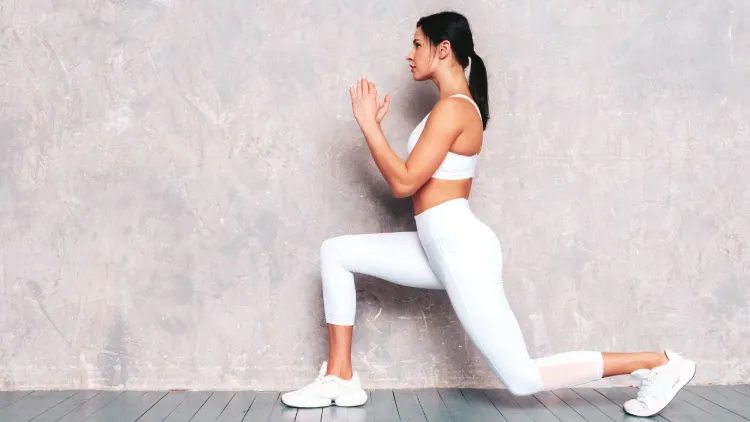
Lunges
Lunges are great for building strength in the lower body and to better balance and coordinate the body’s movement.
Muscles Worked
- Quadriceps
- Hamstrings
- Glutes
- Calves
- Core muscles
How to perform Lunges
- Stand up straight with your feet together and hip-distance apart.
- Place one foot on two feet. Take one leg forward.
- Sit down so that both knees are bent at about 90 degrees.
- -Step back through front heel to standing position.
- Do it again on the other leg.
Benefits
Lunges can work one leg at a time, which can help to correct muscle imbalances and promote stability. They stabilize critical muscles for walking, running, and climbing up and down the stairs as well.
Adding lunges to your home workout routine can significantly enhance lower-body function and coordination.
Plank
The plank strengthens and stabilizes your core and is one of the most effective exercises to do.
Muscles Worked
- Abdominals
- Lower back
- Shoulders
- Glutes
- Hip muscles
How to perform a plank
- Get on your forearms and toes.
- Maintain an aligned position on the body.
- Tighten up your abdominal muscles.
- Do not have hips sag or come up too high.
- Sustain for the amount of time specified.
Benefits
No movement is needed: Planking engages the entire core. Good core strength gives you improved posture, balance, and athleticism.
Unlike other abdominal exercises, planks are a very efficient exercise as they activate several muscles at once.
Mountain Climbers
Mountain climbers perform a mix of strength and aerobic training.
Muscles Worked
- Core muscles
- Shoulders
- Hip flexors
- Quadriceps
- Hamstrings
How to perform a Mountain Climber
- In high plank position, start.
- Bring one knee up to your chest.
- Quickly switch legs.
- Alternatively, seeing a controlled speed.
Benefits
Hikers working on heart rate and upper body/core strength. This makes them ideal for people looking for increased cardio and muscle benefits.
Mountain climbers are one of those exercises that don’t involve equipment and have little space in terms of cost.
Glute Bridges
Glute bridges work out the rear leg muscles.
Muscles Worked
- Glutes
- Hamstrings
- Lower back
- Core muscles
How to perform a Glute Bridge
- Pull your knees up to your chest and turn on your back.
- Foot flat on the ground.
- Push through heels.
- Raise your hips towards the ceiling.
- Tighten your buttocks in the final squeezing motion.
- Slowly descend, repeat.
Benefits
And strong glutes will enhance proper posture, lower-back health, and athletic performance. Glute bridges are particularly beneficial for individuals who have a lot of sitting time in their work.
You can incorporate this exercise in your home exercise routine to ensure healthy hip movement and strength in the lower body!
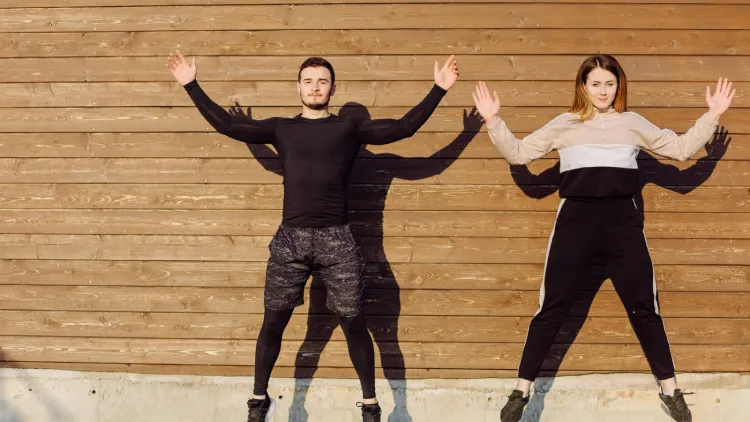
Jumping Jacks
Jumping jacks can be a favorite cardiovascular exercise for nearly all fitness levels.
Muscles Worked
- Legs
- Shoulders
- Core muscles
How to perform jumping jacks
- Place feet in the “heel-together” position.
- Step feet wide while raising arms overhead.
- Go back to the starting position.
- Continue rhythmically.
Benefits
Jumping jacks are great for cardiovascular fitness, coordination, and endurance. They are also great for a workout as a warm-up before more challenging activities.
Their simplicity and effectiveness make them a staple among home workout exercises.
Burpees
Burpees ease every muscle in the body and are exceptionally challenging and effective.
Muscles Worked
- Chest
- Shoulders
- Arms
- Core
- Legs
How to perform a Burpee
- Begin standing.
- Keep your hands on the ground and then squat down.
- Jump backwards into a plank position.
- Repeat: If applicable, do a push-up.
- Step back first, feet to your hands.
- Explosively rise off the ground and jump.
Benefits
Burpees increase the heart rate, strength in the legs, arms, and body, and burn calories, as well as working on coordination. They are great for training efficiency as multiple motions are in one movement.
Burpees are difficult, but can be adjusted for various fitness levels.
Bicycle Crunches
The bicycle crunch is a superb exercise to strengthen the abdominal muscles.
Muscles Worked
- Rectus abdominis
- Obliques
- Hip flexors
How to perform a bicycle crunches
- Lie on your back.
- Rest your hands on the back of your head.
- Shoulders up off the ground.
- Bring one knee with your toes to your chest.
- Turn the opposite elbow toward the lifted knee.
- Alternate sides continuously.
Benefits
The beauty of bicycle crunches is that they help target the front and sides of the abs. This is to establish a well-balanced development of the core and enhance trunk rotation strength.
They’re frequently used for core workout routines aimed at core fitness.
Superman Exercise
This superhero exercise works the muscles that support posture and the stability of the spine.
Muscles Worked
- Lower back
- Glutes
- Shoulders
- Upper back
How to do the Superman pose
- Stretching on the floor, lie on your stomach.
- Stretch arms out straight in front of you.
- Raise both arms and legs at the same time.
- Hold briefly.
- Lower slowly.
- Repeat.
Benefits
People pay a lot more attention to their abs and forget about working their back muscles. Superman exercise promotes balance of muscles and good posture.
The posterior chain can weaken, which can be corrected by regular exercise, thereby enhancing body stability.
High Knees
High knees are cardiovascular movements that take the knees high for a higher heart rate, coordination, and movement.
Muscles Worked
- Quadriceps
- Calves
- Hip flexors
- Core muscles
How to perform high knees
- Stand upright.
- Run in place.
- Bring each knee up in the air as high as possible.
- Always walk quickly with good posture.
Benefits
Exercise: Crossing your thighs at the tops of the legs (high knees) provides cardiovascular endurance, coordination, agility, and strength of the lower body. They can also serve as warm-up exercises before more rigorous exercise routines.
High knees are one of the best exercises for home workouts that don’t need equipment to make workouts more intense.
Sample Home Workout Routine
When creating a workout schedule, a balanced regimen will enable all the main muscle groups to be developed.
Beginner Routine
- Pushup level: 3 x 12
- Sit-ups: 3 sets of 8-10
- Glute Bridges: 3 sets of 15 repetitions
- Plank: 30 seconds
- Jumping Jacks: 1 minute
This is an exercise that aims to get us strong, but is still easy for novices.
Intermediate Routine
- Pushups: 3 sets of 15 reps on each arm/each side of the body.
- Crunches: 3 sets of 15 repetitions
- Mountain Climbers: 45 seconds
- Bicycle Crunches: 20 repetitions
- Plank: 60 seconds
Intermediate level: They can continue to build strength and conditioning and make it more difficult.
Advanced Routine
- Burpees: 20 repetitions
- Jump Squats: 20 repetitions
- Push-Ups: 20 repetitions
- Mountain Climbers: 60 seconds
- High Knees: 60 seconds
- Plank: 90 seconds
More advanced trainees can do several sets, with no resting in between, to give the desired benefits, without tiring the heart out too much.
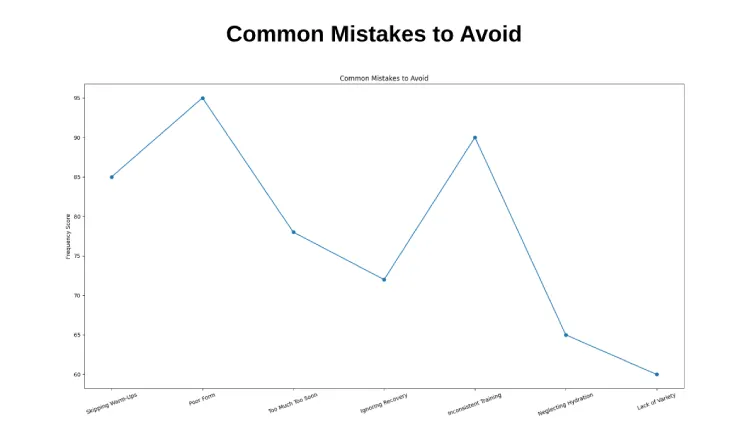
Common Mistakes to Avoid
Even the fanciest exercises taking place at home won’t yield much if done in the wrong way.
Skipping Warm-Ups
A good warm-up gets the muscles, joints, and cardiovascular system ready for exercise. Forfeiting this can lead to injury and not show a performance improvement.
Poor Form
If performed incorrectly, the technique can cause undue strain on the joints and muscles. Safeness and effectiveness depend upon learning correct movement patterns.
Doing Too Much Too Soon
A lot of people are too enthusiastic at the beginning and do too rigorous an exercise. A gradual progression can lead the body to adapt safely.
Ignoring Recovery
Rest and recovery play an essential part in fitness. After workouts, there are certain time limits that the muscles require to repair and strengthen.
Inconsistent Training
Once in a while, exercise is limited. Learning over weeks and months results in significant changes in fitness.
Neglecting Hydration
Good hydration for optimal performance, recovery, and well-being. Pre-hydration, intra-hydration, and post-hydration are important considerations when it comes to drinking enough water before, during, and after exercise.
Exercising only one type of exercise at a time.
Strength, endurance, mobility, and core exercises are all important areas that should be incorporated into a balanced exercise routine. Varying activities help to develop balance.
Final Thoughts
Exercise at home is easy and an effective method to keep active and strong, and also enhance fitness without having to visit a fitness center. Options such as push-up, squat, lunge, plank, or burpee can be used to train your entire body to burn fat with minimal equipment. Remaining consistent, implementing good form, and progressively adding difficulty will yield sustainable fitness gains and reap the numerous benefits of home workouts.
Frequently Asked Questions
1. Which is the best home workout exercise for beginners?
The variations of the squat, push-up, glute bridge, plank, and jumping jack exercises are great options for beginners that are simple, very effective, and easy to modify.
2. Are there any home exercise routines that can make a difference in terms of muscle development?
Yes. Each exercise that is performed while maintaining the body weight will strengthen the muscles, and more challenging exercises will bring about an increase in the number and size of the muscles, as long as it is performed regularly and then implemented.
3. How often to do exercises at home?
A majority of the population will benefit from three to five days of exercise per week, along with optimal recovery between workouts.
4. Are the exercises that are being performed in the garage exercises that help you lose weight?
Yes. If paired with a healthy eating program, at-home fitness instruction can boost calorie count and help promote healthy weight management.