
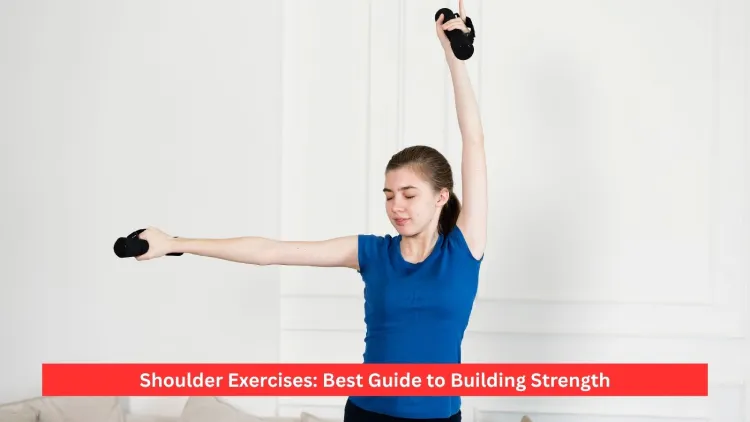

Shoulder exercises make the shoulders strong, enhance posture, and safeguard the highly maneuverable joint. All areas are targeted with the use of presses, raises, and rear delts. Most people eat a program of 3-5 shoulder exercises, which are performed 2-3 times per week. Concentrate on correct form, do not overtrain, and add rear delt exercise. Shoulder exercises are regular and healing, and thus build strong yet stable shoulders at any age.
- Understanding Shoulder Muscles
- Benefits of Shoulder Exercises
- Best Shoulder Exercises
- Beginner Shoulder Exercise Routine
- Intermediate Shoulder Workout
- Advanced Shoulder Exercises Program
- Tips for Effective Shoulder Exercises
- Common Mistakes to Avoid
- How Often Should You Do Shoulder Exercises?
- Bodyweight Shoulder Exercises
- Arthritis and Joint Care Shoulder Exercises
- Shoulder Health, Signs, and Risk
- Shoulder Training, Muscle Growth, and Age
- Shoulder and Full-Body Connection
- Training Balance and Lifestyle Considerations
- Conclusion
- Frequently Asked Questions
Understanding Shoulder Muscles
In order to exercise the shoulder efficiently, one should have some knowledge about the anatomy of the shoulder. The shoulder is a joint that consists of several muscles that combine to enable the shoulder to move in almost all directions.
The three major muscle groups are:
- Anterior deltoid (front) – Muscle in charge of pushing and simultaneously raising the body.
- Lateral deltoid (side) – Makes arms wide and assists in raising arms forward.
- Posterior deltoid (rear) – Aids in pulling and posture.
Besides these, the rotator cuff muscles are important in providing stability to the shoulder. These are smaller muscles that are not usually given much thought, but they play a vital role in the prevention of injuries.
Another shoulder issue is imbalance, which happens when the front delts are developed to overpower the posterior delts, which are weak. This causes bad posture and risk of injury. This is why we need to have shoulder activities that involve all parts.
The least used muscle in the shoulder is usually the rear deltoid, which is usually not well trained in comparison to the front or side delts.

Benefits of Shoulder Exercises
1. Better Strength
You can perform fewer movements and more effectively in pushing, lifting, and pulling activities. And they go hand-in-hand with workouts such as chest and back training.
2. Better Posture
Well-developed shoulders help drag your body into the proper position, which helps to avoid slouching and backaches.
3. Injury Prevention
Shoulder exercises (balanced) help to strengthen stabilizing muscles, minimizing chances of strains and tears.
4. Enhanced Athletic Performance
Whether in sports or the activities of life, the power of the shoulders enhances performance and coordination.
5. Joint Health support
Well-conducted shoulder exercises can alleviate stiffness and enhance mobility, particularly in individuals with mild joint pain.
6. Blood Pressure and Generic Well-being
Understanding how to perform resistance-based shoulder exercises, performed regularly and alongside cardio, can improve heart health. It has been known that moderate exercise helps maintain normal blood pressure.

Best Shoulder Exercises
Exercises that engage all three heads of the deltoid and target stabilizing muscles are the best for the shoulder.
1. Overhead Shoulder Press
How to do it:
- Keep dumbbells/barbell on the level of the shoulders.
- Raising legs and arms straight up.
- Lower slowly
Benefits:
- One of the most important shoulder exercises
- Works on a combination of shoulder muscles.
- Grows strong and big.
This has been regarded as one of the best shoulder exercises, as we know it takes almost the entire shoulder complex into it.
2. Lateral Raises
How to do it:
- Grasp dumbbells by your side.
- Lift arms to the level of the shoulders.
- Lower slowly
Benefits:
- Builds shoulder width
- Works the lateral delts.
3. Front Raises
How to do it:
- Lift weights straight in front of your body
- Maintain a slight bend in arms.
- Lower under control
Benefits:
- Works the front delts.
- Supports pressing movements
4. Rear Delt Fly
How to do it:
- Bend forward slightly
- Raise arms outward
- Squeeze shoulder blades
Benefits:
- Targets rear delts
- Improves posture
5. Arnold Press
How to do it:
- Walk on palms, encouragingly stroke upwards.
- Go downwards in reverse motion.
Benefits:
- Hits all three deltoid heads
- Improves coordination
6. Upright Row
How to do it:
- Pull weights up to the chin.
- Keep elbows high
Benefits:
- Develops the strength of the upper shoulder.
7. Face Pull
How to do it:
- Pull the cable in the direction of the face.
- Focus on rear delts
Benefits:
- Enhances shoulder stability
- Supports injury prevention
A combination of these movements will solve the notion of the five exercises you will ever require:
These are all shoulder areas that are covered.

Beginner Shoulder Exercise Routine
Novices ought to emphasize learning form and establishing a foundation.
- Overhead Press – 3 sets of 10 reps.
- Lateral Raises – 3 sets of 12 reps.
- Front Raises 3 x 10 -10 reps.
- Rear Delt Fly – 3 x 12 reps
At this point, 3-4 exercises on the shoulder per session are sufficient.
Should the number of exercises per day be 3?
Well, we can have beginners who can achieve results with as few as 3 well-done shoulder exercises.
Intermediate Shoulder Workout
- Arnold Press – 4 rounds of 8-10 reps.
- Lateral Raise – 4 sets of 12 reps.
- Upright Row – 3 x 10 reps.
- Face Pull – 3 sets of 12–15 reps
In this case, volume is enhanced, and intensity is enhanced.
Advanced Shoulder Exercises Program
- Overhead Press: 5 sets of 6-8 reps.
- Superset: Lateral Raises + Front Raises
- Rear Delt Fly – 4 sets.
- Divergent sets of burnout.
The more advanced training can be practiced using such techniques as the 3-3-3 rule, consisting of doing three exercises with three sets each and managing tempo to deliver the maximum muscle activity.
Tips for Effective Shoulder Exercises
- Concentrate on good form.
- Use controlled movements
- Train all angles
- Warm up properly
- Allow recovery
The systematic way of doing things will bear consistent progress.
Common Mistakes to Avoid
The most frequent errors that may occur in shoulder exercises are:
- Lifting too heavy
- Using momentum
- Ignoring rear delts
- Poor posture
- Skipping warm-ups
Such mistakes may cause weakness of shoulder muscles and exposure to another injury. Poor posture, absence of training, balance, and inactivity often lead to weak shoulder muscles.
How Often Should You Do Shoulder Exercises?
Shoulder exercises are recommended 2-3 times a week for the majority of people. This frequency gives sufficient stimulation to your muscle growth, as well as allowing your shoulders time to rest. When there is an intensive use of the shoulder joint in most movements of the upper body, rest is as important as training.
To prevent overuse, injury risk, and make sessions sparse, it is advisable to have at least 48 hours of rest between them. Shoulder-exercise without rest may result in fatigue and poor performance in the long-run.
When considering volume, the issue that arises in many minds is the question of whether more exercises are more desirable. As a matter of fact, no more than 4-5 selected shoulder exercises are required to work on all the deltoid parts. It all depends on quality, good form, and appropriate movements, and not on excessive exercises per session.
Bodyweight Shoulder Exercises
Bodyweight shoulder exercises would also be highly recommended to those who lack equipment or would like to do home exercises. They will still be able to develop strength, stability, and endurance when done properly.
- Pike Push-Ups – This is a very effective exercise that imitates the liftoff press, but attacks the shoulders directly.
- Wall Walks – A good way to develop strength and shoulder stability, and also involves the core.
- Plank Shoulder Taps – Enhance shoulder endurance, coordination, and balance.
The following shoulder exercises are very straightforward and quick, particularly for beginners or for individuals who just need to be strong to perform simple tasks like driving.
Shoulder Stretching Exercises
Shoulder exercises are accompanied by stretching, which is important to recover and flexibility. It assists in decreasing muscle tightness, enhancing the amount of motion, and improving the health of a shoulder in general.
- Cross-body stretch – Stretches the rear delts and can relieve tightness.
- Arm circles – strengthen the joint, increase mobility.
- Overhead stretch – Stretches the front and side of the shoulders.
Stretching each part for 15-30 seconds can allow your muscles to more quickly carry out relaxation and recuperation. Stiffness can also be alleviated by a regular regime of stretching with time; future shoulder activity can be enhanced.

Arthritis and Joint Care Shoulder Exercises
The exercises on the right shoulder can support the joint health of people with joint problems to minimize the stiffness, enhance mobility, and ensure long-term joint health. Rather than intense training, emphasis should be on the light-controlled movements that do not strain the shoulder. Frequent mobility is significant since immobile lives may complicate the effects of stiffness and discomfort as time passes.
Safe exercises include:
- Arm circles: It improves the circulation of blood and stretch stiff joints.
- Wall-assisted lifts: Use the assistance to enhance the range of motion.
- Light resistance band pulls: Tighten the muscles to make them stable without much tension.
Such forms of shoulder exercises come in particularly handy as they engage those smaller stabilizing muscles, such as the rotator cuff. Exercise regimens that are only a few minutes each day can build strength and lessen pain over time.
What to Avoid
Shoulder exercises are not all good for joint pain. Certain movements may cause hypertension in the joint and exacerbate symptoms.
- Heavy overhead lifting
- Rapid or clumsy movements.
- Profound or strained stretches.
Repetitive strain or overload activities may worsen the condition of arthritis, and thus, they should be trained responsibly and within a comfortable range of movement.
Pain Relief
Discomfort management, along with shoulder exercises, is the key to improved outcomes. Quick relief can be obtained by some simple means:
- Light exercise to maintain the joint.
- Warm Compress To loosen the muscles and ease the stiffness.
- Light stretching to be flexible.
WCPs can be used with safe shoulder exercises to enhance mobility, decrease pain, and use a healthier shoulder in the long-term.
Shoulder Health, Signs, and Risk
Grounds to beware of shoulder pain include:
- Acute or acute pains.
- Limited movement
- Pain during rest
- They can reflect damage, and cannot be overlooked.
Rotator cuff strain or inflammation is the most prevalent shoulder issue, usually related to overuse or improper use.
Shoulder Training, Muscle Growth, and Age
It is possible to gain muscle almost at any age. Nevertheless, it may slow down recovery.
- The loss of muscle may start slowly after age 30.
- The initial symptoms are a lack of strength and endurance.
- Shoulder exercises should be done all the time to prevent the decline.
In the post 50-year age, nutrition is important. Foods that contain high amounts of protein, such as eggs, aid in muscle repair and recovery.
The later adulthood is the most difficult age to make muscular gains, mostly because most hormones are kept at bay, although there is still the possibility of making gains.
Shoulder and Full-Body Connection
There are exercises that occur in more than two muscles simultaneously, and most exercises of the shoulders are included in these complex motions. One of the significant ones is the overhead press, as it involves the shoulders, but also the core and arms are involved.
The shoulders are also used to provide stability during other movements, such as push-ups and rows. This supports the effectiveness of shoulder exercises with the full-body workouts to come up with the overall strength, coordination, and injury prevention.
Simply stated, isolation training creates shape, and full-body training creates strength.
Training Balance and Lifestyle Considerations
Exercises on the shoulders are significant, although the fitness of the whole body is equally crucial. Shoulders are easy to train, which can cause muscle imbalance; hence, it is prudent to involve the whole body in exercises.
Shoulder exercises can be used to provide definition when physique goals are involved, such as a balanced upper body or trim waist, but it will come down to the choice of the overall training and diet.
An important aspect is consistency, balanced exercises, and correct recuperation. Smart training- not hard training- will bring in greater results in the long run.

Conclusion
Exercises in the shoulders are necessary to enhance strength, stability, and long-term joint health. You can create strong and stable shoulders by incorporating a combination of pressing, raising, and stabilizing movements.
Focus on:
- Proper technique
- Balanced training
- Consistency
No matter your level of expertise, a properly planned shoulder workout can assist you in realizing some tangible strength and muscle gains. The correct way to go will guarantee effective and safe progress, even in old age with joint issues.
Frequently Asked Questions
1. What are the best exercises to strengthen the shoulders?
Shoulder exercises that best address this include the overhead press, rear delt fly, face pull, lateral raises, and the Arnold press. The movements work towards the entire shoulder to achieve balanced strength and muscle development.
2. What is the number of exercises that I need to do for the shoulders in one workout?
Each workout should be composed of 3-5 exercises for your shoulders. It suffices to train all the muscles of the shoulders without overexertion, particularly when the form and intensity are appropriate.
3. Will I perform shoulder exercises daily?
No, it is better to do shoulder exercises 2-3 times a week with at least 48 hours between exercises. This enables muscles to recuperate and develop effectively.
4. Can people with joint pain or arthritis do shoulder exercises?
Yes, however, you must concentrate on some low-impact exercises of the shoulders, such as arm circles, resistance band exercises, or the lying exercises aided by the wall. Strain should be avoided by avoiding excessive lifting and abrupt movement.


2 thoughts on “Shoulder Exercises: Best Guide to Building Strength”
Helpful information. Lucky me I discovered your website by chance, and I’m surprised why this twist of fate didn’t happened in advance!
I bookmarked it.
Thank you for your kind words.
We’re pleased you found our website and appreciate you bookmarking it. We look forward to providing you with more valuable content in the future.