
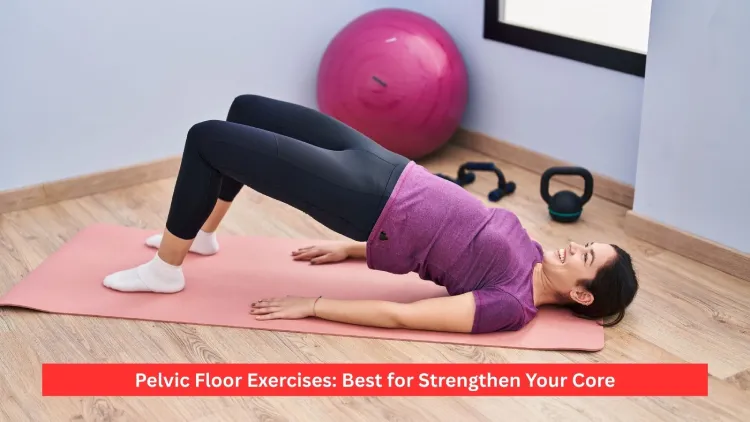

Pelvic floor exercises help to increase the strength of the muscles around your bladder, bowel and reproductive organs, making them more stable, posture-wise, and core. They assist men and women to improve muscle control, minimise weakness symptoms, avoid dysfunction and increase fitness. Pelvic floor exercises become very enduring, restore balance, and help in the long pelvic by practising them adequately, correctly, and with gradual training.
What Are Pelvic Floor Exercises?
Pelvic floor exercises are exercises that are specific to move and strengthen the sling-like muscular structures that are found in the lower part of your pelvis. The muscles are used to support the bladder, uterus or prostate and the intestines, along with assisting in posture maintenance, hip stability and the mechanics of breathing.
A tight pelvic floor will enable the body to exercise useful control over the amount of pressure in performing the daily movements, such as lifting, walking or squatting. The muscles are similar in both genders, with some differences in the structure. Even as the vaginal, rectal, and urinary rings are aided by the pelvic floor of a woman, the prostate, coupled with the urethra of a man, is assisted. These muscles in each case are hammock-shaped in nature and form a stable base of the entire core.
Pelvic floor exercises ensure that these muscles are identified, strengthened, and relaxed. They also enable you to test the engagement of the pelvic floor at home by testing whether you can lift, squeeze and release the muscles without straining your stomach and muscles without over-straining your abdomen and glutes. In the long term, these exercises enhance awareness and control, which makes everyday events and exercises more productive.

Advantages of Pelvic Floor Exercises
Pelvic floor exercises have a great variety of physical advantages. These muscles also make them less weak, so that a person does not leak when sneezing or coughing, experience a heavy feeling in the lower body, lack control over the pelvis, and have less control when exercising. Some of the causes of weakness include old age, pregnancy, birth, bad posture, pressing issues with constipation, lifting heavy items, hormonal issues, and over-sitting.
Enhanced pelvic floor strength leads to better balance and support to the back, and also minimises pressure to the lower back. The exercises are also good when it comes to having the activity of the glute to make the hips more stable and give the transfer of power a better movement. Some emotions, e.g. stress and anxiety, are likely to provide tension in the pelvic muscles, thus making exercises useful in relaxation as well.
Pelvic floor strength can also be enhanced by standing, sitting on the ground and other practical moves in the event that one is combined with intentional muscle cognition. Consummate training enhances stamina over time, and the muscles can carry on with daily activities with better and more vigorous workouts.

Best Pelvic Floor Exercises
The following is a step-by-step analysis of the best pelvic floor exercises applicable at the beginner level, intermediate level, and highly developed fitness levels. Their most common answers in these movements include how long it can take to strengthen, the best positions, do glute squeezing works, and how to ensure maximum results are achievable safely.
1. Kegel Contractions (Beginner)
Kegels are regarded as one of the most appropriate pelvic floor exercises since they provide a direct effect on the muscles that provide support and control. They are both male and female and can be done sitting, lying or standing.
How to Do It:
- Find a good posture– lying is normally easy when you are starting.
- Pull abdominal muscles like with holding urine.
- Wait 3-5 seconds and release.
- Repeat 10–12 times.
Why It Works:
- The exercise assists in the identification of the muscles. With time, proper Kegel exercises and especially when exercised properly, one can regain strength in 6 to 12 weeks. There is no need to do 100 Kegels daily, and it may result in exhaustion; moderate exercise is better.
2. Quick Flicks (Beginner)
Quick contractions train your reflex. This is useful in coughing, laughing or lifting since these actions involve quick engagement.
How to Do It:
- Shrink the stomach wall.
- Release immediately.
- Complete 15–20 repetitions.
Why It Works:
- It enhances speed and coordination. It is a part of the most rapid methods of making pelvic muscles stronger, as well as in combination with slow holds.
3. Bridge with Pelvic Floor Activation (Beginner to Intermediate)
This action will combine pelvic floor with glute strengthening. It is believed, however, that the buttocks have to be squeezed, and this does not make the pelvic floor stronger, but rather the combination of the two helps to create stability.
How to Do It:
- Lie down on your back, bending your knees.
- Lift your hips into a bridge. The pelvic floor to tighten at the top.
- Lower slowly.
- Repeat 12–15 times.
Why It Works:
- This exercise uses the glutes that are used to stabilise the pelvis. It can be used to tighten a droopy butt with regular practice, but the outcomes will differ with the duration and the level of intensity.
4. Deep Diaphragmatic Breathing (Novice)
Breathing is necessary since the diaphragm and pelvic floor move interdependently of each other. Incorrect breathing may undermine the pelvic muscles.
How to Do It:
- Lie down or sit upright.
- Breathe in with your nose, and your belly swells up.
- Breathe out, and you can pull the pelvic floor.
- Repeat 10 cycles.
Why It Works:
- This improves the coordination of the muscles, as well as releasing emotional tension accumulated in the pelvis.
5. Heel Slides with Pelvic Engagement (Intermediate)
This movement is a challenge towards stability.
How to Do It:
- Knees bend, lying on your back.
- Engage the pelvic floor.
- Steadily slide one heel out of control.
- Switch sides.
- Perform 10 repetitions per leg.
Why It Works:
- It tones up the pelvic region through controlled exercise of the legs.
6. Tabletop Toe Taps (Intermediate)
This stability core workout teaches the pelvic floor to stabilise in changing weights of legs.
How to Do It:
- Insert legs lifted into a tabletop.
- Tighten the pelvic floor.
- Tap one foot to the ground.
- Return to the start and switch.
Reps: 10–15 per leg.
7. Side-Lying Leg Lifts (Intermediate)
This is aimed at the outer glutes that stabilise the pelvis.
How to Do It:
- Lie on your side.
- Lift the top leg slowly.
- Lower with control.
- Repeat 12–15 times per leg.
Why It Works:
- This strengthens the hips and enhances the support in the pelvic area.
8. Bird Dog and Pelvic Floor Involvement (Medium to high)
And this is a full body stability exercise that engages the glutes, core and pelvic floor.
How to Do It:
- Begin on all fours.
- Engage the pelvic floor.
- Extend opposite arm and leg.
- Hold for 3 seconds.
- Switch sides.
Why It Works:
- It acquires balance, strength and coordination.

9. Squats (Advanced) Incorporating Pelvis Activation.
When squats are done in the right form, they automatically tighten the pelvic floor. They are equally ranked in glute activation and have the probability of making the bum stronger and rounder.
How to Do It:
- Keep feet at a shoulder distance.
- Just use your core and your pelvic floor.
- Lower into a squat.
- Push through heels to rise.
Why It Works:
- One of the most useful exercises in tightening the pelvic floor as well as the glutes is squats. The 20 squats that one does daily may help to offer slight toning, but a larger transformation demands progressive overload.
10. Plank including Pelvic floor Movements (Advanced).
This puts you right back on the wall.
How to Do It:
- Rest on a plank with the elbows or hands.
- Gently touch the pelvic floor.
- Maintain for 10–20 seconds.
Why It Works:
- The plank is a good training for endurance and is also a great exercise to combine breath and pelvic involvement.

Tips for Best Results
- Pelvic floor exercises are optimally done when one is relaxed and concentrated.
- The easiest posture is lying, and the hardest is standing.
- Pelvic floor therapy would be safe to do at home, provided you get the technique right.
- The problem of over-tightness should be avoided, as it may cause discomfort.
- Some of these yoga postures, such as the downward dog, may also enhance the blood flow and alleviate the pressure in diseases such as haemorrhoids.
- Regularity is important: the majority of people make progress within 2-3 months.
- Pelvic muscles should not be weakened by such habits as straining when going to the bathroom or heavy lifting in a poor posture.
- A woman may also safely carry a baby with weak pelvic muscles, but reinforcement is suggested.
- Any person who is unsure of whether he is contracting in the right way can lay a hand on the lower abdomen to make it relax smoothly.
- Individuals who experience pelvic pain, have undergone surgery recently or have hernias are not supposed to train without the advice of an expert.

Conclusion
Pelvic floor exercises are needed to develop a solid framework for moving, sitting, and housing. This type of exercise will enhance strength, lessen the weak muscle symptoms, and aid fitness through the use of proper breathing, regular workouts, and controlled involvement. Regardless of being a full novice and learning basic contraction or moving forward to more complex stability-based based like planks and squats, performing basic pelvic-floor exercises can be a long-term great positioning that will benefit both men and women alike.
Frequently Asked Questions
1. How frequently are the pelvic floor exercises supposed to be done?
They are good to practice 1-2 times a day by most people, with a combination of slow holds and quick flicks to ensure that there is a balance in the practice.
2. Is it possible to do pelvic floor exercises among men?
Yes. Pelvic floor exercises ensure that men gain support in the area of the bladder, bowels and prostate in addition to increased core control and stability of the pelvis.
3. What is the time to achieve results?
The majority of people start noticing the changes in 48 weeks, and the complete improvement is usually visible in 12 weeks of regular practice.
4. Is pelvic floor strengthening by walking?
Exercise is known to enhance blood circulation, posture and hip activity, which effectively helps in strengthening the pelvic floor through conscious muscle response.