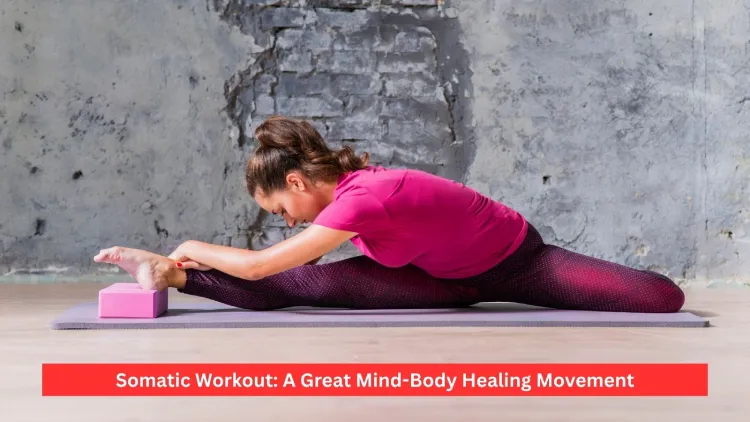

A somatic workout integrates the mind and the body to discharge the stored tension, trauma, and stress as well as enhance the movement, flexibility and emotional state. It is a type of slow, mindful movement that re-trains your nervous system, decreases cortisol concentration, and heals your being internally. Regular somatic workouts will improve body awareness, weight loss of weight and will also make you rediscover yourself physically and emotionally.
- What is a Somatic Workout?
- Advantages of a Somatic Workout
- How Does a Somatic Workout Work?
- Examples of Somatic Activities
- Starting Somatic Exercise
- Somatic Exercises and Emotional Discharge
- Somatic Workout and Weight Loss
- Common Somatic Practices
- Risks and Precautions
- When and How Often to Practice
- The role of Somatic Workouts in dealing with trauma
- Final Thoughts
- Frequently Asked Questions
What is a Somatic Workout?
A Somatic Workout is a kind of body-based practice movement that is concerned with internal awareness and not performance. Somatic derived its name from the Greek word soma, which means the living body. In contrast to all other conventional workouts that focus on muscle strength or endurance, somatic workouts enable one to get in touch with how the body feels, moves and reacts to stress or feelings.
These exercises are also founded on somatic education, which is a treatment method that was created by Thomas Hanna in the 1970s. The primary objective is to reprogram the brain to muscle relationship whereby the body relieves chronic tension due to stress, trauma or bugs. This process eventually enables the renewal of natural movement, improves posture, and facilitates emotional healing.

Advantages of a Somatic Workout
An average workout of the body provides a whole host of bodily and emotional advantages:
Releases Stored Tension:
Somatic movement assists the body in getting deep relaxation as it also trains the brain to realise and ease the tight muscles habitually.
Enhances Flexibility and Mobility:
The movements are slow and controlled, and hence provide flexibility without undue effort on the muscles.
Reduces Cortisol and Stress:
Somatic exercises relax the nervous system, hence reducing cortisol levels, and assist in the belly fat associated with stress.
Aids Emotional Healing:
Several individuals complain of shedding tears or emotional release in the process of somatic exercises – an indication that the body is releasing traumas that are stored.
Loses weight in a Natural way:
A somatic workout can be used in the long-run in helping to help maintain a healthy weight by lowering stress hormones and enhancing sleep.
Enhances Body Awareness:
It can make you touch your body again and be more attentive to the way that emotions can influence your body.
How Does a Somatic Workout Work?
A somatic workout involves slow, mindful movements in a repetitive method to retrain the nervous system. It is based on the concept of pandiculation, a natural act wherein the body responds to bring tension (like animals, which flex when awakening). When you make yourself move in such a way, you give the brain signals that you are safe, and every tight muscle starts to relax more naturally.
You can do, as an example, not stretch your muscle, but extend it a bit, press it and then release it gradually, paying attention to the feeling. This re-equilibrates the length of the muscle and enhances the coordination without pain and strain.

Examples of Somatic Activities
The following are some of the examples of somatic product exercises and activities:
- Somatic breathing: This is deep, slow breathing, which calms the body and brings the mind into focus.
- Pelvic tilts and back waves: These are gentle movements which ease lower back and hip tensions.
- Feldenkrais and Alexander Technique: Systematic somatic therapies that enhance movement awareness.
- Meditation of body scanning: Being aware of sensations through the body from the top to the bottom to facilitate relaxation.
- Slow yoga or walking meditation: Being in movement by giving conscious awareness to every action, relating it to the breath.
Somatic workouts can be a simple daily exercise, such as mindful walking or stretching in bed, running intelligently and consciously.
Starting Somatic Exercise
It does not need special equipment to embark on a somatic workout regimen.
Follow these simple steps:
- Find a Quiet Place: Find a peaceful place where there will be no disturbances to your movements.
- Breathing: You need to tune into the breathing. Start with deep and conscious breathing.
- Start Small: Have light exercises such as rolls around the neck, shoulder lifts and hip rotation.
- Pay Attention: Be aware of the way that your muscles feel, where you have tension in them and how that will change with movement.
- Practice Daily: Even 10-15 minutes of somatic movement per day can deliver enormous outcomes.
There are numerous individuals who believe and subscribe to programs such as the 28-day somatic workout challenge that gradually introduces various somatic movements intended to help one relax and get rid of tension.

Somatic Exercises and Emotional Discharge
The emotional effect of a somatic workout is one of its peculiarities. During practice, people tend to cry or get emotional. The reason is that traumas and stress may get trapped in the body, especially in the hip, shoulders, and stomach.
By moving with care, you assist the body to talk to you, that is to say, enable your repressed feelings to come out and open up. This act is referred to as somatic release and usually leaves one with a warm, tingling or light sensation in their body after the process. The natural release mechanism also may involve crying or trembling, which is supposed to be a symptom of healing but not of distress.
Somatic Workout and Weight Loss
Although a somatic workout is not exactly aimed at weight loss, it will contribute to it. The metabolism is automatically better because cortisol (stress hormone) is minimised, and better sleep is achieved. This is the ability to control the belly fat of cortisol that normally builds up because of continuous stress.
Somatic exercises should be paired with mild exercise, including walking, yoga, or some light intensity exercises, which can intensify the effect. Several individuals vindicate that they feel better about their bodies and food after practising somatic therapy to lose weight.
Common Somatic Practices
The following are some of the common somatic practices that enhance healing and consciousness:
- Trauma Release Exercises (TRE): Seven steps, which involve shaking the body to remove all deep muscular tension.
- Hanna Somatics: Diathesis is based on undistressed relaxation and balance training.
- Feldenkrais Method: Also promotes experimentation on movement patterns in order to improve posture and coordination.
- Body-Mind centring: This is a method that involves movement, touch and dialogue in which the inner sensations of the body are explored.

Risks and Precautions
There is generally no harm in somatic activities and workouts; however, it is vital to exercise caution in them:
- Go at your own pace and do not push yourself.
- A healthcare specialist should be consulted in case you are physically weak or in persistent pain.
- The emotional release may be intense, and in this case, the assistance of a somatic therapist or counsellor is necessary.
- Keep in mind – the point of a somatic exercise is not to be perfect but to be there. It is more significant to listen to the body rather than attain a particular movement or stretch.
When and How Often to Practice
Somatic workouts will be most effective in the morning to wake or in the evening to relax. Somatic exercise may also be performed at bedtime, particularly simple stretches or breathing exercises.
To maximise effects, make it a habit to do it 3-5 times every week. Ver, even brief classes one day can really help with relaxation and integration with the body.
The role of Somatic Workouts in dealing with trauma
The somatic exercises work in areas where an individual is most prone to trauma emotionally- the hips, shoulders, and chest. The somatic healing process related to trauma recovery usually includes recognition, regulation, release, reconnection, and resilience.
Achieving success in your practice, you can observe some signs that are considered as releasing your trauma to your body, including deep sighs, tingling, or emotional waves. It is the reason that you are showing signs of your nervous system re-tuning. Tears in a workout when you are feeling somatic, or skipping to lightness afterwards a normal aspect of this process; your body is finally disposing of the built-up stress.

Final Thoughts
A somatic workout is not an exercise as such, it’s a journey of self-exploration, healing and reconnection with your body. Through slow and conscious breathing, you can also be trained to release emotional and physical tension, enhance your ability to move, and experience an increased sense of inner harmony.
It might be that you are aiming to lower stress levels, recovering from trauma, or improving your overall well-being, but either way, having somatic activities in your new workout habit can change the way you move (and possibly live). The drives to consist, observe and feel compassion for your own body key open the full potential of the somatic healing.
Frequently Asked Questions
1. Is somatic exercise effective or not?
Yes, it can assist in relieving stress, enhancing posture and relaxing the nervous system to stay longer without the problem.
2. Are somatic exercises useful in losing weight?
Indirectly, yes. They reduce the levels of cortisol and stress, which helps in maintaining a healthy weight.
3. What is the frequency of the somatic exercises?
Best results with practice 35 times per week or per day, and 10-15 minutes.
4. What is the reason why people cry during somatic workouts?
Crying is emotional discharge -the body is releasing built-up stress and trauma.