
The thicker, wider, and fuller arms are built with the help of the short head of the biceps. With slight modifications to the regular shoulder exercises by incorporation of special short head bicep exercises such as preacher curls, spider curls, and concentration curls, it is possible to sharpen your arm peak and eliminate imbalances and noticeable size gains. This guide has information on how to work the short head effectively, as well as dissecting exercises and sample workouts, growth tips, with all the information that includes how often to train the bicep, as well as whether or not genetics make a difference.
- What Is the Short Head of the Biceps?
- Why You Should Train the Short Head
- The Best Short Head Bicep Exercises
- Sample Short Head Bicep Workout
- Training Tips and Growth Insights
- Common Mistakes That Stop Growth
- Bicep Growth Facts and FAQs (Blended into Content)
- Final Thoughts
- Frequently Asked Questions
What Is the Short Head of the Biceps?
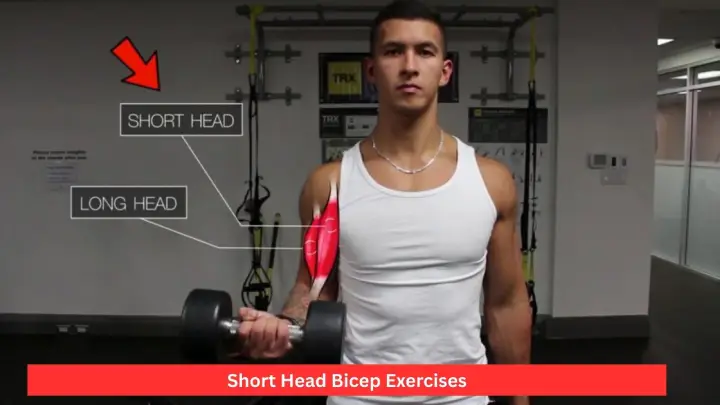
The biceps brachii contains two heads of muscle, namely the long head and the short head. The long head runs along the outer arm and forms the peak, and the short head being located on the inner arm, makes the biceps round and thick.
The short head is a must in case you want to have the appearance of fatter and stronger arms. The short head is the shoulder blade coracoid process, and it is connected to the elbow. This posture causes it to become more active either by holding the elbows in front or by gripping them widely.

Why You Should Train the Short Head
There are both practical and aesthetic advantages to concentrating on short head bicep exercises:
Arms that are wider and thicker
Your biceps will appear fuller from the front thanks to the short head’s addition of inner-arm density.
balanced growth of muscles
Unbalances may result from relying solely on long head training. Symmetry is ensured by short head work.
A more flexed appearance
The short head adds to the rounded, ball-like shape when your arms are flexed.
Enhanced pulling power
The short head improves performance in curls, rows, and chin-ups by facilitating elbow flexion.
Training longevity
Focusing on isolation exercises like spider curls or preacher curls permits safe bicep growth without putting undue strain on the joints, even after the age of fifty.
The Best Short Head Bicep Exercises
These are the best exercises you can do to increase arm fullness and width:
1. Focus Curls
This traditional exercise reduces cheating and isolates the biceps.
- How to accomplish it: Lean forward, place your elbow against your inner thigh, and sit on a bench. Squeeze the dumbbell firmly at the top after slowly curling it.
- Why it works: Deep contraction is forced by the inward angle, which maintains tension on the short head.
2. Preacher Curls
An essential tool for developing the inner bicep muscle.
- How to accomplish it: Curl with a barbell, dumbbell, or EZ bar while resting your arms on the pad of a preacher bench. To get the most stretch, lower gradually.
- Why it works: It secures your arms, allowing the short head to bear the majority of the weight.
3. Spider Curls
A secret treasure for isolation of the short head.
- How to accomplish it: Curl dumbbells upward while lying chest-down on an inclined bench with your arms hanging loosely. Keep your elbows angled slightly forward.
- Why it functions: forces the short head to move without momentum through its entire range of motion.
4. Wide-Grip Barbell Curls
Muscle recruitment is determined by grip width.
- How to accomplish it: With a grip wider than your shoulders, pick up a barbell and curl it carefully.
- Why it functions: It is one of the greatest short-head bicep exercises for width because of the wide grip, which engages the inner bicep fibers.
5. Chin-Ups (Underhand Grip)
Weights are not always as effective as bodyweight.
How to accomplish it: With your hands shoulder-width apart and palms facing you, grasp a pull-up bar and raise your chin above it.
Why it works: The underhand grip increases pulling power and places more emphasis on the short head.
6. Incline Inner-Bicep Curls
An unusual method for getting a good stretch.
How to accomplish it: Rotate your palms out while sitting on an inclined bench and curl your elbows slightly forward.
It maximizes short head tension at the top of the movement, which explains why it works.
7. Cable Curls
Ideal for steady tension.
How to achieve it: Connect the low pulley to a straight or EZ bar handle. Keep your elbows in front of you as you curl and stand tall.
Why it works: Cables provide resistance during the entire motion, unlike free weights.
8. Cross-Body Hammer Curls
gives balance and density.
Method: Curl across your body toward the opposite shoulder while holding dumbbells.
Why it works: Promotes arm thickness by targeting the brachialis and short head.
9. Zottman Curls
A cross between a forearm and biceps exercise.
How to manage it: Rotate your palms down as you lower the dumbbells after curling them palms up.
Why it works: The long head and forearms work on the way down, while the short head works on the way up.
10. Resistance Band Curls
portable and joint-friendly.
How to do it: Hold the handles palms up, step on a band, and curl with a controlled tension.
Why it works: Because the short head contracts the hardest at the top, band tension rises there.
Advanced Bicep Training Methods
Try these intense techniques to develop thicker arms and further challenge the short head:
21-second 7-7-7 curls: 7 reps of the bottom half, 7 reps of the top half, and 7 reps of the entire range. Great for pumping the short head.
German volume training, or 10×10, involves 10 sets of 10 repetitions with brief rest periods to increase fullness and endurance.
21 curls: An additional partial-plus-full rep variation that prolongs the tension on the biceps.

Sample Short Head Bicep Workout
For growth, do this twice a week:
Four sets of twelve preacher curls
- Three sets of ten wide-grip barbell curls
- Three sets of twelve concentration curls
- Three sets of fifteen spider curls
- Underhand Grip Chin-Ups: Three sets to failure
For balanced arm growth, combine with triceps exercises (such as dips, tricep extensions, or skull crushers).
Training Tips and Growth Insights
Frequency is important because the biceps recover well after two to three sessions per week.
- Slow vs. fast reps: Curls that are controlled and slow are more effective at activating the short head than those that are hurried.
- Shape and genetics: Due to genetics, some people are born with longer or shorter biceps. Although origin points cannot be altered, size and fullness can be optimized.
- Bicep gap: It’s genetic if you observe a space between your forearm and biceps. It will still be less obvious with growth.
- Biceps and push-ups: Although push-ups primarily work the chest and triceps, close-grip variations may also slightly engage the biceps.

Common Mistakes That Stop Growth
Using momentum: Tension is released from the short head by swinging weights.
Ignoring variation: Growth is constrained when barbell curls are the only exercise used.
Ignoring recovery: Progress is slowed by overtraining small muscles, such as the biceps.
Ignoring nutrition: Muscle growth stalls when calories and protein intake are inadequate.
Bicep Growth Facts and FAQs (Blended into Content)
In a month, can you gain an inch? Although it’s unlikely unless you’re brand-new to lifting, size can be added gradually with regular exercise and diet.
Which head gives the appearance of larger biceps? Whereas the long head produces a peak, the short head provides width. When combined, they finish the ensemble.
What is the typical size? Elite natural lifters may reach 18–20 inches flexed, whereas men usually range from 13–16 inches.
largest size in nature? The upper natural limit is typically thought to be between 20 and 21 inches.
Do short biceps have more strength? Although they may be able to lift greater weights, shorter muscles frequently don’t have the long, peaked appearance.
With smaller weights, controlled repetitions, and exercises like resistance bands and preacher curls, training after 50 is still feasible.
Why do biceps not grow? Progress is frequently halted by inadequate progressive overload, poor diet, or excessive triceps dominance.
Getting wider: The most effective method for getting wider arms is short head training.
Final Thoughts
Arms that are fuller, wider, and more balanced can be achieved by strengthening the short head of the biceps. The short head adds density and roundness, while the long head adds height and peak. You can change the way your arms develop by combining short head bicep exercises like spider curls, wide-grip barbell curls, and preacher curls with appropriate intensity techniques like 21s or 10×10 workouts.

Consistency and clever programming will pay off whether your goal is to reduce gaps, gain an inch, or train past 50. Maintain your patience, practice proper form, and allow your biceps to reach their maximum size.
Frequently Asked Questions
Which short head bicep exercises are the best?
The short head can be effectively targeted, and bicep width can be added with wide-grip barbell curls, spider curls, concentration curls, and preacher curls.
What are some ways to make my biceps appear wider and thicker?
Focus on short head bicep exercises, train with controlled repetitions, add volume with 21s or 10×10, and eat healthily to build thicker arms.
After 50, is it possible to develop larger biceps?
Yes, safe isolation exercises like resistance band curls, preacher curls, and moderate weights combined with proper recovery and protein consumption can help you build biceps even after the age of fifty.
Do bicep peak and shape depend on genetics?
Although genetics do affect muscle length and gaps, long-head training helps improve peak for a balanced arm shape, while short-head bicep exercises can maximize fullness.