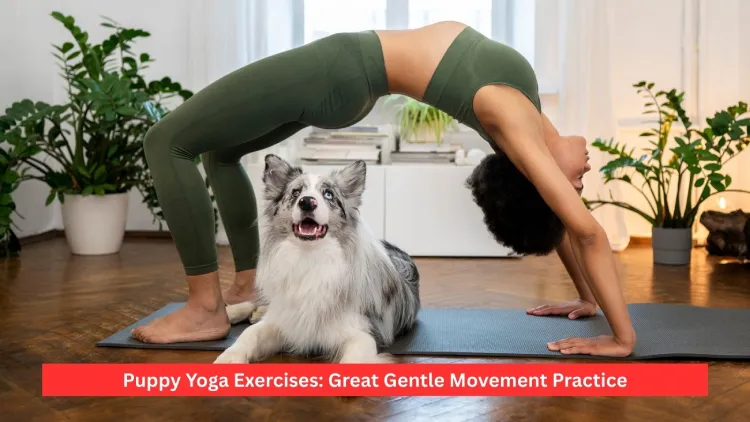

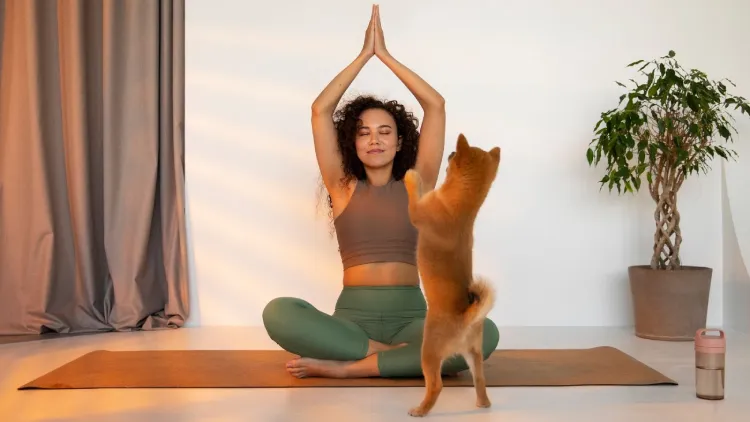
Puppy yoga is a low-vigour and relaxing form of yoga that involves simple yoga practices and a relaxing experience with the puppies. It is concerned with flexibility, balance, posture, breathing, and mindful movement, whereby quick stretches and simple transitions are used. Puppy yoga was made to be the easiest and slow-moving yoga class; incorporating warm-ups, floor-based poses, light standing yoga, seated poses, and relaxation will leave any person relaxed and with reduced stress because it is accessible, and all types of yoga can be performed with ease.
- Why is Puppy Yoga a Style of Exercise?
- Puppy Yoga Warm-Up Exercises
- Basic Puppy Yoga Forms (Floor-Based)
- Standing Puppy Yoga Postures
- Seated Stretching Exercises
- Relaxation and Cool-Down Exercises
- Puppy Yoga Exercise Intensity
- Average Puppy Yoga Workout
- Inclusion of Puppy Development Guidelines During Exercising
- Mental focus, relaxation, and training awareness in yoga with puppies
- The Physical Advantages of Exercise-Based Puppy Yoga
- Ethical and safety concerns of puppies in puppy yoga sessions
- Awareness of Interaction and Relaxation of Training.
- Yoga Foundation In Puppy Yoga
- Final Thoughts
- Frequently Asked Questions
Why is Puppy Yoga a Style of Exercise?
Puppy yoga is a form of yoga based on the usual practice, but modified to be less intense, more playful, and less vigorous. In contrast to power yoga or dynamic flow yoga, puppy yoga emphasises simple movement patterns, regulated breath, mildly slow stretching, gradual changes of poses, and easy resting posture. The existence of puppies inevitably decelerates the speed, prompting the practitioners to concentrate on the real-time breathing, body positioning, and gentle body sensitivity.
Regarding exercise, the given area, in turn called puppy yoga, focuses on mobility, flexibility, coordination, joint health, posture correction, and light muscular activity. It is particularly appropriate for beginners, those who have just come out of injury, aged people, or any other person wishing to have a good exercise without making themselves sick. The physical movements will be planned to be calm, adaptable and not straining, this will enable the participants to be relaxed yet receive the physical advantage.
Puppy yoga is also structured with movement patterns, all of which are considered to be methods of safe training of puppies. Puppies know how to socialise, explore, control energy and be confident in serene environments. Such light workout sessions are usually accompanied by systematic exercise pauses that coincide with several guidelines in the development of the puppy training, like limited time activity, rest intervals, and controlled contacts.
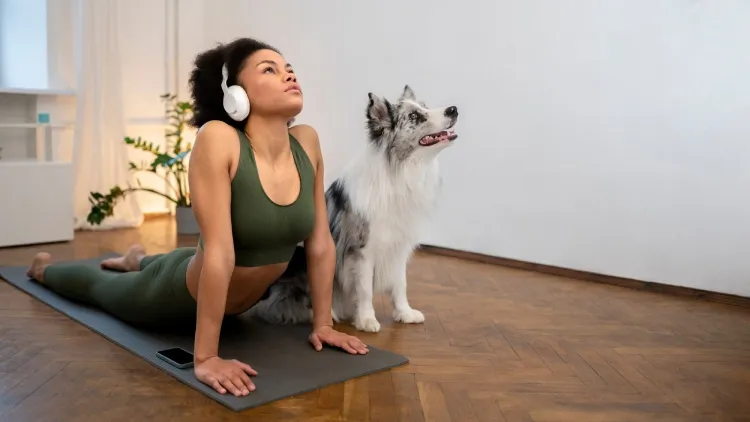
Puppy Yoga Warm-Up Exercises
Warm-up poses of puppy yoga are used to slow down the warming of the body to allow more intensive stretching and changes in the position. These are exercises that will engage muscles of the body, joint mobility and better breathing pattern without discomfort.
1. Seated Breathing Stretch
The sitting forward bends pose forms the basis of the yoga of the puppy. It assists in controlling breathing, enhancing posture, and promoting overall awareness.
How to perform:
- Sit with your cross-legged or your heels.
- Keyboard hands on the thighs.
- Breathe deeply, and press the chest upwards and straighten the spine.
- Breathe out, dropping the shoulders and the muscles of the face.
- Breathe slowly for 1-3 minutes.
This physical exercise is a warm-up that enhances the lung capacity, alignment of the posture and balance of the nervous system. It is also useful to enable puppies to settle down, and then they proceed with movement.
2. Neck and Shoulder Rolls
This practice will deal with the tension of the neck, shoulders, and upper back.
How to perform:
- Sit or kneel comfortably.
- Shoulder roll backwards, then forward.
- Turn the head from side to side.
- Circular neck movements should be done slowly.
The exercises of neck and shoulder mobility also aid in preventing stiffness and adoption of a better posture, particularly in individuals who spend most of their time sitting or working at desks.
Basic Puppy Yoga Forms (Floor-Based)
Puppy yoga exercises rely on floor-based exercises. These positions enable complete relaxation, besides enhancing flexibility and joint mobility.
3. Puppy Pose (Uttana Shishosana)
Puppy pose is considered a characteristic movement in puppy yoga, and it provides a mild spinal stretch.
How to perform:
- Kneel on the mat.
- Hips to hold over knees.
- Stretch arms forward.
- Lower chest toward the floor.
- Calm down, neck and deep breath.
This is a better position to enhance spinal mobility, shoulder mobility and release of the upper-back. It is easy enough to get started with, and it keeps the posture in good condition. Individuals whose shoulders are injured, whose necks are problematic, or who have severe back pain must not perform deep forms of this pose.
There are such common mistakes as lower back collapse, elbow lock, or pushing the chest down. Deep breathing and relaxation are required.
4. Cat-Cow Stretch
These even motions of the spinal activity enhance coordination, flexibility and breathing (control).
How to perform:
- Start on hands and knees.
- Breath, dropping belly and lifting head.
- Breathe out, straightening the spinal column and tucking the chin.
- Repeat slowly for 8–12 cycles.
Cat- cow enhances better spinal position, lessens stiffness, and tightens the core by activating it gently.
5. Child’s Pose
This pose is very relaxing and induces complete body relaxation.
How to perform:
- Kneel on the mat.
- Sit back onto the heels.
- Extend arms forward.
- Forehead sweetly on the floor.
Child pose is beneficial in the opening up of the hips, thighs, back and shoulders, as well as soothing the nervous system.
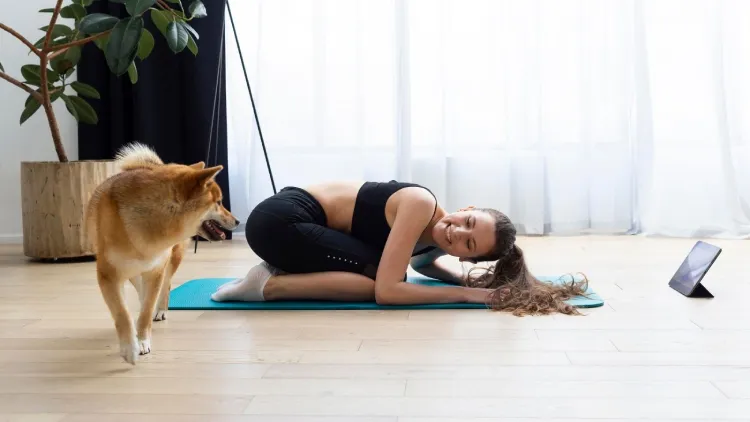
Standing Puppy Yoga Postures
Puppy yoga standing movements are meant to enhance balance, posture and engagement on light body muscles.
6. Mountain Pose
This position develops stature awareness and foundations.
How to perform:
- Erect self with feet hip-wide open.
- Relax your shoulders.
- Keep spine neutral.
- Breathe slowly.
Mountain pose makes one more aligned, balanced, and focused.
7. Forward Fold
A light standing exercise that strengthens flexibility.
How to perform:
- Hinge forward from the hips.
- Let arms and head hang freely.
- Keep knees soft.
This motion lengthens the hamstrings, the calves, and the back region and facilitates circulation.
8. Gentle Balance Pose
Balance activities include balance and stability that will be enhanced through the simplest balance activities.
How to perform:
- Stand on one foot.
- Place (gently) the other foot lightly on the ankle or calf.
- Hold for 3–6 breaths.
These exercises strengthen the neuromuscular and stability of the joints.
Seated Stretching Exercises
Sitting exercises focus on the spine movement, flexibility, and opening of the hips.
9. Seated Forward Bend
An exercise of controlled hamstring and spine.
How to perform:
- Sit with legs extended.
- Inhale to lengthen the spine.
- Breathe out and bend forward.
The practice encourages blood flow and body range.
10. Seated Twist
A slight rotation of the back that enhances the digestive and dancing.
How to perform:
- Sit tall.
- Twist gently to one side.
- Wait a number of breaths and then alternate.
Twisting exercises enhance the ability of the spinal region and the involvement of the core.
Relaxation and Cool-Down Exercises
Somniform movements enable the body to relax and the nervous system to calm down.
11. Supine Stretch
This light back spinal decongestion enhances back comfort.
How to perform:
- Lie on your back.
- Hug knees to chest.
- Rock side to side.
12. Final Rest Pose
The opposite stance is called the complete relaxation stance.
How to perform:
- Lie flat.
- Relax arms and legs.
- Close eyes.
- Breathe slowly for 5–10 minutes.
Puppy Yoga Exercise Intensity
Puppy yoga has a low level of exercise, as it focuses more on calm movement, breath control, flexibility, and relaxation. Sessions do not include excessive strength training, no hard-impact movements, or cardiovascular work. The design will provide comfort to people as well as the well-being of the puppy, keeping energy flowing at a relaxed pace during the classes.
The building is natural in terms of the puppy developmental principles, including regular short activities, frequent breaks, and mild activity. The puppies are given a chance to play a bit, very little interaction, and have plenty of time to rest so that they do not get overworked and nervous.
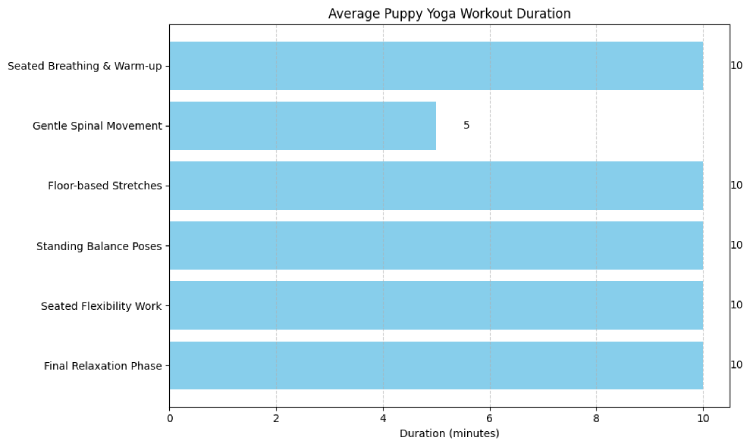
Average Puppy Yoga Workout
A typical puppy yoga session consists of:
- Seated breathing and warm-up
- Gentle spinal movement
- Floor-based stretches
- Standing balance poses
- Seated flexibility work
- Final relaxation phase
The movement of the flow can allow the puppies to move freely whilst the participants are at the ground level and relaxed.
Inclusion of Puppy Development Guidelines During Exercising
Puppy yoga is designed with proper principles that promote healthy growth of the puppies, and yet the exercise environment is gentle and restrained. The games are structured into little movement circles that indicate the attention and energy consumed by a puppy in the normal pup way. These short activity intervals are attributed to natural breaks and rest intervals where the puppies can reset; they will observe and rest without being overstimulated.
The general direction of puppy yoga is based on the main breathing principles of children’s development, which are gradual adaptation and slow exposure. The puppies are exposed to new motions, sounds, surfaces and human beings in a predictable manner that is calm as well. Such a regulated exposure will aid animals as puppies, to gain confidence and familiarity in the long run without developing stress or fear responses.
Limited-duration activity, as well as controlled socialisation, is also a focus of exercise sessions. Puppies are also not forced to move around, but instead allowed to interact with each other or even lie down whenever they want to, by being motivated. This will help to eliminate the physical fatigue and emotional burdens, help instil comfort, security and confidence. With the compliance of these developmental stages, puppy yoga will establish an exercise environment in which puppies can be relaxed, attentive, and emotionally stable throughout the process.
Mental focus, relaxation, and training awareness in yoga with puppies
The sessions of puppy yoga are planned to provide a supportive and calm training environment that ensures emotional balance of the participants and puppies. The low rate of movements, its calm and easy environment facilitate the reduction of the total level of stimulation. This will help them to act with an illusion of calmness and minimise the signs of anxiety or over-excitement, and ensure that both the humans and the puppies stay within the scope of concentration and comfort throughout the session.
As a result of repeated exposure to these calm workout environments, puppies eventually learn to regulate themselves and become aware of their environment. They also get to know when to experiment, when to unwind and how to keep calm in the motion of gentleness and human beings. This is done to ensure that puppies feel more comfortable in society and can easily get used to sharing places without fear.
Healthy bonding and the development of trust are also backed by this type of interaction based on exercise. Relaxed and consistent human behaviour and gentle movements assist in creating positive associations of the puppies with relaxed human contact. With time, puppy yoga builds patience, emotional stability, and confidence. It is a great environment of soft behavioural consciousness and physical activity.
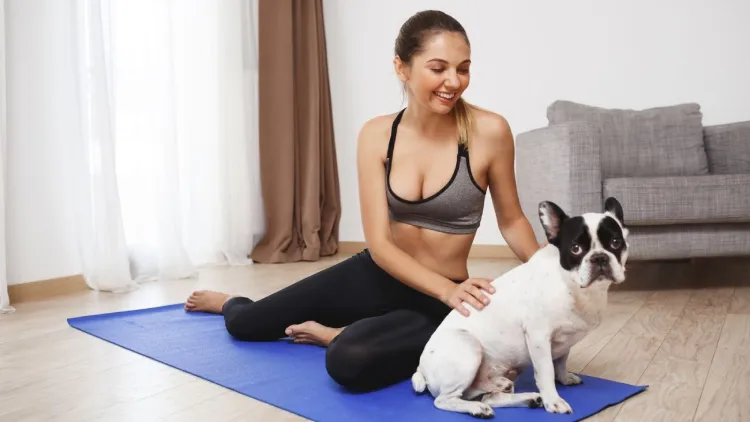
The Physical Advantages of Exercise-Based Puppy Yoga
Puppy yoga is not rigorous, but it particularly provides physical benefits such as:
- Improved posture
- Increased flexibility
- Enhanced joint mobility
- Light muscular resistance.
- Moving to eliminate stress.
- Improved breathing control
The activities are aimed at mobility and relaxation of the whole body, and not power or stamina.
Ethical and safety concerns of puppies in puppy yoga sessions
Safety of the puppy is a major consideration in the yoga sessions, of the puppy and the space where the activities take place has been well planned to ensure the safety of both physical and emotional health. In most cases, puppies that participate in puppy yoga do so courtesy of responsible breeders, shelters or certified animal programs where the health of these puppies, their age and disposition have been well evaluated. Only suitable puppies in terms of their quietness in a group environment are taken, which means that they feel comfortable with people and other animals.
Puppies involved in puppy yoga exercises are allowed to take frequent rest periods, have access to fresh water and a quiet space where they can rest without moving in case they want to. Constant monitoring by professionally trained handlers helps to make sure that puppies do not get overstimulated, handled wrongly, or put in unsafe conditions. Such supervision serves to keep the atmosphere of the exercise peaceful and also enables man-to-man interaction between puppies in a natural and safe environment.
Working procedures are modified to enable the entire freedom of movement without force, restraint, or pressure. Puppies will never be asked to perform any poses or sit in a position. The relaxed and polite communication enables them to draw close, sleep, or forget without the inconvenience of being physically damaged or emotionally troubled. This will be an ethical practice to make sure that puppy yoga is a relaxing, safe, and positive experience for puppies as well as facilitate a smooth and fun exercise experience with the participants.
Awareness of Interaction and Relaxation of Training.
Conscious communication is a significant component of puppy yoga and contributes to the process of peaceful and harmonious conduct of puppies. The sluggish and gentle nature of exercises in the puppy-yoga form a low-stimulation atmosphere wherein puppies will feel safe and unthreatened. With the ease in taking poses and constant breathing, the puppies will be exposed to calming body language, which will promote emotional control and trustworthiness.
The frequent exposure to these restricted exercise environments aids the pups in learning to wait and take time to watch. Relaxing to watch, staying, and playing at an easy pace wood in their own time, the puppies do not matter so much which is the earliest moving. This facilitates successful emotive growth and decreases hyperactivity or anxiety-responses.
Puppy yoga also conforms to modern principles of training, which follow positive reinforcement, exposure, and socialisation. It is never pushed to force puppies tointeract and learn through correction. Rather, the principle of calm behaviour is reinforced naturally by means of a peaceful environment, respectful treatment and consistent routines that will allow the puppies to evolve upon a stable position and the trust that they can share with the body movement.
Yoga Foundation In Puppy Yoga
Puppy yoga is based on the foundations of classical yoga:
- Basic standing poses
- Gentle forward bends
- Simple seated stretches
- Relaxation postures
- Controlled breathing
It is a non-progressive practice that does not involve sophisticated postures, extreme strength moves, and complicated inversions. The standard groupings of yoga tend to devote fundamental poses to the less challenging category, and more advanced poses are classified as advanced arm balances, deep backbends, and so on. Puppy yoga is still highly traditional in terms of simplicity, availability, and safety.
Final Thoughts
Puppy yoga is a different form of exercise that is founded on very tender, moving, supple, and relaxed communication. It is also concentrated on soft transitions, light posture, deliberate breathing and calm body awareness. Puppy yoga can be a universal form of exercise as it allows people of any fitness level to pay attention to comfort, safety and slow movements.
Puppy yoga offers a full but not strenuous system of movement through a series of warm-ups, floor-based stretching, standing balance and seated mobility work, as well as restorative relaxation. Its low-impact aspect benefits physical fitness, range of motion in the joints and psychological rest and repose without disturbing the well-being of the puppy or subjecting it to emotional insecurities in the atmosphere.
Frequently Asked Questions
1. Can beginners take puppy yoga who do not know about yoga?
Yes, the puppy yoga is very appropriate for beginners. The practices are aimed at light stretching exercises, slow motions, and easy postures that do not involve previous yoga training. The light intensity of puppy yoga enables ordinary yoga fish to move within their comfort zone and at their own speed as they enhance flexibility, posture, and awareness of their bodies.
2. What is the ideal age of puppies that should take part in puppy yoga classes?
The puppies are usually introduced to puppy yoga when they are of the age to enjoy the mild social activity, yet old enough to move around without any difficulties and to sleep on their own. The sessions are structured on brief activity intervals, regular breaks, and relaxed interaction, so that the exercises are not too demanding in terms of the development of a puppy.
3. Does puppy yoga reduce anxiety and overexcitement?
Puppy yoga offers a relaxing exercise atmosphere that will help you feel at ease and relaxed. The minimal speed, silence and soft actions of the puppies contribute to decreasing overstimulation and inviting human beings and puppies to stay calm, focused, and relaxed. The repeated exposure to such environments favours self-control and the reduction of stress.
4. What is a standard duration of puppy yoga?
An average puppy yoga session takes approximately 45 to 60 minutes. This session comprises warm-up exercises, floor work and standing exercises, sitting stretches, and lastly a relaxation. The format of the sessions enables frequent breaks to enable puppies relax, stretch, or otherwise in order to facilitate disengagement.