

Kundalini yoga is a transformation technique and awakening of inner energy, harmonisation of chakras, and raising of consciousness. Yoga brings together movement, breathing, mantra, and meditation, which helps maintain body fitness, emotional recovery, and focus of mind. It is easy to use for both beginner and advanced practitioners and is a practice that goes lifelong before practising to attain balance, vitality and self-awareness, by working with the nervous system and the energy body.
What Is Kundalini Yoga?
Kundalini yoga is a science of ancient yoga that aims at awakening some hidden spiritual energy of the body, which is called kundalini. This energy is normally referred to as a coiled energy that is at the bottom part of the spine in the root chakra. Upon stimulation by conscious practice, kundalini energy ascends through the spine column and, at each chakra, increases consciousness at every level.
Contrary to most other styles of yoga practised these days, kundalini yoga incorporates physical movements with breath management, sound vibration, meditation and intentional focus. Such a combination of yoga renders kundalini yoga therapeutic and transformative. The practice was initially shrouded in secrecy, with the teacher passing down the teachings to their students. It was later, in the late 1960s, with the teachings of Yogi Bhajan, that the practice became available to the general population.
Kundalini yoga is sometimes referred to as the yoga of awareness since it teaches the yoga student to watch their thoughts, feelings and perceptions dispassionately. This consciousness gradually generates big changes in attitude, conduct and lifestyle.
Essentials of Kundalini Yoga
Every kundalini yoga session contains certain parts that combine to trigger the energy flow and bring back the balance.
The practice is founded on these aspects.
1. Kriyas
The basis of kundalini yoga is kriyas. They are well-calculated patterns of movement, posture, breath, and mental focus to bring a particular effect upon the body and mind. Every kriya has some specific aim, like to enhance the nervous system, increase the level of digestion, release emotional blockage or stimulate certain chakras. In contrast to the random exercise routines, the kriyas are exercised over an estimated period of time since timing contributes significantly to the generation that is consistent and measurable. With practice, kriyas will eventually enhance stamina, body, mind discipline and circulatory energy of the body.
2. Pranayama (Techniques of Breathing)
Kundalini yoga is primarily about breathwork, as it is the direct impact of breath on the nervous system and energy body. Breath of Fire, deep breathing, and segmented breathing are some of the techniques used to manage stress in response, enhance lung volume, and enhance the supply of oxygen to the brain. Meditative breaths result in emotional stability, increased focus, and detoxification. Pranayama is also practised to prepare the body in meditation to calm the mental fluctuations and awaken subtle energy.
3. Asanas (Postures)
Kundalini yoga asanas are often repetitive, purposeful and rhythmic, as opposed to alignment-based or vinyasa. These positions trigger muscles, glands and meridian points and promote the flow of energy along the spine. Most movements are not complicated, but they may be intense as they have an energetic impact. With time, the postures are known to relieve accumulated tension and trauma, enhance flexibility by means of allowing us to be more aware of inner sensations without the need to exert severe physical endeavours.
4. Mantras and Chanting
One of the characteristics of kundalini yoga is mantras. The chanting can be used to control brain patterns and suppress mental noise by the use of sound and vibration. This could be done through the chanting of mantras in a loud or silent tone as a form of enhancing concentration and increasing awareness. Self-identity and truth consciousness are caught up in sounds such as Sat Nam. The emotional discharge, enhancement of meditation, and subsequent sense of inner balance and connection can be achieved by the rhythmic repetition of a mantra.
5. Meditation
Kundalini yoga meditation teaches the mind to be stable, sharp and alert. Practices can be breath awareness, mantra repetition, visualisation, or focused attention. Constant meditation enhances emotional stability, intuition, and mindfulness. It also aids in combining the stimulating impacts made when doing kriyas and pranayama so that the change made is balanced and sustainable.
6. Mudras and Bandhas
The form of body yoga found in kundalini yoga that involves controlling energy with subtle though powerful methods is called mudras and bandhas. Mudras are distinct hand gestures that determine the flow of energy and brain function,s whereas bandhas are the internal energy holds that direct prana along the body. When used jointly, they enhance the actions of breathwork, motion, and meditation. These methods add accuracy, expand consciousness and enable practitioners to safely enter the kundalini electric depth of yoga.
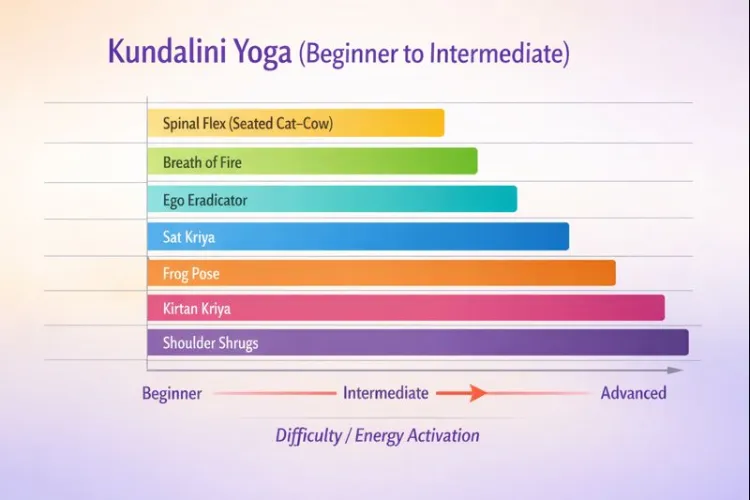
Kundalini Yoga (Beginner to Intermediate)
The exercises in Kundalini yoga are aimed at awakening energy in a non-aggressive manner, with the strengthening of the nervous system and sharpening of the mental focus. These exercises are based on rhythm, breath consciousness and concentration, unlike the fast-moving or active yoga styles. Some of the most common kundalini yoga exercises are safe and effective and are used widely in traditional classes.
1. Spinal Flex (Seated Cat–Cow)
One of the basic yoga exercises in the kundalini yoga is Spinal Flex. The practitioner sits in a cross-legged position, reaches the back with the spine forward and the spine with the spine round. This rhythmical movement activates the spinal column, enhances the flexibility and promotes the upward movement of the kundalini energy.
Flexing of the spine on a regular basis facilitates digestion, lowers the stiffness of the lower back, and gets the body ready to engage more in kriyas and meditation. It is also commonly practiced in the start of a kundalini yoga session as a way of becoming alive.
2. Breath of Fire
Breath of Fire Breath of fire is a fast, rhythmic form of breathing which is practised with the tip of the belly as it is pumped through the nose. It is taken as one of the most potent kundalini yoga practices in that it cleanses the lungs, improves the supply of oxygen and also energises the whole system.
The workout tightens the abdominal muscles, helps in detoxification and enhances clarity of the mind. The beginners must be gentle and should not use Breath of Fire when pregnant or when they feel dizzy or lightheaded.
3. Ego Eradicator
The standard kundalini yoga meditation is known as Ego Eradicator and is performed to equalise the aura and activate the solar plexus chakra. In Breath of Fire, arms are raised at half-length, with fingers spread into palms and thumbs turned upwards, while sitting in a very comfortable position.
The exercise is effective in increasing the lungs’ capacity, confidence and breaking emotional blocks. It is commonly employed to change the mood, decrease fatigue, and develop personal power.
4. Sat Kriya
One of the most significant yoga poses practised in the field of kundalini yoga to awaken the energy without any danger is Sat Kriya. The practitioner sits in a kneeling stance with the arms stretched over the head, chanting Sat and Nam, which means bring in navel and release navel, respectively.
The kundalini energy, which is located at the base of the spine, is stimulated by Sat Kriya, balances the chakras, and aids in hormonal well-being. It also enhances the pelvic muscles and increases concentration.
5. Frog Pose
Frog Pose is a vigorous kundalini yoga that develops strength, stamina, and blood flow. This exercise works the lower chakras and supplies the blood better by moving rhythmically between a squat and a standing position, which is accompanied by breathing deeply.
Frog Pose, though physically challenging, is useful in the release of stored tension, vitalization, and cardiovascular health when employed mindfully.
6. Kirtan Kriya Meditation
Kirtan Kriya is a type of meditation-based kundalini yoga practice which is an integration of chanting, finger motions and visualisation. The chanted words are Sa Ta Na Ma, and each finger tip is touched to the thumb one by one.
According to the results of a scientific study, this practice is associated with better memory, less stress, and better functioning of the brain. It can be practised by beginners and as short as three minutes a day.
7. Shoulder Shrugs
Shoulder Shrugs are easy but powerful kundalini yoga asanas for the discharge of tension in the neck and shoulders. Under the influence of deep breathing, this movement will assist in the removal of stress and getting the blood moving, as well as assisting mental discharge.
This is a very helpful exercise for individuals who are stiff due to excessive sitting or bored during busy working hours.
Benefits of Kundalini Yoga
The advantages of kundalini yoga run in physical, mental, emotional and spiritual aspects.
Physical Benefits
The frequency of kundalini yoga helps in maintaining health in general by enhancing the nervous, endocrine and immune systems. It enhances the posture, flexibility, and breathing capacity, besides increasing the circulation and the energy levels. Some of the kriyas stimulant of glandular balance, which is important to metabolism, mood and vitality.
Mental and Emotional Benefits
Kundalini yoga is also very effective in dealing with stress. Breathwork and meditation control the amount of cortisol, relax the mind and decrease anxiety. It is a normal reaction to cry during the practice as one releases the tension stored in the body as emotion, especially in the practice of hip-opening poses, where the emotional memory is usually held.
Spiritual Benefits
But on a higher level, kundalini yoga brings about self-awareness and tranquillity. Since power is circulating freely in the chakras, it becomes common to experience increased intuition and clarity of purpose, which the practitioners indicate, as well as struggling to connect with something bigger than themselves. It is not the avoidance of life, but rather a conscious life that the ultimate goal of kundalini yoga entails.
Chakras and Kundalini Energy
Kundalini yoga processes systematically functioning with the seven chakras, which are the different aspects of human experience.
- Root Chakra (Muladhara): Survival, stability and grounding.
- Sacral Chakra ( Svadhisthana ): Sacral chakra.
- Solar Plexus Chakra (Manipura): self-esteem and willpower.
- Heart Chakra (Anahata): love, compassion and emotional level.
- Throat Chakra (Vishuddha): Truth and communication.
- Third Eye Chakra (Ajna): Intuition and knowing.
- Crown Chakra (Sahasrara): Unity and spirituality.
When the energy in kundalini ascends via these centres, blockages might likely be revealed and disintegrated. The most frequent symptoms of this process include physical experiences, emotional fluctuations and modifications in perceptions.
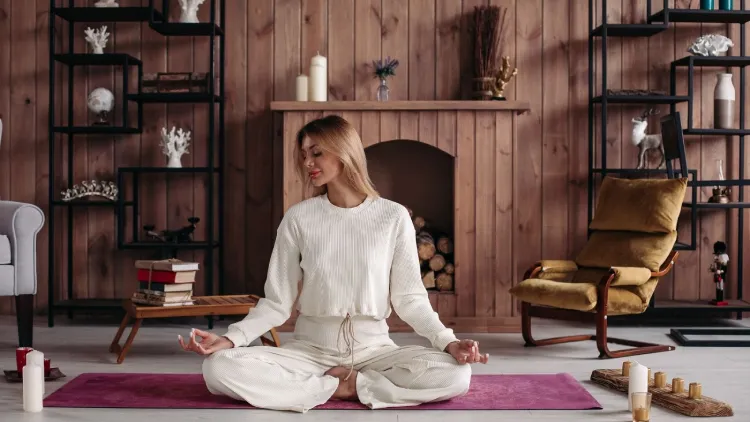
Kundalini yoga: What to Expect in a Class
A Kundalini yoga session is a special combination of yoga, breath, meditation and chanting that is work, thirst, and harmony of body and mind. Classes tend to start with an introductory chant such as Sat Nam, which tends to get the mind in the right state and gives the session a purpose.
This is followed by the warm-up, which consists of soft stretches, flexes of the spine and shoulder/hip movement to relieve tension and energy centres.
The core of the class is comprised of the main kriya. They are organised patterns of body postures and breathing exercises, and occasionally chanting aimed at specific regions, including energy flow, chakra balancing or mental clearness. The practitioners are advised to remain conscious of their body, breath and sensations at all times.
The benefits must be integrated by the nervous system after the kriya, which is a relaxing period. It might involve either lying or sitting meditation, allowing emotional or physical discharge.
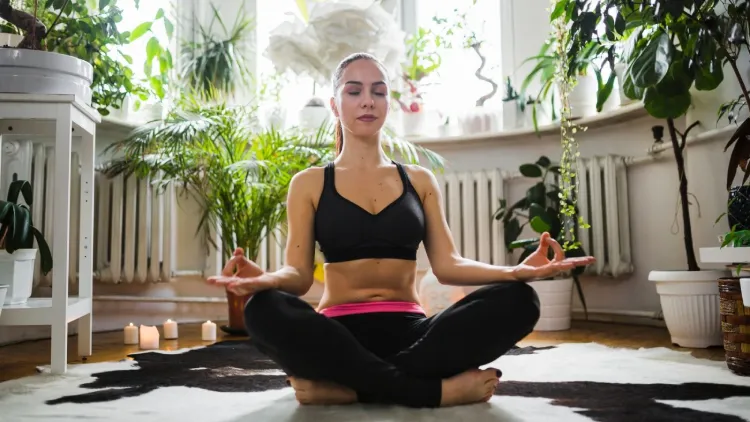
The energy is grounded at the end of the class with the help of the meditation and the ending chant, which creates balance. The short classes make students feel refreshed and concentrated, and more in touch with their inner being.
Conclusion
Kundalini yoga is a complete or total yoga that helps in nurturing the mind, body, and spirit. It advances slumbering energy, the stuffiness of energy, and mollifies our equilibrium at numerous levels by integrating kriyas, breathing techniques, meditation, mantras, and mind-ful motion. The nervous system may be strengthened, the mind may become clearer, emotional tension may be removed, and spiritual growth may be achieved with the help of regular practice.
Kundalini yoga is safe and transformative: it is a practice that can lead any individual, beginning or advanced practitioner, to self-awareness, vitality, inner harmony, and so on. Its exclusive understanding of energy, awareness and consciousness makes it among the most effective types of yoga as it offers means to traverse life with more clarity, stalem and direction in life. Finally, kundalini yoga is not an exercise but rather a lifetime process of realisation, harmony and awareness.
Frequently Asked Questions
1. Can Kundalini yoga be practised by beginners?
Yes, it is beginner-friendly. Such exercises as Spinal Flex and Kirtan Kriya can be performed in a soft way. Slow training is also safe, as practice makes us stronger.
2. What do practice of Kundalini yoga bring to us?
It enhances a healthy body, psychological, and emotional well-being. Chakra alignment is also encouraged in kundalini yoga. On the spiritual level, it develops self-consciousness and communication with inner energy.
3. Is it safe to awaken inner energy with the help of Kundalini Yoga?
Yes, formulated kriyas, breathwork and meditation securely control the energy circulation. Simple exercises should be chosen as the first ones by beginners. Consciousness avoids suffering and promotes gradual enlightenment.
4. What is the schedule of the Kundalini yoga practice?
Begin with 2-3 short sessions a week. Progressively use longer and longer periods and frequency. Regular exercises increase physical, mental, and spiritual gains with time.