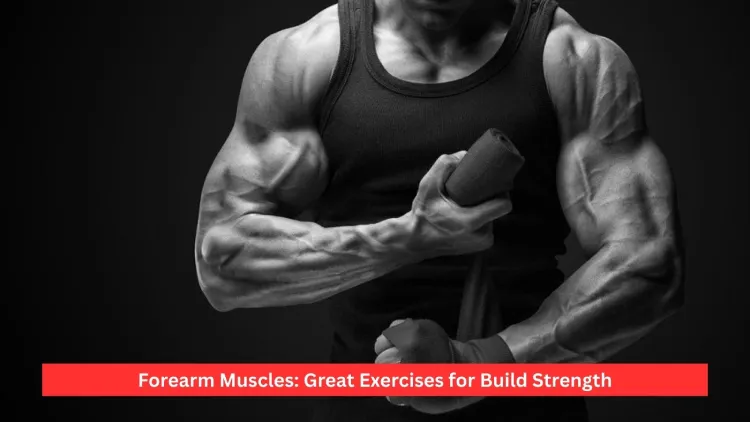

Forearm muscles are required to be strong in terms of grip strength, arm power, injury prevention, and generally upper-body performance. The forearm has flexors, extensors, and brachioradialis that all aid in supporting the movement of the wrist and fingers. Specialised exercises of the forearm, such as curls of wrist curls, reverse curls, hammer curls, farmer carry and grip exercises, are used to gain size, thickness in the forearm and endurance. Having consistently thin and weak or at least slow-growing forearms, regular practice and technique, and progressive overload can change them, improving your elbow and wrist health and even lifting.
- 1. Wrist Curls
- 2. Reverse Wrist Curls
- 3. Farmer’s Carry
- 4. Hammer Curls
- 5. Finger Curls
- 6. Wrist Roller Exercise
- 7. Plate Pinches
- 8. Towel or Rope Pull-Ups
- 9. Dead Hangs
- Rules and Frequency of Training
- Forearm Development Issues
- High-level Techniques of Fat Forearms
- Conclusion
- Frequently Asked Questions
1. Wrist Curls
Target Muscles: Forearm flexors.
One of the basic exercises used to build forearm muscles is the wrist curls. They directly attack flexor muscles, which extend along the inside of the forearm and cause wristing, as well as the holding of objects firmly.
How to Do It:
- Find a bench and sit down with the dumbbell or barbell in each of your hands with your palms up.
- Lay your forearms flat, and with your fingers poking just over the outline, down on your thighs.
- Bend your wrists slowly upwards, only to squeeze the muscles of the forearm at the top.
- Reduce the weights under control.
Tips for Growth:
- Take emphasis on slow and controlled movement instead of bringing heavy by using momentum.
- Gradual overloading is the most important – add weight until further growth is still stimulated.
- Make the rep range 1220 and enhance endurance and strength.
Wrist curls are great for both the novice and the more experienced lifter and are highly beneficial to the person with anaemic or weak forearms. They aid in the balancing system and make the elbows bulletproof by enhancing the supporting forearm muscles.
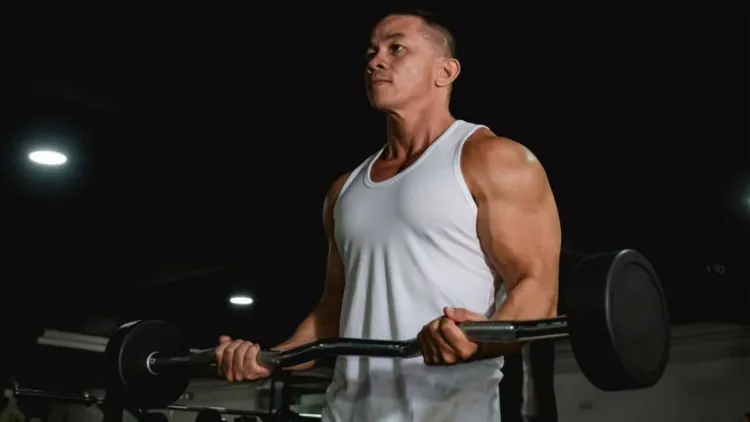
2. Reverse Wrist Curls
Target Muscles: Extensors of the forearm.
The reverse wrist curls are a supplement to regular wrist curls because they attack the extensors located along the outer forearm. Powerful extensors stabilise the development of the forearm in the long term, enhance the stability of the wrist, and lower the chances of injury.
How to Do It:
- Sit with all forearms placed down on your thighs and palms in an inverted position.
- Take a dumbbell or a barbell and raise your wrists upwards, and then bring them down gradually.
- The movements should be maintained with tension.
Benefits:
- Increases endurance to the wrist and forearm, which is useful in climbing, lifting or racket games.
- Maintains the muscles that are easily overlooked to prevent injuries from overuse.
- This makes sense by using wrist curls and reverse wrist curls to work the whole forearm, which is important in developing thick forearms in due course.
3. Farmer’s Carry
Target Muscles: The muscles of the grip, the flexors of the forearm, brachioradialis.
The carries of Farmer carries are the most efficient functional exercises to work with the forearms. This movement is not only a strength-gaining movement, but it also makes your grip, shoulders and core strong.
How to Do It:
- You should have heavy dumbbells or kettlebells in both hands, and your arms should be in full rest with all hands off.
- Keep your correct posture, as well as your shoulders back and core tight.
- Act Coordination Walk: While holding tightly, walk a specified time or distance.
Why It Works:
- Constant pulling in the process of carrying puts the forearm to the test.
- An important forearm muscle, the brachioradialis, is greatly involved.
- Enhances stability in the elbow, which helps to avoid weak or painful joints.
- Farmer carries are recommended to be used in daily forearm conditioning, provided that the volume is controlled so as not to be overtrained.
4. Hammer Curls
Muscles to be used: Brachioradialis, forearm flexors.
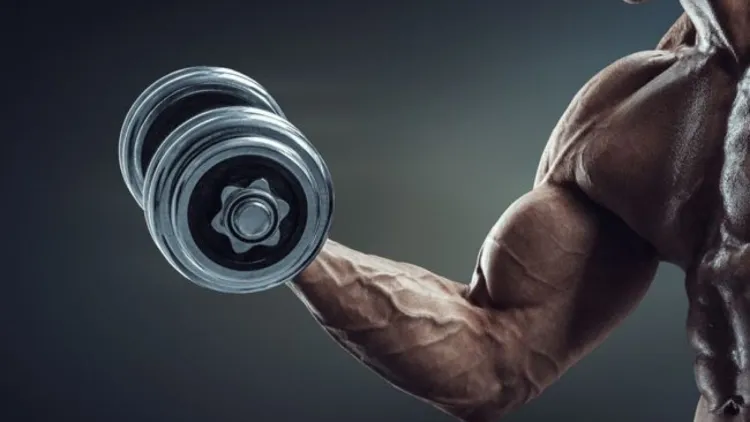
Hammer curls are an essential part of establishing forearm thickness and top arm strength. The brachioradialis is more involved by having the palms turn towards each other as opposed to the normal bicep curls.
How to Do It:
- Strauss with a dumbbell in both hands with palms forward to the body.
- Turn the dumbbells whilst holding to the neutral grip.
- Gradually lift down the weights.
Training Tips:
- Balancing between hypertrophy and strength, do 3-4 sets of 8-12 reps.
- The arms should not be swung; it is important to be very strict.
- Hammer curls can commonly be considered one of the most popular exercises involving the forearms due to their capability to improve both the appearance of the arms and grip strength used in real life.
5. Finger Curls
Target Muscles: Flexors of fingers.
Finger curls may be small yet very efficient exercises to make the forearm thicker and enhance grip strength. Good finger flexors reflect strong lifting, climbing, and daily activities in which hand strength is vital.
How to Do It:
- Grasp a dumbbell or a barbell with palms upwards.
- Keep rolling the weight down to your fingers.
- You have to fold your fingers upwards to reverse the weight in your palm.
Tips:
- Task slowly to get the most tension out of it.
- Alternate light to moderate weight at the beginning; form is more relevant than weight.
- Finger curls are also especially effective when the person has a problem with skinny forearms, as they can make the forearm size grow in a few weeks as a result of constant work.
6. Wrist Roller Exercise
Target muscles: Forearm flexors and extensors.
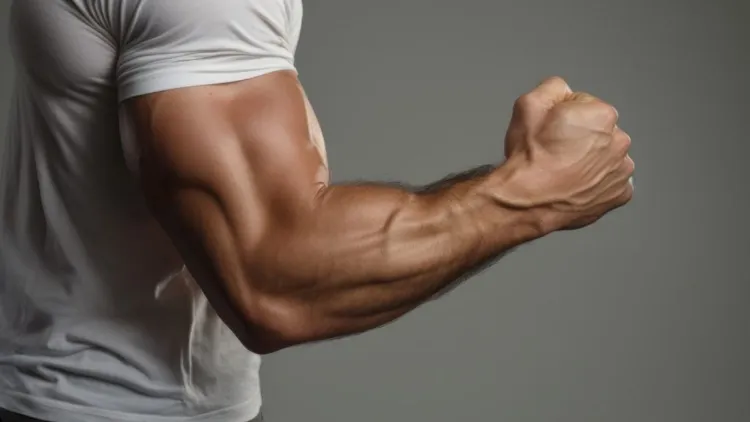
Wrist roller is a multifunctional forearm building device, used in combination of strength and endurance. When a weight is rolled up and down, practically all forearm muscles will be mobilised.
How to Do It:
- Take a roller of the wrist and hold it with the hands, and stretch them forward.
- Tilting the weight is done by rotating your wrists to roll the weight upwards and roll it again to the ground.
Benefits:
- Switch enhances the weight and muscle strength of the forearm.
- Enhances muscle strength, which helps to avoid problems with fatigue of the elbow and wrist.
- Weak elbows can also be treated using a wrist roller, which keeps supporting muscles which stabilise joints.
7. Plate Pinches
Target Muscles: Grip strength, flexor forearm.
Plate pinches: This is a very simple and yet effective method of developing thick, rich forearms. This workout focuses on the strength of fingers and grip durability in general.
How to Do It:
- Grasp two weight plates with fingers and thumb on one side respectively.
- Hold on as long as you can squeeze it between your fingers.
- Rest and repeat.
Why It Works:
- Strengthens the self-muscles of the forearm.
- Assists in strengthening the sides of the arms like bulletproof.
- Plate pinches are especially handy to those whose forearm development is slow and inaccessible, since they work small muscles that are overlooked by many.
8. Towel or Rope Pull-Ups
Target Muscles: Forearm flexors, brachioradialis.
The use of a towel or rope-pull-ups is a tremendous boost to the involvement of the forearm, since the grip cannot be easily maintained. They do both endurance and size at the same time.
How to Do It:
- Place a towel on top of a pull-up bar.
- Hold on to the two ends and do pull-ups.
- Lower slowly and repeat.
Training Notes:
- Concentrate on the movement; the motion decreases by the use of momentum on the forearm.
- Perform 3–4 sets of 6–10 reps.
- This activity is ideal for building up thick, powerful forearms within a short period of time when combined with other specific exercises.
9. Dead Hangs
Goal: Muscles in the forearm, grip strength.
Dead hangs also assume a false, simplistic effectiveness in lubrication of the forearm and health of the joints. They also assist in strengthening the elbows and wrists.
How to Do It:
- Grasp an overhand placed pull-up bar with the hands at the level of the shoulders.
- Hanging and using a full extension of arms.
- Wait as long as you can, and then sleep and start over.
Benefits:
- Increases small fibres in the forearm, which provide stabilisation.
- Another lift is reinforced by improved grip endurance.
- Stimulates the growth of fatter, denser forearms.
Rules and Frequency of Training
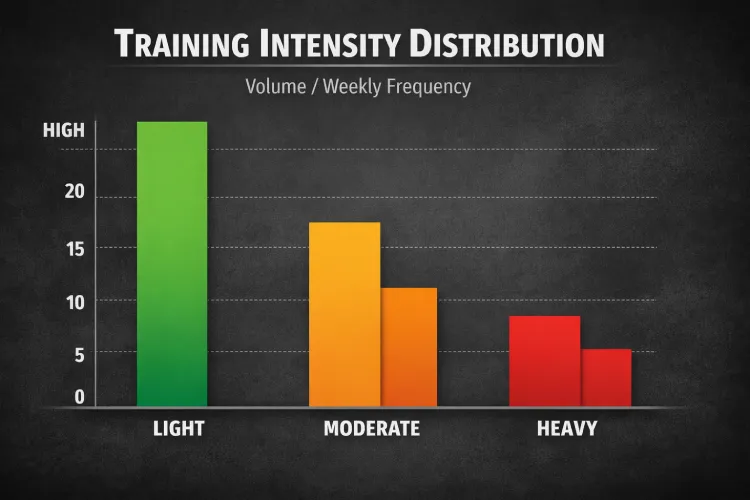
Muscles of the forearm can be trained on a regular basis since they are endurance-based based though it should be taken not to overtrain them. Light exercises that can be performed daily, including, but not limited to, dead hangs or wrist curls, can supplement heavier, more intensive workouts. Others employ regulations such as 6-12-25 (6 heavy, 12 middle, 25 light) of 2-2-2/3-3-3 gym regulations and organise their sets and intensity to achieve the growth and rest balance.
Gradually increasing weight or time under tension is the deciding factor when it comes to changing thin or weak forearms, and that is progressive overload. The consistency with appropriate rest will guarantee the growth of the most difficult-to-grow muscular parts.
Forearm Development Issues
- This is why forearms do not grow well: They are hard-work-oriented by nature and obligatory, or rather indirectly worked by the other lifts, so they usually lag in growth.
- Weak wrists and elbows: These are usually a result of poorly developed supporting muscles; one can remedy this problem through exercises that centre on the wrist curls, reverse curls, and farmer carry.
- Training per day: It is possible to do light exercises daily, whereas heavy lifting demands rest.
- The basics of rapid development include: train often, make sure the form is correct, overload gradually and eat right.
The development of the forearms can be done in 30 days through regular work, as it involves all the major motions, grip-specific exercises and gradual overloading. Genetics also determine shape and thickness, but exercises such as the hammer curls, the wrist rollers, and towel pull-ups will increase growth.
High-level Techniques of Fat Forearms
- Practise all angles: Flexors, extensors, brachioradialis and flexors to the fingers should be practised.
- Grip Variation: alternate overhand, underhand and the neutral grip.
- Endurance exercise: Dead hangs, plate pinches and roller sets of the wrist.
- Elbow and Wrist Health: Injuries are averted by strengthening the muscles around the area.
- Periodisation: Varyed stimulus by use of rules, 4-8-12, 6-12-25 and 2-2-2.
The adhesion to these strategies leads to heavier and solid forearms, as well as safeguarding the joints and improving total arm output.
Conclusion
It is not only aesthetics, though forearm development can be connected with functional strength, as well as grip power and injury prevention. One can develop strong and thick forearms using such exercises as a wrist curl, reversed curl, hammer curl, finger curl, farmer carry, towel pull-ups, plate pinch, and roller. Proper form training, progressive overload training, and sufficient rest guarantee the greatest growth even of the most difficult-to-grow muscles.
It may be that in your natural condition, your forearms are thin, weak, or otherwise not easily developed, but with a systematic, careful course of training, you can have bulletproof forearms, heavy forearms, and a stronger grip in a few weeks.
Frequently Asked Questions
1. What is the time required to accumulate perceptible forearm muscles?
Most individuals can notice great changes within 4-6 weeks with regular training of the involved exercises, such as wrist curls, hammer curls and farmer carries. The combination of the correct technique, gradual overloading, and sufficient personal recovery enhances the development of the forearm.
2. Is it possible to train forearms daily?
Yes, it is possible to do light forearm exercises using dead hangs, wrist curls, or plate pinches daily. Rest days should, however, be permitted in heavy lifts and high-intensity workouts to avoid over-training and make sure that the muscles get time to recover.
3. Which is the most effective gym exercise to enlarge and strengthen the forearms?
No best exercise exists, but wrist curls, reverse wrist curls, hammer curls, farmer carries, and towel pull-ups are all useful to work all the forearm muscles, increasing thickness, grip strength, and stamina.
4. Why do my forearms not grow strong or soft?
Forearms are an endurance type of muscle which usually receives indirect work in the other exercises. Poor forearms can be caused by a lack of training, bad form or failure to perform grip-related movements. This needs to be overcome by regular and targeted exercises and progressive overload.