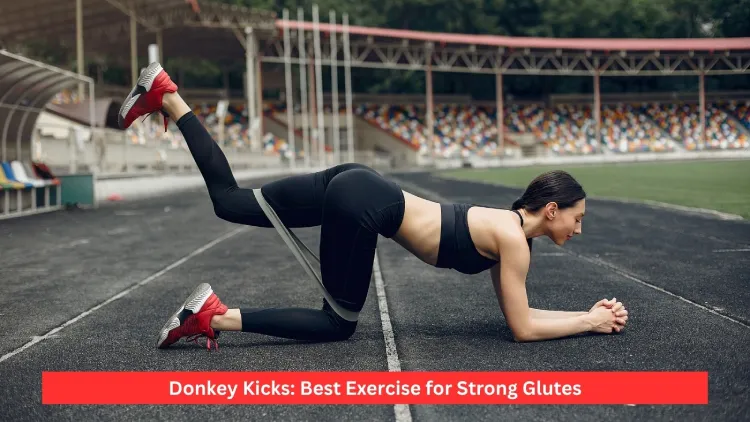

Donkey Kicks can be considered as one of the most beneficial bodyweight exercises as a way of strengthening and conditioning the glutes. They assist in enhancing muscle activity, stability, and postures alongside the maintenance of hip health. Donkey kicks, ks when performed correctly and with progressive overload, have the potential to make glutes stronger and more defined. In a way, they will not directly burn belly fat or substitute such a drastic and extensive movement as squats, but they prove to be very useful in isolating the glutes and enhancing the overall performance of lower body muscles.
- What Are Donkey Kicks?
- Benefits of Donkey Kicks
- The correct technique for performing donkey kicks.
- Proper Form Tips
- Common Mistakes to Avoid
- Donkey Kick Variations
- Muscles Worked
- The DK Workout Trick You Need to Add to Your Workout
- Looking at Donkey Kicks and another Glute exercise
- Tips for Better Results
- Deep Insights on Glute Development and Performance
- Advanced Training Concepts
- Glute Training for All Ages
- Final Thoughts
- Frequently Asked Questions
What Are Donkey Kicks?
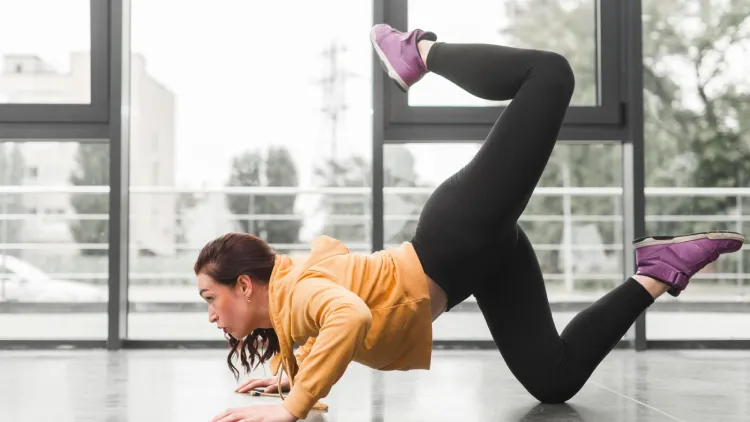
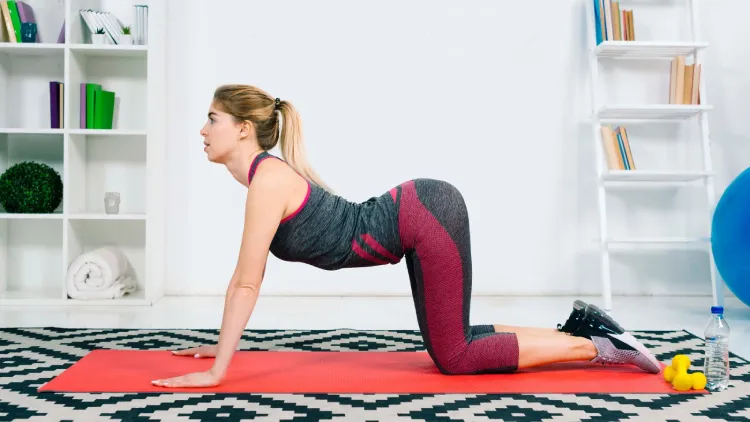
One of the core lower-body exercises is donkey kicks, where one is in a quadrupod (all-fours) position. The motion entails extending a knee forward and backwards, lifting one leg upwards. Although donkey kicks are simple, they have been extensively employed in fitness programs because they are able to isolate and engage the glute muscles effectively.
The main muscle aimed at in this exercise is the gluteus maximus, which is the biggest muscle in the body, and it helps to extend the hips. The muscles which support the movement, like the gluteus medius, hamstrings, and the core stabilizers also help in keeping balance and proper posture during the movement.
Donkey kicks also come in handy when one finds it difficult to feel their glutes when performing compound workouts. This movement (isolating the glutes) aids in the creation of a better mind-muscle connection and can enhance performance in other exercises.
They are found in general commonly in:
- Glute-focused workouts
- Rehabilitation programs
- Warm-up routines
- Home fitness plans
Donkey kicks are open to beginners since they do not need any equipment, and they have sufficient options that provide beginners room to advance.
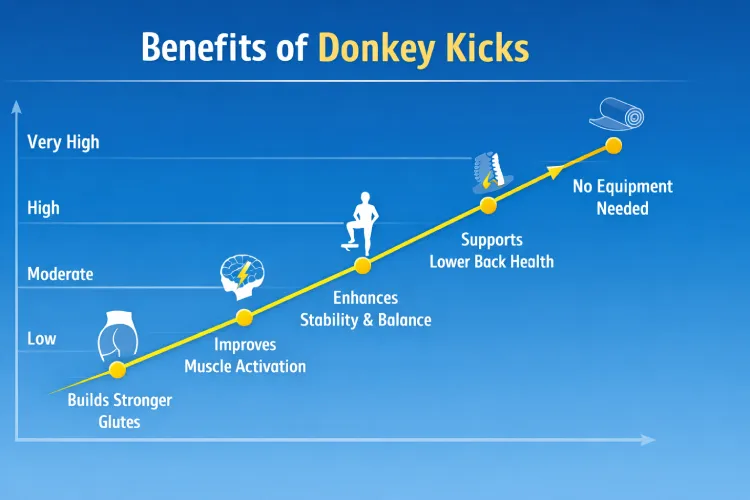
Benefits of Donkey Kicks
1. Styles Thicker and Rounder Glutes
The increase in the size of the glutes, as well as their strength, can be mentioned among the principal purposes of performing donkey kicks. Training in good form may also help in muscle growth, particularly when supplemented with progressive overload programs such as resistance bands or weights.
2. Improves Glute Activation
Active debilitation of the glutes is caused by many individuals as a result of prolonged sitting or poor posture. Donkey kicks also need to wake up these muscles exhausted from the exercises, therefore,e they become more attentive.
3. Enhances Hip Stability
Well-built glutes are very significant to the stabilisation of the hips. This has the potential of alleviating pain, enhancing the range of motion and aiding in good performance in sports.
4. Supports Lower Back Health
The poor glutes tend to cause lower-back compensation. Donkey kicks will enable me to strengthen my glutes to lessen excessive tension in the spine.
5. Helps Improve Body Shape
Although genetics has an influence, the appearance of the glutes can also be boosted with exercises such as donkey kicks in order to boost muscle tone and lift, which adds definition to the lower body.
6. Rot, Complete and Simple to use
It provides seniors and those with less fitness the option to either do what is known as donkey kicks, which are simple to master but easy to modify to fit any fitness level, especially with victims of an injury.
The correct technique for performing donkey kicks.
Any improvement requires proper form to achieve the maximum possible results and prevent injury.
Follow these detailed steps:
- Start by lying on your back with your knees bent at a right angle, your shoulders and hips.
- Maintain a neutral spine position and use core muscles.
- Raise one leg moderately.
- Keep hips square (do not roll over)
- Emphasis on the glute squeeze on the top.
Even tiny changes in execution can have a substantial impact on the experience of the execution. Behind the back,k without bending the knee more than around 90 degrees.
Straighten your heel upwards to the ceiling.
Stop at the top and squeeze your butt.
Gradually put your leg back to the position.
Do the same to take the needed repetition, ns then switch sides.
Breathing is also important. Puff your breath in and out with upward and downward movements of your leg. This assists in keeping the control and the stability.
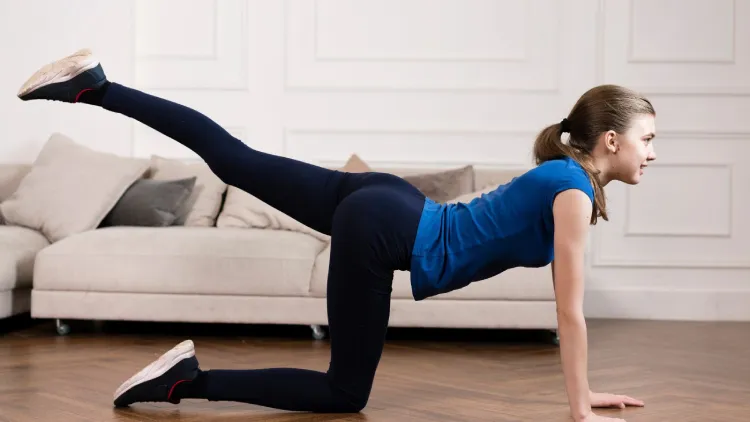
Proper Form Tips
To get the most out of donkey kicks, focus on technique rather than speed:
- Keep your core engaged throughout the movement
- Avoid excessive arching of the lower back
- Move in a slow and controlled manner
- Maintain square hips (avoid twisting)
- Focus on squeezing the glutes at the top
Small adjustments in form can make a significant difference in how effective the exercise feels.
Common Mistakes to Avoid
Although donkey kicks are simple, they are always done by most individuals in the wrong manner. The following are the most frequent mistakes:
1. Arching the Lower Back
It decreases glute activation and tensile shift to the spine.
2. Using Momentum
Swinging other than controlling the leg makes it ineffective.
3. Lifting Too High
Higher isn’t always better. Form can be undermined through overextending.
4. Not Engaging the Core
Weakness in the core results in instability and poor posture.
5. Rotating the Hips
This diverts attention to the glutes and cuts out loneliness.
These errors should be corrected to achieve improved outcomes and minimise the risk of injuries.
Donkey Kick Variations
To continue progressing, you can modify donkey kicks in several ways:
1. Straight-Leg Variation
Targets the glutes differently by increasing the range of motion.
2. Resistance Band Version
Adds tension, making the exercise more challenging.
3. Weighted Donkey Kicks
External resistance (ankle weight or light dumbbells, etc.) is important to gain strength and muscle size. The difference is perfect in the intermediate and advanced individuals who want to go a notch higher in their glute workouts.
4. Pulse Reps
You do not extend your leg down all the way; instead, you make little pulses at the top of the movement. This holds the glutes in constant tension and adds to time under tension with the ability to produce improved muscle activation and endurance.
5. Elevated Version
The angle of the exercise is manipulated by laying your hands on a raised surface or bench. This change will allow you to work the glutes more dynamically by increasing intensity and improving balance,e and also training the glutes in a slightly different position.
Fitting these variations into your routine will make the difference so that you are continuously progressing as well as extracting the maximum from donkey kicks.
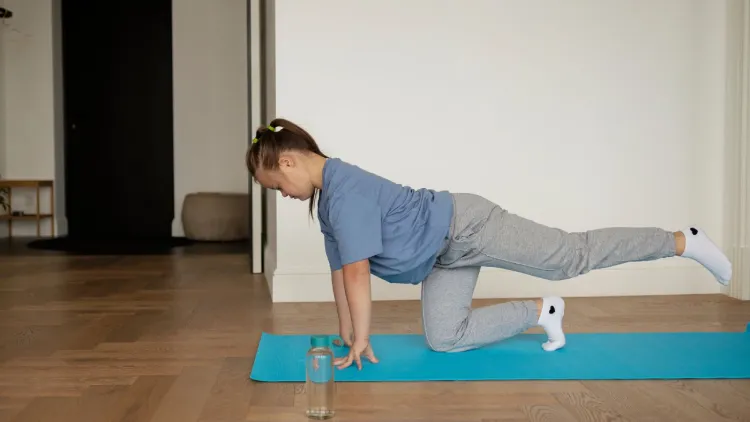
Muscles Worked
The main targets of the donkey kicks are:
- Gluteus maximus (main muscle)
- Gluteus medius(hip stability)
- Hamstrings (assistance
- Core muscles (stabilization)
Well-developed glutes are not only beautiful but also effective and good.
The DK Workout Trick You Need to Add to Your Workout
Beginner
2–3 sets of 10–12 reps per leg
Intermediate
3–4 sets of 12–15 reps
Advanced
4–5 sets of 15–20 reps with resistance
They can be used as:
- Warm-ups
- Activation drills
- Main glute exercises
- Finisher sets
Consistency is key. When they are done as a regular performance, they become evidently improved with time.
Looking at Donkey Kicks and another Glute exercise
It is easier to use donkey kicks in comparison to squats and hip thrust exercises.
Squats are regarded as one of the most effective compound movements, and sometimes members refer to them as the king of exercises since they engage numerous muscles.
The donkey kicks are, however, er excellent in isolation and specific activation.
Therefore, are donkey kicks superior to squats? Not exactly. They can be used for different end purposes. Squats are good to build general strength,h and the donkey kicks train and stimulate the glutes.
The combination of both is the most effective way.
Tips for Better Results
- Tmaximise effectiveness:
- Target how to work on gradual overload.
- Axes Intermix compound motions.
- Maintain proper nutrition
- Stay consistent
- Prioritize recovery
The glute development does not occur in one day. The improvements are felt by most of the people in a few weeks, and some months may be necessary before real strength gains are realised.
Deep Insights on Glute Development and Performance
Good and powerful glutes require various factors:
Muscle Growth and Size
Such exercises as donkey kicks are effective constituents of resistance training to achieve muscle hypertrophy. Nonetheless, multi-joint exercises like hip thrusts tend to result in the most glute activation generally.
Body Shape and Aesthetics
To attain the hourglass shape, it takes a mixture of core training, a combination of glute work, and fat burning. The donkey kicks would contribute to lifting the appearance of the glutes.
Fat Loss and Misconceptions
Donkey kicking is not a direct way of losing belly fat. Fat burning is done not by isolated activities but by thecalorics consumption. Nevertheless, they help to enhance the muscle tone and posture.
Hip Health
The glute workouts will also be useful in letting the hip discomfort go because they will strengthen the surrounding muscles and make the joints more stable.
Weak Glutes and Causes
Poor glute signals are usually occasioned due to:
- Sedentary lifestyle
- Poor posture
- Lack of targeted training
Symptoms include pain in the lower back, inability to balance, and lack of athletic ability.
Timeline of Strength Development.
The majority of individuals start to feel stronger after 2-4 weeks, whereas noticeable changes can be observed after 6-12 weeks, depending on the consistency and intensity.
Advanced Training Concepts
Progressive Overload
You need to either progressively add resistance, repetitions or load to build glutes.
The “3-3-3 Rule”
The described concept of training can be described as coordinated groups or tempo-oriented repetitions that can be used to enhance the control and involvement of the muscles.
High-Rep Training
Doing more reps,s e.g. 100 donkey kicks, ks can also increase endurance, but must be combined with resistance training to build muscle.
Glute Training for All Ages
Age does not restrict exercise, and such motions as Donkey Kicks can enable all people, whether they are beginners or aged. Powerful butt muscles assist in the daily routine,e such as walking, standing, and staying steady.
The exercises that can be performed by individuals of 60s or 70s are especially beneficial because low-impact activities like donkey kicks help to strengthen the hips and enhance stability without overloading the joints. This minimises the possibility of falls and aids in increased mobility.
To keep it safe and effective:
- Move slowly and with control
- Focus on proper form
- Begin with a lesser number of reps and add up.
Regular training of the glutes will preserve strength, independence, and overall movement at all ages.
Final Thoughts
Donkey Kicks are one of the exercises that are used most efficiently in isolating and strengthening the glutes. Although they might not be able to substitute these compound movements, they are vital in the activation and shaping of the muscle, as well as the general development of the lower body.
With the help of kicks of a donkey together with a round training program, well-balanced training program, correct technique, and regularity, you can have stronger, more stable, and more attractive glutes than before.
Frequently Asked Questions
1. Donkey Kicks: Does it really work?
Yes, donkey kicks are very good isolators and trouble producers of the glutes. When correctly executed in a regular manner, they can aid in enhancing the level of strength, muscle tone and stability, particularly when it is incorporated into a whole lower-body workout.
2. Do glutes increase with donkey kicks?
Kicks of the donkey might also help in the enhancement of the glglutealize through muscle stimulation and strength. Nevertheless, to cause significant growth, they are to be coupled with resistance exercise, progressive overload, and adequate nutrition.
3. Well, but what would happen should I kick 100 donkeys a day?
Kicking 100 donkeys a day may enhance endurance and muscle activity, but eventually may level off. To achieve improved progress, it should be fluctuated in intensity, incorporate rest, and incorporate resistance where necessary.
4. Which one is more effective, donkey kicks or squats?
Kicks by donkeys are not superior to squats; they accomplish other duties. Donkey kicks and squats work the glutes and general lower-body strength, respectively. The combination of both yields the highest results.