


The concentration curl is one of the best isolation exercises used on the biceps, and this exercise is known to enhance optimum strength and symmetry as well as tight muscle control. It is done sitting or standing with the elbow against the thigh, reducing the amount of momentum and maximising tension. When performed correctly, underlined with a steady pace of movement and gradual overload, concentration curls increase the volume of the biceps, the connection between mind and muscles, and the beauty of the arm. This guide covers what concentration curls are and how they are performed, how they are used to gain stronger, larger and well-defined biceps by exclusively focusing on one body part.
- What Is the Concentration Curl?
- Primary Muscles Worked
- Performing Concentration Curls Properly
- Advantages of Concentration Curls
- Common Mistakes to Avoid
- Variations of Concentration Curls
- Tempo and Range of Motion
- Sets and Repetition Instructions (Exercise Perspective)
- Concentration Curls vs Biceps Other Workouts
- When to Add Concentration Curls to a Workout
- Safety and Control
- Advanced Training Ideas with Concentration Curls
- Biceps Dimension, Strength and Expectations
- Equipment and Load Perspective
- Final Thoughts
- Frequently Asked Questions
What Is the Concentration Curl?
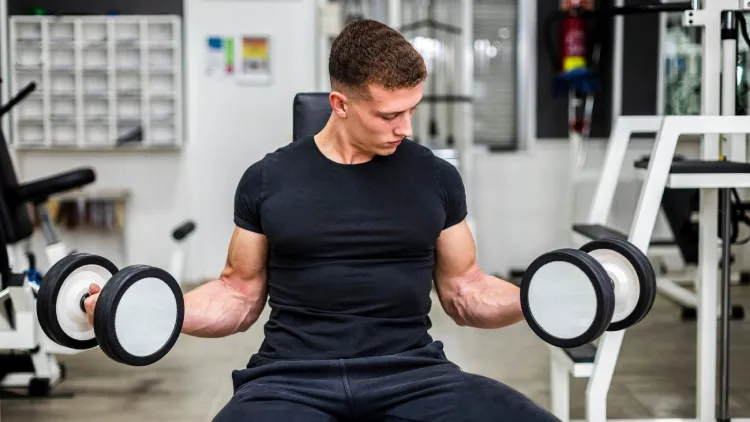
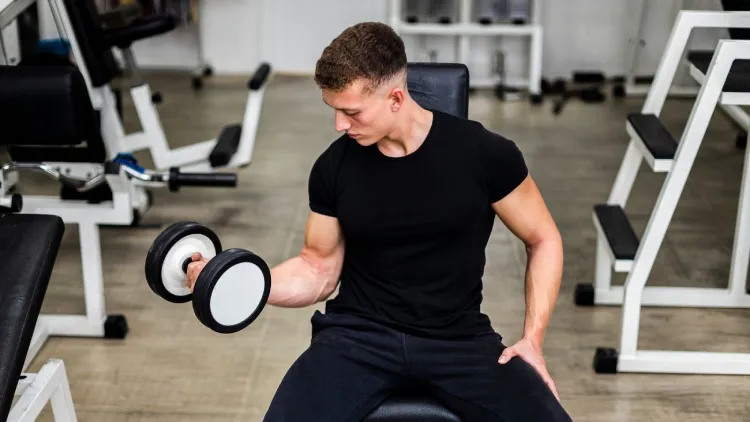
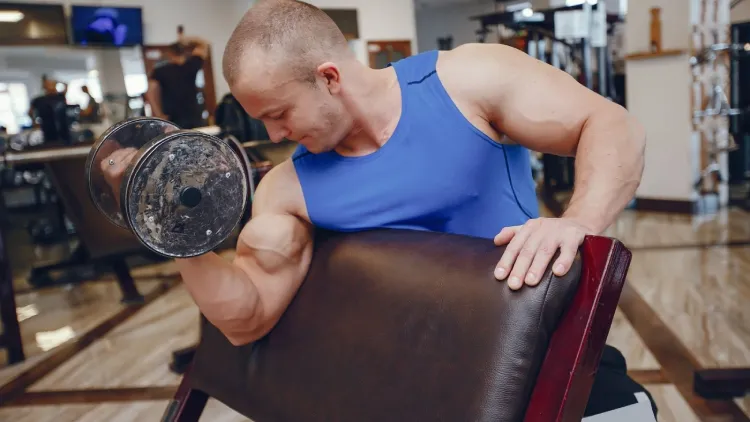
Concentration curls are an exercise that involves the use of one arm, but the arm is the biceps, which is specifically made to do away with any momentum and any external help from the shoulders, back or hips. The characteristic position of the curls is the braced elbow, typically pressed against the inner thigh and holding the upper arm in position, making the biceps do almost all the work.
In comparison with most standing curl forms, where the body sway may affect the lift, the concentration curls focus more on the strict form of curling, motion control and conscious muscle contraction. This causes them to be particularly helpful with technique-oriented lifters, with those concerned with the symmetry and maximum development of the peak instead of the maximum load.
The curls may be done in a seated position or standing position, and typically they are done with a dumbbell, but can also be done using cables or resistance bands to provide the same effect.
Primary Muscles Worked
The main muscles on the front of the upper arm, which are the focus of concentration curls, are the two-headed biceps brachii, which allow the flexion of the elbow and rotation of the forearm.
Although there are secondary muscles used:
- Brachialis, the muscle that is beneath the biceps, hence making the arm bulkier.
- The brachioradialis helps to stabilise the forearm.
- Forearm flexors assist in holding on and keeping the wrist.
Due to hindered shoulder motion in the situation of concentration curls, the biceps are more highly engaged in relation to quotas of many compound curling movements. This explains the reason why the concentration curls are regarded as best for the pure biceps.
Performing Concentration Curls Properly
Step-by-Step Execution
- Seated on the bench with legs apart and feet closed.
- In one hand, have a neutral grip of a dumbbell.
- Lean a little forward and push your elbow against the inside of the thigh.
- Recline downwards with the straightening of your arm without locking your elbow.
- Bend the dumbbell towards your shoulder.
- Put the palm facing upwards toward the top by tilting the wrist.
- Wait a little and squeeze biceps.
- Reduce the weight gradually and be in control.
- Do each repetition to the point of side alternation.
Key Form Cues
- Place the upper arm in a motionless position.
- Do not swing the weight
- Make a full swing of motion.
- Keep a neutral position in the wrists.
- Lifting and lowering control.
It is this rigorous control which is what makes concentration curls unique and distinct, and distinguishes them from looser forms of curling.
Advantages of Concentration Curls
1. Maximum Biceps Isolation
Since the action of the elbow is constrained, concentration curls minimise the participation of the deltoids and back, and most of the mechanical stress goes directly onto the biceps.
2. Enhanced Mind-Muscle Interaction
The gradual and gradual progress of the concentration curls intensifies the neural connections on the working muscle, which enables the lifters to feel and manage every contraction.
3. Balanced Arm Development
Because concentration curls are unilateral, they reveal the differences in the strengths on the left and right sides of the body and correct the muscular imbalances over a period of time.
4. Safer Curling Mechanics
Less momentum decreases stress on the joint and promotes better elbow and wrist positioning than swinging curls, which are heavy.
Common Mistakes to Avoid
- Using a weight that allows you to disrupt proper form.
- Letting the arm drop backwards or to the right.
- Going too quick and keeping out the squeeze.
- Maintaining a controlled, partial range of motion.
- Allow the wrist under compression to crunch.
These mistakes should be avoided to make sure that concentration curls are effective and do not cause their use to be painful.
Variations of Concentration Curls
1. Standing Concentration Curl
It is done by sitting the elbow against the thigh in a standing position. This variation is refined not only to create demands on balance, but also to isolate.
2. Cable Concentration Curl
Maintains tension during the entire movement, which is what is good in controlled hypertrophic exercises.
3. Resistance Band Concentration Curl
A joint friendlier option that is focused on at least smooth motions and peak contracting.
4. Incline Concentration Curl
Alters the tension angle when tension on the biceps at the base of the movement increases.
Such variations enable the concentration curls to be applicable in environments and experience levels, varying training conditions.
Tempo and Range of Motion
To maximise the effectiveness of the concentration curls, it is necessary to use a controlled tempo.
- Lift: 2 seconds
- Squeeze: 1–2 seconds
- Lower: 3–4 seconds
Slowly performed eccentrics extend the time under tension, which is one of the most crucial factors in muscle growth. In the case of fast and slow curls, a slower movement always gives greater control and muscle activity.
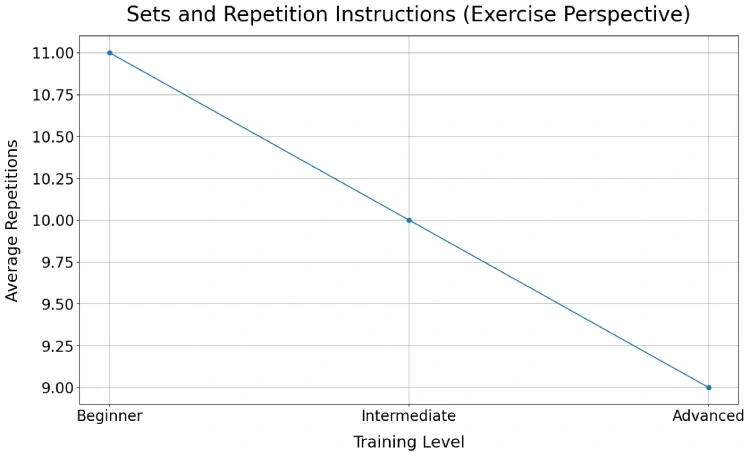
Sets and Repetition Instructions (Exercise Perspective)
- Beginners: 2–3 sets of 10–12 reps
- Intermediate: 3–4 sets of 8–12 reps
- Advanced: 4–5 sets of 8–10 strict reps
The advancement must rely on the quality of the form rather than the weight gain.
Concentration Curls vs Biceps Other Workouts
Contrary to the conventional standing biceps curls, concentration curls give:
- Greater isolation
- Reduced momentum
- Better peak contraction
The concentration curls have a higher focus on the peak of the biceps in comparison to hammer curls, whereas the latter are more focused on the brachialis and forearm muscles.
Preacher curls present the same isolation and use the outside support, unlike the concentration curls, in which the body takes the initiative to stabilise the movement and concentrate on the same.
This is what causes concentration curls to be used by many lifters as a final exercise, as opposed to being a main strength exercise.
When to Add Concentration Curls to a Workout
The best moves are the concentration curls:
- Following the pulling or curling of compounds.
- Played during exercises of the arm.
- Inserted to bring about the biceps peak and symmetry.
- Used in the hypertrophy or refinement stages.
They are not that appropriate in maximal strength tests, but are splendidforn building muscles.
Safety and Control
When it comes to doing concentration curls, it is critical that the necessary safety and control are ensured, as the exercise is highly focused on the stability of joints and accuracy in movement. Whereas concentration curls are deemed as one of the safest exercises for the biceps, it requires proper preparation and guidance on how to perform them to avoid damaging the elbows and wrists.
Before starting, warm the joints in the arms to the level of the elbows and wrists by simply moving the arms lightly, doing curls of low resistance. This enhances the circulation of blood, athletes have better joint mobility, and the muscles and connective tissues are prepared to be under controlled loading.
In doing the concentration curls, do not lock out the elbow violently at the bottom. Rather, extend to almost full length without allowing much tension on the muscles to ease the stress exerted on the joint and to create constant tension on the biceps.
The breathing must be constant and fine during work at a repetition. Breathing During the lifting phase, release an exhale and on the lowering phase, a breath in to ease rhythm, attention, and muscular tone.
In case of sharp or sudden pains in the joints during the concentration curls, then cease and recalculate the form or load. Muscle fatigue is common, whereas joint pain is not. Concentration curls, when they are done with form, temperature control and correct weight, are also one of the safest and most joint-friendly types of curling.
Advanced Training Ideas with Concentration Curls
The intensity methods that concentration curls can accommodate are:
- Particular reps close to optimal contraction.
- Breaks to increase mind muscle connection.
- Drop sets of metabolic stress.
- 7-style techniques which break the continuum of motion.
The techniques boost muscle fatigue without loading the muscles too heavily.
Biceps Dimension, Strength and Expectations
When performed regularly with a proper volume, strict performance, and gradual enhancement, concentration curls can make muscles mass. Nevertheless, one should not make exaggerated expectations. Although improvements that change as a result of training, including increased muscle pump, muscular control of contractions, and improved mind-muscle relationship, are apparent within a few sessions, noticeable gains in arm size can only be achieved by prolonged training.
The development of the biceps is slow and is caused by the repetitive strain of the muscles and fatigue. Focus curls are effective, especially in keeping the biceps in constant tension as they are in isolation. Since the momentum has been eliminated, the muscle has to work during the entire motion range, and it helps increase hypertrophy during its constant application.
Progressive Overload
The development of the biceps over a long period is based on progressive overload. Under concentration curls, overload is not necessarily an addition of weight.
The strict form required can also be attained by:
- Repeating with perfect form by increasing the repetitions.
- Reduction in the speed of the eccentric (activation).
- Increasing the length of the pause at the pick contraction.
- Better control by the superiority of motion.
Since concentration curls make cheating difficult, even minor changes in the load or tension are significant.
Strict Execution
The one thing that makes the difference between concentration curls and the majority of other curl variations is being strictly executed. Cladding the elbow against the thigh will remove the help of the shoulders and the torso, making sure that the biceps do most of the work. Such rigidity heightens muscle tension and lessens joint tension.
Through sustained practice of concentration curls using strictly mechanical parameters with the neuromuscular efficiency of the tasks, increased neuromuscular efficiency will be realised. This implies that the biceps become used to contracting to the point where it becomes harder and more efficient, and this is simply what assists with muscle building and enhanced visuality.
Sufficient Training Volume
The volume of training is a very important factor in the size-building of biceps. Curls with concentration are better achieved when they are part of a balanced arm exercise, not as a biceps curl per set. Several high-quality sets with regulated tempo cause progressive fatigue of the muscle fibres, which provokes adaptation.
Due to the intense demands of concentration curls, even when they use lighter weights, they may be introduced to several exercises in a training session when the biceps have been adequately tired by more demanding movements, so that they cannot be performed earlier in the workout.
Regular Exercise Choices
It requires consistency so that measurable progress can be made. Adaptation can be constrained by a high rate of exercise changes. One of the most effective exercises yielding optimal results in the case of regular exercise that is done within a few weeks is the concentration curl, where the biceps get used to the movement pattern and are gradually able to withstand higher levels of tension.
Concentration curls used regularly allow for working on muscle shape and enhancing arm muscle symmetry, especially in the biceps.
Strengths in Roles
Although concentration curls do help in building the strength of the entire biceps, this is not their focus during heavy weight lifting. Their main job is to control muscles and develop them specifically, rather than to produce ultimate power performance. The heavier variations of the barbell/compound curl are more favourable when it comes to testing the strength of a person, whereas concentration curls are more effective when it comes to building the muscular details.
Overall Expectations
Concentration curls do not qualify as an exercise of mass, but a tool. They are important in working the biceps, adding to the appearance of peaks, and enhancing the balance between the left and right sides. They allow achieving a gradual development of muscles in combination with progressive overload, adequate volume, and a rigid performance and reinforce the correct mechanics of the curling.
With time, there will be firmer, richer and stronger biceps– or more precisely defined- developed by discipline and not by push.
Equipment and Load Perspective
Light to moderate dumbbells would also be the most appropriate to concentrate on the curls, as the work does not depend on loading but on strict form. Due to the support of the brace between the elbow and the thigh, coupled with restricted movement, the majority of lifters will utilise significantly less weight as compared to standing curls. It offers more control, a wider range of movement, and a heavier squeeze at the top of each movement, unlimited compared to the standard dotted lettering.
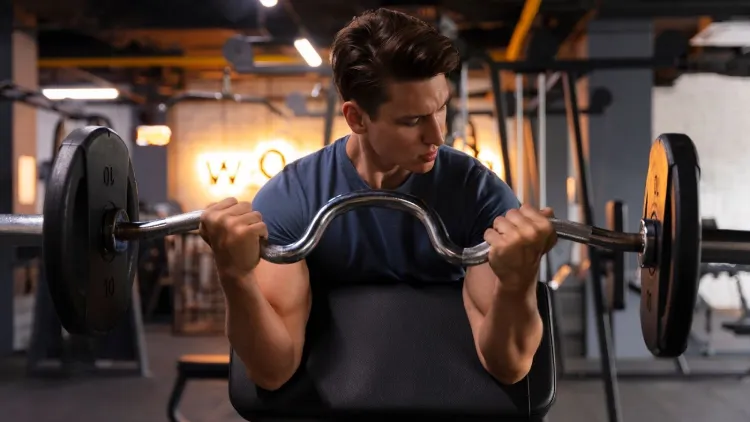
Dumbbells provide the most preferable use in concentration curls since they can be trained as far as the natural rotation of the wrist and one-sided practice that is beneficial in developing the balance of muscles between arms. Although EZ bars and barbells can work with heavier, compound curling movements, they are not well adapted to this exercise as they have a fixed grip and load bilaterally. In the concentration curls, it is much more important not to do heavy work but to pick a reasonable weight and keep its perfect shape.
Final Thoughts
Concentration curls are another widely applied and proven exercise method of developing well-shaped biceps. Their rigorous shape and the formidable cadence and unparalleled seclusion render them invaluable to lifters who are concerned with physique, equilibrium and muscular development.
Concentration curls are an addition to heavier variations of curls when used, as they complement them and increase biceps peak and achieve healthier training actions. The focus they are on is not on the maximum amount of weight they lift, but on counting the number of repetitions.
Frequently Asked Questions
1. Do concentration curls pack on the muscle?
Yes. The concentration curls are recommended because they build muscle by isolating the biceps, keeping constant tension by strict controlled motion.
2. Are concentration curls better than biceps curls?
They are different. Biceps curls enable heavier loads, whereas concentration curls emphasise isolation, control, and optimum contraction.
3. Should the concentration curls be performed while sitting or standing?
Both work. Seated is more stable and isolated, whereas standing is a little challenging in terms of balance.
4. What is the appropriate weight of concentration curls?
To utilise a strict form, full range of motion, and controlled without swinging reps, use a weight.


2 thoughts on “Concentration Curls: Great Exercise You Need To Know”
wonderful issues altogether, you just gained a logo new reader.
What would you recommend about your submit that you made some days
in the past? Any positive?
Thank you! I’m glad you enjoyed it. I’d say keep checking back—there’s more useful content coming soon!