
Lotus Pose is an excellent exercise for lower-body strength, posture, and flexibility, enhancing hip flexibility, joint mobility, and core stability. Regular training in this pose develops postural muscles, improves efficiency in other movements, and develops whole-body control. It looks easy, but Lotus Pose demands considerable hip flexibility and technique to prevent injury. Beginners need to use variations and gradually build up. It is safe, improves the execution of other movements, helps maintain joint integrity, and may contribute to better strength and flexibility over time.

- What is Lotus Pose as Exercise?
- Muscles Worked in Lotus Pose
- Benefits of Lotus Pose as an Exercise
- How to Perform Lotus Pose Correctly
- Beginner Modifications
- Common Mistakes to Avoid
- Progression Exercises for Lotus Pose
- How Long to Hold Lotus Pose
- Safety Tips
- Who Should Do Lotus Pose?
- How to Do Lotus Pose
- Why Lotus Pose Feels Difficult
- Comparison With Other Exercises
- Related Exercise Positions and Concepts
- Additional Practical Insights
- Symbolism and Awareness
- Popularity and Usage
- Conclusion
- Frequently Asked Questions
What is Lotus Pose as Exercise?
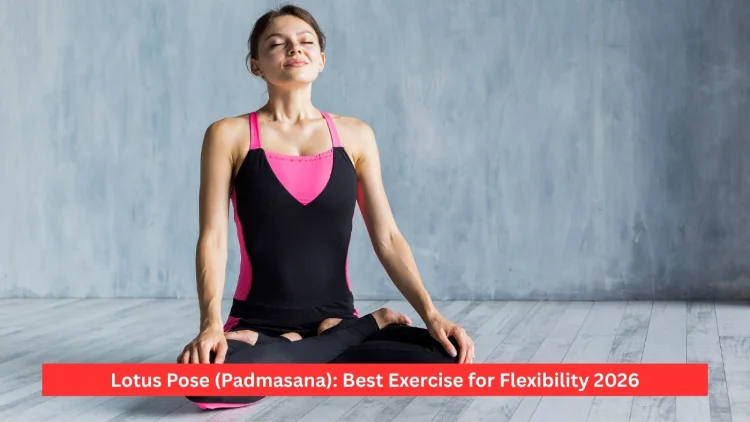
Also known as “padai padmasana” in Hinduism, the Lotus Pose exercise position is typically sitting with the feet on the thigh of the opposite leg. It’s usually linked to meditation, but underestimated as an exercise. In fact, it is one of the best for developing lower-extremity flexibility and posture.
In terms of training, Lotus Pose enhances hip mobility, stabilises core muscles, and corrects posture. Unlike other sitting postures, it requires muscular effort for balance and support.
This exercise challenges:
- Hip external rotation
- Knee alignment and stability
- Ankle positioning
- Core control
As a result, Lotus Pose can be considered a stretching as well as a strength-building exercise.
It also serves as a prerequisite to other, more complicated exercises. With stable hips, squats and lunges are safer movements to perform.
Muscles Worked in Lotus Pose
The serene Lotus Pose works several muscles at once.
1. Hip Muscles
This pose works the hips. The deep external rotators, glutes, and hip flexors are all engaged during the pose. Many find this pose challenging due to tight hips.
2. Thigh Muscles
The inner thighs and quads hold up the legs to prevent them from buckling. They also keep the body in proper position and ease the pressure on the knee.
3. Core Muscles
Core muscles (abdominals and lower back) maintain spinal alignment. If your core isn’t fired up, you will slump, eliminating the exercise benefits.
4. Lower Ankles and Calf
Ankles and lower legs are used for balance. It is important to keep the ankles in a safe position.

Benefits of Lotus Pose as an Exercise
1. Improves Hip Flexibility
The greatest benefit of the Lotus Pose is flexibility in the hips. Many people have restricted movements of their hips as a result of sitting for long periods of time. This posture works on this.
2. Enhances Joint Mobility
Practicing increases the flexibility of the hips, knees, and ankles. This eliminates stiffness and enables smoother movements.
3. Strengthens Postural Muscles
An upright posture helps strengthen spinal and core muscles. And over time, can improve posture throughout daily tasks and exercise.
4. Assists with Improving Mechanics
And the increased mobility carries over to other types of exercise. Exercises such as squats are performed with greater profundity.
5. Increases Body Control
This pose requires coordination. This helps with balance and postural control.
Further, it has an indirect influence on relaxation and balance of the nervous system, which can help with blood pressure by affecting stress-related factors that affect blood pressure. But for people with elevated blood pressure, milder postures are generally preferred to vigorous or upside-down poses.
How to Perform Lotus Pose Correctly
Step-by-Step Instructions
- Start sitting with your legs straight out in front.
- Flex your right knee and put your right foot on your left thigh.
- Bend your left knee and put your foot on your right thigh.
- Keep your back straight and shoulders down.
- Place your hands on your knees and hold.
Key Form Tips
- Maintain a tall and upright spine
- Don’t force your legs into the pose
- Engage your core slightly
- Move slowly and with control
Correct form is essential. Lotus Pose injuries can result when people try to perform it without sufficient flexibility.
Beginner Modifications
1. Half Lotus Pose
Both feet are crossed at the shins, but done while the top foot is on the opposite thigh. This takes the weight off the knees.
2. Cross-Legged Position
It’s a beginner-friendly pose. It helps build flexibility gradually.
3. Supported Lotus
The cushion fills the space between the hips and the ground.
These poses are helpful for those who are uncomfortable with Lotus Pose from the start.
Common Mistakes to Avoid
- Forcing the Position: This is the most common mistake. Don’t rush the stretches, as you can pull your knees.
- Rounding the Back: Rounding the back decreases the muscles’ effectiveness, potentially resulting in pain.
- Ignoring Hip Mobility: Bending should occur at the hips.
- Holding Tension: You want to be relaxed but structured.
- Skipping Warm-Up: Stiff muscles are more likely to be injured.
Progression Exercises for Lotus Pose
- Hip Openers: Butterfly stretch and hip rotations are beneficial.
- Hamstring Stretches: Hamstring stretch facilitates better posture.
- Glute Activation: Stabilize your hips with a strong butt.
- Ankle Mobility: Flexible ankles decrease discomfort.

How Long to Hold Lotus Pose
When using Lotus Pose as exercise, consider any of these times, depending on your skill and flexibility level:
- Beginners: 20–30 seconds
- Intermediate: 1–2 minutes
- Advanced: 3–5 minutes
It’s not about the time but the technique. It is better to maintain proper alignment with your spine erect and shoulders and hips relaxed than to hold for longer. It’s better to have a shorter hold with proper form than a longer one with incorrect form.
Once your flexibility has developed, you can work on holding the pose longer. Don’t push yourself too quickly, as prematurely extending the hold can strain the knees and hips.
Safety Tips
To prevent injury when doing the Lotus Pose, it’s important to do it safely, particularly for joints such as the knees and hips. Be sure to warm up first in a gentle hip-opening stretch before sitting up in the pose.
Never force your body. You should feel a gentle stretch, but not pain. Advance slowly and naturally, as your body gets used to the pose.
It’s also important to move gently. Gentle movements in and out of the pose can help prevent joint injuries and maintain balance. Jerky movements could lead to injury.
The complete Lotus Pose should be avoided in people with knee injuries, those with very tight hips, and those with arthritis. In these cases, the Half Lotus or a more basic cross-legged pose is a good substitute.
Who Should Do Lotus Pose?
Lotus Pose can be helpful for many people:
- Beginners working on flexibility
- Athletes improving mobility
- People with low activity levels
- Those looking for better posture
It’s particularly beneficial for people who work at a desk for prolonged periods, as it stretches the hips and relieves tightness. With consistent practice, it can enhance movement and relieve discomfort.
But people with joint problems or limited flexibility should avoid the Lotus Pose. It’s best to seek guidance or modify the pose to prevent injury.
How to Do Lotus Pose
As a Warm-Up
Practice Lotus Pose after follow-up mobility exercises to warm up your joints. It aids in progressively increasing flexibility before more intense poses.
As a Mobility Exercise
Do it as part of flexibility workouts to enhance joint flexibility. Regular practice will aid other exercises.
As a Cool-Down
Lotus Pose can also be used as a Cool-Down. It can help you relax, stretch, and relieve the tightness and soreness that sometimes occur after a workout.
The flexibility of doing the Lotus Pose can be incorporated throughout a workout, making it an important and useful exercise for both flexibility and balance.
Why Lotus Pose Feels Difficult
The Lotus pose is difficult for many people due to the level of flexibility, strength, and joint positioning required. Hip flexibility is the primary factor, not effort.
The human body isn’t “built” for this posture, particularly with a chair lifestyle. With practice, it gradually becomes more comfortable.

Comparison With Other Exercises
You may hear some compare flexibility training to strength training to determine which is more difficult. The truth is, both are challenging and have different goals. Lotus Pose is more geared to enhance mobility, joint positioning, and control, while weightlifting or Pilates is more focused on muscle contraction and development of muscle control, endurance, and strength.
Lotus Pose may feel challenging for those with stiff hips or limited flexibility, as it involves moving the body through a large range of motion. Alternatively, adaptation to strength training may be harder if you don’t have good muscular endurance or control.
The difference is about adaptation. Strength exercises make muscles stronger and control, while flexibility exercises increase range of motion and joint flexibility. Both types of exercises are not always more difficult – it’s all about the individual, the level of experience, and the level of effort put in. Both workouts are needed for optimal function and injury prevention.
Related Exercise Positions and Concepts
Several exercise positions can work in conjunction with the Lotus Pose to enhance flexibility, strength, and coordination. These positions can assist with the progression and development of the pose.
Forward bends extend the back, hamstrings, and calves. They can lengthen the spine and improve your posture, making the Lotus Pose more comfortable.
Warrior postures, even those that use a balance element (like Warrior 3), help to strengthen and improve lower-body stability and balance. They build leg strength and stability, which in turn supports stability in the seated postures.
Seated forward bends target hamstring flexibility and lower back mobility, aiding in better posture and stability. Balance exercises improve coordination and awareness, allowing you to balance without unnecessary effort.
Combined, these exercises build a balanced practice to promote flexibility, stability, and coordination.
Additional Practical Insights
Recovery After Practice
When finishing the Lotus Pose, it is crucial to exit the pose gently. It’s important to slow movements, especially if your hips or knees are tight. Slowly stretch your legs out, wiggle them, and relax your body. This promotes blood flow and relieves stiffness.
Simpler Alternatives
If you find Lotus Pose too difficult, don’t push it. You can also try simpler poses like Basic Cross-legged Pose or Half Lotus, which offer similar benefits. You can also sit on a cushion to raise your hips for better posture and comfort.
General Exercise Guidelines
Flexibility exercises should be more about practice rather than intensity. It takes time to improve, and over-stretching can cause damage. Emphasize correct technique, breathing, and steady progress. Consistent practice, even in a small amount, will produce safe and improved results.
Symbolism and Awareness
A lotus symbolizes growth, stability, and balance. When applied to movement, this position offers these attributes through progressive movements. It promotes a sense of patience, as gains in flexibility take time to develop.
This pose also enhances body consciousness. Once posture and alignment are achieved, concentration in this position helps develop a stronger mind-body awareness while working out.
Popularity and Usage
The Lotus Pose is a well-known pose in mobility and flexibility training. Its straightforward appearance and benefits make it an attractive pose for both new and seasoned practitioners.
It is often incorporated into warm-ups, cool-downs, and mobility drills. It’s a staple in the routines of athletes seeking better flexibility and recovery, and practitioners seeking improved posture and joint well-being. It can be incorporated into any workout regimen, enhancing fitness and health.

Conclusion
Lotus Pose is an effective pose that enhances flexibility, posture, and balance. It’s a basic pose with a profound impact on the body.
Through incremental progress and good form, Lotus Pose can be learned by anyone. It helps improve flexibility, aids other workouts, and promotes a healthy lifestyle. With time, Lotus Pose can be a staple in your workout routine.
Frequently Asked Questions
1. What are the benefits of Lotus Pose?
Lotus Pose enhances flexibility, mobility, posture, and stability. It also increases muscular strength and balances body control.
2. Why is Lotus Pose difficult?
Lotus Pose is challenging because it demands great flexibility in the hips, stability in the knees, and flexibility in the ankles. Our hips are tight due to sitting, and we can’t achieve the full pose.
3. When should you avoid Lotus Pose?
Lotus Pose is not advisable for those with severe hip inflexibility, knee problems, or joint issues. Alternative poses such as Half Lotus and crossed-legged sitting may be used instead.
4. How long should you hold the pose?
It should be held for 20-30 seconds for beginners, 1-2 minutes for intermediate, and 3-5 minutes for advanced practitioners. It’s better to maintain good form and practice shorter holds if necessary.