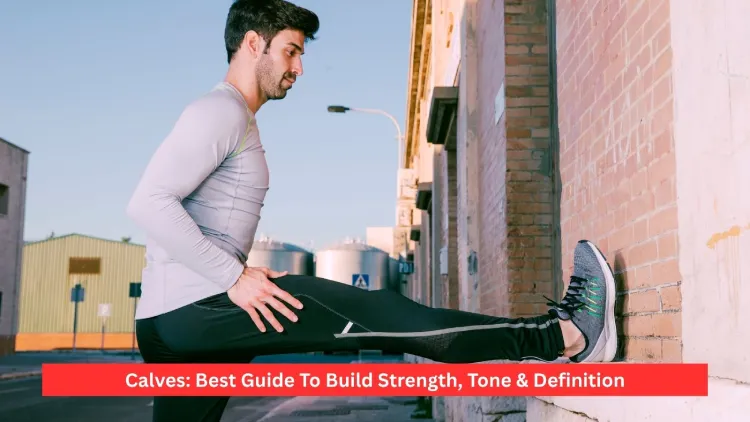

Powerful, well-built calves not only increase the aesthetics of legs but also provide greater stability, balance, and athleticism. It is important to train the gastrocnemius and soleus with a combination of exercises, standing and seated calf raises, dynamic movements, and weighted exercises. The frequency, gradual overloading, and correct form are essential to well-formed functional calves.
Knowing Calves and their purpose in the legs
The calves are the muscles that are found on the back of the lower leg, and they mainly consist of gastrocnemius and soleus. All these muscles collaborate in aiding the movement of the human body, like walking, running, jumping, and stabilizing the ankle. The gastrocnemius is the bigger and more visible muscle that forms the noticeable shape of the calf, with the soleus positioned underneath,d giving power and endurance, especially when bending the knee.
The muscles of the calf are typically larger in males than in females because they have more testosterone and because the calves of women are usually well-toned through exercise, although genetic makeup may influence the general shape. It is worth mentioning that calves are practically a combination of muscles almost completely, whereas the proportion of body fat may cause an impact on their appearance. Thick calves may still be possessed by a lean person with considerable muscle building, and some fatness may give calves the appearance of added bulk in females
Thighs and calves are not the same; they are lower body parts, but the calves are those that are found in the lower leg and are involved in ankle flexion and propulsion, whereas the thighs are mainly the quadriceps and hamstrings that are found in the knee and hip, respectively.

Calves Anatomy
The calves consist of two major muscles, each having a particular role:
- Gastrocnemius: It is a muscle composed of two heads and is the muscle that is visible on the calf. It is more active during explosive movements of losing stability, like jumping and sprinting, and when the knee is in a straight position.
- Soleus: This muscle, which is found under the gastrocnemius, is important in endurance and daily movement that is considered essential. It is more mobilized when the knee is bent and operates continuously during such activities as walking or being on a footstool most of the time.
By knowing about these muscles, you can better focus on them with exercise. Better-trained calves enhance the stability of the ankle, minimizing the risk of injury and improving overall lower-body strength.

Top Calf Exercises
1. Standing Calf Raises
Target: Gastrocnemius
A foundational exercise to build visible calf muscle to be built is standing calf raises.
How to do it:
- Have your heels hanging off on a platform or step.
- Use your feet, pushing with the balls of the feet, then, in the best way that you can get, stay on your heels, no matter how high above the ground they may get.
- Raise and drop your heels gradually, lower than the platform.
- Repeat for 3–4 sets of 12–20 reps.
Pointers: To increase the resistance, hold a dumbbell or a barbell. Important to hold at the top to ensure maximum contraction. This activity trains both calves at the same time,e and this helps to keep them symmetrical and strong.
2. Seated Calf Raises
Target: Soleus
The calf raise in the seated position focuses on the soleus muscle that helps in endurance and thickness of the lower-leg.
How to do it:
- Sit on a bench, and have a weight on your knees.
- The feet of the balls should be on a platform or a step.
- Lift up the heels to the maximum and place them down slowly.
- Perform 3–4 sets of 15–25 reps.
Tips: Be aware of slow and controlled movements. The high repetition ranges are the best to mobilize the soleus to encourage equilibrium of growth.
3. Donkey Calf Raises
Position: Supine Lie.
Donkey calf raise- This type of exercise can be stretched and gets a complete contraction; however, it is effective in hypertrophy.
How to do it:
- Fold over and rest your back on a bench or a sturdily held wearing well.
- Provide weight through a partner or a special machine.
- Get as high as you can with your heels and stop and drop.
- Aim for 3–4 sets of 12–20 reps.
This difference is especially beneficial to those who would like to grow in size and definition at the same time.
4. Single-Leg Calf Raises
Target: Gastrocnemius and balance
The variations of the single legs are useful in rectifying muscle imbalances and enhancing ankle stability.
How to do it:
- Balance on one leg on a flat or step.
- Raise up your heel as high as possible, but bring it down gently.
- Do 3 or 4 sets of 12-15 reps each leg.
It is easy to put one leg at a time, which contributes to higher intensity and improves mind-muscle contact, a key element of progress.
5. Jump Rope
Target: Calves, stamina, mobility.
Jump rope is an active workout that involves continuous movement of the calves.
How to do it:
- Lightly land on the balls of your feet on your jumps.
- Leap forward 30-60 seconds round.
- Repeat for 5–10 rounds.
This is a great method to have cardiovascular training together with calf activity.
6. Sprinting up a hill or stairs
Purpose: Explosive power and gastrocnemius.
Sprint training on uphill ramps puts the calves to natural resistance.
How to do it:
- Race up a hill or up the stairs to its utmost.
- Take a stroll to get better.
- Repeat for 6–10 rounds.
This workout develops strength, stamina, and contours, especially in the gastrocnemius.
7. Calf Press on Leg Press Machine
Position: Figure 1.
Leg press calf exercise can be performed with heavy resistance, yet safely.
How to do it:
- Locate yourself on the leg press machine with the balls of your feet on the platform.
- Exert the drive through the use of your calves against the ground, pushing the platform upwards with the knees bent a little.
- Bend downwards gradually.
- Perform 3–4 sets of 12–20 reps.
It is recommended to avoid locking the knees to minimize the risk of injury and to do controlled movements in order to be able to make the most of them.

General Calving Training
- Frequency: Weaners react to high frequency-2- 4 times a week- is ideal.
- Repetition Range: Higher should be endurance (15 to 25 reps), and moderate (8 to 12 reps) should be hypertrophy.
- Full Range of Motion: In all cases, be sure that heels go lower than the platform and up as high as they can.
- Mind-Muscle Connection: Concentrate on the sensation of the calf-work, not the hurry.
- Progressive Overload: Add weight or reps progressively to challenge your muscles.
- Diversity: Use standing, seated, and dynamic movements to enjoy balanced development.
Certain trainers would also suggest the 3-2-1 rule, which would involve equal portions of each kind of exercise: 3 sets with moderate weight, 2 sets with heavier weight, and 1 set with maximum effort to stimulate both gastrocnemius and soleus equally.
Overcoming Calf Strength and Weakness
Weak calves are characterized by weak ankle stability, lack of jumps or sprint activities, and undefined definition. Weak calves might influence the general lower body performance and can be associated with risks of developing injuries such as Achilles tendon strain. Calves strengthening also helps in posture development and balance, particularlyfore athletes or those who remain standing for long.
Genetics and training affect cow strength and size. Although the natural shape and size potential of the calves are determined by genetics, development can be greatly enhanced through proper exercise, frequency, and progressive overload. There are those people who may not have to train extensively to gain noticeable muscle, though they might have larger calves, and there are those who need more of such training.

Common Calf Myths and Misconceptions
- Calves are 100% genetics: While genetics influence calf shape, targeted exercises can enhance size, definition, and endurance.
- Calves and thighs are the same: They are distinct muscle groups; calves focus on ankle flexion, thighs on knee extension, and hip flexion.
- Big calves mean fat: Appearance depends on muscle size and fat distribution. Some individuals may have muscular calves that appear large, while others may have fat accumulation, giving a bulkier look.
- Only males can build calves: Both males and females can develop calves effectively through consistent training.
Calving and looking after Calves
- Calculating the progress: Calculating the progress can be done by measuring the upper width of the lower leg. It can assist you in keeping track of the progress and amending your training as you go. Adequate care of the calf involves stretching before and after exercises, resting properly, and using a progressive exercise program.
- There are 5 Cs of calf care: consistency, control, contraction, calories, and careful stretching; these 5 Cs make sure that your calves are stronger, flexible, and can perform well. The average human being is well fed on 2-4 calfing sessions per week with an adequate amount of intensity and rest to keep overtraining at bay, but to get the greatest possible outcomes.
Specific Recommendations to Raise Calfs
- Women’s calves: Calves are able to grow out and become well-developed when women are trained in how to build them, but the hormonal differences affect the natural size.
- Male Calves: Men might develop faster since they have increased testosterone, yet they remain in need of variation when it comes to exercises.
- Pregnancy and Calves: Hormonal changes may temporarily affect both the retention of fluids and the size of the calf.
- High-Fat Areas: To reduce fat, calves are the parts that are not generally the most challenging ones, but genes and general overall bodily makeup influence appearance.
- Body Composition: Skinny people might still have fat in their calves because of localised fat or genetics.
Getting these subtleties enables one to adjust calf training according to individual needs.

Conclusion
Calves that have well-developed legs enhance aesthetics and athletics as well as stability in the lower part of the body. Standing, seated, and unilateral as well as dynamic exercises will help develop the gastrocnemius and soleus in balance. The importance of training frequency, progressive overload, and a mind-muscle connection in growth, and the role of genetics and body composition in natural shape.
With all these exercises, correct guidelines, and consistency, anyone could develop strong, defined calves that will not only appear great but also enhance overall functionality and performance.
Frequently Asked Questions
1. What number of times should I train my calves?
2-4 times a week with a good balance of both high-rep endurance and moderate-rep strength.
2. Is the size of calves genetically defined?
Shape and insertions. An individual will have their genetics, but with specific exercises, one can choose to increase the size and tone.
3. What is the reason why calves of men and women are different?
The size is affected by hormones, distribution of fat,t and even the genes; women can build up known calves through training.
4. What is a sure way to tell whether my calves are weak?
Weak calves result in poor ankle stability or the inability to jump. Train on calf raise, one-legging exercises, and jump rope.